Page 1 :
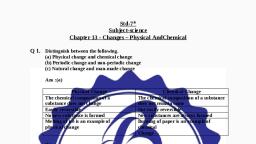
Changes- Physical & Chemical, Distinguish Between the Following:(a) Physical change and chemical change, , Physical Change, , Chemical Change, , The chemical composition of a, substance does not change, , The chemical composition of a substance, does not remain same, , Easily reversible, , Not easily reversible, , No new substance is formed, , New substances are always formed, , Melting of ice is an example of, physical change, , Burning of paper is an example of chemical, change, , (b) Periodic change and non-periodic change, , Periodic changes, , Non periodic changes, , 1. Events that repeat themselves after, a fixed period of time and whose, ocurence can be predicted are called, periodic changes., , The events that do not repeat themselves, after regular interval of time are called non, periodic changes., , 2. Example- rotation of earth,, revolution of earth, day and night,, seasons etc., , Example- natural disasters like earthquake,, cyclones etc., , (c) Natural change and man-made change, , Natural changes, 1. The changes which are brought about by nature, itselfand are not under the control of humans are, called natural changes., , Man made changes, The changes which are brought, about by humans are called man, made changes.
Page 2 :
2. Examples- change of season, tides in sea, ageing, of plants etc., , , , Examples- burning of fuels, cutting, hair, switching on lights etc., , Under which different types can the following changes be classified?, (a) Conversion of milk into yoghurt- Chemical change, (b) Bursting of a cracker- Chemical change, (c) Occurence of an earthquake- Natural change, (d) Revolution of the earth around the sun- Periodic change, (e) Stretching of a spring- Physical change, , Give Reasons:(a) While purchasing canned food, its expiry date should be checked., Ans. While purchasing canned food their expiry date should be checked because an expiry, date indicates that for how long a canned food is safe for consumption. Canned foods with, expired dates are not considered worth consumption as they could affect your health. They, might get contaminated with microorganisms like bacteria or may have no nutritional value, left after its expiration., , (b) An iron article should be given a coat of paint, Ans. Iron articles often undergo rusting resulting in the formation of a reddish brown layer on, its surface. Rusting is caused by the exposure of iron to the air and water in the, surroundings. An iron article which is coated with a paint prevents the interaction of iron with, the surrounding air and water and thus protects it from rusting., , (c) A wooden article should be polished., Ans. A wooden article should be polished because it protects the wooden article from, sunlight and all other external conditions and also it reduces the probability of wooden mites, damaging the furniture., (d) Copper and brass utensils should be tinned., Ans. Copper and brass materials also undergo corrosion resulting in the formation of a, greenish layer on this surface. When the surface of copper/ brass comes in contact with air, or water, it results in corrosion and to prevent this, the process of tining is used. In this, process copper and brass articles are coated with tin.
Page 3 :
(e) A dry handkerchief gets wet at once on dipping in water, but it takes long for a, wet handkerchief to dry., Ans. A dry handkercheif gets wet at once because it quickly absorbs the water in which it is, dipped. However, it takes longer for a wet handkerchief to dry because the water needs to, evapourate from the handkerchief. Evaporation is a slow process which is dependant on, other factors as well like relative humidity., , , , What will you take into account while identifying the following?, , (a) A physical change in a substance., , Ans. Physical changes are those changes in which only the forms of substances get, modified; the chemical natures and compositions of the substances involved are not altered., Characteristics:, 1. No new substance is formed during a physical change., 2. Most physical changes can be reversed easily., 3. The chemical composition of a substance undergoing physical change remains the, , same., , (b) A chemical change in a substance, , Ans. Chemical changes are changes that involve reaction of substances with one another., Such reactions result in alterations in the chemical compositions of the substances involved., These changes lead to the formation of new substances., Characteristics:, 1. One or more new substances are formed during a chemical change., 2. Most chemical changes cannot be reversed easily., 3. The chemical composition of a substance undergoing chemical change does not remain, , the same., 4. A chemical change is always accompanied by a change in energy., , , , Read the paragraph and note down the various types of changes it, mentions., , It was nearing six o'clock in the evening. The sun was setting. A breeze was blowing., Leaves on the tree were shaking. Sahil was sitting in the courtyard, rolling balls of wet, soil and shaping them into various toys. Then he felt hungry and went into the house., Mother made a dough from wheat flour and fried purees. While eating hot purees, his
Page 4 :
attention was drawn outside the window. It had started raining. There was lightning, too., Sahil was enjoying his dinner in the dim light., Ans. It was nearing six o'clock in the evening (Periodic change). The sun was, setting (Periodic change). A breeze was blowing (Natural change). Leaves on the tree, were shaking (Physical change). Sahil was sitting in the courtyard, rolling balls of wet soil, and shaping them into various toys (Physical change). Then he felt hungry (Chemical, change) and went into the house. Mother made a dough from wheat flour and fried, purees (Irreversible change). While eating hot purees, his attention was drawn outside the, window. It had started raining (Natural change). There was lightning (Natural, change), too. Sahil was enjoying his dinner in the dim light., , -Yash V. Wani, VII A