Page 1 :
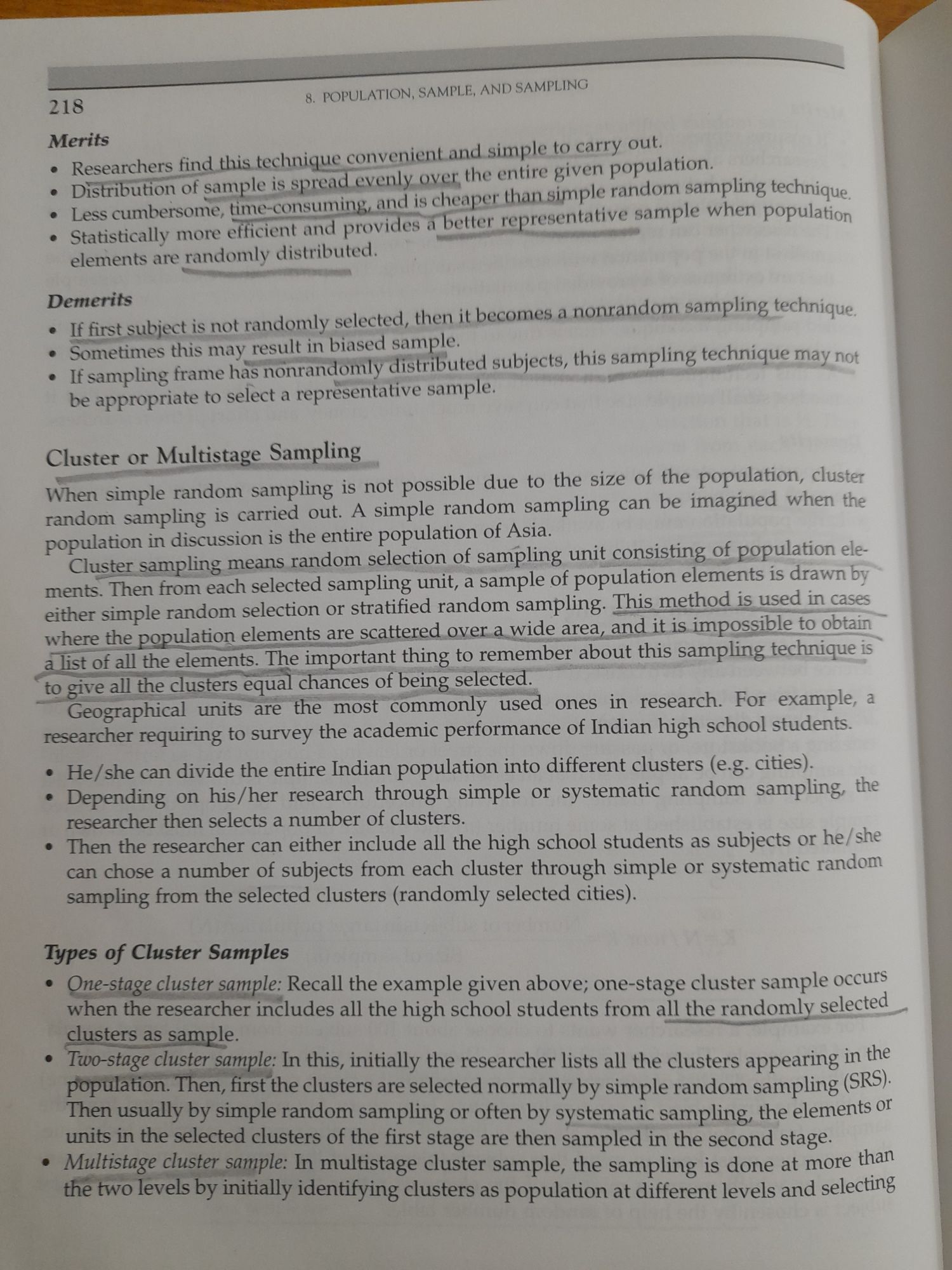
- Dl 5N, SAMPLE, AND SAMPLING, 218 8, POPULATION, SAM, , Merits, , e Researchers find this techr ique convenient and. simple to carry ci, , ¢ Distribution of sample is spread_evenly over, the entire given population. :, , e Less cumbersome, time-consuming, and is cheaper than, simple random sampling technique ., , Statistically more efficient and provides @ better representative sample when populatior i, elements are randomly distributed,, , Demerits ;, , ° If first subject is not randomly selected, then it becomes a nonrandom sampling technique, , e Sometimes this may result in biased sample., , Ifsampling frame hasnonrandomly distributed subjects, this sampling technique may not, be appropriate to select a representative sample., , Cluster or Multistage Sampling _, , When simple random sampling is not possible due to the size of the population, cluster, random sampling is carried out. A simple random sampling can be imagined when the, population in discussion is the entire population of Asia., , Cluster sampling means random selection of sampling unit consisting of population elements. Then from each selected sampling unit, a sample of population elements is drawn by, either simple random selection or stratified random sampling. This method 1 is used inc, where the population elements are scattered.over. a.wide area, and it is impossible to obtain, , a list of all the elements. The important thing to remember about this sampling technique is, to give all the clusters eque | chances of being. selected. ,, , , , aie Sa, , Geographical units are the most commonly used ones in research. For example, 2, researcher requiring to survey the academic performance of Indian high school students., , * He/she can divide the entire Indian population into different clusters (e.g. cities). ;, , ¢ Depending on his/her research through simple or systematic random sampling, the, researcher then selects a number of clusters., , Then the researcher can either include all the high school students as subjects or he she, can chose a number of subjects from each cluster through simple or systematic random, sampling from the selected clusters (randomly selected cities)., , Types of Cluster Samples, ° Qhecslage duster sample Recall the example given above; one-sta: S ecurs, researcher inc : ; -stage cluster sample occurs, when the er includes all the high school students from all the randomly selected _, slusters as sample. ul the randomly s, © Two-stage cli, , POUR Thee ee In this, initially the researcher lists all the clusters appearing in the, ion. Then, first the clusters are selected normally by simple random sampling (SRS):, , Then usually by simple random samplin i i, ent pling or often by systematic sampling, the elements O", units in the selected clusters of the first stage are then sampled in the second stage., , eae emple. the sampling is done at mow, : rr initially identifying clusters as population at different levels and selecting, , CR