Page 1 :
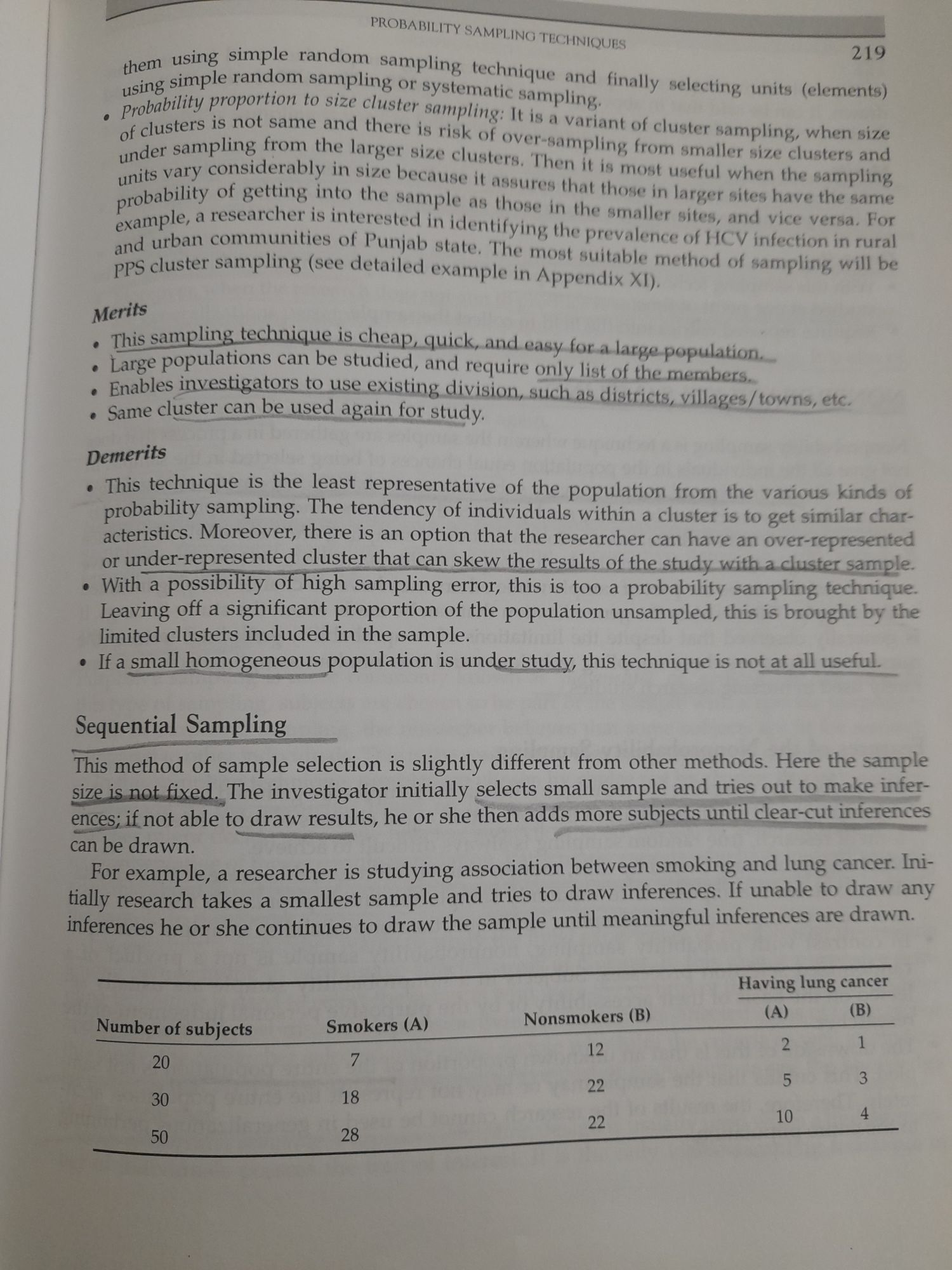
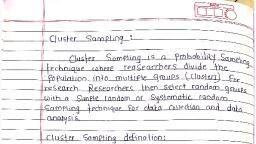
Sa PRO AM, BABILITY SAMPLING TECH INIQUES, , | A using simple random Samplin, ing simple random sampling or sys, , obability proportion to size cluster sampling: 1, af clusters is not same and there ig rigk eh Ae, | under sampling from the larger size cluste by, its vary considerably in size becauge it .., robability of getting into the sample, , , , 219, & technique ; ;, que and finally selecting units (elements), , tematic Sampling,, , tra : cluster sampling, when size, Then it a rom smaller size clusters and, assures that 1 Most useful when the sampling, , 8 that those in larger sites have the same, , ary 48 those j, a researcher is rested inj Se in the smaller site: 1, example, z interested jn identifying the prey teh : n ith im bag veh, alence © infection in rural, , and urban eununities of Punjab state, The most gui, pps cluster sampling (see detailed example in ae method of sampling will be, : ndix XI),, Merits, + This sampling technique is cheap, quick, and.e: ae ;, Large populations can be studied, and Pet ap "i P np population,, i i Bevawinid Hine: nly list of the members,, * Enables investigators to use existing division, such as Seat sa . a, + Same cluster can be used again for study, AALS LOWS Se:, Demerits, . This technique ig dhe least tepresentative of the population from the various kinds of, probability sampling. The tendency of individuals within a cluster is to get similar characteristics. Moreover, there is an option that the researcher can have an over-represented, or under-represented cluster that can skew the results of the study. with acluster sample, * With a possibility of high sampling error, this is too a probability sampling technique., Leaving off a significant proportion of the population unsampled, this is brought by the, limited clusters included in the sample. ;, ¢ Ifa small homogeneous population is under study, this technique is not at all useful., , | Sequential Sampling, This method of sample selection is slightly different from other methods. Here the sample, , si J The investigator initially selects small sample and tries out to make infer, ences; if not able to draw results, he or she then adds more subjects until clear-cut inferences, as estate tetanic - a— ™ ST, can be drawn., , , , , , , , , , a researcher is studying association between smoking and lung cancer. Inid tries to draw inferences. If unable to draw any, until meaningful inferences are drawn., , r example,, arch takes a smallest sample an, s he or she continues to draw the sample, , , , , , , , , , , Having lung cancer, , Nonsmokers (B) (A) (B), , , , Smokers (A)