Page 1 :
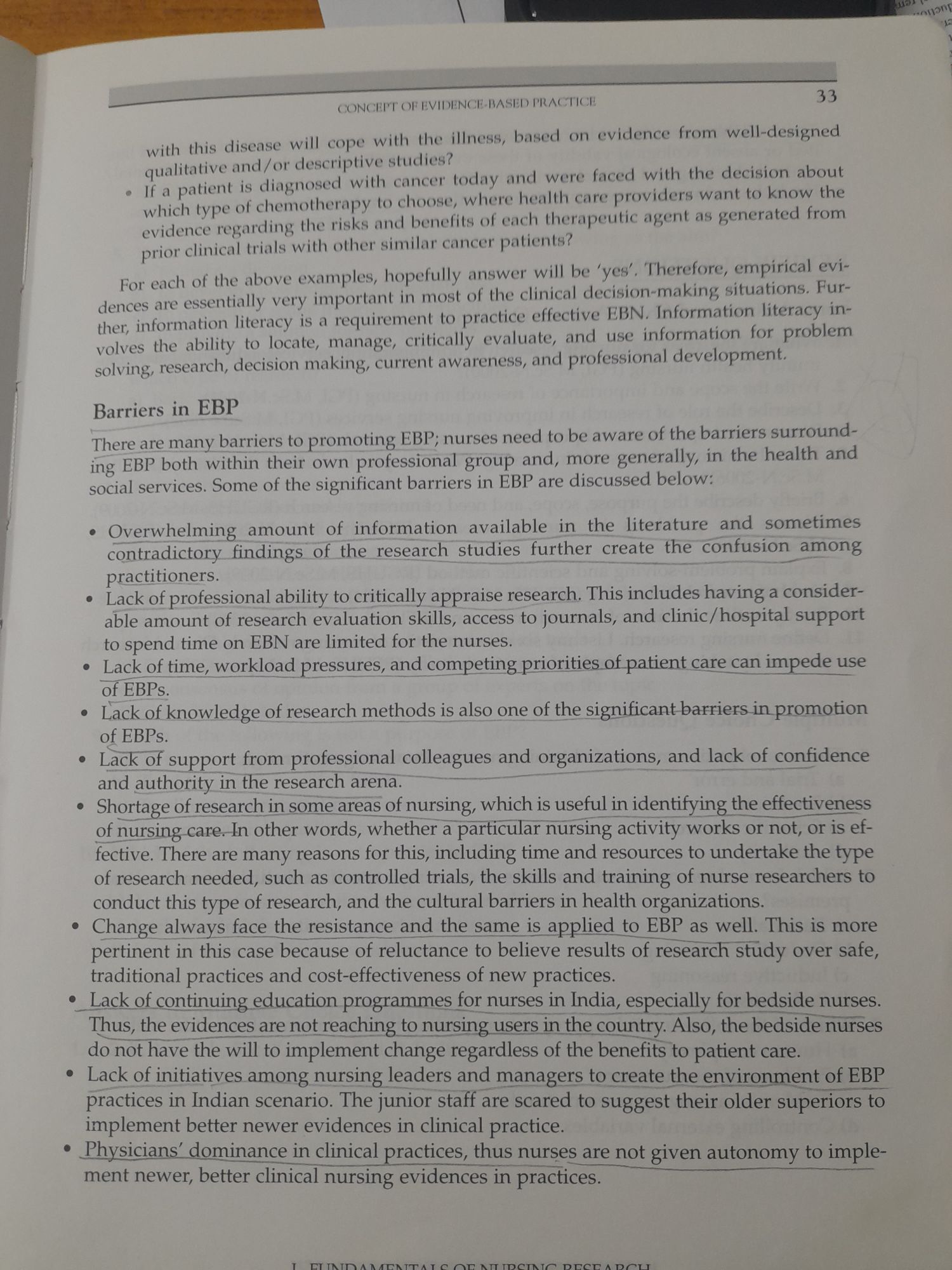
33, , , , , , CONCEPT OF EVIDENCE-BASED PRACTICE, : with this disease will cope with the illness, based on evidence from well-designed, ise itati 1/or descriptive studies?, : ative and/or descri} f f ~, ree aced with the decision about, , mmosed with cancer today and were f, where health care providers want to know the, , e If a patient is diag:, shich type of chemothe, Ww YI ach therapeutic agent as generated from, , evidence regarding the ris, , srapy to choose,, ind benefits of @, sr patients?, , , , i ‘ { { nar “|, prior clinical trials with other similar cance, i pr , . * irl i' For each of the above examples, hopefully answer will be ‘yes’, lherefore, empirical evi, dences are essentially very important in most of the clinical decision-making, situations. Fur‘ : actice effective EBN. Information literacy in, ther, information literacy isa requirement to pr, volves the ability to locate, manage, critically e, solving, research, decision making, current awareness, and profession, , valuate, and use information for problem, al development., , Barriers in EBP, There are many barriers to promoting EBP; nurses need to be aware of the barriers surroundand, more generally, in the health and, , ing EBP both within their own professional group, social services. Some of the significant barriers in EBP are discussed below:, , e Overwhelming amount of information available in the literature and sometimes, contradictory findings of the research studies further create the confusion among, practitioners. Pye sat, , e Lack of professional ability to critically appraise research, This includes having a consider, able amount of research evaluation skills, access to journals, and clinic/hospital support, , to spend time on EBN are limited for the nurses., , Lack of time, workload pressures, and competing priorities of patient care can i impede use, , of EBPs., Lack of knowledge of research methods is also one of the significant barriers in promotion, , e, , of EBPs., Lack of support from professional colleagues and organizations, and lack of confidence, , and authority in the research arena., Shortage of research in some areas of nursing, which is useful in identifying the effectiveness, of nursing care-In other words, whether a particular nursing activity works or not, or is effective. There are many reasons for this, including time and resources to undertake the type, of research needed, such as controlled trials, the skills and training of nurse researchers to, conduct this type of research, and the cultural barriers in health organizations., , Change always face the resistance and the same is applied to EBP as well. This is more, , pertinent in this case because of reluctance to believe results of research study over safe,, , traditional practices and cost-effectiveness of new practices., , e Lack of continuing education programmes for nurses in India, especially for bedside nurses., Thus, the evidences are not reaching to nursing users in the country. Also, the bedside ntirses, do not have the will to implement change regardless of the benefits to patient care., , ° Lack of initiatives among nursing leaders and managers to create the environment of EBP, practices in Indian scenario. The junior staff are scared to suggest their older superiors to, implement better newer evidences in clinical practice., , ¢ Physicians’ dominance in clinical practices, thus nurses are not given autonomy to imple, ment newer, better clinical nursing evidences in practices., , T DTIAMMAAATAITATC MOAT Mcnic DTCrTADCII