Page 1 :
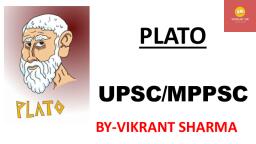
The philosopher Plato discusses five types, of regimes (Republic, Book, VIII; Greek: πέντε πολιτεῖαι). They, are aristocracy, timocracy, oligarchy, democ, racy, and tyranny. Plato also assigns a man, to each of these regimes to illustrate what, they stand for. The tyrannical man would, represent tyranny, for example. These five, regimes progressively degenerate starting, with aristocracy at the top and tyranny at, the bottom., Aristocracy is the form of government, (politeia) advocated in Plato's Republic. This, regime is ruled by a philosopher king, and, thus is grounded on wisdom and reason., The aristocratic state, and the man whose, nature corresponds to it, are the objects of, Plato's analyses throughout much of The, Republic's books, as opposed to the other
Page 2 :
four types of states/men, that are studied, primarily in Book VIII., The aristocratic state that Plato idealizes is, composed of three caste-like parts: the, ruling class, made up of the, aforementioned philosopher-kings (who are, otherwise identified as having souls of, gold); the auxiliaries of the ruling caste,, made up of soldiers (whose souls are made, up of silver), and whose job in the state is to, force on the majority the order established, by the philosophers; and the majority of the, people (souls of either bronze or iron), who,, in contrast to the first two classes, are, allowed to own property and produce, goods for themselves, but are also obliged, to sustain with their own activities their, rulers' — who are forbidden from owning, property in order to preclude that the
Page 3 :
policies they undertake be tainted by, personal interests., The aristocratic man is better represented, by Plato's brand of philosopher: a man, whose character and ambitions have been, forged into those ideal for a just ruler, through a rigorous education system, designed to train intellectuals that are, selfless and upright, and whose souls have, been made calm and aware of the absolute, Good by learning the Truth based on the, Platonic Ideas. Plato envisages for this, philosopher a disposition and ability that, makes him the ideal governor of any state, precisely because his soul knows the Idea of, the Good, which is the metaphysical origin, of all that is good, including happiness, itself. Wealth, fame, and power are just, shadows of the Good and provide only
Page 4 :
hollow and fleeting satisfaction. It is only, the knowledge of the Good in itself that, gives man enduring and real happiness., Thus, the philosopher who is exposed to, metaphysical contemplation is not tempted, to abuse his power in his pursuit of material, goods, and his state policies are therefore, dedicated to establishing only the Good in, the state, not his personal interests., In contrast to historical aristocracies, Plato's, resembles a meritocracy or prototechnocracy of sorts. In it, a big government, state keeps track of the innate character, and natural skills of the citizens' children,, directing them to the education that best, suits those traits. In this manner, a child, with a gold soul born to parents with silver,, bronze or iron souls will not be held back, by his inferior birth and will be educated to
Page 5 :
levels above his kin according to his golden, qualities. Conversely, from parents with, gold and silver souls, a child born with a, bronze or an iron soul is educated to only, the level earned by his natural aptitudes., Timocracy is treated in Book VIII of the, Republic 545a-550c. Aristocracy, degenerates into timocracy when, due to, miscalculation on the part of its governing, class, the next generation of guardians and, auxiliaries includes persons of an inferior, nature (the persons with souls made of iron, or bronze, as opposed to the ideal, guardians and auxiliaries, who have souls, made of gold and silver). Since in the, government there will be present people of, an inferior nature, inclined not just to, cultivating virtues but also producing, wealth, a change in the constitution of the
Page 6 :
aristocratic city is eventually worked, and its, educational system, which used to, introduce the high classes into a purely, rational, selfless political theory, is altered, so that it becomes permissible for current, state leaders to pursue their individual, interests. The timocracy, however, does not, completely break from all the characteristics, of aristocracy, and for Plato this regime is a, combination of good and bad features., A timocracy, in choosing its leaders, is, "inclining rather to the more high-spirited, and simple-minded type, who are better, suited for war".[1] The governors of, timocracy value power, which they seek to, attain primarily by means of military, conquest and the acquisition of honors,, rather than intellectual means. Plato, characterizes timocracy as a mixture of the, elements of two different regime types —
Page 7 :
aristocracy and oligarchy. Just like the, leaders of Platonic aristocracies, timocratic, governors will apply great effort in, gymnastics and the arts of war, as well as, the virtue that pertains to them, that of, courage. They will also be contemptuous, towards manual activities and trade and will, lead a life in public communion. Just like, oligarchs, however, they will yearn for, material wealth and will not trust thinkers to, be placed in positions of power. Timocrats, will have a tendency to accumulate wealth, in pernicious ways, and hide their, possessions from public view. They will also, be spendthrift and hedonistic. Because their, voluptuous nature will not be, like that of, philosopher-kings, pacified in a, philosophical education, law can only be, imposed onto them by means of force.
Page 8 :
For Plato, timocracies were clearly superior, to most regimes that prevailed in Greece in, his time, which were mostly oligarchies or, democracies. Crete and Sparta are two, examples of timocracies given in, Plato's Republic. In the Symposium, Sparta's, founder, Lycurgus, is given high praise for, his wisdom. And both Crete and Sparta, continued to be held in admiration by Plato, in one of his latest works, the Laws, for, having constitutions which, unlike that of, most other Greek cities, go beyond mere, enumeration of laws, and focus instead on, the cultivation of virtues (or at least one of, them, that of courage). Plato, however, does, present a criticism against those cities —, that their constitutions neglected two other, virtues essential to a perfectly just city such, as his aristocracy, namely wisdom and, moderation.
Page 9 :
Of the man who represents a timocratic, state, Socrates says that his nature is, primarily good: He may see in his father, (who himself would correspond to an, aristocratic state) a man who doesn't bother, his soul with power displays and civil, disputes, but instead busies himself only, with cultivating his own virtues. However,, that same young man may find in other, persons in his house a resentment of the, father's indifference to status. Thus, by, observing his father and listening to his, reasoning, he's tempted to the flourishing, of his own intellect and virtues; but, influenced by others in his house or city, he, may become power craving. He thus, assents to the portion of his soul that is, intermediate between reason and desire, (see Plato's tripartite theory of soul), the one
Page 10 :
that is aggressive and courageous (thus the, timocracy's military character)., The young timocrat may himself be, somewhat contemptuous towards money, and money-making activity, but he, becomes increasingly focused in saving his, goods as he ages, since the virtues of his, soul have not been purified by the salutary, effects of reasoning activities and aesthetic, experiences that Plato recommends to the, high class. The timocrat is further described, as obedient towards authority, respectful to, other free citizens, good at listening, and, aggressive rather than contemptuous, towards slaves., Plato defines oligarchy as a system of, government which distinguishes between, the rich and the poor, making out of the, former its administrators.
Page 11 :
An oligarchy is originated by extending, tendencies already evident in a timocracy., In contrast to Platonic aristocrats, timocrats, are allowed by their constitution to own, property and thus to both accumulate and, waste money. Because of the pleasures, derived therefrom, money eventually is, prized over virtue, and the leaders of the, state seek to alter the law to give way and, accommodate to the materialistic lust of its, citizens. As a result of this newfound, appreciation for money, the governors, rework the constitution yet again to restrict, political power to the rich only. That is how, a timocracy becomes an oligarchy., Plato gives a detailed account of the, problems usually faced by the oligarchies of, his days, which he considered as, significantly more troubled than the former
Page 12 :
system, that of timocracy. The following are, examples of such problems:, •, , •, , The very distribution of political power,, which prevents wise and virtuous, but, poor, men from influencing public life,, while giving such possibility to the rich, but incompetent ones;, The instability caused by class divisions:, By its very nature, an oligarchy is, invariably divided between the rich and, the poor. Plato saw it as the state's, responsibility to preclude income, disparities from widening, by, implementing laws that forbid citizens, from enriching through exploitative, contracts, or from becoming poor by, wasting their money and goods. But these, laws are never imposed in oligarchies, since it is in the nature of the oligarchic, state to seek to make inequality starker in, order to feed the material lust of its, governors. The poor underclass grows
Page 13 :
•, , and many of them become either beggars, or thugs imbued with anger at their, condition and a revolutionary spirit, which threatens the stability of the state, from within., Poor performance in military campaigns:, An oligarchy will usually do poorly in, military campaigns because the rich, who, are few, will make a small army, and they, are afraid to give weapons to the majority, (the poor) due to fears of a revolution., , If, by the way, a revolution does ensue, and, the poor become victorious over the rich,, the former expel the latter from the city, or, kill them, and proceed to divide their, properties and political power between one, another. That is how, according to Plato, a, democracy is established., As to the man whose character reflects that, of an oligarchy, Plato explains his
Page 14 :
psychology with a similar scheme to the, one used for the timocratic man. Just like, Plato explains the timocratic character as, the result of social corruption of a parent, aristocratic principle, the oligarch is, explained as deriving from a timocratic, familial background. Thus, at first, the, oligarchic son emulates his timocratic, father, being ambitious and craving honor, and fame. When, however, he witnesses the, problems his father faces due to those, timocratic tendencies — say, he wastes, public goods in a military campaign, and, then is brought before the court, losing his, properties after trial — the future oligarch, becomes poor. He then turns against the, ambitions he had in his soul, which he now, sees as harmful, and puts in their place, craving for money, instead of honor, and a, parsimonious cautiousness. Such men, the
Page 15 :
oligarchs, live only to enrich themselves,, and through their private means they seek, to fulfill only their most urgent needs., However, when in charge of public goods,, they become quite 'generous'., Oligarchs do, however, value at least one, virtue, that of temperance and moderation, – not out of an ethical principle or spiritual, concern, but because by dominating, wasteful tendencies they succeed in, accumulating money. Thus even though he, has bad desires – which Plato compares to, the anarchic tendencies of the poor people, in oligarchies – by virtue of temperance the, oligarch manages to establish a fragile, order in his soul. Thus the oligarch may, seem, at least in appearance, superior to the, majority of men.
Page 16 :
Oligarchy then degenerates into a, democracy where freedom is the supreme, good but freedom is also slavery., In democracy, the lower class grows bigger, and bigger. The poor become the winners., People are free to do what they want and, live how they want. People can even break, the law if they so choose. This appears to be, very similar to anarchy., Plato uses the "democratic man" to, represent democracy. The democratic man, is the son of the oligarchic man. Unlike his, father, the democratic man is consumed, with unnecessary desires. Plato describes, necessary desires as desires that we have, out of instinct or desires that we have to, survive. Unnecessary desires are desires we, can teach ourselves to resist such as the, desire for riches. The democratic man takes, great interest in all the things he can buy
Page 17 :
with his money. Plato believes that the, democratic man is more concerned with his, money over how he can help the people. He, does whatever he wants whenever he wants, to do it. His life has no order or priority., Plato does not believe that democracy is the, best form of government. According to him,, equality brings power-seeking individuals, who are motivated by personal gain. They, can be highly corruptible, and this can, eventually lead to tyranny. This form of, government is unstable, and it lacks leaders, with proper skills and morals. Without able, and virtuous leaders, who come and go, it is, not a good form of government. He sees, democracy as dangerous as it motivates the, poor against the wealthy rulers. It prioritizes, wealth and property accumulation.[2]
Page 18 :
Democracy then degenerates, into tyranny where no one, has discipline and society exists in chaos., Democracy is taken over by the longing for, freedom. Power must be seized to, maintain order. A champion will come along, and experience power, which will cause him, to become a tyrant. The people will start to, hate him and eventually try to remove him, but will realize they are not able., The tyrannical man is the son of the, democratic man. He is the worst form, of man due to his being the most unjust, and thus the furthest removed from any joy, of the true kind. He is consumed by lawless, desires which cause him to do many terrible, things such as murdering and plundering., He comes closest to complete lawlessness., The idea of moderation does not exist to, him. He is consumed by the basest
Page 19 :
pleasures in life, and being granted these, pleasures at a whim destroys the type of, pleasure only attainable through knowing, pain. If he spends all of his money and, becomes poor, the tyrant will steal and, conquer to satiate his desires, but will, eventually overreach and force unto himself, a fear of those around him, effectively, limiting his own freedom. The tyrant always, runs the risk of being killed in revenge for, all the unjust things he has done. He, becomes afraid to leave his own home and, becomes trapped inside. Therefore, his, lawlessness leads to his own selfimprisonment., Plato further expounds upon the unjustness, that leads to misery in a tyranny, through, the voice of Socrates, when he illustrates, sought after values of three sorts. Wisdom, and reason are of the highest and most just