Page 1 :
th, Chapter-4, , South Asia, and, Contemporary, World
Page 2 :
When India and Pakistan joined the club, of nuclear powers. South Asia suddenly, became the focus of global attention., The focus was ______________ conflicts, like pending border & water sharing, disputes ____________insurgency, ethnic, strife and resource sharing __________, makes the region very TURBULENT., At the same time, many people in South, Asia recognize the fact that this region, can develop and prosper if the states of, the region co-operate with each other.
Page 3 :
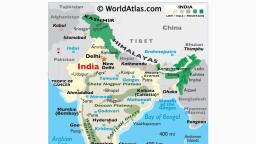
South Asia - Bangladesh, Bhutan,, , India, The Maldives, Nepal,, Pakistan and Sri Lanka., The mighty Himalaya in the, North and the vast Indian Ocean,, the Arabian Ocean and the Bay of, Bengal in South, west and east, respectively provide a natural, insularity......
Page 4 :
South Asia at a glance!
Page 5 :
Natural, , insularity to the, region, which is largely, responsible for the, linguistic, social &, cultural distinctiveness of, the sub-continent., South Asia stands for, diversity in every sense, and yet constitutes one, geo-political sense/space.
Page 6 :
India, , & Sri Lanka have successfully, operated a Demo. Sys. > Pakistan and, Bangladesh have experienced both, civilian and military ruler., Nepal from a constitutional monarchy, to Demo., Bhutan is still a monarchy but the king, has initiated plans for its transition to, multi-party democracy., The Maldives has now transformed, into a Republic.
Page 7 :
Despite, , the mixed record of the, democratic experience, the people in all, these countries share the aspiration for, democracy., Surveys also shows that there is, widespread support for democracy in all, these countries., Ordinary citizens, rich as well as, downtrodden and belonging to different, religions, view the idea of democracy, positively and support the institutions of, representative democracy.
Page 8 :
SURVEY (2006):, Item's, , Bangladesh Pakistan, , India, , Nepal, , Sri Lanka, , Democracy, is, Preferable, , 69, , 39*, , 70, , 62, , 71, , Sometimes, Dictatorship, , 06, , 14*, , 09, , 10, , 11, , Doesn't, Matter, , 25, , 49*, , 21, , 28, , 18, , * Democracy is preferred over dictatorship everywhere, except in Pakistan.
Page 9 :
Human Development, Report, 2019:, Life, Adult G.E.R., Scope, , G.D.P., , (p.c.), , %, , HDI, , U.N.P., , RANK/, 189, , -, , Expect., , Lit., , World, , 72.6, , -, , 67, , 8833, , 17, , Developing, Countrie, s, South Asia, , 65.2, , 78.9, , 63, , 4775, , 17, , 65.2, , 63.9, , 56, , 3072, , 13.4, , -, , Bangladesh, India, Nepal, Pakistan, Sri Lanka, , 63.3, , 54.3, , 57, , 1870, , 30, , 135, , 68.7, , 74.4, , 66.5, , 7845, , 14, , 129, , 62.1, , 53.6, , 57, , 1490, , 17, , 147, , 63.4, , 51.9, , 42, , 2225, , 23, , 152, , 76.3, , 93.7, , 63, , 4390, , 22, , 71
Page 10 :
Timeline of South Asia, 1947, 1948, , - Independence of India & Pakistan., Sri Lanka (Ceylon) gained independence, India-Pakistan conflict over Kashmir, (UN Pact-1948), , 1954-55 - Pakistan join SEATO & CENTO, 1962, , - Border conflict between India & China, , 1965, , - India-Pakistan war (UN India-Pakistan, observation Mission), , 1966, , - Tashkent Agreement
Page 11 :
Six-point proposal of Sheikh Mujib-ur-Rahman Choudh, Mar. 1971, , - Proclamation of independence by Bangladesh, , Aug. 1971 - India-Soviet treaty (20 year pact of friendship), Dec., 1971 - India-Pakistan war, Liberation of Bangladesh, July, 1972, , - Shimla Agreement, , May, 1974 - Nuclear test by India (POKRAN-1), Dec., 1985 - SAARC estd. (1st summit held at Dhaka), 1987, , - India-Sri Lanka Accord (IPKF operation 1987-90), , 1988, , - India sent troops to the Maldives., , 1988-91, , - Democracy restoration in Pakistan, Nepal &, Bangladesh, , Dec. 1996 - Farakka Treaty for sharing the Ganga water, between I & B., May, 1998 - FTA between India & Sri Lanka., Feb. 1999, , - Bus Diplomacy / Lahore Declaration (June- July,, Kargil war)
Page 12 :
Jan. 2004, , -, , SAFTA signed at 12th summit held at Islamabad, , April 2007, (3/4 April), , SAARC Summit held at New Delhi (Afghanistan 8th, member), , August 1-3, 2008, , 15th SAARC Summit held in Colombo, Sri Lanka, , Nov 15-16, 2016, , 19th SAARC Summit held in Islamabad,, Pakistan, ( Following the Uri terror attack, India cancelled, it participation, alleging Pakistan’s involvement, in the terror attack/ Hours after Indian Prime, Minister Narendra Modi decided to boycott the, SAARC Summit in Islamabad in the wake of Uri, attack Bangladesh, Afghnistan, Bhutan , The, Maldives and Sri Lanka have pulled out of the, Summit/ Nepal is only country that have not, pulled out of SAARC Summit 2016/ Nepal being, the Chairperson, urged that “a conducive, environment be created soon to ensure the, participation of all member states”)
Page 13 :
THE MILITARY AND DEMOCRACY IN PAKISTAN, 1960'S, , General Ayub Khan - First constitution., , 1965-70, , General Yahya Khan (Military rule) - Bangladesh, crisis, , 1971-77, , Zulfikar Ali Bhutto - Elected government, , 1977, , General Zia-ul-Haq (1977-88) - faced prodemocracy movement, , 1988, , Elected government estd. Under leadership of, Benazir Bhutto (1988 to 1990 and 1993 to 1996). She, was the first woman to head a democratic, government in a Muslim majority nation. Pakistan’s, politics centered around the competition between,, her party, the Pakistan People's Party and the Muslim, League of Nawaz Sharrif., , 1999, , Nawaz Sharif (Removed by Gen. - Pervez Mushrraf), , 2001-201 General Musharraf got himself elected as the, 9, President/In 2008 he was compelled to resign/, During election campaign (2007) Benzir Bhutto was, th
Page 14 :
Factors have contributed to Pakistan's, failure, in dominance, building of, a stable, democracy, • The social, the military,, clergy and -, , landowning aristocracy has led to the frequent, overthrow of elected governments and the, establishment of military govt., • Pakistan's conflict with India has made the promilitary groups more powerful, according to them, political parties & democracy in Pakistan are flawed,, Pakistan's security would be harmed by selfish-minded, parties and chaotic democracy., • The lack of genuine international support for, democratic rule in Pakistan has further encouraged the, military to continue its dominance., • Fear of the threat 'Global Islamic Terrorism and the, apprehension that Pakistan's nuclear arsenal might fall, into the hands of these terrorist groups the military, regime in Pakistan has been a protector of western, interest in west Asia and South Asia etc.
Page 16 :
Indo-Pak relations, Soon after the, , partition, the two countries got, embroiled in a conflict over the fate of, Kashmir. The Pakistani government claimed, that Kashmir belonged to it. Wars between, India and Pakistan in 1947-48 and 1965 failed, to settle the matter., The 1947-48 war resulted in the division of the, province into Pakistan Occupied Kashmir, (POK) and the Indian province of JammuKashmir-Laddakh divided by the Line of, Control (LOC)., In 1971, India won a decisive war against, Pakistan but the Kashmir issue remained, unsettled............
Page 17 :
Cont........., India’s conflict with Pakistan is also over strategic, issues like the control of he Siachen glacier and, over acquisition of arms. The arms race between, the two countries assumed a new character with, both states acquiring nuclear weapons and missiles, to deliver such arms against each other in the 1990s, to till date., But both the governments continue to be suspicious, of each other. The Indian government has blamed, the Pakistan government for cross border terrorism, in Kashmir/ aided to Khalistani militants with arms, and ammunitions and ISI’s (Inter Intelligence, Service) involvement in anti-India campaings in, India’s northeast, operating secretely through, Bangladesh and Nepal., India and Pakistan also have had problems over the, sharing of river water............,
Page 19 :
Experts views.........., Although India-Pakistan relations seem to be a story, of endemic conflict and violence, there have been a, series of efforts to manage tensions and build peace., The two countries have agreed to undertake, confidence building measures to reduce the risk of, war. Social activists and prominent personalities, have collaborated to create an atmosphere of, friendship among the people of both countries., Leaders have met at summits to understand each, other better and to find solutions to the major, problems between the two neighbors., A number of bus routes have been opened up, between the two countries. Trade between the two, parts of Punjab has increased substantially in the, last one decade........,
Page 20 :
DEMOCRACY IN BANGLADESH •Was a part of Pakistan from 1947 to 1971 (East Pakistan). The, people of this region resented the domination of western, Pakistan and the imposition of the Urdu language. Sheikh Mujibur-Rahman led the popular struggle against western Pakistan, domination., •In 1970 Awami League led victory in Eastern Pakistan General, YahyaKhan, tried to suppress the mass movement., •Huge refugee problem for India. (India helped financially & Military, both), •War between India & Pakistan (Dec, 1971), •Formation of Bangladesh as an independent country ., •Bangladesh drafted its constitution declaring faith in, Secularism, Democracy and Socialism., •In 1975, sheikh Mujib-ur-Rahman amended to shift from, the Parliamentary to Presidential form of govt.
Page 21 :
•August, 1975 after the assassination of Sheikh, new military ruler, Ziaur Rahman Choudhary formed his BNP (1979) ., •After his assassination (1981) under the leadership of Lt. Gen. H.M., Ershad took over., •Ershad step down in 1990................................... Democracy on the, way....................................based on multi-party elections has been, working in Bangladesh., •Begam Khaleda Zia , widow of President Ziaur Rahman , become the, Prime Minister, shifts power away from presidency., •In 1996, Awami League returns to power under the leadership of, Sheikh Hasina Wajed , the daughter of Sheikh Mujibur Rahman, Choudhary, Father of nations for Bangaladesh., •In 2001 October, Khaleda Zia’s Nationalist Party takes power in, coalition government., •2008 to 2013- Awami League captures more than 250 seats out of, 300 in Parliament., •In 2018, Opposition leader Khaleda Zia sentenced to five years in, prison for corruption, disqualifying her from contesting the elections, later in the year. Governing Awami League wins landslide victory in, parliamentary election.......
Page 22 :
II Let Democracy Be Freed II
Page 23 :
India-Bangladesh relations, The, , government of India and Bangladesh, have had differences over several issues, including the sharing of the Ganga and, Brahmaputra river waters., The Indian government has been unhappy, with Bangladesh’s denial of illegal, immigration to India, its support for antiIndian Islamic fundamental groups., Bangladesh’s refusal to allow Indian troops to, move through its territory to northeastern, India, and its decision not to export natural, gas to India or allow Myanmar to do so, through Bangladeshi territory.
Page 24 :
Cont..., Despite, , their differences, India and, Bangladesh do co-operate on many issues., Economic relations have improved, considerably in the last two decades., Bangladesh is a part of India’s Look East, policy that wants to link up with Southeast, Asia via Myanmar., On disaster management and environment, issues, the two states have co-operated, regularly., Efforts are on to broaden the areas of cooperation further by identifying common, threats and being more sensitive to each
Page 25 :
MONARCHY AND DEMOCRACY IN, NEPAL, • Nepal was a Hindu Kingdom in the past and then a, , constitutional monarchy in the modern pd., • Common people of Nepal wanted a more open and, responsive system of government., • The King accepted the demand for a new democratic, constitution in1990, in the wake of a strong prodemocracy movement., • During nineties the MAOISTS of Nepal were, successful in spreading their influence in many parts of, Nepal, • For some times, there was a Triangular conflict among,, the Monrchist,The democrats and the Maoists., • In, 2002, King abolished the parliament & dismissed, , the govt., , • In April 2006, there were massive, country wide ,pro-democracy, protest. The largely non-violent movement was led by the Seven, Party Alliance (SPA) , the Maoists and social activits.
Page 26 :
Democratic Moves!
Page 27 :
Indo-Nepal relations, Nepal, , and India enjoy a very special, relationship that has very few parallels in the, world. A treaty between the two countries, allows the citizens of the two countries to, travel to and work in the other country without, visas and passports., Despite this special relationship, the, government of the two countries have had, trade related disputes in the past., The Indian government has often expressed, displeasure at the warm relationship between, Nepal and China and at the Nepal, government’s inaction against anti-India, elements.
Page 28 :
Cont..., , .......Nevertheless,, , Indo-Nepal relations, are fairly stable and peaceful., Despite of differences , trade, scientific, co-operation , common natural, resources, electricity generation and, interlocking water management grids, hold the two countries together., There is a hope that the consolidation, of democracy in Nepal will lead to, improvements in the ties between the, two countries.
Page 29 :
Ethnic Conflict & Democracy in Sri, Lanka, , Sri Lanka retained democracy since its independence, in 1948. But it faced a serious challenge, not from, the military or monarchy, but rather from ethnic, conflict leading to the demand for secession by, one of the regions., Politics in Sri Lanka has been dominated by forces, that represented the interest of the majority Sinhala, community They were hostile to a large number of, Tamils who had migrated from India to Sri Lanka, and settled there., The neglect of Tamil concerns led to militant Tamil, nationalism (LTTE- Liberation Tigers of Tamil Eelam), , has been fighting an armed struggle with the army, of Sri Lanka and demanding ‘Tamil Eelam’ or a, separate country for the Tamils of Sri Lanka. The, LTTE controlled the northeastern parts of Sri Lanka.
Page 30 :
Cont......, The, , Sri Lankan problem involves people of, Indian origin, and there is considerable, pressure from the Tamil people in India to the, effect that the Indian government should, protect the interests of the Tamils in Sri Lanka., The government of India from time to time, tried to negotiate with the Sri Lankan, government on the Tamil question., In 1987, the government of India got directly, involved in the Sri Lankan Tamil question., India signed an accord with Sri Lanka and sent, troops to stablilize relations between Sri, Lankan government and the Tamils........in, 1989, the IPKF pulled out of Sri Lanka without, attaining its objective.
Page 31 :
Act of Balancing!
Page 32 :
Cont..., .........In spite of the ongoing conflict, Sri, Lanka has registered considerable, economic growth and recorded high levels, of human development., Sri Lanka was one of the first developing, countries to successfully control the rate, of growth of population, the first country in, the region to liberalize the economy, and it, has had the highest per capita gross, domestic product (GDP) for many years, right through the civil war. Despite the, ravages of internal conflict, it has, maintained a democratic political system..., ...........
Page 33 :
Indo-Sri Lanka relations, The, , difficulties in the relationship between the, governments of India and Sri Lanka are mostly, over ethnic conflict in the island nation. Indian, leaders and citizens find it impossible to remain, neutral when Tamils are politically unhappy and, are being harassed., After the military intervention in 1987, the, Indian government now prefers a policy of, disengagement vis-à-vis Sri Lanka’s internal, troubles., India signed a free trade agreement with Sri, Lanka which strengthened relations between, two countries. India’s help in post Tsunami (26, December,2004) reconstructions in Sri Lanka, has also brought the two countries closer.......
Page 34 :
Experts views!, .......Although India-Pakistan relations seem to be a, , story of endemic conflict and violence, there have, been series of efforts to manage tensions and build, peace in the region. The two countries have agreed to, undertake confidence building measures to reduce the, risk of war., Social activists and prominent personalities have, collaborated to create an atmosphere of friendship, among the people of both countries. Leaders have met, at summits to understand each other and to find, solutions to the major problems between the two, neighbours., A number of bus routes have been opened up between, the two countries. Trade between the two parts of, Punjab has increased substantially in the last decade.
Page 35 :
No region exists in a vacuum!, ........It is influenced by outside powers and, , events no matter how much it may try to, insulate itself from non-regional powers., China and the United states remain key players, in South Asian politics. Sino-Indian relations, have improved significantly in the last ten, years, but China’s strategic partnership with, Pakistan remains a major irritant ., The demand of development and, globalization have brought the two Asian, giants closer, and their economic ties, multiplied rapidly since 1991.
Page 36 :
America’s interest in South Asia!, ....American involvement in South Asia has, rapidly increased after the Cold War. The US, has had good relations with both India and, Pakistan since the end of the Cold War and, increasingly works a moderator in IndiaPakistan relations., Economic reforms and liberal economic policies in, both countries have greatly increased the depth of, American participation in the region., The large South Asian diasporas in the US and the, huge size of the population and markets of the region, also give America an added stake in the future of, regional security and peace.,
Page 37 :
Chalte.......Chalte, ............Whether South Asia will, , continue to be known as a conflict, prone zone or will evolve into a, regional bloc with some common, cultural features and trade, interests will depend more on the, people and the government of the, region than any other outside, power.