Page 1 :
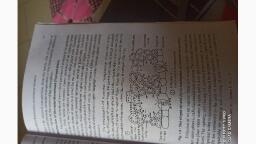
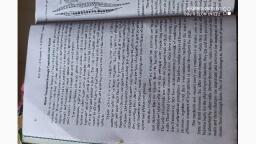
Plant Water and Nutrition, area the into larger of The, root hairs the of soil by ways - (a), walled of cells that increase the surface, small of the root hairs to the spaces, not to (b) they the of contact into soil, Paper VI, Physiological Importance of Water, ne water, Plant Water Relationsh, status in plant cells and tissues., walled outgrowths c, area and extend the, root hairs increase, small diameter of the, not accessible to m, ndicates, by their length and diameter, Mechanism of Water Absorption, greater ability of that cell or tissue to absorb water., y of the, cell or tissue, to supply water to other cell or tissue., 4. Water potential is used to measure water deficit and water, tress., Mechanism of Wa, For absorption, selectively permeable membrane is responsible for osmosis., 1.2: Water Transport Process, Normally such sy, such s, the root., ystem, which is in direct, functions as water absorbing system and the aerial shoot system as o, transpiring system. For these processes, the soil acts as a water supplyie, system. This indicates, that water present in the soil is absorbed and ther he root. During, transported to the surrounding atmosphere, through root and shoot system hair and throug, of a plant. There are many processes involved in this transport of wate movement of w, from soil to the atmosphere and all these processes are known as water gradient from ro, transport processes. Some of the important water transport processes are is the water ab=, (a) Absorption of water (b) Water transport through tracheids and xylem elements and it, and (c) Transpiration., water, cortical cells pre, establishes conta, he root. During absorption of water from the soil, water will enter the root, hair and through cortical cells, finally reach the xylem elements. This, movement of water is possible, only if there is sufficient suction pressure, gradient from root hair upto xylem elements. This suction pressure gradient, is the water absorbing capacity of all the cells from root hair to xylem, elements and it is the force, essential for absorption of water., As shown in fig. 1.3, root hair A is in direct contact of soil capillary, then, tems, vater, ater, 5 are, dem, As shown, water. The same cell A with root hair, is also in contact with the cortical, cell B on it's innerside. The cortical cells B to E are in direct contact with, Absorption of Water : Its Mechanism, water. The sam, In all the processes included in plant water relations, absorption of cell B on it's ir, water is an important process, because it is the initial process in water each other and, transport. For transport of water, initially it must be absorbed and then elements G in, with high osm, solutes) than t, The osmotic, Due to water holding capacity of the soil particles a good amount of cell B to the w, water is retained in the soil as soil water. The soil water exists in three Because of h, different forms, such as, Capillary water, Hygroscopic water and hair A, soil w, Chemically combined water. Out of these three forms, plants utilize capillary outside soil in, water which is present in the spaces between non-colloidal soil particles. cell with root, During the process of absorption of water, the roots of land plants absorb (chemical pc, transport of-, JO L, each other and the cell E, through pericycle is in contact with the xylem, elements G in the vascular strand. The epidermal cell with root hair A is, with high osmotic pressure (less chemical potential due to presence of, ater, supplied to aerial organs by a definite process. In most of the plants root, system plays important role in absorption and transport of water., solutes) than the surrounding soil water (with higher chemical potential)., The osmotic pressure progressively decreases from outermost cortical, cell B to the water conducting xylem elements G due to transport of water., Because of higher osmotic pressure (lower chemical potential) in root, hair A, soil water (with higher chemical potential) slowly diffuses from the, 100, of, ree, pu, outside soil in to root hair by endosmosis. Due to entry of water, epidermal, cell with root hair A becomes fully turgid and its osmotic pressure decreases, (chemical potential increases), than the cortical cell B. It results in the, transport of water from cell A to cell B. Due to progressive decrease in the, osmotic pressure in the cells from B to G, water absorbed by the root hair, OOREDMINOTE 8 PRODF G via cortical cells B to G (i.e. by the process of, CadainUAD CAMERA er chemical potential to lower chemical potential)., capillary water in the soil., The apical regions of the main root and all its branches show osmotic pres, specialized structure for absorption of water. The part of the root which moves in the, OaREDMIINOTEn8 PRO in rapid absorption of water corresponds generally endosmosis, wiAh QUADNCAMERA region and root hair region. The root hairs are thin
Page 2 :
TANY Paper V, Plant Water Re, Plant Water Relationship and Mineral Nutrition, IT, it progressive, nges in these, decrease in their osmotic pressure, the suction force also changes in h, (a) Acti, I conducting, draw water, e with which, rence in the, m elements., by the aerial, and shows, ents draws, mechanism, (a) Active absorption theories : As per active absorption theories,, water is absorbed as a result of various activities in the cells of root system, and not due to any physiological process in the aerial shoot system. Te, two important groups of theories are (i) Osmotic theories and (ii) Non-, osmotic theories., (i) Osmotic theories : Water is absorbed due to differences in the, osmotic pressures between soil water and the cell sap. The osmotic pressure, in the soil water is low due to relatively less solute concentration, while, osmotic pressure in the cell sap is relatively very high due to higher solute, concentration. The higher solute concentration in the cell sap is maintained, metabolic reactions using metabolic energy. Water enters the cell by, xylem elements having maximum suction force continuously draw wate and not due, from the cortical cells and finally from the root hairs. The force with which, water is drawn from the soil depends entirely upon the difference in the osmotic the, osmotic pressure in the soil water and water conducting xylem elemente, Due to continuous removal of water from the xylem elements by the aerial osmotic pre, organs, the central xylem cylinder is always under tension and showe in the soil, increased suction force. This suction force in the xylem elements drawe osmotic pr, water from the soil through root hairs via cortical cells during the mechanis concentrat, of absorption of water., The mechanism of absorption of water shows, the root hair maintains, the contact with soil water and acts as water absorbing organ. The water, from the soil diffuses into root hair as a result of diffusion pressure deficit, gradient (i.e. by endosmosis from the region of higher chemical potential, to the region of lower chemical potential). The cell sap in the root hair is, with higher solute concentration and lower chemical potential, than the, outside soil water with higher chemical potential. It means during absorption, of water, diffusion of water molecules takes place through semipermeable inhibitor, membrane from the region with higher water concentration to the region is essen, of lower water concentration., two importa, so (1), by metabc, endosmos, solute cor, by, endosmosis from region of less solute concentration to the region of higher, (i) N, and it is, maintains, The water, ure deficit, potential, pot hair is, than the, bsorption, ermeable, ne region, solute concentration., (i) Non-osmotic theories : Absorption of water is an active process, and it is not carried out simply by osmosis, but also due to non-osmotic, reasons. The energy is supplied to the process by respiration. The relation, between respiration and non-osmotic absorption of water can be observed, in the form of (a) wilting of root cells in water logged soils, indicating, respiration is essential to maintain turgidity in the cells (b) respiratory, inhibitors reduce the rate of water absorption, also indicates that respiration, is essential for absorption (c) process of absorption is observed only in, living cells, indicating that respiration is required for the process., (b) Passive absorption theories : According to theories of passive, absorption, the activities in the cells in other organs, mainly the aerial organs,, are responsible for absorption of water by the root system. The suction, force essential for absorption of water by the roots, originates in the shoot, system due to transpiration in aerial organs. As the rate of water absorption, and transpiration are approximately equal, the two processes must be related, with each other. This view is supported by many observations like (a) rate, of absorption is as per the rate of transpiration (b) transpiration pull is the, force which helps the movement of water against osmotic gradient (c) it is, purely a physical process, not requiring energy (d) rate of absorption of, water is much faster than the rate of normal diffusion, especially when, transpiration rate is very high in aerial organs., Most of the plant physiologists are of the opinion, that the absorption, of water is a passive process. If there is some active absorption of water, it, only helps the passive absorption process to satisfy the water requirements, reasons., between, in the fo, respiratic, living ce, Vascular, cylinder, (9), Epidermis, Cortex, Soil particies, ndiosqe, are resp, force es, system, and tras, with, of abse, Metaxylem, elements, force w, purely, Root hair, Protoxylem, elements, water, Soil with, transE, xylem, ents, capillary water, Fig. 1.3: Mechanism of water absorption (path of water)., of wa, only, Theories for the Mechanism of Water Absorption, REDMINNONES& PROVS can broadly be classified into two groups as (a) Active, Al QUADOGAMERAeories and (b) Passive absorption theories., About the mechanism of absorption of water there are different views of ae, RED, of aerial organs PRO, view, AI QUAD CAMERA




 Learn better on this topic