Page 1 :
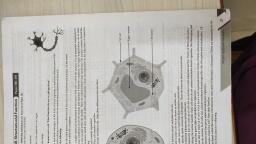
The plants and the animals, ognized and identified by the earl, groups by means of a number of well, in Table : 2.1., , Table 2.1, Certain Structural and Functional Different, , , , J-defined structural and fu, , jations between Plants and Animals., , , , , , , , , , , , , , , , , , , , , , , , Kingdoms, S.No. Characteristic Features ae iwc, or ‘ure Present Absent, 2 Chloroplasts Present Absent, 3 | Growh Open Closed, a Functional features, Carbon source Carbon dioxide Organic compounds, Energy source Light (UV) Chemical energy, Growth factor needs None Complex, Active moment Absent Present, , , , , , Soon after the discovery of the ‘microbial world’ — the immotile multicellular and photosynthetic algae were classified duly in the plant kingdom; whereas — the microscopic motile forms of, , algae were placed duly in the animal kingdom. Hence, a close and careful examination revealed the, presence of both plant — and animal-like characteristic features in the ‘microorganisms’. Further,, supporting evidences and valuable informations strongly established that the ‘microorganisms’ could, , aforesaid kingdoms, namely : ‘plants’ and ‘animals’. Therefore, Haeckel, , not fit reasonably into the two, (1866) legitimately and affirmatively proposed a ‘third kingdom’ termed as the ‘Protista’® to include, , the ‘microorganisms’ exclusively., , Importantly, Protista group usually comprises of both the photosynthetic and non-photosynthetic microorganisms, of course, with certain members sharing the characteristic features of both the, usual traditional plant and animal kingdoms, Nevertheless, the most prominent and predominant attribute of this particular group being the comparatively much simpler biological organization. Most of, the representative members of this group are normally unicellular and undifferentiated unlike the animals and the plants., , Noticeably, further categorization of this kingdom was exclusively dependent upon the extent of, complexity encountered by the cellular organization, substantial progress in microscopy, and the ‘biochemistry of various microorganisms" has ultimately paved the way towards a much advanced and, , , , rar, day a i nee also been recopitet ake And ae mon Probably the py, ic ly f, follows : Pes of ells® (a) and (b) sha NOW be discussed, “ae, MICO in the, Sclions thy, , 24.1.1. Eukaryotic Cells {‘eu' = true ; “karyote’, , presence of a multiplicity of definite unirrombos ie ©!) a exp, topologically distinct Trom the tite ne ae, tems categorical, , specialized organelles.** Endoplasmic reticulum Tepresenis, brane system that essentially aug Te can at, , “at iWVATABTY cover a larger segment of the interior network of iter eS, “ Portion of the cell. ey, , shoe noe ec fen Mis meme eee, : gions the surface of the membrane is parieetee eEe te, is particularly cov Sz be macless, , ever synthesis of protei: ‘ thom,, jalkcain heats wae ae pola eventually pass : te —, Is of is, ensuing cell cytoplasm,, , , , ber ene of the differences with regard to the ‘internal architectural design of the micro,, , As to date there are no types of cells that have been recognized duly, such as :, , T, , Another third type, known as the U, , = nul (ref, It has been observed that the eukaryotic att WO rucleus of ety:, , rane, Eyes tha tapes be pan eye, , ly enable the rete eS Wequel, these pevaing pee Bd, , , , , , , , , , , , he PP PPP AAA AA RAB, , , , , , , , Fig, 2.1. The Eukaryotic Cel, , Nucleus, The eukaryotic cell possesses the ‘genetic material, ie., very much within the nucleus. However, chloroplasts ae ‘ab, istic DNA. The chromosomes are linear threads made of DNA (and proteins ees os, , —_ sais, , nucleus of a: cell, which may stain deeply wil, , , , , , , , , , dard Chston (19372, * In taxonomy, a kingdom of organisms that includes the protozoa, unicellular and multicellular algae, © These einologies were fist roped OT i, slime molds, The cells are eukaryotic. ™ ie mate ve p specialized prof ell ht perfors SH, , , , eee, , Scanned with CamScanner
Page 2 :
d specific sequences of DNA, sais ei i TS ia the number of the \, Eee theless. the nucleus invariably contains a nuchromosomal segment termed as the ‘nucleolar, , i hesis., involved in ribosomal RNA (tRNA) syn, red to be totally involv : ae ame, - is the specific process by which, i mber of chromosomes as the pare! C s by whi, ee ar cates somatic cells are replaced. I continuous process divided into, four diet phases, namely : prophase, metaphase, anaphase, and telophase. ;, |A brief discussion of the aforesaid four phases shall be given in the sections that follows along, ith their illustrations in Fig. 2.2. ., " (a) Prophase. In prophase, the chromatin granules of the nucleus usually stain more densely, and get organized into chromosomes. These first appear as long filaments, each comprising, , , , se The DNA happens to be, snes for the cel, ous organisms. N, , , , , , of nev identical chromatids,* obtained asa result of DNA replication. As prophase progresses,, the chromosomes become shorter and more compact and stain densely. The nuclear membrane and the nucleoli disappear. At the same time, the centriole divides and the nvo daughter centrioles,** each surrounded by a centrosphere, move to opposite poles of the cell., They are duly connected by fine protoplasmic fibrils, which eventually form an achromatic, spindle., , (b) Metaphase. The metaphase refers to the chromosomes (paired chromatids) that arrange, themselves in an equatorial plane midway between the two centrioles., , (©) Anaphase. In anaphase, the chromarids (aow known as daughter chromosomes) diverge, , « and move towards their respective centrosomes. The end of their migration marks the begin, ning of the next phase., , (@) Telophase. In telophase, the chromosomes at each pole of the spindle undergo changes that, are the reverse of those in the prophase, each becoming a long loosely spiraled thread. The, nuclear membrane re-forms and nucleoli reappear. Outlines of chromosomes disappear, and, chromatin appears as granules scattered throughout the nucleus and connected by a highly, , staining net. The cytoplasm gets separated into nwo portions, ultimately resulting in nvo, ls., , , , , , , Produces the cell membrane forms in a similar position. The, ve divisions is usually known as interphase., Mitosis is of particular significance wherein the genes are distributed equally to each daughter, cell and a fixed number of chromosomes is maintained in all somatic cells of an organism., , Mitosis are of nvo kinds, namely :, , period between two., , (i) heterotypic mitosis : The first or reduction division in the maturation of germ cells, and, (ii) homeorypic mitosis : The second or equational division in the maturation of germ cells., , * One of the two potential chromosomes formed by DNA replication, ent of each chromosome before mitosis and, meosis. They are joined together atthe centromere and separate at the end of metaphase ; thea the new, Chromosomes migrate to opposite poles of the cell at anaphase. ,, ** Aminute organelle consisting of a hollow cylinder closed i, a i spel cyl stone end and open atthe other, found in the cell, , , , Diploia, ‘Number, ol cellis 4, , Metaphase : Pairs of Chromatids La, Line up on Equator of el AS), , , , Phases of Moss sige seers,, , i a Men ferlitaMeiosis. Meiosis refers toa specific proces of anes, eg o sperm tnt sential conn al ewan TT ari anos, tion takes place, the nuclei of the sperm and om, , complement., , _ azz, , , , Scanned with CamScanner
Page 3 :
oo, , —, , , , PHARMACEUTICAL MICRORIOLOGY, , Ex i, MLS: The life cycle of the eukaryotic protist ma, , 24 given below :, , be exemplified by a typical yeast, OMICES Cerevisae as depicted in Fig. TT nae, , — + ET @ t 0 660%, , , , , , , , Mitochondria. These are, , internal membrane system having, , , , mostly found in the respiring eukaryotes and, characteristic structure and function, The, , sentially contain an, intemal membrane of the, ‘The exact number, Parameters and varies from 1-29, Preexisting organelles containing, , a 1¢) possesses the, of copies of mitochondria per cell solely, , respiratory electron transport system., mitochondria per cell. These are generated by the division of the, , tory electron, upon the, , , , , , , , , , STRUCTURE AND FUNCTION : BACTERIAL CELLS, , ribosomes that usually resemble the bacterial ribosomes, However, th, the mitochondria are very much akin to that in the prokaryotic cells,, , ‘These cell organelles (rod/oval shape 0.5 jim in diameter, , xB, Ic Process of Protein synthesis in, , , , ‘ontain the oneal, srmthesis chloroplast for Choropaangg, tbe of opera echoes depen acess open ene En ee, 40 to 50 chloroplasts per cell. These are also produced by the division of the, , TORS and varies fom, Generally, chloroplasts are the sites of photosynthesis, They possess a stroma and f, Pigments : chlorophyll a, chlorophyll b, carotene, and xanthophyll. And contain four, , Preexisting organetes,, Golgi Apparatus : The Golgi apparatus is alamellar m, , '¥ Employing a phase., ration and thus are the usu:, , Chloroplasts are fo the photosy1, of the chToroplasts is termed as the ‘thylakoid’, , , , , , ———, , rembranous organelle invariab, in the eukaryotic cells and consists of thickly packed mass of Matened vse ane ha, sizes. The major functions of the Golgi apparatus are, namely : fT, * packaging of both inaceous and, endoplasmic reticulum, and, , * their adequate transport to other segments of the cell,, , Golgi apparatus may be best viewed by the aid of electron microscopy, It contains curved, parallel series of flattened saccules that are often expanded at their ends. In: Secretory cells, the apparatus, concentrates and packages the secretory product. Its function in other Cells, although apparently important, is poorly understood., , , , , teinaceous substances uly synthesized in the, , , , , , 2.4.1.2, Prokaryotic Cells (‘pro’ = primitive ; *karyote’ = nut (refers to nucleus of cell)] :, Prokaryote : is an organism of the Kingdom Monera with, a nuclear membrane, or membrane bound organelles. Included, , cyanobacteria (formerly the blue-green algac) [SYN : prokaryote)., , In fact, the prokaryotic cell is characterized by the absence of the endoplasmic reticulum (ER), and the cytoplasmic membrane happens to be the only unit membrane of the cell, Ifhas been observed, that the cytoplasmic membrane May be occasionally unl 'P into the cytoplasm. An exhaustive, electron microscopical studies would reveal that most prokaryotes (ie., prokaryotic cells) only py,, distinct internal regions, namely : (a) the cytoplasm ; and (b) the rnucleoplasm, as shown in, , Cytoplasm : Cytoplasm refers to the Protoplasm cell outside the nucleus. It i granular in apPearance and contains ribosomes that are specifically smaller in size in comparison to the corresponding, eukaryotic ribosomes., , , , le circular chromosome, without, is classification are bacteria and, , , , , , , , , , , , , , ii ilar id contains, Nucleoplasm : It refers to the protoplasm of a cell nucleus. Itis fibrillar in character an, yy — —_— =_—, , oe i ied and, With mycoplasmas* as an exception, other prokaryotes invariably Se Oe ne, , "gid cell wall. It has been observed that neither the membranous structures very m, , mitochondria nor chloroplasts are present in the prokaryotes. a Se, , tobe the site ofthe respiratory electron inthe prokaryotes usally. nesting, inthe photrynbete, , * A group of bacteria that lack cell walls and are highly pleomorphic., , et, , Scanned with CamScanner