Page 2 :
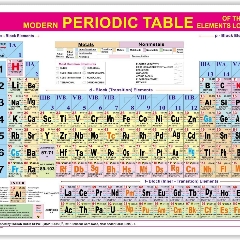
D – Block Elements –, The d-block elements are those which have incomplete d-subshell in its atomic or ionic state., The outermost or valence differentiating electron enters in the d-orbital belonging to the, penultimate shell means (n-1)d shell where n is the last shell., They are also known as transition elements because their properties are lies between more, electropositive elements (s-block) and less electropositive elements (p-block)., Zinc (Zn), Cadmium (Cd), Mercury (Hg) have completely filled d-subshell in their ground state, and excited state. So, they can not be incorporated with d-block elements., Position of d-block elements –, The d –block elements are situated in the middle of the periodic table and includes 3 – 12 groups, in the modern periodic table., , , , , First transition series – 4th period – Sc (atomic number, 21) to Zn (atomic number,, 30), Second transition series – 5th period – Y (atomic number, 39) to Cd (atomic number,, 48), Third transition series – 6th period – La (atomic number, 57), Hf ( atomic number,, 72) to Hg (atomic number, 80)., , Electronic configuration –, The general electronic configuration of d-block elements are (n-1)d1-10ns1-2 where (n-1) stands, for inner shell which may have 1 to 10 electrons and n stands for outer shell which may have 1 to, 2 electrons., The d-block elements incorporate three series in which each series contains ten elements. The, three series are 3d series (Sc to Zn), 4d series (Y to Cd) and 5d series (La to Hg). The fourth (6d), series comprising of ten elements from Ac to Uub in which 6d series is still incomplete. The, electronic configuration of these series are given below –, First transition series (3d series) – 4th period – Sc (atomic number, 21) to Zn (atomic, number, 30), Sc (atomic number, 21), Ti (atomic number, 22), V ( atomic number, 23), Cr (atomic number, 24), Mn (atomic number, 25), Fe (atomic number, 26), , [Ar]3d14s2, [Ar]3d24s2, [Ar]3d34s2, [Ar]3d54s1, [Ar]3d54s2, [Ar]3d64s2
Page 3 :
Co (atomic number, 27), Ni (atomic number, 28), Cu (atomic number, 29), Zn (atomic number, 30), , , [Ar]3d74s2, [Ar]3d84s2, [Ar] 3d104s1, [Ar]3d104s2, , Exceptional electronic configuration in first transition series –, , Cr (Z = 24) - Electronic configuration - 4s13d5, Expected electronic configuration - 4s23d4, Cu (Z = 29) - Electronic configuration - 4s13d10, Expected electronic configuration - 4s23d9, This is due to the extra stability of half – filled or completely filled electronic configuration., These exceptions are mainly due to –, Due to less energy difference between (n-1)d and ns orbitals., Due to extra stability of half – filled and completely filled d – orbitals., Second transition series – 5th period – Y (atomic number, 39) to Cd (atomic number, 48), Y (atomic number, 39), Zr (atomic number, 40), Nb ( atomic number, 41), Mo (atomic number, 42), Tc (atomic number, 43), Ru (atomic number, 44), Rh (atomic number, 45), Pd (atomic number, 46), Ag (atomic number, 47), Cd (atomic number, 48), , , [Kr]4d15s2, [Kr]4d25s2, [Kr]4d45s1, [Kr]4d55s1, [Kr]4d55s2, [Kr]4d65s2, [Kr]4d75s2, [Kr]4d85s2, [Kr]4d105s1, [Kr]4d105s2, , Exceptional cases of electronic configuration in second transition series –, , Niobium (Nb) has electronic configuration 4d45s1 rather than 5s04d5 or 5s24d3., According to afbau principal, firstly the electrons are likely to be fill in lower energy, shell (5s-orbital) and then in higher energy shell (4d-orbital). In case of niobium, the two, reasons which makes its electronic configuration weired , , The size of 4d and 5s is larger than the 3d and 4s. So, there are less chances of, electron ruplusion in bigger orbital. When the fourth valence electron enters in the, 4d orbital, then there are less chances of electron ruplusion.
Page 4 :
The energy difference between the 4d and 5s is less which making favourable, pathway of 4th electron to be placed into d instead of s., Silver (Ag) has electronic configuration 3d104s1 rather than 3d94s2. According to afbau, principal, the energy difference between the 4s and 3d energy levels are quite closer. Due, to which the electron can easily jump from s orbital to d –orbital., , , Third transition series – 6th period – La (atomic number, 57), Hf ( atomic number, 72) to, Hg (atomic number, 80)., La (atomic number, 57), Hf (atomic number, 72), Ta ( atomic number, 73), W (atomic number, 74), Re (atomic number, 75), Os (atomic number, 76), Ir (atomic number, 77), Pt (atomic number, 78), Au (atomic number, 79), Hg (atomic number, 80), , , [Xe]5d16s2, [Xe]4f145d26s2, [Xe] 4f145d36s2, [Xe] 4f145d56s1, [Xe] 4f145d56s2, [Xe] 4f145d66s2, [Xe] 4f145d76s2, [Xe] 4f145d86s2, [Xe] 4f145d106s1, [Xe] 4f145d106s2, , Exceptional cases of electronic configuration in third transition series –, , Platnium (Pt) = Electronic configuration - [Xe] 4f145d86s2, Expected electronic configuration - [Xe] 4f145d106s0, Gold (Au) = Electronic configuration - [Xe] 4f145d106s1, Expected electronic configuration - [Xe] 4f145d96s2, It can also be explained on the basis of afbau principal. According to which, to achieve the, completely filled electronic configuration (d10), the electrons of s-orbital are shifted to d-orbital, very easily., Fourth transition series – 7th period – Ac (atomic number, 89), Rf ( atomic number, 104) to, Uub (atomic number, 112)., Ac (atomic number, 89), Rf (atomic number, 104), Db ( atomic number, 105), Sg (atomic number, 106), Bh (atomic number, 107), Hs (atomic number, 108), Mt (atomic number, 109), Ds (atomic number, 110), , [Rn]6d17s2, [Rn]5f146d27s2, [Rn] 5f146d37s2, [Rn] 5f146d47s2, [Rn] 5f146d57s2, [Rn] 5f146d67s2, [Rn] 5f146d77s2, [Rn] 5f146d87s2
Page 5 :
Rg (atomic number, 111), Uub (atomic number, 112), , [Rn] 5f146d107s1, [Rn] 5f146d107s2, , Oxidation state –, 3d series Elements, Scandium(21), Titanium(22), Vanadium(23), Chromium (24), Manganese(25), Iron(26), Cobalt(27), Nickel(28), Copper(29), Zinc(30), , Symbol, Sc, Ti, V, Cr, Mn, Fe, Co, Ni, Cu, Zn, , Electronic Confi., 3d14s2, 3d24s2, 3d34s2, 3d44s2, 3d54s2, 3d64s2, 3d74s2, 3d84s2, 3d94s2, 3d104s2, , Oxidation state, +2, +3, +2, +3, +4, +2, +3, +4, +5, +2, +3, +4, +5, +6, +2, +3, +3, +4, +5, +6, +7, +2, +3, +4, +5, +6, +2, +3, +4, +2, +3, +4, +1, +2, +2, , 4d series Elements, Ytterbium(39), Zirconium(40), Niobium(41), Molybedenum (42), Technetium(43), Ruthenium(44), Rhodium(45), Palladium(46), Silver(47), Cadmium(48), , Symbol, Y, Zr, Nb, Mo, Tc, Ru, Rh, Pa, Ag, Cd, , Oxidation state, +3, +3, +4, +2, +3, +4, +5, +2, +3, +4, +5, +6, +2,+4, +5, +7, +2, +3, +4, +5, +6, +7, +8, +2, +3, +4, +6, +2, +3, +4, +1, +2, +3, +2, , 5d series Elements, Ytterbium(39), Zirconium(40), Niobium(41), , Symbol, Y, Zr, Nb, , Oxidation state, +3, +3, +4, +2, +3, +4, +5
Page 6 :
Molybdenum (42), Technetium (43), Ruthenium (44), Rhodium (45), Palladium (46), Silver (47), Cadmium (48), , Mo, Tc, Ru, Rh, Pa, Ag, Cd, , +2, +3, +4, +5, +6, +2, +4, +5, +7, +2, +3, +4, +5, +6, +7, +8, +2, +3, +4, +6, +2, +3, +4, +1, +2, +3, +2, , As the atomic number increases, higher oxidation state increases and reaches maximum (+7) in, the middle, then starts decreasing., Cause of variable oxidation state Transition metals shows the variable oxidation state due to the presence of electrons in the inner, (n-1)d and outer ns orbital, as they can participate in bond formation due to less energy, difference between them. It means the no. of oxidation state depends on the number of electrons, available in outermost shell., When the outer ns electrons takes part in bond formation, then elements shows lower, oxidation state., When the inner (n-1)d electrons takes part in bond formation, then elements shows higher, oxidation state., Higher oxidation states are more stable in heavy metals –, The valence electrons of the d-block elements are in (n-1) d and ns shell which can easily, removed by oxidation. Mainly, there are following factors which favor the higher oxidation state, –, High positive charge density (high hydration energies), Manganese (Mn) shows higher oxidation state – i.e. - +7 and has higher charge density., So, it is stabilized by higher hydration energies., Pп – dп back bonding (it stabilize the stability of metal –ligand bond), It occurs when ligands with fully filled p-orbital donate its electron pair and overlap with, the empty d-orbital of transition metal due to which its stability increases., Ease of losing valence d- shell electrons., Important Points –, The metals in the lower oxidation state generally form the ionic bond and in higher, oxidation state, they form covalent bonds which are formed by the sharing of d-electrons., Highest oxidation state of transition state = sum of s and d electron.
Page 7 :
Generally, the transiton metals forms their compounds in higher oxidation state and act as, strong oxidizing agent and come to stable in lower oxidation state., Highest oxidation state is stabilizing by the electronegative elements like F and O and, lower oxidation state is stabilizing by the ligands., Ionic radii –, As we move from left to right, ionic radii decreases because –, Number of electrons increases, Nuclear charge increases, Shielding effect of nuclear charge decreases, Nuclear charge dominates the effect of added electron and reducing the size., Atomic radii –, Atomic radius increases from top to bottom and decreases along the period. For atomic radii, the, trend is not uniform. As we move along the period Effective nuclear charge increases., The number of electrons in the penultimate shell (n-1) increases., Shielding effect increases (added electron cloud to inner (n-1) shell shield the outermost, shell)., Force of attraction increases (in which nucleus pulls the electron density towards itself), Atomic radius decreases., Explanation –, In the beginning of the series, there is smaller number of electrons in their outermost d-shell. So,, their nuclear charge predominates and decreases the atomic radii. As we going later in the series,, the number of electrons in the inner (n-1)d-shell increases. The repulsion between the outer ns, electrons increases due to which they slightly pushed away and increases the atomic radii., From top to bottom –, Number of shell increases, Force of attraction decreases, Shielding effect decreases, Note - But the radii of 2nd and 3rd transition series are nearly same due to lanthanide contraction., Metallic character - .
Page 8 :
Metallic nature means the reactivity of an element (capability of an atom to lose the electrons)., Transition metals shows metallic character because of –, , , , , , Low ionization energy, Vacant or partially filled d – orbital, Good conductivity, Hardness, , Explanation –, All the transition elements are metal and they are hard. Their property of hardness shows that the, presence of strong metallic bond in them. Transition metals form the covalent bond due to the, presence of unpaired electrons in the d-orbital. These unpaired electrons may overlap and makes, covalent bond. So, their property of good conductivity and their hardness indicates that they have, covalent or metallic bonding. Therefore, the transition elements possess metallic character, represents both metallic and covalent bonding in them., As we move from left to right, the number of electrons increases, nuclear force increases and the, capability of losing electron decreases. So, the metallic character decreases. Copper (Cu),, Molybdenum (Mo), manganese (Mn) has maximum number of unpaired electrons. So, they are, very hard. Whereas zinc (Zn), cadmium (Cd), mercury (Hg) do not have any unpaired electrons., So, these metals are not very hard., Melting and Boiling point –, The trend of melting and boiling point of the transition metals is not regular across the period., The melting and boiling point of d-block elements increases firstly, reaches maximum and then, gradually decreases., Explanation All transition elements are very hard. They have closely packed and held together by the strong, metallic bonding due to the presence of unpaired electrons in the outermost shell. The melting, point is mainly depends on the strength of bonding and number of unpaired electrons. More is, the number of unpaired electrons; more is the strength of metallic bonding and high is the, melting and boiling point., As we move along the period, the first four row elements has higher melting and boiling point, are due to the more electrons present in the inner (n-1)d orbital and outer ns-electrons which, results in strong metallic bonding. Later in the series, the last five elements have low melting and, boiling point because unpaired electrons in the d- orbital get paired up.
Page 9 :
, , , , , Manganese has low melting and boiling point because Mn has half filled electronic, configuration. The five electrons in the 3d-orbital is tightly bound to the nucleus. So, less, delocalization of electrons is there which is not effective in metallic bonding., Zinc (Zn), cadmium (Cd) has low melting and boiling point due to the filled (n-1)d, orbital. So, they are not involved in metallic bonding., Mercury (Hg) is the only metal in the d-orbital that exist in liquid state at room, temperature. It has electronic configuration [Xe]4f145d106s2 in which all orbital’s are, filled that make it more stable. But its unusual or unexpected behavior is due to 6s, electrons. These are electrons which can be shared, lost during the chemical bonding. The, 6s electrons of mercury are closely pulled by nucleus and less involved in metallic, bonding. So, it has low melting and boiling point and has good electrical conductivity., , Ionization enthalpy –, It is the minimum amount of the energy which is required to remove the most loosely bound, electron of isolated gasesous atom., Generally, as we move from left to right –, , , , , , , Number of electron in the inner (n-1)d shell increases, Atomic size decreases, Nuclear charge increases, Shielding effect increases (this shielding effect of the added electrons tends to decrease, the attraction due to nuclear charge), Force of attraction increases, , These are the factors which tend to increases the ionization energy. The ionization energy of d –, block elements are lies between s and p – block., , , The first ionization energy of 5d series is more than 3d and 4s., , Explanation – In the 5d series, the electrons are added in the inner 4f orbital which has poor, shielding effect. So, outermost electrons experience greater nuclear attraction due to which leads, to high ionization energy., Magnetic properties –, The substances are classified into diamagnetic, paramagnetic and ferromagnetic on the basis of, magnetic field., , , Diamagnetic – The substances which are repelled by the magnetic field. It occurs due to, the absence of unpaired electrons. In that case, the electrons are in paired form which, have opposite spin. The magnetic field is created by electrons cancelled each other and, net magnetic moment is zero.
Page 10 :
, , , Ferromagnetic – which are strongly attracted by magnetic field., Paramagnetic – the substances are attracted by magnetic field. The transition metal shows, paramagnetic behavior due to presence of unpaired electrons. The paramagnetic behavior, of the transition elements firstly increases, reaches at maximum (Mn has maximum, unpaired electrons), then gradually decreases. More is the number of unpaired electrons,, more is the magnetic moment and greater will the paramagnetic behavior.Their, paramagnetic behavior can be determined by –, μs =, , ( 4S(S+1))1/2 BM = (n(n+2))1/2 BM, , Where, s is the total spin and n is the number of unpaired electrons. BM stands for Bohr, magneton., Formation of colored compounds –, All the transition elements forms colored compounds because they have vacant d-orbital., Their color variation is depend on the charge on the metal ion and number and type of atoms, attached to it. Actually, the transition metals ions are not colored on their own. They become, colored only when they become complex ions., Their complexes are formed when they bonded to the ligands. Without bonded to the ligands,, all the d-orbitals are degenerate (all have same energy level).But when they form complexes,, their d-orbital interact in such a way that they become non-degenerate. It means orbitals are, spilt into different energy level. This can be explained on the basis of crystal field splitting, energy (CFSE) in which we can identify the energy of different d- orbitals. Their splitting is, depending on the geometry of complex, nature of metal and oxidation state of the metal ion., When the electron is excited from lower energy level to the higher energy level, which is, called d-d transition in which d orbitals are involved (t 2g and eg for octahedral complex and e, and t2 for tetrahedral complex). This d-d transition falls in visible region for all transition, elements. Then, some amount of energy is absorbed and remaining energy emitted as colored, light., Here, you can see that color of complex ion is due to excitation and de-excitation. The color, of the ion is complementary of color absorbing by it. The colors of some transition elements, are –, Cr+3 – Green, Cr+2 – Blue, Cr+6 – Yellow, Here, you can see that the chromium in different oxidation state gives different color. This, color change help us to identify the end point of redox reaction., Note – Transition metals having zero (Sc+3, Ti+4) or ten (Zn+2) d electrons will be, colorless.
Page 11 :
Formation of complexes –, D- Block elements form complexes because of following reasons –, , , , , Due to unfilled d-orbital that can accept the pair of electron from ligands (acts as, Lewis base)., Small size of metal ion., Charge on the metal ion / oxidation state of metal ion., , Catalytic properties –, Catalysts are those substances which alter the rate of reaction. Transition metal and their oxides, are used as catalyst in many chemical reactions such as platinum, iron, nickel. In the, hydrogenation of unsaturated organic compound, nickel is used as catalyst. Iron is used as, catalyst in haber process. They show good catalytic properties due to –, , , , , , , Vacant d-orbital, Variable oxidation state, Ability to form complex compounds, Large surface area, Tendency to form reaction intermediate with reactants., , Explanation –, When transition metal is used as catalyst in any reaction, they form unstable intermediate with, the reactants due to their ability to show the variable oxidation state. This unstable intermediate, lower the activation energy of the reaction, increase the rate of reaction and converted into final, product. The catalyst used in this reaction provides the large surface area on which reactant, molecules move closer to each other and get absorbed on the surface., Formation of interstitial compounds –, All the transition metals forms interstitial compounds. Interstitial compounds are those, compounds in which small atoms like C, H or N get trapped into the interstitial sites of their, crystal lattice. They form non-stoichiometric material. Some characteristics of interstitial, compounds are –, , , , , , Hard and Rigid, High melting point than their metals, Chemically inert, Good conductivity like a pure metal, , Alloy formation –
Page 12 :
An alloy is the combination of metals or metal with another element which conserve the desired, properties of metal and enhances the properties of constituent elements. In transition elements,, the atomic size of the elements are very similar to each other due to which they are easily replace, with each other in the crystal lattice. Therefore, a solid solution is formed which is known as, alloy. Alloy is corrosion resistant and having wide range of other applications. For example –, brass – alloy of copper and zinc., Reactivity –, Reactivity means the ease to lose the electrons. D-elements are less reactive because they lies in, the middle of the modern periodic table. They are transit between s and p block elements which, are more reactive than d block elements. As we move from left to right, their reactivity decreases, due to –, , , , , No. of unpaired electrons increases, Strength of metallic bonding increases, Melting and boiling point increases, , So, reactivity decreases., Standard reduction potential –, Standard reduction potential means tendency to gain the electrons. The d-block elements are, weak reducing agents due to –, , , , , , High ionization energy, High heat of sublimation, High heat of hydration, Less reactivity, , Note – The greater reduction electrode potential make their oxidation state unstable which means, the metal in that oxidized that acts as strong oxidizing agent., Potassium dichromate –, Chemical formula - K2Cr2O7, Molar mass – 294 g/mol, Color – Red-orange, Oxidation state of chromium = +6, It acts as an oxidizing agent in acidic medium., Cr2O72- + 14H+ + 6e2Cr3+ + 7H2O, Equivalent weight =, , Molecular weight, Electron gained by one molecule
Page 14 :
Potassium permanganate (KMnO4) –, Chemical formula - KMnO4, Molar mass – 158 g/mol, Oxidation state of manganase = +7, Preparation –, 1. Generally, it is prepared from finely powdered MnO2 2MnO2 + 4KOH + O2, 2K2CrO4 + 2H2O, Properties –, , Hot H2SO4, , K2SO4 + MnSO4 + H2O + O2, , Cold H2SO4, , KMnO4, , Mn2O3 + KHSO4 + H2O, , Heat, , K2MnO4 + MnO2 + O2, , , Potassium permanganate is very strong oxidizing agent but its action is depend, upon the medium – acidic, basic and neutral., In neutral solution, it acts as moderate oxidizing agent., In strong alkaline solution, it is converted into MnO42--. Here, the oxidation state, of Mn changes from +7 to +6., 2KMnO4 + 2KOH, 2K2MnO4 + H2O + O, In acidic medium, the oxidation state of Mn changes from +7 to +2., 2KMnO4 + 3H2SO4, K2SO4 + 2MnSO4 + 3H2O, , Applications of d-block elements –, D- block elements includes 3-12 group in the modern periodic table. The d block elements, includes titanium, iron, gold, silver, copper, zinc etc. Some applications of d-block elements are, given below –, , , , , , , All elements of the d block are good conductor of heat and electricity., They have good catalytic properties. So, they can be used as catalyst in various chemical, reactions., Iron is the most important and abundant element which is used in magnets. It alloy, steel, used in industries, bridges and furniture etc. It also used in Haber process in the, production of ammonia., Gold and silver are used in making expensive jewelry.
Page 15 :
, , , , Titanium has highly corrosion resistant material due to its high tensile strength. Its alloy, are used in space – craft, air-craft and airplane engines etc., Copper is used in making motors and conducting wires. It is good conductor of, electricity., Chromium is used in making stainless steel.