Page 1 :
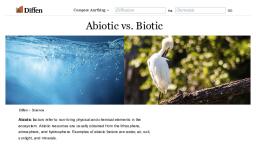
Vedariti,, , Learn LIVE Online, , What are ecology and ecosystem?, , Ecology is the study of the relationship between the environment and organisms. It deals, with topics such as population, food scarcity, pollution and global warming, extinction of, various organisms, etc. Moreover, it deals with the fields of evolution, physiology, genetics,, etc. In a nutshell, any form of biodiversity comes under ecology., , Before answering the MCQs of ecology and ecosystem, let us revise some of the, important points of the ecosystem. An ecosystem is a geographical region in which, plants, animals, and other species, as well as weather and topography, interact and, coexist. Ecosystems comprise both biotic and abiotic elements, or living and nonliving, components. Plants, animals, and other species are examples of biotic factors. Rocks,, temperature, and humidity are examples of abiotic variables. In simpler terms, an, ecosystem is made up of a group of species and their physical surroundings. Ecosystems, can be classified into marine or aquatic and terrestrial in nature. Biomes are the term used, for broad classifications of terrestrial ecosystems. An important point to note is that, ecosystems with more biodiversity are more stable, having more resistance and resilience, to shocks and disruptive events., , This article comprises some important MCQ on ecology, which will help you to score, better in the exams. Additionally, you will get a better understanding of the subject. The, answers to this environment and ecology objective questions are given at the end for, reference., , MCQ on Ecology, 1. The natural residence of every organism is known as:, , A. Biome, B. Niche, C. Habit, D. Habitat
Page 2 :
Vedariti,, , Learn LIVE Online, , Ans- Habitat, , Explanation- In ecology, the term habitat is used to refer to the collection of resources,, physical and biological factors. An important defining feature is that organisms can, reproduce and survive in the given area., , 2. What is the name of the feature that allows organisms to survive in the conditions of, their habitat?, , A. Adjustment, B. Adaptation, C. Acclimatization, , D. Adaptive variation, , Ans- Adaptation, , Explanation- Adaptation is the method of adjusting to new habitats or changes in their, existing environment, according to evolutionary theory; it is the outcome of natural, selection acting on heritable variation over generations., , 3. Shelford’s law of tolerance is named after:, A. James Shelford., B. Jacob Shelford, C. Ernest Shelford, D. None of these, , Ans- Ernest Shelford, , Explanation- Victor Ernest Shelford discovered Shelford's law of tolerance in 1911. It, claims that an organism's success is determined by a complicated set of circumstances,, with each organism having a specific minimum, maximum, and optimal environmental, factor or combination of variables that determine success., , 4. Shelford’s law of tolerance suggests that organisms with a wide tolerance limit for, environmental factors show:
Page 3 :
Vedariti,, , Learn LIVE Online, , A. Narrow distribution with low population, B. Wide distribution with high population, C. Wide distribution with high population, D. Narrow distribution with high population, , Ans- Wide distribution with high population, , Explanation- According to the law species that are able to withstand high stress usually, have a greater area of distribution and large population., , 5. A wide variety of living organisms is called:, A. Biodiversity, B. Population, C. Habitat, D. Diversity, Ans- Biodiversity, , Explanation- It is the term in ecology which is used to define the flora and fauna, population in a particular area., , 6. Animal adopts a similar state like sleep to reduce their metabolic rate, it is called:, A. Migration, B. Transpiration, C. Hibernating, D. None of these, , Ans- Hibernating, , Explanation- Hibernation is a strategy for animals to store energy in order to withstand, harsh weather or a shortage of food. Physiological changes such as a reduction in body, temperature and a reduced metabolism are commonly involved in the process., , 7. Hyenas and Vultures are
Page 4 :
Vedariti,, , Learn LIVE Online, , A. Omnivorous, B. Scavengers, C. Carnivorous, D. Herbivorous, , Ans- Scavengers, , Explanation- Scavengers are the animals that feed on the dead and rotting organisms., Scavengers provide an important service to the ecosystem by removing disintegrating, organisms and acting as an innate sanitation system. Scavengers assist conserve energy, and nutrients received from rotting flesh within the top trophic levels and thus are capable, of transferring the energy and nutrients further away from the source of the carrion., , 8. A mutual relationship between two organisms, where both of them are benefitting from, watching the other is called:, , A. Mutualism, B. Symbiosis, C. Parasitism, D. Food chain, , Ans- Mutualism, , Explanation- Mutualism is defined as an interspecies interaction that has a favourable, influence on the participating species’ per capita reproduction and/or survivability., , 9. Which is not a feature of heliophyte among the following?, A. Stem with long internodes, B. Numerous rootlets, C. Long lateral roots, , D. Vigorous fruiting and flowering, , Ans- Stem with long internodes
Page 5 :
Vedariti,, , Learn LIVE Online, , Explanation- Heliophytes are heat resistant plants. They are adapted to an environment, with high levels of insolation. Coarse, small leaves with hairy and waxy protection against, excessive solar radiation and water loss are unique to the plant. The leaves have a lot of, double palisade layers in their structure., , 10. Which of the following is not a feature of ‘r’ selected species?, A. Reproduce quickly, B. The low survival rate of progenies, C. Reproduce a large number of progenies, D. Paternal care, , Ans- Paternal care, , Explanation- ‘r' selected species does not provide paternal care to the filial generations,, the species belonging to this category are small animals like mice and flies. The defining, trait of r-selected species is the generation of small progeny accompanied by exponential, population expansion., , Additionally, these are some common multiple-choice questions in ecology with answers, that students can follow for better grades., , MCQ on Ecosystem, , Let us look into some of the MCQs for a better understanding of the concept., 1. The term ecosystem was proposed by, , A. Lindeman, B. AG Tansley, C. Grinnel, , D. Turesson, Ans- AG Tansley,, , Explanation- AG Tansley, coined the term ecology in 1935. Tansley defined the term as a, unit where all ta abiotic factors interacted in the environment. These biotic and abiotic, factors are joined together through nutrient cycles and energy flows. Ecology is the study, of organisms and their interactions with their surroundings. An ecologist is a scientist who, investigates the interactions between living things and their environments.