Page 2 :
Functions of skeletal system, Support: Structural support for entire body, and framework to support organs, 2. Storage of minerals and lipids: Calcium and, phosphate stores, yellow bone marrow ahs, lipid as energy reserves, 1.
Page 3 :
Functions of skeletal system……, Blood cell Production: red bone marrow in, the internal cavities is the site for the blood, cell production, 4. Protection: Soft organs like heart lungs and, protected in cage like structure formed by, ribs (bones), 5. Leverage: Skeletal muscles are attached to, the bones which help in the movement of, fingers to the entire body, 3.
Page 4 :
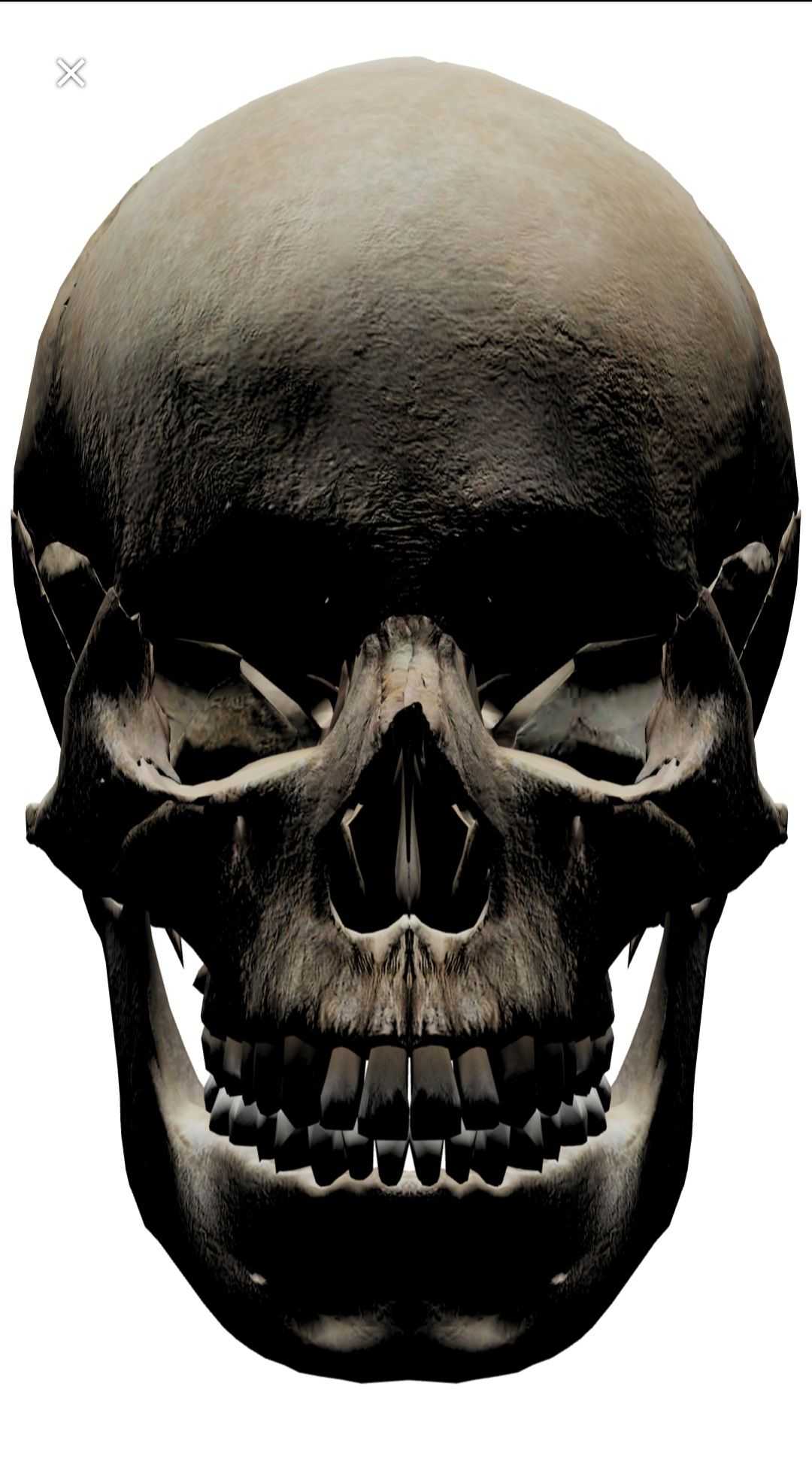
Classification of bones, , , , , There are typically 206, bones which can be, categorized into 6 categories, according to their shapes, 1. Sutural bones, or, wormian bones, as they, name suggest they are for the, connection between two, bones. Basically found in, between of flat bones of, skull. Their borders are, irregular and are like jigsaw, puzzle and have variable size, , Fig: 6.1, Martini and Nath
Page 5 :
2. Irregular bones, , , They have irregular, shapes with short, flat,, notched or ridged, surfaces. Exaples are, spinal vertebrae, bone, of pelvis and skull, bones, , Fig: 6.1, Martini and Nath
Page 6 :
3. Short bones, , , They are small and, boxy. Examples are, short bones of wrists, (carpal bones) and ankle, bones (tarsal), , Fig: 6.1, Martini and Nath
Page 7 :
4. Flat bones, , , They have thin parallel, surfaces. They form, room of the skull, the, sternum, the ribs and, the scapulae. Provide, protection and, attachment surface for, the skeletal muscle, , Fig: 6.1, Martini and Nath
Page 8 :
5. Long bones, , Fig: 6.1, Martini and Nath, , , , These bones are long and slender. They are, located in arms, forearm, thigh, leg, palms,, soles, fingers and toes. Femur is the largest and, heaviest bone of the body
Page 9 :
6. Sesamoid bones, , , They have shape like, sesame seed. Theyare, small and flat and found, in variety of locations., Their number can vary, so that total number of, bones can also vary, individually. Commonly, found near joints of, knees, hands and the, feet, , Fig: 6.1, Martini and Nath
Page 10 :
Bone structure, , Fig: 6.1, Martini and Nath
Page 11 :
Bone structure……, , , , , A typical bone for, example femur has one, elongated tubular shaft, called diaphysis which is, having at both ends on, expanded are known as, epiphysis. Epiphysis is, connected to diaphysis at, both ends with a narrow, zone called as metaphysis., Diaphysis has a wall made, up of compact bone or, dense bone which, surrounds medullary, (marrow)cavity., , Fig: 6.1, Martini and Nath, , Fig: 6.1Tortora and Grabowski
Page 12 :
Epiphysis, Epiphysis is made up of spongy bone, (cancellous or trabecular bone), Spongy bone has network of struts and plates, which resembles latticework with a thin, covering or cortex of compact bone (cortical, bone),
Page 13 :
Flat bones, Found in skull such as parietal bones, It is having sandwich like structure, compact, bone covering a core of spongy bone. This, spongy layer in cranium is called diploe (two, fold). Bone marrow is present in spongy bone, but there is no medullary cavity like diaphysis, of long bones, , , Fig: 6.1, Martini and Nath
Page 16 :
, , Hydroxiapatite crystals combine with other, calcium salts like calcium corbonate (CaCO3, and ions such as sodium, magnesium and, fluoride., Calcium phosphate, (2/3), , Collagen (1/3), Cells, (2%)
Page 17 :
Crystals are very hard, but relatively inflexible and, quite brittle. They can withstand compression, but, likely to shatter when exposed to bending, twisting, or sudden impacts., Collagen fibers are relatively quite strong and, when subjected to tension are relatively strong, (stronger than steel)., The composition of the matrix in compact bone is, the same as in spongy bone. The collagen fibers, provide an organic framework on which, hydroxyapatite crystals can form,
Page 18 :
Bone cells, Four types of cell, Osteocytes: mature bone cells, most abundant., Each osteocyte occupies a lacuna, a pocj=ket, sandwich between layers of matrix. The layers are, called lamellae., Osteocytes don’t divide and a lacuna never, contains more than one osteocyte., Narrow passageway (canaliculi) penetrate the, lamellae, radiating through the matrix and, connecting lacunae with one another and with, sources of nutrients such as blood vessel in the, central canal., ,
Page 19 :
Osteocytes….., , Fig: 6.3, Martini and Nath, , Canaliculi contain cytoplasmic, extensions of osteocytes., Neighbouring osteocytes are, linked by gap junctions, which, permit the exchange of ions and, small molecules like ntrients, and hormones between the, cells., The interrstitial fluid that, surrounds the osteocytes and, their extensions provides an, additional route for the, diffusion of nutrients and waste, products.,
Page 20 :
Functions of osteocytes, 1. Maintenance of protein and mineral content of, the surrounding matrix, Osteocytes secrete chemicals that dissolve the, adjacent matrix, and minerals released enter, the circulation., Osteocytes then rebuild the matrix, stimulating, the deposition of new hydroxyapatite crystals., The turn over rate varies from bone to bone.
Page 21 :
Functions of osteocytes………, 2. Repair of the damaged bones, If released from their lacunae, osteocytes can get, converted to a less specialized cell like, osteoblast or osteoprogenitor cells
Page 22 :
Osteoblasts, , , , , , , They produce new bone, matrix and the process, is called as ossification, or osteogenesis, Osteoblasts make and, release proteins and, other organic, componenets of the, matrix, Without calcium salts,, this matrix is called the, osteoid, , Fig: 6.3, Martini and Nath
Page 24 :
Osteoprogenitor cells, , , , , These cells are like, stem cells, (mesenchymal cells), which divide and give, rise to osteoblast., Important for the, maintenance of the, osteoblast and repair of, fracture., , Fig: 6.3, Martini and Nath
Page 25 :
Osteoclasts cells, , , , , , , , , They remove and recycle, bone matrix., Giant cells with 50mor, more nuclei, Derived from stem cells, which produce monocytes, and macrophages, Osteolysis (resorption) Acid, and proteolytic enzymes, secreted by these cells, dissolve and the matrix and, release the minerals, Important for the regulation, of calcium and phosphate, minerals in the body fluids, , Fig: 6.3, Martini and Nath
Page 26 :
Osteoclasts are constantly removing matrix, and osteoblasts are always adding to it., A fine balance is required in two kind of, activities of two cells., Strength training makes the bones stronger, while less activity makes bone weak.,
Page 27 :
Origin of Cells of Bone, , Tortora, 14th Edition
Page 28 :
References, , , Fundamental of Anatomy and Physiology (2018), 11th ed.,, Martini, F.H. and Nath, J.L., Pearson Publications (San, Francisco), ISBN: 10:1-292-22986-1/ISBN: 13: 978-1-29222986-7., , , , Principles of Anatomy & Physiology (2014), 14th ed., Tortora,, G.J. and Grabowski, S., John Wiley & sons, ISBN-13: 9781118344392/ISBN-10: 1118344391