Page 1 :
IIT-JEE / NEET, , Perform best in Physics, with Praveen Gupta, , Theory & Problems on, Formula based questions, (Increase , decrease, change, Fractional & percent)
Page 2 :
ADDRESS :MEDJEE 4/641 Vijyant Khand, Gomtinagar ,Lucknow,, Near sapna sweets Mob 9919222899, TYPES OF FORMULA BASED QUESTIONS IN PHYSICS, Unit A: Algebraic Mathematics based questions in physics, albm, Consider formula of type Q = K n, c, Where K,l,m,n, are constant Q, a,b,c, are physical quantities, A.1, A.2, A.3, , One of a, b, c, d, Q is unknown, Comparison of two similar events based on single formulas, Increase/Decrease due change of a, b, c frictional change percentage change for small & large change, , Type-A.1, One of Q, a, b, c is unknown, It is the simplest type of question we have to take care of unit SI units are generally used., SI units:, , Mass in Kg, length in meter, Time in Second, , Example:, Ex1., , A constant torque ( ) of 31.4 N-m is exerted on a pivoted wheel. If angular acceleration ( α )of wheel is, 4 π rad/sec2, then the moment of inertia(I) of the wheel is [Use = I ], (a) 1.5 kg m2, (b) 2.5 kg m2, (c) 0.5 kg m2, (d) 1 kg m2, , Ex2., , The mass of the electron (m) is 9 x 10-31 kg. If the two electrons are separated by a distance of 100 cm,, mm, the Gravitational force (F) of attraction between them is [Use F = G 1 2 2 G ⎯⎯, → 6.67 10−11 ], r, (a) 5.40 x 10-51N, (b) 5.40 x 10-44N, (c) 5.40 x 10-42N, (d) 5.40 x 10-71N, , Ex3., , A force F of 50 dynes (g-cm/sec2) is acted on a body of mass(m) 5g which is at rest for an time interval, (t) of 3 seconds, then impulse (J = F.t) is, (a) 0.15 x 10⁻³ N-s (b) 0.98 x 10⁻³ N-s (c) 1.5 x 10⁻³ N-s, (d) 2.5 x 10⁻³ N-s, , 1., , A long solenoid of 50 cm length having 100 turns carries a current of 2.5 A. The magnetic field at the centre of the solenoid is:, ( 0 = 4 10 T m A-1), −7, , (a) 3.14 x 10⁻⁴ T, , B = 0 ni, 2., , (b) 6.28 x 10⁻⁵ T, , (c) 3.14 x 10⁻⁵ T, , (d) 6.28 x 10⁻⁴ T, , n=N/L, , An electron is accelerated from rest through a potential difference of V volt. If the de Broglie wavelength of the electron is 1.227, x 10-2 nm, the potential difference is:, (a) 102 V, (b) 103 V, (c) 104 V, (d) 10 V, , =, 3., , 12.27 0, A, V, , Assume that light of wavelength 600 nm is coming from a star. The limit of resolution of telescope whose objective has a, diameter of 2 m is:, (a) 1.83 x 10⁻⁷ rad, (b) 7.32 x 10⁻⁷ rad, (c) 6.00 x 10⁻⁷ rad, (d) 3.66 x 10⁻⁷ rad
Page 3 :
min =, , 1.22, O, , Ex 148, 4., , A cylinder contains hydrogen M = 2 gas at pressure of 249 kPa and temperature 270 C. Its density (SI) is: (R = 8.3 J mol-1 K(a) 0.2 kg/m3, (b) 0.1 kg/m3, (c) 0.02 kg/m3, (d) 0.5 kg/m3, , M = 2, (θ) , =, 5., , An iron rod of susceptibility, , = 599 is subjected to a magnetising field of 1200 A m-1. The ( ) permeability of the material of, r = 1 + , = 0 r, , the rod is: ( 0 = 4 10 T m A ), −o, , (a), , 6., , 8.0 10−5 T m A−1, , PM 25, ,, , T = 273 + , RT 3, , −1, , (b), , 2.4 10−5 T m A−1, , A short electric dipolel has a dipole moment of, , (c), , 2.4 10−7 T m A−1 (d) 2.4 10−4 T m A−1, , ( ) = 16 x 10-9 C m. The electric potential (v) due to the dipole at a point at a, , distance of 0.6 m from the centre of the dipole, situated on a line making an angle of 60 0 with the dipole axis is, , 1, , = 9 109 Nm2 / C 2 , , 4 0, , (a) 200 V, 7., , v=, , (b) 400 V, , k P cos , r2, , ,, , kP cos , , v =, , r2 , , , (c) zero, , (d) 50 V, , The energy required to break one bond in DNA is 10 -20 J. This value in eV is nearly, , Energy in ev =, (a) 0.6, 8., , (b) 0.06, , (c) 0.006, , energy in joule, 1.6 10−19, , (d) 6, , A charged particle having drift velocity of 7.5 x 10 -4 m s-1 in an electric field of 3 x 10⁻¹⁰ Vm-1, has a mobility in m2 V-1 s-1 of, [, , Mobility, (a) 2.5 x 10⁶, , 9., , (b) 2.5 x 10⁻⁶, , (c) 2.25 x 10⁻¹⁵, , =, , (d) 2.25 x 10¹⁵, , A spherical conductor of radius 10 cm has a charge of 3.2 x 10 -7 C distributed uniformly. What is the magnitude of electric field, at a point r = 15 cm from the centre of the sphere ?, (a) 1.28 x 10⁵ N/C, , 1, , = 9 109 Nm2 / C 2 , , 4 0, , , (b) 1.28 x 10⁶ N/C, , (c) 1.28 x 10⁷ N/C, , (d) 1.28 x 10⁴ N/C, , 10. A spherical conductor of radius r = 10 cm has a charge of 3.2 x 10⁻⁷ C distributed uniformly. What is the magnitude of electric, field at a point r = 15 cm from the centre of the sphere?, , (a) 1.28 x 10⁵ N/C, , (b) 1.28 x 10⁶ N/C, , 11. The energy equivalent of m = 0.5 g of a substance is:, , 1, , = 9 109 Nm2 / C 2 , , 4 0, , (c) 1.28 x 10⁷ N/C, , E=, , kq, r2, , (d) 1.28 x 10⁴ N/C, , [ E = mc2 , C = 3 108 m / s], , v, t
Page 4 :
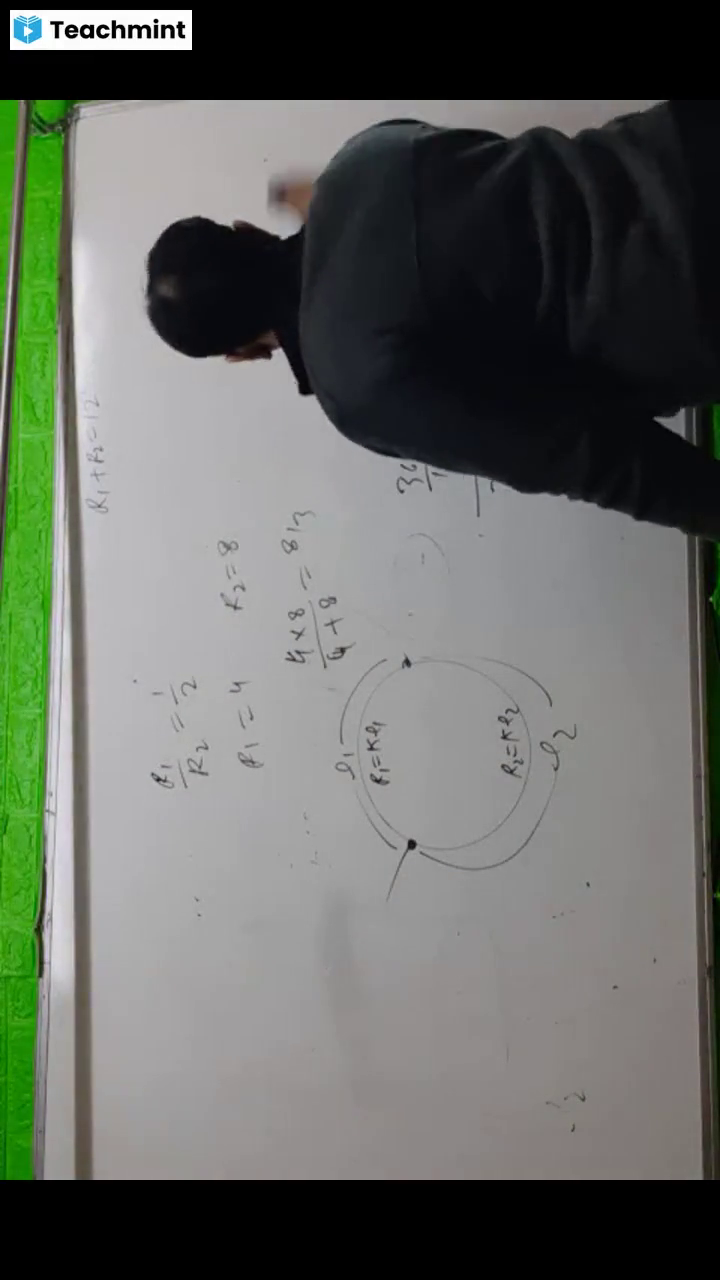
(a) 4.5 x 10¹³ J, , (b) 1.5 x 10¹³ J, , (c) 0.5 x 10¹³ J, , (d) 4.5 x 10¹⁶ J, , Type – A.2.1, Increase/decreases, albm, For, Q=K n, c, What happen to Q if, a increase (keeping b & c constant) Q increases , a increase (keeping b & c constant) Q increases , c increase (keeping b & c constant) Q decreases ↓, Ex1., , Ex2., , If the radius (R) of the earth were to decrease, its mass (M) remaining the same, the acceleration due to, GM, Gravity (g) on the earth’s surface would [ Use g = 2 G- constant], R, (a) Increase, (b) Decrease, (c) Remain same, (d) information is insufficient if a is double/tripled, l, On decreasing the length and radius of a conductor to half, its resistance will (use R = ρ ,A = area, ρA, specific resistance-constant , l -length, ,R- resistance), (a) Increase, (b) Decrease, (c) Its specific resistance will increase, (d) Its specific resistance, , Type-A.2.2, Comparison of two situations, For situation 1, Q = Q1, a = a1, b = b1, c = c1, Find, Q2, if a = a2, b = b2, c= c2, l m, n, Q1 a1 b1 c1, =, Q2 a2l b2m c2n, Ex.1 The period of revolution of an earth satellite close to surface of earth is 90 minutes. The time period of, another satellite in an orbit at a distance of four times the radius of earth from centre (Use, , R3, ), GM, (a) 90 8 min, T = 2, , Ex.2, , Ex.3, , (b) 360 min, , (c) 720 min, , (d) 270 min, , Two spheres (of same material) of radius R1 and R2 have charges q1 and q2 respectively. If there, potentials (V) are same then the value of q1/q2 will be (use V = Kq/R here k- constant), R2, R2, (a) R2/R1, (b) R1/R2, (c) 22, (d) 12, R1, R2, Two masses of 1g and 9g are moving with equal kinetic energies (K). The ratio of the magnitude of, their respective linear moments (P) is (use P = 2mK ), (a) 1 : 9, (b) 1 : 1, (c) 1 : 3, (d) 3 : 1
Page 5 :
Ex.4, , Two bodies of masses m and 4m are moving with equal kinetic energy(K). The ratio of their linear, momenta (P) is, (use P = 2mk ), (a) 4 : 1, (b) 1 : 1, (c) 1 : 2, (d) 1 : 4, , Ex.5, , Distance (r) is increased to double then the repulsive force between the charges (q), as compared to its, previous value, will become (use F = Kq1q2/r2), (a) ¼, (b) ½, (c) ¾, (d) same, , Ex-.6 If the distance between the masses is doubled, the gravitational attraction between them, (a) Is doubled, (b) Becomes four times, (c) Is reduced to half quarter, (d) Is reduced to a quarter, Ex.7, , Two bodies of masses m1 and m2 have equal kinetic energies. If p1 and p2 are their respective, momentum, then ratio p1 : p2 is equal to, (a) m1 : m2, (b) m2 : m1, (c) m1 : m2, (d) m12 : m22, , Ex.8, , If velocity (v) is doubled & radius is tripled find ratio of centripetal force on a particle. (Fc=mv2/r), (a) ¾, (b) 4/3, (c) 2/3, (d) 3/2, , Ex.9, , 1, , Find ratio of velocity of first orbit (n) & second orbit. v ., n, , (a) 1 : 2, (b) 2 : 1, (c) 4 : 1, , (d) 1 : 4, , Ex.10 Find ratio of radius of first orbit & sec orbit of an atom (z - constant), (use r = n2/Z), (a) 1 : 4, (b) 4 : 1, (c) 2 : 1, (d) 1 : 2, Ex.11 Find ratio of radius (r) of one atom (z = 1) of first orbit to another atom (z = 2) third orbit., 2, (a) 2/3, (b) 3/2, (c) 4/9, (d), 9, 12. A body weighs mg = 72 N on the surface of the earth. What is the gravitational force on it, at a height equal to half the radius of, the earth?, W, , Wh =, , (a) 32 N, , (b) 30 N, , (c) 24 N, , (d) 48 N, , h, 1 + , R, , 2, , 13. In Young’s double slit experiment, if the (d) separation between coherent sources is halved and the distance (wavelength, , ( ) constant )of the screen from the coherent sources (D)is doubled, then the fringe width becomes:, (a) Half, , (b) four times, , (c) one-fourth, , W=, , D, d, , (d) double, , Type-A.2.3, , a1b 2, c3, Comparison of two situations more then one formula used, If a doubles what will happen to a most of the students says Q will also double they never think whether b or c, Let Q = K, , a ( a2 ), , 2, , Q a 5 If a, depends on a or not if b depends on a by relation b = Ka & c is independent of a then Q = K, 3, c, ,, 5, Q a , doubles will become 32 times 1 = Q1 = 32Q, Q 2a , Ex.1 Two conducting spheres radius R1 and R2 are charged such that their charge densities ( σ ) are equal. The, ratio of potential (V) near their surface will be (use V = Kq/R and σ = q/4 π R2)_, 2
Page 6 :
R22, R12, (d), R12, R22, Two solid sphere radius R are kept touching each other. Gravitational force between two depends on, (a) R2/R1, , Ex.2, , [Use F =, , GM 1M 2, , M = V, R2, , (a) R0, Ex.3, , (b) R1/R2, , (c), , , V = 4 R3 -density (constant)], 3, , (b) 1/R2, , (c) R4, , (d) R6, , Magnetic field (B) at the centre (at nucleus) of the hydrogen like atoms (atomic number = z) due to the, motion of electron in the nth orbit is proportional to, T v / r , v z / n, r n 2 / z . ), ( B= 0i / 2r , i 1/ T , T=2πr/v,, , n3, n4, z2, z3, (b), (c), (d), z5, z, n3, n5, Magnetic moment( ) due to the motion of the electron in nth energy state of hydrogen atom is, (a), , Ex.4, , 2 r, 1, , , use = NiA, i 1/ T , T =, , r n 2 , v , i − current , n − number of orbit , , , proportional, v, n, , , Area, A=πr2, v, −, velocity, of, electron, ,, N, −, constant, , , 0, 5, 3, (a) n, (b) n, (c) n, (d) n, Ex.5, , Raindrop reaching the ground with terminal velocity (v1) has momentum (p). Another drop twice the, radius reaching the ground with terminal velocity, will how the momentum, 2, , 2 r ( 0 − A ), 4 r 3 , g , momentum p = mv, m = , use vt =, , 9, , 3 , , (a) 4P, (b) 8P, (c) 16P, (d) 32P, , Ex.6, , Find ratio of time period (T) in first orbit (n = 1) & second orbit (n = 2) of an electron in atom., Z2, , , 2 r, n2, , r = , v = z = constant , use T =, v, n, Z2, , , (a) 1 : 8, (b) 8 : 1, (c) 4 : 1, (d) 1 : 4, , 14. The quantities of heat Q required to raise the temperature of two solid copper spheres of radii r 1 and r2 (r1 = 1.5 r2) through 1K, , 4, [Q = ms , m = r 3 ], 3, , ( ) are in the ratio:, (a), , 9, 4, , (b), , 3, 2, , (c), , 5, 3, , (d), , 27, 8, , Type A.3.1, Decrease/increase, change, fractional change, percentage change of quality (Q), Increase, = Q f − Qi, Decrease, , = Qi − Q f, , Change in quantity, , = Q f − Qi, , Qi, , ⎯⎯, → Initial value, , Qf, , ⎯⎯, → Final, , Fractional, Percentage change, , weightage in 1, weightage in 100
Page 7 :
Example:, (1), (2), (3), (4), (5), (6), (7), , A particle of mass 2kg moving with 3m/s change its velocity to 4 meter/second find, , Increase in velocity, Fractional increase, Percent increase, Increase in kinetic energy, Change in kinetic energy, Fractional change, Percentage change in kinetic energy, , (use K = ½ mv2), , Ex.1, , If the kinetic energy of a particle is increased by 300%, the momentum of the particle will increase by, use P = 2mk, (a) 20%, (b) 200%, (c) 100%, (d) 50%, , Ex.2, , If the momentum of a body is increased by 50%, then the percentage increase in its kinetic energy is, , P2 , K =, , 2m , , , (a) 50%, , (b) 100%, , (c) 125%, , (d) 225%, , Ex.3, , If the momentum of a body is increased by 100%, then the percentage increase in the kinetic energy is, (a) 150%, (b) 200%, (c) 225%, (d) 300%, , Ex.4, , If velocity (v) is increased by 20% & radius(r) by increased by 20% find % change in force (F), , mv 2 , use, F, =, , , r , , (a) 40%, (b) 20%, (c) 10%, (d) 30%, , Ex.5, , Ex.6, , 1, , , If velocity is increased by 50% find % kinetic energy (k) become use k = mv 2 , 2, , , (a) 50%, (b) 125%, (c) 225%, (d) 625%, If velocity (v) is increased by 50% & mass (m) is increased by 20%. kinetic energy (k) become., (a) 200%, (b) 270%, (c) 100%, (d) 170%, , Ex.7, , If velocity (v) is increased by 50% & man (m) is increased to 20%. Increase in kinetic energy (k)., (a) 200%, (b) 270%, (c) 100%, (d) 170%, Type A.3.2, For small percentage change, ab 2, For example Q = K 3, c, Fractional change, , Q a, b, c, =, +2, −3, Q, a, b, c, , (up to 3 – 4%), , albm, In general Q = K n, c, Fractional change, Q, a, b, c, = ( ) + m( ) − n ( ), Q, a, b, c, , albm, Q, a, b, c, X 100 = l, X 100 + m, X 100l − n, X 100, Percentage change in Q, n, c, Q, a, b, c, if a,b,c are error full (small) for fractional error., for Q = K, , dQ, da, db, dc, al bm, =l, +m, +n, For max. fractional error., n, c, Q, a, b, c, Note for minimum error we make a combination of +ve & -ve terms such that result is minimum., Q=k
Page 8 :
Ex.1, , If the radius of the earth (R) shrinks by 1%, its mass(M) remaining same, the acceleration due to gravity, (g) on the surface of earth will [Use g =, (a) decrease by 2%, , GM, ], R2, , (b) decrease by 0.5% (c) increase by 2%, , (d) increase by 0.5%, , Ex.2, , If a simple pendulum is taken to place where g decreases by 2%, then the time period(T) (Use, l, ), T = 2, g, (a) Decreases by 1% (b) Increases by 2% (c) Increases by 2% (d) Increases by 1%, , Ex.3, , If the radius of the earth (r) shrinks by 1.5% (mass remaining same), then the value of acceleration due, m, to gravity (g) changes by [Use g = G 2 ], r, (a) 1%, (b) 2%, (c) 3%, (d) 4%, , Ex.4, , Centripetal force (f) is given by F =, , Ex.5, , mv 2, , m – mass, v – speed, r – radius, of circular motion. If mass, r, increased by 1% velocity increased by 2% & radius increased by 3%. Find % change in force F., (a) 2%, (b) 1%, (c) .1%, (d) 3%, , kQ 2, Force between two charges related as F = 2 where Q – charge, r – radius .If charge is increased by, r, 1% & radius increased by 2% find % charge in F., (a) +1%, (b) -1%, (c) +2%, (d) -2%, , Exercise, 1 Two springs of springs constants 1500N/m and 3000N/m, respectively are stretched with the same force. They will, , , , , have potential energy in the ratio U =, (a) 4:1, , (b) 1:4, , 1 2, , Kx , F = Kx , 2, , , (c) 2:1, , (d) 1:2, , 2. If a long spring is stretched by 0.02 m, its potential, energy is U. If the spring is stretched by 0.1 m, then its, , , , , potential energy will be U =, (a), , (b) U, , 1 2, Kx , 2, , , (c) 5U, , (d) 25 U, , 3. Two bodies of masses m1 and m2 have equal kinetic, energies. If p1 and p2 are their respective momentum,, then ratio p1 : p2 is equal to P = 2mk, (a) m1 : m2, (b) m2 : m1, (c), :, (d), 4. A light and a heavy body have equal momenta. Which, , , , one has greater K.E. K =, , , , (a) The light body, (c) The K.E are equal, , P2 , , 2m , , (b) The heave body, (d) Data is incomplete, , 5. A light and a heavy body have equal kinetic energy., Which one has a greater momentum? P = 2mk, (a) The light body, (b) The heavy body, (c) Both have equal momentum, (d) It is not possible to say anything without additional, information, 6 If the K.E. of a particle is doubled, then its momentum, will P = 2mk, (a) Remain unchanged, (c) Be quadrupled, , (b) be doubled, (d) Increase, times, , 7. If the kinetic energy of a body increases by 0.1 %. the, 2, percent increase of its momentum will be K = P, , (, , (a) 0.05% (b) 0.1%, , (c) 1.0%, , 2m, , ), , (d) 10%, , 8 Two bodies with kinetic energies in the ratio of 4:1 are, moving with equal linear momentum. The ratio of their, masses is, (a) 1 : 2, (b) 1 : 1, (c) 4 : 1, (d) 1 : 4, 9 Two bodies with kinetic energy of a body becomes four, times of its initial value, then new momentum will
Page 9 :
(a) Becomes twice its initial value, (b) Become three its initial value, (c) Become four times its initial value, (d) Remains constant, , circular disc of same mass and thickness but half the, 2, destiny about the same axis I = MR , m = R 2t, , (, , (a), , 10. A 4 kg mass and a 1 kg mass are moving with equal, kinetic energies. The ratio of the magnitudes of their, linear momenta is, (a) 1 : 2, (b) 1 : 1, (c) 2 : 1, (d) 4 : 1, , 21., , 13. The mass of two substances are 4gm and 9gm, respectively. If their kinetic energies are same, then the, ratio of their momenta will be, (a) 4 : 9, (b) 9 : 4, (c) 3 : 2, (d) 2 : 3, , (b), , I0, 4, , (c) 8I0, , Two bodies have their moments of inertia I and 2I, respectively about their axis of rotation. If their, kinetic energies of rotation are equal, their angular, momentum will be in the ratio L = 2 KI, (a) 1 : 2, , (b), , 23., , The mass and diameter of a planet have twice the, value of the corresponding parameters of earth., Acceleration due to gravity on the surface of the, GM, planet is use g = 2 ,D=2R, R, 2, (a) 9.8 m / sec, (b) 4.9 m / sec 2, , 24., , (d) 0.2 m/s, , 25., , , , , seconds. The magnitude of this torque is =, (a), 19., , 3A 0, 4, , (b) A0, , (a) 400%, , 2I, , (c) 200%, , 26., , (c) 0.49 m/s 2, , (d) 49 m/s 2, , Radius of orbit of satellite of earth is R. Its kinetic, , 27., , (d) 100%, , 1, R, , (b), , (c) R, , (d), , R, , 1, R3/2, , and v p denotes the escape velocity from the earth, and another planet having twice the radius and the, same mean density as the earth. Then, 2GM / R, , ), M = V, , , V = 4 R 3, 3, , (a) ve = v p, , (b) ve = v p / 2, , (c) ve = 2v p, , (d) ve = v p / 4, , Escape velocity on a planet is ve . If radius of the, planet remains same and mass becomes 4 times, the, escape velocity becomes ve = 2GM / R, (a) 4 ve, , 28., , 1, , GMm , , 2r , , ve, , (v =, , (d) 12 A0, , The moment of inertia of a circular disc of mass M, and radius R about an axis passing through the centre, of mass is I0 .The moment of inertia of another, , (b) 0.98 m/s 2, , (a), , ), , (b) 800%, , (a) 4.9 m/s 2, , , , , A , , t , , If the angular momentum of any rotating body, increases by 200%, then the increase in its kinetic, 2, energy K = L, , (, , 20., , (c) 4 A0, , GM, ,D=2R, R2, , energy is proportional to K =, , 17 Masses of two substances are 1 g and 9 g respectively., If their kinetic energies are same, then the ratio of their, momentum will be, (a) 1 : 9, (b) 9 : 1, (c) 3 : 1 (d) 1 : 3, 18. constant torque acting on a uniform circular wheel, changes its angular momentum from A0 to 4A0 in 4, , (d) 19 .6 m / sec 2, , If the mass of earth is 80 times of that of a planet and, diameter is double that of planet and ‘g’ on earth is, 9.8 m/s 2 , then the value of ‘g’ on that planet is, use g =, , , P2 , K =, ,P=mv, 2m , , (c) 1 m/s, , (d)1 : 2, , If the distance between two masses is doubled, the, gravitational attraction between them, (a) Is doubled, (b) Becomes four times, (c) Is reduced to half (d) Is reduced to a quarter, , 16 A body moving with velocity v has momentum and, kinetic energy numerically equal. What is the value of v, , (b), , (c) 2 : 1, , 2 :1, , (c) 980 m / sec 2, , (a) 2 m/s, , ), , 22., , 14 If the mometum of a body is increased by 100%, then, the percentage increase in the kinetic energy is, a) 150%, (b) 200% (c) 225%, (d) 300%, 15 Two bodies of masses m and 4 m are moving with equal, K.E. The ratio of their linear momentums is, (a) 4 : 1, (b) 1 : 1, (c) 1 : 2, (d) 1 : 4, , (d) 2I0, , (, , 11 If momentum is increased by 20%, then K.E. increases, by, (a) 44%, (b) 55%, (c) 66%, (d) 77%, 12 An object of 1 kg mass has momentum of 10 kg m/sec, then the kinetic energy of the object will be, (a) 100 J (b) 50 J, (c) 1000J, (d) 200J, , I0, 8, , ), , 2, , (b) 2 ve, , (, , ), , (c) ve, , (d), , 1, ve, 2, , The escape velocity for the earth is 11.2 km/sec. The, mass of another planet is 100 times that of the earth
Page 10 :
and its radius is 4 times that of the earth. The escape, velocity for this planet will be, (a) 112.0 km/s, (b) 5.6 km/s, (c) 280.0 km/s, (d) 56.0 km/s, 29., , 30., , 31., , The escape velocity of a body on the surface of the, earth is 11.2 km/s. If the earth's mass increases to, twice its present value and the radius of the earth, becomes half, the escape velocity would become, (a) 5.6 km/s (b) 11.2 km/s (c) 22.4 km/s(d) 44.8 km/s, Given mass of the moon is 1/81 of the mass of the, earth and corresponding radius is 1/4 of the earth. If, escape velocity on the earth surface is 11.2 km/s, the, value of same on the surface of the moon is, (a) 0.14 km/s, (b) 0.5 km/s, (c) 2.5 km/s, (d) 5 km/s, The escape velocity of a body on an imaginary, planet which is thrice the radius of the earth and, double the mass of the earth is (v e is the escape, velocity of earth), ve = 2GM / R, , (, , ), , (a) 2 / 3 v e, , (b) 3 / 2 v e, , (c) 2 /3 v e, , (d) 2 / 3 v e, , 37., , The rotation period of an earth satellite close to the, surface of the earth is 83 minutes. The time period of, another earth satellite in an orbit at a distance of, three earth radii from its surface will be, (a) 83 minutes, (b) 83 8 minutes, (c) 664 minutes, (d) 249 minutes, , 38., , If satellite is shifted towards the earth. Then time, eriod of satellite will be, (a) Increase, (b) Decrease, (c) Unchanged, (d) Nothing can be said, , 39., , Two planets move around the sun. The periodic, times and the mean radii of the orbits are T1 , T2 and, r1 , r2 respectively. The ratio T1 / T2 is equal to, , (T r ), 2, , 3, , (a) (r1 / r2 )1 / 2, , (b) r1 / r2, , 2, , (d) (r1 / r2 )3 / 2, , (c) (r1 / r2 ), 40., , If the density of the earth is doubled keeping its, radius constant then acceleration due to gravity will, GM, be (g = 9.8 m/s 2 ), g = 2 m = V , V = 4 R 2, R, 3, 2, 2, (a) 19 .6 m/s, (b) 9.8 m/s, (c) 4.9 m/s 2, , 32., , For a satellite moving in an orbit around the earth,, the ratio of kinetic energy to potential energy, , GMm, GMm, , is K =, ,U = −, 2r, r, , (a) 2, 33., , (b)-, , 1, 2, , 35., , Acceleration due to gravity on moon is 1/6 of the, acceleration due to gravity on earth. If the ratio of, , , (c) -2, , (d), , (, , 1, 2, , ), , (b) 11.2 km/sec, (d) 6 km/sec, , (a), , 42., , (a) 2R, 43., , (a) T r, , ( T = 2, , R3, GM, , (b) T r 2, , (d) T r 4, , (c), , 3, Re, 18, , (d), , 1, 2 3, , Re, , (b) 4 R, , (c), , 1, R, 4, , (d), , 1, R, 2, , (c) 3 times, , (d) 4 times, , A body of mass m is placed on the earth’s surface. It, is taken from the earth’s surface to a height h = 3 R ., The change in gravitational potential energy of the, GM, GMm, body is, g= 2, U =−, R, R+h, , ), , (c) T 2 r 3, , 1, Re, 6, , (a) 2 times(b) 2 times, , If a body describes a circular motion under inverse, square field, the time taken to complete one, revolution T is related to the radius of the circular, orbit as, , (b), , How many times is escape velocity (Ve ) , of orbital, velocity (V0 ) for a satellite revolving near earth, , 44., 36., , 5, Re, 18, , The density of a newly discovered planet is twice, that of earth. The acceleration due to gravity at the, surface of the planet is equal to that at the surface of, the earth. If the radius of the earth is R, the radius of, the planet would be, , The distance of neptune and saturn from sun are, nearly 1013 and 1012 meters respectively. Assuming, that they move in circular orbits, their periodic times, will be in the ratio, (a) 10, (b) 100, (c) 10 10 (d) 1 / 10, The period of a satellite in a circular orbit of radius R, is T, the period of another satellite in a circular orbit, of radius 4R is, (a) 4T, (b) T/4, (c) 8T, (d) T/8, , 5, , densities of earth (e ) and moon (m ) is e =, m 3, then radius of moon Rm in terms of Re will be, , A small satellite is revolving near earth's surface. Its, orbital velocity will be nearly v = GM / R, (a) 8 km/sec, (c) 4 km/sec, , 34., , 41., , (d) 2.45 m/s 2, , (a), , 2, mgR, 3, , (b), , 3, mgR, 4, , (c), , mgR, 2, , (d), , mgR, 4
Page 11 :
45., , The ratio of the radii of planets A and B is k 1 and, ratio of acceleration due to gravity on them is k 2 ., The ratio of escape velocities from them will, GM, be ve = 2GM / R , g = 2 ), ,, R, , (, , ), , k1 k 2 1 (c), , (a) k1 : k 2 (b), 46., , 47., , (a), , 1, T, , (b), , 1, T2, , ), , 3, , R, GMm, , , T = 2, K =, GM, 2, R, , , (c), , 1, T3, , (d) T −2 / 3, , What is the magnitude of a point charge due to which, the electric field, away has the, 30 cm, magnitude 2 newton / coulomb, , E=, , use, , KQ, r2, , [ K = 9 109 Nm2 / C 2 ], , 49., , (a) 2 10 −11 coulomb, (b) 3 10 −11 coulomb, (c) 5 10 −11 coulomb, (d) 9 10 −11 coulomb, Two charges each of 1 coulomb are at a distance 1, km apart, the force between them is Use F = KQ1Q2, r2, , 3, , (a) 9×10 Newton, (c) 1.1×10⁻⁴ Newton, 50., , 51., , -3, , (b) 9×10 Newton, (d) 104 Newton, , Two charges each equal to 2µC are 0.5m apart. If, both of them exist inside vacuum, then the force, between them is, (a) 1.89 N, (b) 2.44 N, (c) 0.144 N, (d) 3.144 N, The radius of a soap bubble whose potential is 16V is, doubled. The new potential of the bubble will be, ( V = KQ ), R, , 52., , (a) 2V, (b) 4V, (c) 8V, (d) 16V, Electric field strength due to a point charge of 5 C at, a distance of 80 cm from the charge is E =, , 53., , KQ, r2, , (a) 8 10 4 N/C, (b) 7 10 4 N/C, (c) 5 10 4 N/C, (d) 4 10 4 N/C, Two spheres A and B of radius ‘a’ and ‘b’, respectively are at same electric potential. The ratio, of the surface charge densities of A and B, is( V =, (a), , a, b, , KQ, , Q= A ,A= V = 4R 2 ), R, (b), , b, a, , (c), , a2, b2, , (d), , (R = l / A, A = V / l,V − cons tan t ), , (a) 300%, , (b) 200% (c)100%, , (d) 50%, , 55. If a 0.1 % increase in length due to stretching , the, percentage increase in its resistance will be, , (R = l / A, A = V / l,V − cons tan t ), , k2, k1, , (d), , If the radius and acceleration due to gravity both are, doubled, escape velocity of earth will become, (a) 11.2 km/s, (b) 22.4 km/s, (c) 5.6 km/s, (d) 44.8 km/s, In a satellite if the time of revolution is T, then K.E., is proportional to, , 48., , k1, k2, , change in the resistance of the wire will be, , b2, a2, , 54. The length of a give cylindrical wire is increased by, 100% .Due to the consequent decrease in area the, , (a) 0.2%, , (b) 2%, , (c) 1%, , (d) 0.1%, , 56. A satellite is in sufficiently low obit so that it, encounter air drag and if orbit changes from r to r r. Find the change in orbital velocity (v)and change, GMm, in PE (U).( (v = GM / R ) , U = −, ), r, (a), , r, 2, , GM GMmr, ,, r3, r2, , (b), , (c), , r, 2, , GM GMmr, ,, r3, 2r 2, , (d) None, , r, 2, , GM GMm, ,, r, r2, , ……By Praveen Gupta