Page 1 :
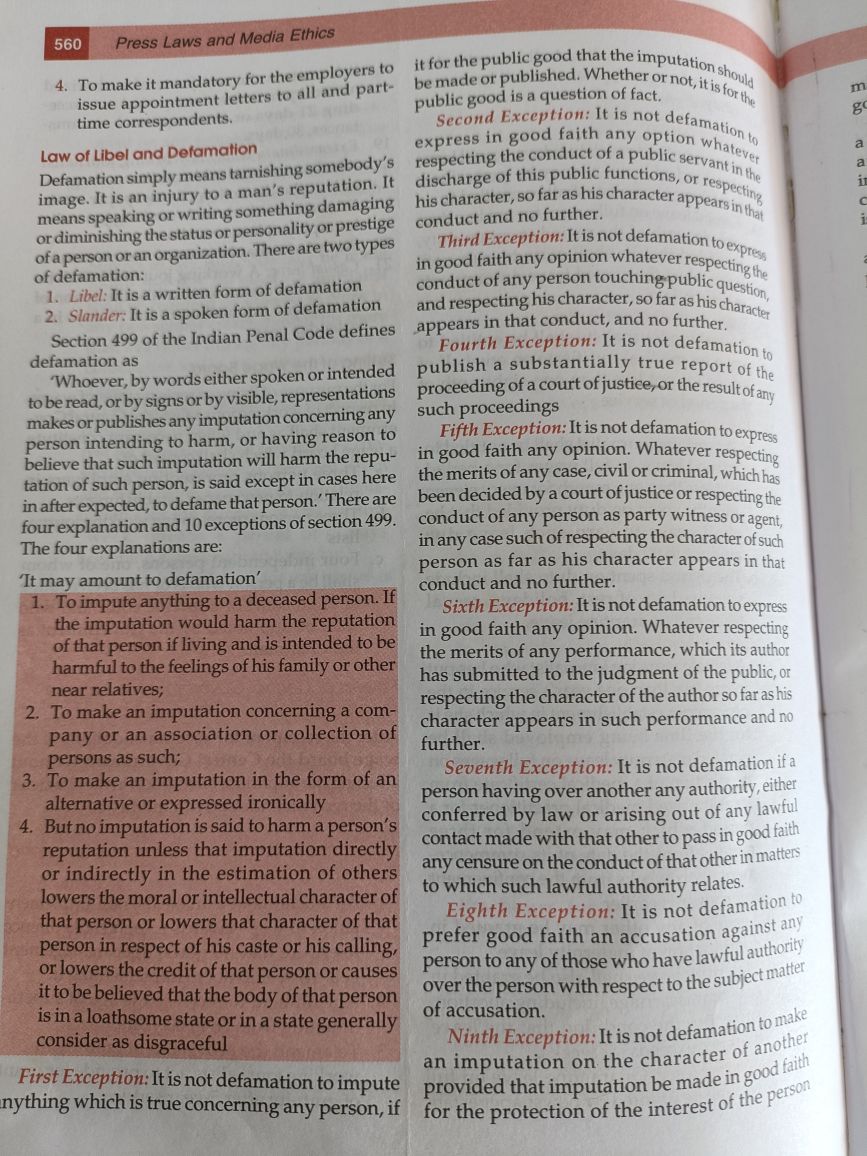
Press Laws and Media Ethics, , , , he employers to, , tory for t, 4, To make it mandatory for thee at, issue appointment letters, time correspondents., , Law of Libel and Defamation }, Defamation simply means tarnishing jeomebody, image. It is an injury toa man’s reputation., means speaking or writing something damaging, ordiminishing the status: ‘or personality oF prestige, ofa person or an organization. There are two tyPes, of defamation: i, It is a written form of defamation, 2 It is a spoken form of defamation, , Section 499 of the Indian Penal Code defines, defamation as, “Whoever, by words either spoken or intended, tobe read, or by signs orby visible, representations, makes or publishes any imputation concerning, any, person intending to harm, or having reason to, believe that such imputation will harm the reputation of such person, is said except in cases here, inafter expected, to defame that person.’ There are, four explanation and 10 exceptions of section 499., The four explanations are:, , ‘It may amount to defamation’, , 1. To impute anything to a déceased person. If, the imputation would harm the reputation, of that person if living and is intended to be, harmful to the feelings of his family or other, near relatives; I, , 2. To make an imputation concerning a company or an association or collection of, , , , 3. To make an imputation in the form of an., alternative or expressed ironically, 4. Butno imputation is said to harm a person's, reputation unless that imputation directly, or indirectly in the estimation of others, Jowers the moral or intellectual character of, that person or lowers that character of that, person in respect of his caste or his calling,, or lowers the credit of that person or causes, ittobe believed that the body of that person, be! -state or ina state generally, , , , , First Espo pitts it deesation 15 tan ute, nything which is true concerning any en, if, , it for the public good that the imputatio,, de of published. Whether or not,", , bema i m, , public good is a question of fact for ,, Second Exception: It is not defan,, , express in good faith any option yj,, , respecting the conduct of a public ser,, discharge of this public functions, or ,,...', his character, so far as his character appe,.°"", conduct and no further. d, ‘Third Exception: Itis not defamation to .,., it faith any opinion whatever resp,, conduct of any person touching-public gyi..;, and respecting his character, so far as his chs,, appears in that conduct, and no further., Fourth Exception: It is not defamatioy, publish a substantially true report oy,, proceeding of acourt of justice, or the result o5, such proceedings ., , Fifth Exception: Itis not defamation to, in good faith any opinion. Whatever respect,, the merits of any case, civil or criminal, which},, been decided by a court of justice or respectir, conduct of any person as party witness, inany case such of respecting the character of su, person as far as his character appears in th, conduct and no further., , Sixth Exception: Itis not defamation to expres:, in good faith any opinion. Whatever respectin:, the merits of any performance, which, has submitted to the judgment of the, respecting the character of the author so, character appears in such performan, further., , Seventh Exception: it is not defamation, person having over another any authority, conferred by law or arising out 0!, contact made with that other to pa:, any censure on the conduct of that othe, to which such lawful authority relates, , Eighth Exception: It is not d, prefer good faith an accusation 4, person to any of those who have law!, over the person with respect to the su!, of accusation., , Ninth Exception: It is not defam2t, an imputation on the characte? of, provided that imputation be made #, for the protection of the interest ©