Page 1 :
Introduction to Hydrosphere, It is the component of the earth which is made up of all liquid water we find on the planet. It, comprises of water storage area like oceans, seas, lakes, ponds, rivers as well as streams., In other words, hydrosphere is quite large as the oceans only cover around 71% of the earth’s, surface area. Hydrosphere’s motion and exchange of water between the hydrosphere and, cryosphere is the basis of the hydrologic cycle., Further, the constant movement and exchange of water help in forming currents which move, warm water from the tropics to the poles and assist in regulating the Earth’s temperature. So, you, see that the exchanging of water is an essential part of the hydrosphere., Most importantly, the hydrosphere mainly composes of water. In addition, there are also some, impurities or addition to it which consist of dissolved minerals, gases and particulates. We, consider some of these to be pollution, while others are significant for the health of ecosystems., For instance, too much sediment is dangerous to the surrounding ecosystems, whereas, insufficient levels of dissolved oxygen in the water result in hypoxic conditions which can pose a, threat to ecosystems., Therefore, a delicate balance is required for healthy ecosystems which surround various, components of the hydrosphere. Further, the hydrosphere is always in motion. The motion of, rivers and streams are visible, but that of ponds and lakes is less obvious., Moreover, we can see some motion of seas and ocean with large scale motions that travel water, with great distances like poles and tropics or between continents. These types of motions are in, the form of currents., Basically, they move warm water in the tropics towards the poles and cool water from the poles, towards the tropics. These currents exist on the ocean’s surface and at depths., Importance of Hydrosphere, , One hardly thinks about the planet’s role in keeping us alive as we take the hydrosphere for, granted. The major significance of the hydrosphere is that water sustains various life forms., Further, it plays an essential role in ecosystems and regulates the atmosphere., Hydrosphere covers all water present on the surface of the earth. It consists of saltwater,, freshwater, and frozen water along with groundwater and water in the lower levels of the, atmosphere., Now, we will look at its functions:
Page 2 :
Significance of water in cells, , Every cell in a living organism is composed of around 75% of water, thus, it enables the cell for, functioning appropriately. If we didn’t have water, cells won’t be able to operate normally as life, cannot exist without it., Human needs water, , Human beings make use of water in various ways. Drinking water is the most obvious use, but it, is we also use it for domestic purposes such as washing and cleaning and in industries. Further,, we also use water in producing electricity through hydropower., Water offers habitat, , Hydrosphere offers a place for multiple plants and animals to live in. A lot of gases such as CO2,, O2, nutrients such as ammonium and nitrite(NO–2) and other ions are dissolved in water. The, presence of these substances is significant for life to exist in water., Regulate climate, , The specific heat of the water is its unique characteristics. This denotes that water requires a lot, of time to heat up and a lot of time cool down. It assists to regulate the temperatures on earth as, they stay in a range that is acceptable for life on earth to exist., Components of Hydrosphere, , Any water storage area on the Earth that holds liquid water, we consider it to be a part of the, hydrosphere. Because of this, there is an extensive list of formations that make up the, hydrosphere including:, Oceans: Most of the water on our planet is salt water, and the vast majority of this saltwater is, present in the oceans., Freshwater: Freshwater is much less abundant than saltwater, and is present in a variety of, different places., Surface water: Surface sources of freshwater consist of lakes, rivers, and streams., Groundwater: Freshwater stored beneath ground makes up a small portion of the fresh water on, Earth., Glacial water: Water that melts off of glaciers.
Page 3 :
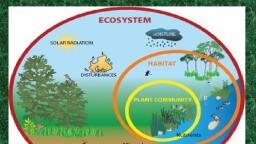
Human Impacts on Hydrosphere, , As we know humans are having a great impact on the environment, the same is the case with the, hydrosphere. It has changed drastically because of water pollution, river damming, wetland, drainage, climate change and irrigation., Further, when we release fertilizers and sewage into water storage areas, it results in, eutrophication which causes aquatic environments to be artificially enriched with nutrients., Excessive algal blooms can cause harmful hypoxic conditions in the water. Acid rain from SOx, and NOx emissions from fossil fuel combustion has caused the acidification of components of, the hydrosphere, which harms the surrounding ecosystems., Finally, our activities also change the natural flow of water in the hydrosphere when we divert, and dam rivers. In other words, it harms surrounding ecosystems which are reliant on the water, source., , What is an Ecosystem?, Ecosystem is defined as the earth’s vital units encompassing the entire system of living, organisms (biotic) and the physical factors (abiotic or non-living things) that make up the, environment. Otherwise stated, the interaction of a community of organisms with their physical, environment constitutes the ecosystem. Therefore, the connectedness of the ecosystem brings, about its categorization on the basis of functions and structure., The functions pertain to activities associated with the key components in the ecosystem while, structure is justified by the spatial distribution of the functions that are essential for the continued, operation of the ecosystem. Ecosystem structure hence describes the physical features (abiotic), and organisms (biotic) of an environment including the distribution of nutrients and other, prevailing climatic conditions, and the relationships between them. In the simplest definition, possible, ecosystem structure is the network of interactions between components (biotic and, abitoc) of the system., , Components of an Ecosystem, The ecosystem is largely divided into two functional components; the Abiotic and Biotic., 1. Abiotic, , The abiotic component of the ecosystem refers to the physical environment or the non-living, factors. Examples of the abiotic component comprise the soil, atmosphere, solar radiation and, water. Abiotic factors greatly determine the functions, distribution, structure, behavior and interrelationship of organisms in a habitat. Without the abiotic component, organisms cannot live or, survive. Some of the most essential elements for food production and survival for both animals
Page 4 :
and plants like water and air are abiotic components. The abiotic component is further divided, into two that is; the climatic factors and edaphic factors., , , Climatic factors: Climatic factors include elements namely rain, light, temperature, humidity,, wind and air., , , , Edaphic factors: These are elements such as minerals, soil, topography and pH just to mention a, few., , 2. Biotic, The biotic components of the ecosystems are the living organisms including animals, plants and microorganisms (Fungi and Bacteria). The Biotic components are further categorized into three based on their, functions in the ecosystem as producers, consumers, and reducers or decomposers., , , Producers: Producers, also known as autotrophs, are the green plants with chlorophyll, which gives them the ability to use solar energy to manufacture their own food through a, process termed as photosynthesis., , , , Consumers: Consumers are on the second level. Since they lack chlorophyll, they depend, on producers for food. Also known as heterotrophs, consumers are additionally grouped, into primary consumers, secondary consumers, tertiary consumers, and quaternary, consumers., Primary consumers: Also referred to as first order consumers or herbivores, the, animal species under this category primarily feeds on plants or primary producers., Examples include zebras, goats, cattle, rabbits, grasshoppers, deer etc., Secondary consumers: species under this category are also known as second order, consumers or primary carnivores. They mainly feed on herbivores and examples here are, rats, foxes etc., Tertiary consumers: Tertiary consumers are the third order consumers, (large carnivores) that feed on the secondary consumers. Examples are the wolves,, owls, snakes., Quaternary consumers: These are the last order consumers and they are considered, the largest carnivores. They feed on primary, secondary and tertiary consumers and are, not eaten by any other animal. They are animals with little or without natural enemies., Examples are the tigers, cheaters, lions, hawks, polar bears, alligators, sharks etc., , , , , , , , , , Examples of an Ecosystem, As defined earlier, ecosystems are interconnected and stable systems that provides for the, beneficial relationship between the living and non-living things in the environment. An, ecosystem is therefore a natural self-sufficient unit and is defined by the natural functions of both, living and non-living things which encompasses examples such as lakes, ponds, deserts, forests,, oceans, gardens and even our homes., , Examples of an Ecosystem, As defined earlier, ecosystems are interconnected and stable systems that provides for the, beneficial relationship between the living and non-living things in the environment. An, ecosystem is therefore a natural self-sufficient unit and is defined by the natural functions of both
Page 5 :
living and non-living things which encompasses examples such as lakes, ponds, deserts, forests,, oceans, gardens and even our homes., 1. Lakes, , Since the lake includes both biotic and abiotic things interconnected with physical and chemical, interactions, it qualifies as an ecosystem. It is an example of a stationary ecosystem as the, enabling environment is relatively still. Streams, rivers, ponds and oceans are similarly included, under this category and is part of the aquatic ecology. The biotic components include fish,, bacteria, phytoplanktons and zooplanktons while the abiotic factors include the water, light, and, rocks underneath the lake., , 2. Deserts, , The desert is considered as an ecosystem because it has an ecology characterized by both biotic, and abiotic functions and processes in arid areas. It includes both plant, animal, and bacterial, populations and their interaction with desert climate, air and soil. In desert ecosystems, both, plants and animals are specially adapted to withstand the harsh prevailing conditions., Animals such as camels have evolved to store huge amounts of water in their bodies to enable it, survive even without drinking water for several weeks. Plants such as cacti have their needle like, shape leaves to reduce transpiration. Cacti also have very thick stems for storing water. Other, various animals living in the desert including scorpions, desert snakes, and lizards equally have, their special adaptation techniques for surviving the in the desert., 3. Forests, , In the forest, there are many animal and plant species interacting with non-living things. For, example, precipitation and sun’s energy is taken up by the plants and used for growth and then, consumed by primary consumers (the herbivores). The primary consumers are later preyed on by, secondary consumers particularly the carnivores and the system continue through simple and, complex food web and food chain respectively. In the end, the dead materials are decomposed by, decomposers (bacteria and earthworms) where they are broken down into nutrients which are, then again absorbed by the plant roots and the cycle starts afresh., 4. Ponds, , A pond refers to a small lake or a pool of water. Just like the lake, it qualifies as an ecosystem, because it contains both living and non-living things that depend on each other for survival. For, instance, there are various living microorganisms in ponds that live in the ponds and are, supported by the prevailing environmental condition of the pond. Birds, insects, amphibians and, reptiles also feed and live within the pond through simple and complex food web and food chains, respectively. This makes the pond to qualify as an ecosystem., 5. Gardens, , Gardens encourage natural processes and various functions in the local areas. They help in, buffering the detrimental impacts of strong winds, regulating water drainage, and providing, shelter and food for indigenous wildlife.
Page 6 :
Soil microbes and wildlife species such as pollinator birds and insects, rodents, geckoes and, frogs survive in urban areas and they are mostly dependent on the local gardens together with, other non-living elements for survival. The local gardens are simply their central habitat., 6. Oceans, , The oceans have diverse range of natural components that enable its continuity and the constant, exchange of materials between living and non living things. Aquatic animals such as fish obtain, essential nutrients such as phosphorous, nitrogen, oxygen and food from within the water. The, same applies to the plants living under water. The ocean ecosystems, also known as marine, ecosystems, are regarded as the most extensive of the planets ecosystems., Accordingly, there are several other categories under ocean ecosystems including the mangroves,, deep sea habitats, the sea floor, estuaries, coral reefs, and intertidal zones. Because of its, extensiveness, ocean ecosystems often have a wide range of biodiversity. The ocean’s Coral, reefs, for instance, provide places for shelter and food for thousands of marine fish and plants., Coral reefs also serve as breeding grounds for the aquatic species., 7. Grasslands, , Grasslands are ecosystems in temperate regions that do not get so much rain as compared to, other regions such as the tropical rainforests. The interconnectedness of the rich soils of the, grasslands and the various animal and plant species depict it as a system formed by the constant, interaction of living organisms with their physical environments. The grasslands supports animal, species namely buffalo, wolves, lions, zebras, and antelopes and plants species such as wild oats,, buffalo grass, foxtail, and needle grass.