Page 3 :
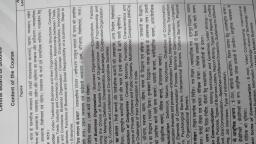
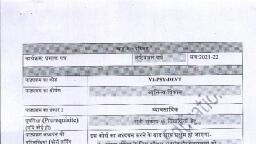
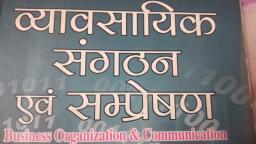
Format for Syllabus of Theory Paper, Part A Introduction, Program: Degree, Subject:Commerce, Course Code, Class: B.COM, Year: I Year, Session:2021-2022, 1, C1- COMA 2T, Course Title, BUSINESS ORGANIZATION AND COMMUNICATION, 3, Course Type (Core, Minor, Course/Elective/Generic, Elective/Vocational/...), Pre-requisite (if any), Course Learning outcomes, (CLO), Not required) open for all, After completion of this course it is expected that the-student shall, understand the basics of the business and will able to imbibe how any, business can be organized successfully. The chapters related, communication shall be able to elucidate how communication plays an, important role in modern business scenario, 4, 5, Credit Value, Total Marks, Max. Marks: 25+75, Min. Passing Marks:33, Part B- Content of the Course, Total No. of Lectures-Tutorials-Practical (in hours per week):, L-T-P:, No. of, Unit Topics, Lectures, INTRODUCTION:, 15, 1, Indian traditional businesses and their organizational structures. Concepts of Business,, Trade, Industry and Commerce Classification Relationship between Trade., Industry and Commerce - Business- Organization-, Importance and Objectives . Functions of Business and Social Responsibility of a, business Steps to Start an Enterprise., FORMS OF BUSINESS ORGANIZATION: Business Organization Classification -, Factors Influencing the Ghoice of Suitable Form of Organization Sole Proprietorship, and Partnership Meaning, Definition Characteristics Advantages. Co-Operative, Organization- Meaning Functions and Limitations of Co-operatives Societies., ORGANIZATION OF COMPANIES: Concepts, Meaning, Formation, Characteristics, and Significance of Private Company and Public Company. Multinational Companies, (MNC'S) and-the Challenges of their organization in India., Concept, Characteristics,, 2, 15, 15, 4, COMMUNICATION: Definition, Nature, Importance, Objectives of Communication., 15, Communication theories and process- Information theory, Interaction theory,, Transaction theory, Elements of communication process. Barriers to Communication:, Linguistic Barriers, Psychological Barriers, Interpersonal Barriers, Cultural Barriers,, Physical Barriers, Organizational Barriers., Written Communication: Writing techniques and Guidelines. Letter writing - Basic, Principles, Purpose, Types of business letters, Report writing, types of reports,, Drafting of report. Oral Communication: Speeches for, for effective listening, Job Interviews, Type of information,, 15, occasions, Guidelines, 6, Modern forms of communication E-mail, Video Conferencing, International, 15, Communication for Global Business. Information Technology: Form of technology,, uses in modern communication system. Role of Social Media in modern business., Keywords/Tags:, (DR. PAVAN MISHRA)
Page 4 :
Part C-Learning Resources, Text Books, Reference Books, Other resources, Suggested Readings:, 1. Author Surname, Initials "Book Title",, Publisher's name, City/country of publication, Year of, publication. Edition No. if any., Text books:, Author, मध्यप्रदेश हिन्दी ग्रंथ अकादमी, भोपाल की पुस्तक।, T.N. Chhabra,, s.n., Book title, publisher, City, | 1., 2., Business Communication, Himalaya Publishing, House, New Delhi, 3., K.K. Sihna,, Essentials of Business, Communication, Dr. Ramesh Mangal Business Communications, VK Global publications, 4., Universal Publication, 2. Suggestive digital platforms web links:, Suggested equivalent online courses:, Part D-Assessment and Evaluation, Suggested Continuous Evaluation Methods:, Maximum Marks : 100, Continuous Comprehensive Evaluation (CCE) : 25marks University Exam (UE) 75 marks, Internal Assessment :, Class Test, 15, Continuous Comprehensive, Evaluation (CCE):25, Assignment/Presentation, 10, herEotcations, External Assessment :, Section(A) : Three Very'Short, Questions (50 Wörds Each), Section (B) Four Short Questions, (200 Words:Each) Section (C) : Two, Long Questions (500 Words Each), 03 x 03 = 09, University Exam Section: 75, Time : 02.00 Hours, 04 x 09 = 36, 02 x 15 = 30 Total 75, Any remarks/ suggestions:, (DR. PAVAN MISHRA), Departmen




 Learn better on this topic