Page 1 :
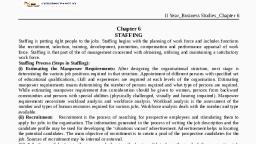
staffing, , It may be defined as the process of hiring and developing th, required personnel to fill in various positions in the ee, organisation., , According to Koontz and O’Donnell, “The managerial, function of staffing involves managing the organisational, structure through proper and effective selection, appraisal, and development of personnel to fill the roles designed into, , the structure.”, , Importance of Staffing, , e It helps in discovering and obtaining competent personnel, for various jobs. :, , e Jt ensures:better performance by placing the right man at, the right job., , - Jt improves job satisfaction by providing fair remuneration, , and regular assessment., + It ensures continuous survival and growth of the enterprise., , + Ithelps in avoiding overmanning, underutilisation of, manpower and high labour cost. :, , Staffing Process Z, Following steps are inyolved in staffing process, , 1. Estimating Manpower Requirements It means to, estimate the number and type of persons required in the, organisation., , 2. Recruitment It is the process of searching for prospective, employees and stimulating them to apply for jobs., , 3. Selection It means to choose the best from amongst the, applicants, mainly by interviewing and conducting, selection tests.
Page 2 :
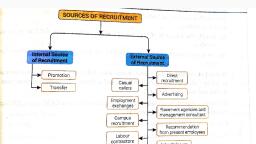
. Placement and Orientation Once the employee is, selected, he is given the post. This is known as, placement., , Orientation means introducing the new employee to. the, other employees and the organisation., , . Training and Development Training is conducted to, increase the skill and knowledge of the person to do the, specific job. Whereas development aims for overall, growth of the employee., , . Performance Appraisal It means evaluating an, employee’s current or past performance against the, pre-determined standards., , . Promotion and Career Planning Promotion refers to, the advancement of an employee in the management, hierarchy., , . Compensation It refers to all types of pay or rewards, given to an employee, whether financial or indirect, , payments., , Recruitment, , Recruitment may be defined as the process of publishing the, information about the vacancies in the organisation and, , inducing people to apply for them., , Internal Source of Recruitment, , These refer to employ persons from within the organisation., The sources of internal recruitment are as follows, , 1. Transfer It means shifting an employee to a similar post, with no change in salary, status and responsibility., , 2. Promotion It refers to shifting an employee to a higher, , job.
Page 3 :
i Sources ., Warten of rere their performance., , s are motivated to improve, , , , , Employ, It simpli, , ‘on and placement., s to prepare, , , , the process of selec, , + Transfe tool of training the, , them for higher jobs., , It is less costly source of recruitment. 7, induction training., , department with the, , , , mploye, , , , Selected employees do not need i, It helps to fulfil the deficiency of one, , surplus of another., , Demerits of Internal Sources, Internal sources of recruitment are not suitable for new, , enterprises., , Restricted choice and less scope for getting fresh talent in, the organisation., , The spirit of competition among the employees may be, hampered., , When employees are sure of time bound promotions, they, become lethargic., , When employees are transferred frequently to different, jobs, it results in reduced productivity., , External Source of Recruitment, , These refer to the recruitment of candidates from outside the, organisation. External source of recruitment has the, following types, , 1. Direct Recruitment Under this method, a notice is, placed on the notice board of the enterprise specifying, the details of the jobs available. Job seekers assemble, outside the premises of the organisation on a specific, date and selection is.done on the spot., , 2. Advertisement Advertising in newspapers and trade, journals is a common method of encouraging people to, apply for jobs., , 3. Employment Exchange These are run by government, and help to match personnel demand and supply by, serving as a link between job seekers and employers., , 4, Labour Contractors They maintain close contacts with, labourers and they can provide large number of workers, at short notice., , 5. Web Publishing Internet is becoming a common source, of recruitment these days. There are many websites, like naukri.com, monster.com, etc. which are designed to, provide information to both job seekers and employers., , 6. Casual Callers Many business organisations keep a, catabase of unsolicited applicants in their files. Such, files can be recalled to fill the current vacant positions, in the organisation., , 7. Recommendations of Employees Employees of an, organisation recommend the names of their friends, relatives and neighbours, which prove to bea good, external source of recruitment.
Page 4 :
8. Placement Agencies and Management Consultants, These provide a nationwide service in matching, personnel demand and supply. They compile the, bio-data of large number of candidates and provide, them to organisation on demand., , Such agencies charge a fee for the service they provide, to organisations. They help organisations. to recruit, technical, professional and managerial personnel easily., , 9. Campus Recruitment Many organisations maintain a, close link with universities, vocational and management, institutes, in order to recruit fresh talent and qualified, personnel. On one hand, it gives good opportunities to, freshers to be employed in reputed firms and on the, other hand, provide qualified manpower in a cost, effective way. Ra gi ‘, , 10. Advertising on Television Advertising through television, allows enterprises to reach a large number of people,, providing detailed information regarding the job as well, as the company., , Merits of External Sources, , * Organisation can attract highly qualified personnel., * External sources create large pool of candidates., , * It helps to bring fresh talent into the organisation., , ° New entrants creates competitive spirit and helps to, improve performance. ,, , Demerits of External Sources, * Dissatisfaction among existing staff., * It involves lot of time and efforts of the manager,, , * It involves lot of expenditure on advertising, selection and, other processes.