Page 1 :
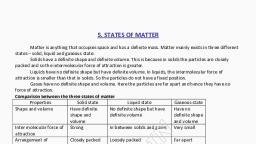
ELECTROPHILIC CHEMISTRY CLASSEs, Address:- Govind nagar near sidheshwar garden Auraiya, Director:-Abhinay sengar (M.Sc) Mob:- 7017905780,8430762339, , Chapter -01 Some Basic Concept Chemistry, 1.CHEMISTRY :Chemistry is defined as the study of the composition, properties and interaction of matter. Chemistry is often called the, central science because of its role in connecting the physical sciences, which include chemistry, with the life sciences and, applied sciences such as medicine and engineering. Various branches of chemistry are, , 1.1 Physical chemistry:The branch of chemistry concerned with the way in which the physical properties of substances depend on, and influence their chemical structure, properties, and reactions., , 1.2 Inorganic chemistry:The branch of chemistry which deals with the structure, composition and behavior of inorganic compounds. All the, substances other than the carbon-hydrogen compounds are classified under the group of inorganic substances., , 1.3 Organic chemistry:The discipline which deals with the study of the structure, composition and the chemical properties of organic, compounds is known as organic chemistry., , 1.4 Biochemistry:The discipline which deals with the structure and behavior of the components of cells and the chemical processes in, living beings is known as biochemistry., , 1.5 Analytical chemistry, The branch of chemistry dealing with separation, identification and quantitative determination of the compositions, of different substances., , 2. MATTER:Matter is defined as any thing that occupies space possesses mass and the presence of which can be felt by any one or, more of our five senses. Matter can exist in 3 physical states viz. solid, liquid, gas., Solid - a substance is said to be solid if it possesses a definite volume and a definite shape, e.g., sugar, iron, gold etc., Liquid- A substance is said to be liquid, if it possesses a definite volume but no definite shape. They take up the shape, of the vessel in which they are put, e.g., water, milk, oil, mercury, alcohol etc., Gas- a substance is said to be gaseous if it neither possesses definite volume nor a definite shape. This is because they, fill up the whole vessel in which they are put, e.g., hydrogen, oxygen etc. The three states are interconvertible by, changing the conditions of temperature and pressure as follows, , 3.CLASSIFICATION OF MATTER AT MACROSCOPIC LEVELL, At the macroscopic or bulk level, matter can be classified as, (a) mixtures (b) pure substances., These can be further sub-divided as shown below, 1
Page 2 :
Classification of matter, (a) Mixtures : A mixture contains two or more substances present in it (in any ratio) which are called its components., A mixture may be homogeneous or heterogeneous., Homogeneous mixture- in homogeneous mixture the components completely mix with each other and its, composition is uniform throughout i.e it consist of only one phase. Sugar solution and air are thus, the examples of, homogeneous mixtures., Heterogeneous mixtures- In heterogeneous mixture the composition is not uniform throughout and sometimes the, different phases can be observed. For example, grains and pulses along with some dirt (often stone) pieces, are, heterogeneous mixtures., Note:-Any distinct portion of matter that is uniform throughout in composition and properties is called a Phase., (b) Pure substances :- A material containing only one substance is called a pure substance., , Note :-In chemistry, a substance is a form of matter that has constant chemical composition and characteristic properties., It cannot be separated into components by physical separation methods, i.e. without breaking chemical bonds., They can be solids, liquids or gases., Pure substances can be further classified into elements and compounds., Element- An element is defined as a pure substance that contains only one kind of particles. Depending upon the physical, and chemical properties, the elements are further subdivided into three classes, namely, (1) Metals (2) Nonmetals and (3) Metalloids., Compound- A compound is a pure substance containing two or more than two elements combined together in a fixed, proportion by mass. Further, the properties of a compound are completely different from those of its constituent, elements. Moreover, the constituents of a compound cannot be separated into simpler substances by physical methods., They can be separated by chemical methods., , 4. PROPERTIES OF MATTER, Every substance has unique or characteristic properties. These properties can be classified into two, categories – physical properties and chemical properties., 4.1 Physical Properties, Physical properties are those properties which can be measured or observed without changing the identity or the, composition of the substance. Some examples of physical properties are color, odor, melting point, boiling point,, density etc., , 4.2 Chemical properties, Chemical properties are those in which a chemical change in the substance occurs. The examples of chemical, properties are characteristic reactions of different substances; these include acidity or basicity, combustibility, etc., 5. MEASUREMENT, , 2
Page 3 :
5.1 Physical quantities, All such quantities which we come across during our scientific studies are called Physical quantities. Evidently, the, measurement of any physical quantity consists of two parts, (1) The number, and (2) The unit, A unit is defined as the standard of reference chosen to measure any physical quantity., , 5.2 S.I. UNITS, The International System of Units (in French Le System International d’Unités – abbreviated as SI) was established by, the 11th General Conference on Weights and Measures (CGPM from Conference Generale des Poids at Measures)., The CGPM is an inter governmental treaty organization created by a diplomatic treaty known as Meter Convention which, was signed in Paris in 1875. The SI system has seven base units and they are listed in table given below., These units pertain to the seven fundamental scientific quantities. The other physical quantities such as speed, volume,, density etc. can be derived from these quantities. The definitions of the SI base units are given below :, , Definitions of SI Base Units, Unit of length, , metre, , Unit of mass, , Kilogram, , Unit of time, , second, , Unit of electric current, , ampere, , Unit of thermodynanic, , kelvin, , Unit of amount of substance, , mole, , Unit of luminous intensity, , candela, , The metre is the length of the path travelled by light in vacuum, during a time interval of 1/299 792 458 of a second., The kilogram is the unit of mass; it is equal to the mass of the, internationl prototype of the kilogram., The second is the duration of 9 192 631 770 periods of the radiation, corresponding to the transition between the two hyperfine levels, of the ground state of the caesium-133 atom., The ampere is that constant current which, if maintained in two, straight parallel conductors of infinite length, of negligible circular, cross-section, and placed 1 metre apart in vacuum, would produce, between these conductors a force equal to 2 × 10⁻⁷ newton per, metre of length., The kelvin, unit of thermodynamic temperature, is the, temperature fraction 1/273. 16 of the thermodynamic temperature of, the triple point of water., 1. The mole is the amount of substance of a system which contains as, many elementary entities as there are atoms in 0.012 kilogram of, carbon12; its symbol is “mol.”., 2. When the mole is used, the elementary entities must be specified, and may be atoms, molecules, ions, electrons, other particles, or, specified groups of such particles., The candela is the luminous intensity, in a given direction, of a source, that emits monochromatic radiation of frequency 540 × 1012 hertz, and that has a radiant intensity in that direction of 1/683 watt per, steradian., , Note:-The mass standard is the kilogram since 1889. It has been defined as the mass of platinum-iridium (Pt-Ir) cylinder, that is stored in an airtight jar at International Bureau of Weights and Measures in Sevres, France. Pt-Ir was, chosen for this standard because it is highly resistant to chemical attack and its mass will not change for an, extremely long time., , 3
Page 4 :
6. SOME IMPORTANT DEFINITION, 6.1 Mass and Weight, Mass of a substance is the amount of matter present in it while weight is the force exerted by gravity on an object. The, mass of a substance is constant whereas its weight may vary from one place to another due to change in gravity. The SI, unit of mass is the kilogram (kg). The SI derived unit (unit derived from SI base units) of weight is newton., , 6.2 Volume, Volume is the quantity of three-dimensional space enclosed by some closed boundary, for example, the space that a, substance (solid, liquid, gas, or plasma) or shape occupies or contains. Volume is often quantified numerically using the, SI derived unit, the cubic meter., , 6.3 Density, The mass density or density of a material is defined as its mass per unit volume. The symbol most often used for density, is P (the lower case Greek letter rho). SI unit of density is kg m–3., , 6.4 Temperature, Temperature is a physical property of matter that quantitatively expresses the common notions of hot and cold. There, are three common scales to measure temperature — °C (degree celsius), °F (degree fahrenheit) and K (kelvin)., The temperature on two scales is related to each other by the following relationship:, , °F = 9/5 (°C) + 32, 7.LOW OF CHEMICAL COMBINATION, , K = °C + 273.15, , 7.1 Law of conservation of mass, “In a chemical reaction the mass of reactants consumed and mass of the products formed is same, that is mass is, conserved.” This is a direct consequence of law of conservation of atoms. This law was put forth by Antoine, Lavoisie in 1789., , 7.2 Law of Constant / Definite Proportions, The ratio in which two or more elements combine to form a compound remains fixed and is independent of the source of, the compound. This law was given by, a French chemist, Joseph Proust. 7.3 Law of Multiple Proportions When two, elements combine to form two or more compounds then the ratio of masses of one element that combines with a fixed, mass of the other element in the two compounds is a simple whole number ratio. This law was proposed by Dalton in 1803., , 7.4 Law of Reciprocal Proportions, When three elements combine with each other in combination of two and form three compounds then the ratio of masses, of two elements combining with fixed mass of the third and the ratio in which they combine with each other bear a simple, whole number ratio to each other. This Law was given by Richter in 1792., , 7.5 Gay Lussac’s Law of Gaseous Volumes, This law was given by Gay Lussac in 1808. He observed that when gases combine or are produced in a chemical reaction, they do so in a simple ratio by volume provided all gases are at same temperature and pressure ., , 7.6 Avogadro Law, In 1811, Avogadro proposed that equal volumes of gases at the same temperature and pressure should contain equal, number of molecules., • Avogadro’s law explains law of combining volumes., • According to this law, “Under similar conditions of temperature and pressure equal volume of gases contain equal, number of molecules.”, • It is used in:, 1. Deriving molecular formula of a gas, 2. Determining atomicity of a gas, 3. Deriving a relation Molecular mass = 2 × Vapour Density (M = 2 × V.D.) 4. Deriving the gram molecular volume, • Avogadro number (N0 or NA) = 6.023 × 10²³., • Avogadro number of gas molecules occupies 22.4 litre or 22400 mL or cm3 volume at STP., • The number of molecules in 1 cm3 of a gas at STP is equal to Loschmidt number, that is, 2.68 × 10¹⁹., • Reciprocal of Avogadro number is known as avogram., , 8. DALTON’S ATOMIC THEORY, In 1808, Dalton published ‘A New System of Chemical Philosophy’ in which he proposed the following:, 1. Matter consists of indivisible atoms., 4
Page 5 :
2. All the atoms of a given element have identical properties including identical mass. Atoms of different elements differ, in mass., 3. Compounds are formed when atoms of different elements combine in a fixed ratio., 4. Chemical reactions involve reorganization of atoms. These are neither created nor destroyed in a chemical reaction ., , 9. ATOM, Atom is the smallest part of an element that can participate in a chemical reaction., {Note : This definition holds true only for non-radioactive reactions}, , 9.1 Mass of an Atom, There are two ways to denote the mass of atoms., , 9.2 Method 1, Atomic mass can be defined as a mass of a single atom which is measured in atomic mass unit (amu) or unified mass (u), Where, 1 a.m.u. = 1/12th of the mass of one C12 atom, , 9.3 Method 2, Mass of 6.022 × 10²³ atoms of that element taken in grams. This is also known as molar atomic mass., , Note:-1.Mass of 1 atom in amu and mass of 6.022 × 10²³ atoms in grams are numerically equal., 2. When atomic mass is taken in grams it is also called the molar atomic mass., 3.6.022 × 1023 is also called 1 mole of atoms and this number is also called the Avogadro’s Number., 4. Mole is just a number. As 1 dozen = 12; 1 million = 106; 1 mole = 6.022 × 10²³., , 10.MOLECULE, A group of similar or dissimilar atoms which exist together in nature is known as a molecule. e.g. H2, NH3. The mass of, molecules is measured by adding the masses of the atoms which constitute the molecule. Thus, the mass of a molecule can, also be represented by the two methods used for measuring the mass of an atom viz. amu and g/mol., 11. CHEMICAL REACTIONS, A chemical reaction is only rearrangement of atoms. Atoms from different molecules (may be even same molecule), rearrange themselves to form new molecules., Points to remember :, 1.Always balance chemical equations before doing any calculations, 2. The number of molecules in a reaction need not to be conserved e.g. N2 + 3 H2 ----2NH3., The number of molecules is not conserved If we talk about only rearrangement of atoms in a balanced chemical reaction, then it is evident that the mass of the atoms in the reactants side is equal to the sum of the masses of the atoms on the, products side., This is the Law of Conservation of Atoms and Law of Conservation of Mass., 12. STOICHIOMETRY, The study of chemical reactions and calculations related to it is called Stoichiometry. The coefficients used to balance the, reaction are called Stoichiometric Coefficients., Points to remember :, 1.The stoichiometric coefficients give the ratio of molecules or moles that react and not the ratio of masses., 2.Stoichiometric ratios can be used to predict the moles of product formed only if all the reactants are present in the, stoichiometric ratios. Practically the amount of products formed is always less than the amount predicted by theoretical, calculations, 12.1 Limiting Reagent (LR) and Excess Reagent (ER), If the reactants are not taken in the stoichiometric ratios then the reactant which is less than the required amount, determines how much product will be formed and is known as the Limiting Reagent and the reactant present in excess, is called the Excess Reagent. e.g. if we burn carbon in air (which has an infinite supply of oxygen) then the amount of CO2, being produced will be governed by the amount of carbon taken. In this case, Carbon is the LR and O2 is the ER., 13. PERCENT YIELD, As discussed earlier, due to practical reasons the amount of product formed by a chemical reaction is less than the amount, predicted by theoretical calculations. The ratio of the amount of product formed to the amount predicted when multiplied, by 100 gives the percentage yield., Percentage Yield = Actual Yield /Theoretical Yield × 100, 14. REACTIONS IN AQUEOUS MEDIA:Two solids cannot react with each other in solid phase and hence need to be dissolved, 5
Page 6 :
in a liquid. When a solute is dissolved in a solvent, they co-exist in a single phase called the solution. Various parameters are, used to measure the strength of a solution., The strength of a solution denotes the amount of solute which is contained in the solution. The parameters used to denote, the strength of a solution are:, * Mole fraction X : moles of a component / Total moles of solution., *Mass% :, Mass of solute (in g) present in 100g of solution., * Mass/Vol : Mass of solute (in g) present in 100mL of solution, * v/v : Volume of solute/volume of solution {only for liq-liqsolutions}, * g/L : Wt. of solute (g) in 1L of solution, *ppm : massof solute/massof solution 106, *Molarity (M) : molesof solute /volumeof solution(L), *Molality (m) : molesof solute/ massof solvent(kg), , Points to remember :, 1.Molarity is the most common unit of measuring strength of solution., 2. The product of Molarity and Volume of the solution gives the number of moles of the solute, n = M × V, 3. All the formulae of strength have amount of solute. (weight or moles) in the numerator., 4.All the formulae have amount of solution in the denominator except for molality (m)., 15. DILUTION LAW, When a solution is diluted, more solvent is added, the moles of solute remains unchanged. If the volume of a solution, having a Molarity of M1 is changed from V1 to V2 we can write that:, M1V1 = moles of solute in the solution = M2V2, 16. EFFECT OF TEMPERATURE, Volume of the solvent increases on increasing the temperature. But it shows no effect on the mass of solute in the solution, assuming the system to be closed i.e. no loss of mass. The formulae of strength of solutions which do not involve volume of, solution are unaffected by changes in temperature., e.g. molality remains unchanged with temperature. Formulae involving volume are altered by temperature e.g. Molarity., 17. INTRODUCTION TO EQUIVALENT CONCEPT, Equivalent concept is a way of understanding reactions and processes in chemistry which are often made simple by the use, of Equivalent concept., 17.1 Equivalent Mass, “The mass of an acid which furnishes 1 mol H+ is called its Equivalent mass.” “The mass of the base which furnishes 1 mol, OH- is called its Equivalent mass.”, 17.2 Valency Factor (Z), Valency factor is the number of H + ions supplied by 1 molecule or mole of an acid or the number of OH- ions supplied by 1, molecule or 1 mole of the base., Equivalent mass(E) =Molecular mass/Z, 17.3 Equivalents, No. of equivalents = wt.of acid/basetaken Eq.wt., Note : It should be always remembered that 1 equivalent of an acid reacts with 1 equivalent of a base., 18. MIXTURE OF ACIDS AND BASES, Whenever we have a mixture of multiple acids and bases we can find whether the resultant solution would be acidic or, basic by using the equivalent concept. For a mixture of multiple acids and bases find out the equivalents of acids and, bases taken and find which one of them is in excess., 19. LAW OF CHEMICAL EQUIVALENCE, According to this law, one equivalent of a reactant combines with one equivalent of the other reactant to give one, equivalent of each product . For, example in a reaction aA + bB ------ cC + dD irrespective of the stoichiometric, coefficients, 1 eq. of A reacts with 1 eq. of B to give 1 eq. each of C and 1eq of D, 20. EQUIVALENT WEIGHTS OF SALTS, To calculate the equivalent weights of compounds which are neither acids nor bases, we need to know the charge on the, cation or the anion. The mass of the cation divided by the charge on it is called the equivalent mass of the cation and the, mass of the anion divided by the charge on it is called the equivalent mass of the anion. When we add the equivalent, 6
Page 7 :
masses of the anion and the cation, it gives us the equivalent mass of the salt. For salts, Z in the total amount of positive or, negative charge furnished by 1 mol of the salt., 21. ORIGIN OF EQUIVALENT CONCEPT, Equivalent weight of an element was initially defined as weight of an element which combines with 1g of hydrogen. Later, the definition wad modified to : Equivalent weight of an element is that weight of the element which combines with 8g, of Oxygen., Same element can have multiple equivalent weights depending upon the charge on it. e.g. Fe 2+ and Fe3+., 22. EQUIVALENT VOLUME OF GASES, Equivalent volume of gas is the volume occupied by 1 equivalent of a gas at STP. Equivalent mass of gas = molecular, mass /Z. Since 1 mole of gas occupies 22.4L at STP therefore 1 equivalent of a gas will occupy 22.4/Z L at STP. e.g. Oxygen, occupies 5.6L, Chlorine and Hydrogen occupy 11.2L., 23. NORMALITY, The normality of a solution is the number of equivalents of solute present in 1L of the solution., N= equivalentsof solute/ volumeof solution(L), The number of equivalents of solute present in a solution is given by Normality × Volume (L). On dilution of the solution the, number of equivalents of the solute is conserved and thus, we can apply the formula :, N1V1 = N2V2, Caution : Please note that the above equation gives rise to a lot of confusion and is a common mistake that students make., This is the equation of dilution where the number of equivalents are conserved. Now, since one equivalent of a reactant, always reacts with 1 equivalent of another reactant a similar equation is used in problems involving titration of acids and, bases. Please do not extend the same logic to molarity., Relationship between Normality and Molarity, N = M × Z ; where ‘Z’ is the Valency factor, , IMPORTANT FACTS TO MEMORIZE, , , , , , , , , , , , , , , , , , , , , , , , , , , , , Most abundant element in human body, Most abundant gas in sun, Most abundant gases in universe, Element having maximum tendency for catenation, Most abundant metal of earth, Rarest element of earth, Most abundant element of earth, Element containing no neutron, Amphoteric metals, Noble metals, Elements having highest tensile strength, Metals showing highest oxidation number, Non-metal having highest m.p., b.p., Lightest element, Heaviest naturally occurring element, Best electricity conductor among metals, Best conductor among non metals, Most reactive solid element, Most reactive liquid element, Most reactive gaseous element, Amphoteric non metal, Elements showing diagonal relationship, Highest electronegativity, Highest ionization potential, Lowest ionization potential, Lowest electron affinity, Highest electron affinity, , Oxygen, H2, H2, He, Li, Al, Astatine (At), Oxygen (O), 1, 1H, Zn, Al, Sn, Pb, Au, Pt, Boron, Ru, Os, Diamond, H, 238U, Ag, Graphite, Li, Cs, F, Si, Li-Mg, Be-Al, B-Si, F, He, Cs, Noble gases (zero), Cl, 7
Page 8 :
, , , , , , , , , , , , , , , , , , , , , , , , , , , , , , , , , , , , , , , , , , , Non-metals having metallic lusture, Element sublime on heating, Coolant in nuclear reactor, Most poisonous element, Liquid non-metal, Total number of radioactive elements in periodic table, Volatile d-block elements, Liquid metals s, Element kept in water, Elements kept in kerosene oil, Metal with highest m.p., Metal with lowest m.p., Non metal with highest refractive index, Lowest refractive index, Lowest b.p., Heaviest solid metal, Lightest solid metal, Lightest solid non metal, Hardest naturally occurring non metal, Hardest artificial substance good conductor of heat, Strongest basic hydroxide, Strongest basic oxide, Most stable metal carbonate, Element with highest radioactivity, Strongest reducing agent, Strongest oxidising agent, Smallest anion, Smallest atomic size, Largest atomic size, Element with maximum number of isotopes, Element with minimum number of isotopes, Element with maximum number of allotropes, Liquid element of radioactive nature Francium, Poorest conductor of current, Metalloids elements, Dry ice, Most recently elements name by IUPAC, ‘All purpose’ grease, Old name of astatine, Most abundant gas in atmosphere, Rarest gas in atmosphere, Lightest gas in atmosphere, , iodine, graphite, I, D2 O, Pu, Br2, 25, Zn, Cd, Hg, Hg, Ga, Cs, Fr, Eka, P, Na, K, I2, Cs, W, Hg, Diamond, Air, H2, Os, Li, B, Diamond, B4 C (norbide), CsOH, CsO2 (caesium peroxide), Cs2 CO3, Ra, Azide(N3-), OF2, H- (hydrides), H, Cs, Ag (46), H (3), Sn, (Fr), Pb (metal),S (non-metal), B, Si, Ge, As, Sb, Te, CO2, Ds (atomic number = 110), Lithium stearate, Albamine, N2, Rn, H2, , OBJECTIVE TYPE QUESTION, 1.The number of significant figures for the three numbers 193 cm, 0.193 cm, 0.0193 cm are:, (a) 2, 3 and 4 respectively, (b) 3, 3 and 3 respectively, (c) 3, 5 and 4 respectively, (d) 3, 4 and 4 respectively, 2. The equivalent weight of an acid is equal to:, (a) Molecular weight/acidity, (b) Molecular weight/basicity, 8
Page 9 :
(c) Molecular weight × basicity, (d) Molecular weight × acidity, 3. Avogadro’s number is the number of molecules present in:, (a) 1 litre of molecule, (b) 1 g of molecule, (c) Gram molecule mass, (d) 1 g atom, 4. A mole of any substance is related to:, (a) Number of particles, (b) Volume of gaseous substances, (c) Mass of a substance, (d) All of these, 5. 25 mL of a solution of barium hydroxide on titration with 0.1 molar solution of hydrochloric acid gave a titre, value of 35 mL. The molarity of barium hydroxide solution was:, (a) 0.07, (b) 0.14, (c) 0.28, (d) 0.35, 6. Number of atoms in 560 g of Fe (atomic mass 56 g mol-1) is:, (a) Twice that of 70 g N, (b) Half that of 20 g H, (c) Both are correct, (d) None is correct, 7. The number of oxygen atoms in 6.4 g of SO2 is:, (a) 6 × 10²³, (b) 11 × 1023, (c) 12 × 1023, (d) 1.2 × 10²³, 8. What volume of hydrogen gas at 273 K and 1 atm pressure will be consumed in obtaining 21.6 g of elemental, boron (atomic mass = 10.8) from the reduction of boron trichloride by hydrogen?, (a) 89.6 L, (b) 67.2 L, (c) 44.8 L, (d) 22.4 L, 9. The number of moles of KCl in 1000 mL of 3 molar solution is:, (a) 2, (b) 3, (c) 4, (d) 6, 10. The specific heat of metal is 0.16. Its atomic weight is:, (a) 1.6, (b) 16, (c) 32, (d) 48, 11. The correct relationship between molecular mass and vapour density is:, (a) V.D. = 2M, (b) V.D. = M/ 2, (c) M = (V.D. )1/2, (d) V.D. = M2, 12. How many moles of potassium chlorate should be decomposed completely to obtain 67.2 litres of oxygen at, STP?, (a) 1, (b) 2, (c) 3, (d) 4, 13. How many grams of phosphoric acid is required to complete neutralize 120 g of sodium hydroxide?, (a) 0.98, (b) 98, (c) 89, (d) 49, 14. The hydrated salt Na2CO3 n H2O undergoes 63% loss in mass on heating and becomes anhydrous. The value, of n is: (a) 4, (b) 6, (c) 8, (d) 10, 15. The vapour density of a mixture having NO2 and N2O4 is 27.6. The mole fraction NO2 in the mixture is:, (a) 1.6, (b) 0.8, (c) 2.4, (d) 0.6, 16. Among the following pairs of compounds, the one that illustrates the law of multiple proportions is:, (a) Cu and CuSO4, (b) CuO and Cu2 O, (c) H2 S and SO2, (d) NH3 and NCl3, 17. The value of 1 amu is equal to:, (a) 1.66 × 10⁻²⁴ g, (b) 12.00 × 10⁻²⁴ g, (c) 1.992 × 10⁻²⁴ g, (d) 1.0 g, 18. Normality of 0.04 M H2SO4 is:, (a) 0.02 N, (b) 0.01 N, (c) 0.04 N, (d) 0.08 N, 19. Which among the following is the heaviest?, (a) One mole of oxygen, (b) One molecule of sulphur trioxide, (c) 100 amu of uranium, (d) 44 g of carbon dioxide, 20. The number of e– present in 3.6 ml drop of water with a density of 1 g/ml as?, (a) 2NA, (b) NA, (c) NA/2, (d) 4NA, 21. A boy drinks 500 mL of 9% glucose solution. The number of glucose molecules he has consumed are, [mol. wt. of glucose = 180]., (a) 0.5 × 10²³, (b) 1.0 × 10²³, (c) 1.5 × 10²³, (d) 2.0 × 10²³, 22. The pollution of SO2 in air is 10 ppm by volume. The volume of SO2 per litre of air is:, (a) 10-2 Ml, (b) 10 -2mL, (c) 10-4 mL, (d) 10 -6 mL, 9
Page 10 :
23. The molarity of pure water is:, (a) 55.56 M, (b) 5.56 M, (c) 1.0 M, (d) 0.01 M, 24. The number of grams of a dibasic acid (molecular weight 200) present is 100 mL of its aqueous solution to give, decinormal strength is:, (a) 1 g, (b) 2 g, (c) 3 g, (d) 4 g, 25. Normality of 0.3 M H3 PO4 solution is:, (a) 0.1 N, (b) 0.45 N, (c) 0.6 N, (d) 0.9 N, 26. 2 g of O2 at NTP occupies the volume:, (a) 1.4 L, (b) 2.8 L, (c) 11.4 L, (d) 3.2 L, 27. Which has maximum number of oxygen atoms?, (a) 1 g of O, (b) 1 g of O2, (c) 1 g of O3, (d) All have same number of O-atoms, 28. 7.5 g of a gas occupies 5.6 litres as STP. The gas is:, (a) CO, (b) NO, (c) CO2, (d) N2 O, 29. 50 g of calcium carbonate was completely burnt in air. What is the weight (in grams) of the residue?, (a) 28, (b) 2.8, (c) 46, (d) 4.8, 30. At STP the density of a gas (mol. wt. = 45) in g/L is:, (a) 11.2, (b) 1000, (c) 2, (d) 22.4, 31. One mole of a substance present in 1 kg of solvent. The correct statement regarding above solution is:, (a) Strength by weight, (b) Molar concentration, (c) Molal concentration, (d) Normality, 32. How many moles of acidified FeSO4 can be completely oxidized by one mole of KMnO4?, (a) 20, (b) 10, (c) 5, (d) 0.5, 33. A compound possess 8% sulphur by mass. The least molecular mass is:, (a) 200, (b) 400, (c) 155, (d) 355, 34. The vapour density of ozone is:, (a) 24, (b) 16, (c) 48, (d) 72, 35. The weight of one molecule of a compound C60 H122 is:, (a) 1.3 × 10⁻²⁰ g, (b) 5.01 × 10⁻²¹ g, (c) 3.72 × 10²³ g (d) 1.4 × 10⁻²¹ g, 36. 1000 g calcium carbonate solution contains 10 g carbonate. The concentration of solution is:, (a) 10 ppm, (b) 100 ppm, (c) 1000 ppm, (d) 10,000 ppm, 37. One mole of CH4 contains:, (a) 4.0 g atoms of hydrogen, (b) 3.0 g atom of carbon, (c) 6.02 × 10²³ atoms of hydrogen, (d) 1.81 × 10²³ molecules of CH4, 38. Number of moles of a solute per kilogram of a solvent is called:, (a) Normality, (b) Formality, (c) Molality, (d) Molarity, 39. The maximum number of molecules is present in:, (a) 15 L of O2 gas at STP, (b) 10 L of H2 gas at STP, (c) 1.5 g of H2 gas (d) 5 g of CO2 gas, 40. If we consider that 1/6 in place of 1/12 mass of carbon atom is taken to be the relative atomic mass unit,, The mass of one mole of a substance will:, (a) Decrease twice, (b) Increase two fold, (c) Remain unchanged, (d) Be a function of the molecular mass of the substance, 41. The incorrect statement for 14 g of CO is:, (a) It occupies 2.24 litre at NTP, (b) It corresponds to 0.5 mol of CO, (c) It corresponds to same mol of CO and N2, (d) It corresponds to 3.01 × 10²³ molecules of CO, 42. Area of nuclear cross section is measured in ‘Barn’. It is equal to:, (a) 10-28 m2, (b) 10-18 m2, (c) 10-8 m2, (d) 10-34 m2, 43. Which of the following statement is correct?, (a) 1 mole of electrons weighs 5.4 mg, (b) 1 mole of electrons weighs 5.4 kg, (c) 1 mole of electrons weighs 0.54 mg, (d) 1 mole of electrons has 1.6 × 10⁻¹⁹ C of charge, 10
Page 11 :
44. Which of the following pairs of gases contain equal number of molecules?, (a) CO2 and NO2, (b) CO and (CN)2, (c) NO and CO, (d) N2 O and CO2, 45. The samples of NaCl are produced when Na combines separately with two isotopes of chlorine Cl35 and Cl37., Which law is illustrated?, (a) Law of constant volume, (b) Law of multiple proportions, (c) Law of reciprocal proportions, (d) None of these, 46. Which of the following is the odd one with regard to mass?, (a) 1 g atom of sulphur, (b) 0.5 moles of CO2, (c) 1 mole of O2, (d) 3 × 10²³ molecules of SO2, 47. A breakfast cereal in advertised to contain 110 mg of sodium per 100 g of the cereal. The per cent of sodium, in the cereal is:, (a) 0.110%, (b) 0.0110%, (c) 11.0%, (d) 0.22%, 48. Express 145.6 L of chlorine in terms of gram moles., (a) 6.5 g moles (b) 4.5 g moles (c) 0.65 g moles (d) 9.5 g moles, 49. The number of significant figures in 306.45 and 40440 are respectively:, (a) 4, 5 (b) 5, 5 (c) 5, 4 (d) 4, 6, 50. The quantity of PV /KBT represents the:, (a) Molar mass of a gas (b) Number of molecules in a gas (c) Mass of gas (d) Number of moles of a gas, 51. Which is the correct order of micro, nano, femto and pico here?, (a) Micro ≤ Nano ≤ Pico ≤ Femto, (b) Pico ≤ Femto ≤ Nano ≤ Micro, (c) Femto ≤ Pico ≤ Nano ≤ Micro, (d) Femto ≤ Nano ≤ Micro ≤ Pico, 52. Find the number of atoms present in 0.016 g of methane. (a) 0.5 N0 (b) 0.005 N0 (c) N0 (d) 1.6 N0, 53. 15 litre atmosphere is equal to: (a) 1.515 × 10⁸ erg (b) 15.15 × 10⁹ erg (c) 1.515 × 10¹⁰ erg (d) 15.15 × 10¹² erg, 54. If equal moles of water and urea are taken in a vessel what will be the mass percentage of urea in the solution?, (a) 22.086, (b) 11. 536, (c) 46.146, (d) 23.076, 55. Mixture X = 0.02 mol of [Co(NH3)5SO4]Br and [Co(NH3)5Br]SO4 was prepared in 2 litre of solution. 1 litre of, mixture X + excess AgNO3 Y 1 litre of mixture X + excess BaCl2 Z Number of moles of Y and Z are:, (a) 0.02, 0.01, (b) 0.01, 0.01, (c) 0.01, 0.02, (d) 0.02, 0.02, 56. To neutralize completely 20 mL of 0.1 M aqueous solution of phosphorus acid, the volume of 0.1 M aqueous, KOH solution required is:, (a) 10 mL, (b) 40 mL, (c) 60 mL, (d) 80 mL, 57. The amount of zinc required to produce 224 mL of H2 at STP on treatment with dilute H2 SO4 will be (Zn = 65):, (a) 65.0 g, (b) 0.65 g, (c) 6.35 g, (d) 0.065 g, 58. 6.02 × 10²⁰ molecules of urea are present in 100 mL of its solution. The concentration of urea solution is:, (a) 0.02 M (b) 0.001 M (c) 0.01 M (d) 0.1 M, 59. When 18 g of glucose is dissolved in 180 g of water then the mole fraction of glucose is:, (a) 0.0099, (b) 0.0999, (c) 0.9999, (d) 0.9111, 60. The weight of 1 × 10²² molecules of CuSO4.2H2 O is:, (a) 42.42 g (b) 41.42 g (c) 44.44 g (d) 48.94 g, 61. Density of a 2.05 M solution of acetic acid in water is 1.02 g/mL. The molality of the solution is:, (a) 1.14 mol kg-1 (b) 3.28 mol kg-1 (c) 2.28 mol kg-1 (d) 0.44 mol kg-1, 62. The reaction, 2Al(s) + 6HCl (aq)-------- 2Al3+ (aq) +6Cl- (aq) + 3H2 (g), (a) 33.6 L H2 (g) is produced regardless of temperature and pressure for every mole of Al that reacts, (b) 67.2 L H2 (g) at STP is produced for every mole of Al that reacts, (c) 11.2 L H2 (g) at STP is produced for every mole of HCl (aq) consumed, (d) 6 L HCl (aq) is consumed for every 3L H2 (g) produced, 63. What is the molarity of H2 SO4 solution that has a density 1.84 g/cc at 35°C and contains 98% H2 SO4 by, weight? (a) 1.84 M, (b) 81.4 M, (c) 18.4 M, (d) 184 M, 11
Page 12 :
64. The number of moles of oxygen in one litre of air containing 21% oxygen by volume, in standard conditions, is:, (a) 0.176 mol, (b) 0.32 mol, (c) 0.0093 mol, (d) 2.20 mol, 65. Number of atoms in 4.25 g of NH3 is approximately:, (a) 6 × 10²³, (b) 15 × 1023, (c) 1.5 × 10²³, (d) 2.5 × 10²³, 66. The amount of NH3 formed by the combustion of 2 L of N2 and 2 L of H2 is:, (a) 2 L, (b) 1 L, (c) 0.66 L, (d) 1.33 L, 67. The amount of O2 formed at N.T.P by the complete combustion of 1 kg coal is:, (a) 22.4 L, (b) 2240 L, (c) 1866 L, (d) 100 L, 68. A gaseous mixture contains O2 and N2 in the ratio 1:4 by weight. Then the ratio of their number of, molecules in the mixture is:, (a) 3:32, (b) 7:32, (c) 1:4, (d) 3:16, 69. What is the Mass of 0.5 moles of O3 molecules?, (a) 16 g (b) 20 g (c) 48 g (d) 24 g, 70. 0.30 g of a volatile liquid displaces 90.0 cm3 of air at STP in the Victor Meyer’s method. The molecular, mass of the liquid is:, (a) 54.44 g, (b) 34.64 g, (c) 64.76 g, (d) 74.66 g, 71. A metal oxide having 40% oxygen. The equivalent weight of metal is:, (a) 24, (b) 12, (c) 36, (d) 20, 72. If 0.50 mole of BaCl2 is mixed with 0.20 mole of Na3PO4, the maximum number of moles of Ba3(PO4)2, that can be formed is:, (a) 0.10, (b) 0.20, (c) 0.30, (d) 0.40, 73. The equivalent weight of MnSO4 is half its molecular weight when it is converted to:, (a) MnO, (b) MnO4 2(c) MnO2, (d) MnO474. An aqueous solution of 6.3 g oxalic acid dehydrate is made up to 250 ml. The volume of 0.1 N NaOH, required to completely neutralize 10 mL of this solution is:, (a) 4 mL, (b) 20 mL, (c) 40 mL, (d) 60 mL, 75. In the standardization of Na2 S2 O3 using K2 Cr2 O7 by iodometry, the equivalent weight of K2 Cr2 O7 is:, (a) Same as mol. wt. (b) Mol. wt./2 (c) Mol. wt. /4 (d) Mol. wt./ 6, 76. The number of molecules in 4.25 g of ammonia is:, (a) 1.5 × 10²³, (b) 2.5 × 10²³, (c) 3.5 × 10²³, (d) 15 × 1023, 77. The volume in litres of CO2 liberated at STP, when log of 90% pure limestone is heated completely is:, (a) 2.24, (b) 22.4, (c) 2.016, (d) 20.16, 78. The weight of a single atom of oxygen is:, (a) 5.057 × 10²³ g (b) 1.556 × 10²³ g (c) 2.656 × 10⁻²³ g (d) 4.538 × 10⁻²³ g, 79. From the complete decomposition of 20 g CaCO3 at STP the volume of CO2 obtained is:, (a) 2.24L, (b) 4.48 L, (c) 44.8 L, (d) 48.4 L, 80. 5 g of CH3 COOH is dissolved in one litre of ethanol. Suppose there is no reaction between them. If the, density of ethanol is 0.789 g/mL then the molality of resulting solution is:, (a) 0.0256, (b) 0.1056, (c) 1.1288, (d) 0.2076, 81. 800 g of a 40% solution by weight was cooled. 100 g of solute precipitated. The percentage composition of, remaining solution is:, (a) 31.4%, (b) 57.6%, (c) 45.8%, (d) 41.4%, 82. 0.25 mol of P4 molecules contains_______atoms., (a) 1.764 × 10²³ (b) 6.02 × 10¹⁹ (c) 6.023 × 10²³ (d) 8.086 × 10²³, 83. How many grams of CH3 OH would have to be added to water to prepare 150 mL of a solution that is 2.0 M, CH3OH? (a) 9.6 g, (b) 906 g, (c) 4.3 × 10² g, (d) 9.6 × 10³ g, 84. The oxide of an element contains 67.67% of oxygen and the vapour density of its volatile chloride is 79., Equivalent weight of the element is, (a) 2.46, (b) 3.82, (c) 4.36, (d) 4.96, 12
Page 13 :
85. The molar concentration of 20 g of NaOH present in 5 litre of solution is:, (a) 0.1 mol/L (b) 0.2 mol/L (c) 1.0 mol/L (d) 2.0 mol/L, 86. Volume of a gas at NTP is 1.12 × 10⁻⁷ cc. The number of molecules in it is:, (a) 3.01 × 10¹² (b) 3.01 × 10¹⁸ (c) 3.01 × 1024 (d) 3.01 × 1030, 87. Maximum number of molecules will be in:, (a) 1 g of H2, (b) 10 g of H2, (c) 22 g of O2, (d) 44 g of CO2, 88. How many grams of KCl must be added to 75 g of water to produce a solution with a molality of 2.25?, (a) 1.257 g, (b) 125.7 g, (c) 12.57 g, (d) 25.14 g, 89. The equivalent weight of phosphoric acid (H3 PO4) in the reaction: NaOH + H3 PO4------- NaH2PO4 + H2O is, (a) 89 (b) 98 (c) 59 (d) 29, 90. 2.76 g of silver carbonate (At. mass of Ag = 108) on being heated strongly yields a reduce weight:, (a) 2.32 g, (b) 3.32 g, (c) 1.36 g, (d) 0.32, 91. 4 g caustic soda is dissolved in 100 cc of solution. The normality of solution is:, (a) 1, (b) 0.8, (c) 0.6, (d) 0.10, 92. The volume of 1.0 g of hydrogen in litres at NTP is:, (a) 22.4 L, (b) 1.12 L, (c) 11.2 L, (d) 44.56 L, 93. The normality of H2 SO4 having 50 milliequivalent in 2 L solution is:, (a) 1.025 (b) 1.25 (c) 0.050 (d) 0.025, 94. 120 g of urea is present in 5 litre of solution. The active mass of urea is:, (a) 0.06, (b) 0.2, (c) 0.4, (d) 1.4, 95. The normality of orthophosphoric acid having purity of 70% be weight and specific gravity 1.54 is:, (a) 11 N, (b) 22 N, (c) 33 N, (d) 44 N, 96. 1021 molecules are removed from 200 mg of CO2. The moles of CO2 left are:, (a) 2.88 × 10⁻³ (b) 28.8 × 10⁻³ (c) 288 × 10-3 (d) 28.8 × 10³, 97. What is the volume (in litres) of oxygen at STP required for complete combustion of 32 g of CH4?, (mol. wt. of CH4 = 16), (a) 89.6, (b) 189.6, (c) 98.4, (d) 169.5, 98. Two grams of sulphur is completely burnt in oxygen to form SO2, In this reaction, what is the volume, (in litres) of oxygen consumed at STP? (At. wt. of sulphur and oxygen are 32 and 16, respectively), (a) 22.414 /16 (b) 16 /22.441 (c) 32.414 /18 (d) 42.414 /16, 99. How many water molecules are there in one drop of water (volume = 0.0018 mL) at room temperature?, (a) 4.86 × 10¹⁷ (b) 6.023 × 1024 (c) 2.584 × 10¹⁹ (d) 6.023 × 10¹⁹, 100. ‘X’ litres of carbon monoxide is present at STP. It is completely oxidized to CO2. The volume of CO2 formed, is 11.207 litres at STP. What is the value of ‘X’ in litres?, (a) 32.2, (b) 21.2, (c) 10.2, (d) 11., JEE MAINS ONLINE QUESTION, 1. Dissolving 120 g of a compound of (mol. wt. 60) in 1000 g of water gave a solution of density 1.12 g mL–1., The molarity of the solution is:, (a) 1.00 M, (b) 2.00 M, (c) 2.50 M, (d) 4.00 M, 2. The amount of oxygen in 3.6 mol of water is : (a) 115.2 g, (b) 57.6 g, (c) 28.8 g, (d) 18.4 g, 3. A gaseous compound of nitrogen and hydrogen contains 12.5% (by mass) of hydrogen. The density of the compound, relative to hydrogen is16. The molecular formula of the compound is:, (a) N2 H4, (b) NH3, (c) N3 H, (d) NH2, 4. The amount of BaSO4 formed upon mixing 100 mL of 20.8% BaCl2 solution with 50 mL of 9.8% H2 SO4 solution will be:, (Ba = 137, Cl = 35.5, S = 32, H = 1 and Q = 16), (a) 33.2 g (b) 11.65 g (c) 30.6 g (d) 23.3 g, , 13
Page 14 :
5. A + 3B + 3C ---------AB2 + C3 Reaction of 6.0 g of A, 6.0 × 10²³ atoms of B, & 0.036 mol of C yields 4.8 g of compound, AB2 C3 . If the atomic mass of A and C are 60 and 80 amu, respectively, the atomic mass of B is (Avogadro no. = 6 × 10²³) :, (a) 50 amu, (b) 60 amu, (c) 70 amu, (d) 40 amu, 6. 44 g of a sample on complete combustion gives 88 gm CO2 and 36 gm of H2 O. The molecular formula of the, Compound may be, (a) C4 H6, (b) C3 H6 O, (c) C 2 H4 O, (d) C3 H6 O, 7. The volume of 0.1 N dibasic acid sufficient to neutralize 1g of a base that furnishes 0.04 mole of OH- in aqueous, solution is :, (a) 200 mL, (b) 400 mL, (c) 600 mL, (d) 800 Ml, 8. Excess of NaOH (aq) was added to 100 mL of FeCl3 (aq) resulting into 2.14 g of Fe(OH)3 . The molarity of FeCl3 (aq) is :, (Given molar mass of Fe = 56 g mol”1 and molar mass of Cl = 35.5 g mol”1, (a) 0.2 M, (b) 0.3 M, (c) 0.6 M, (d) 1.8 M, 9. What quantity (in mL) of a 45% acid solution of a monoprotic strong acid must be mixed with a 20% solution of the same, acid to produce 800 mL of a 29.875% acid solution, (a) 320, (b) 325, (c) 316, (d) 330, 10. A sample of NaClO3 is converted by heat to NaCl with a loss of 0.16 g of oxygen. The residue is dissolved in water and, precipitated as AgCl. The mass of AgCl (in g) obtained will be : (Given : Molar mass of AgCl = 143.5 g mol-1), (a) 0.35, (b) 0.41, (c) 0.48, (d) 0.54, 11. An unknown chlorohydrocarbon has 3.55 percent of chlorine. If each molecule of the hydrocarbon has one chlorine, atom only; chlorine atoms present in 1 g of chlorohydrocarbon are : (Atomic wt. of Cl =35.5 u; Avogadro constant, 6.023 1023 = × mol-1) (Online 2018 SET 3) (a) 6.023 1020 × (b) 6.023 109 × (c) 6.023 1021 × (d) 6.023 1023, , ANSWERS, 1. (b) 2.(b)3 (c)4.(d) 5. (a) 6.(c) 7. (d) 8.(b)9 (b)10.(b)11 (b)12.(b)13.(b) 14. (d)15.(b), 16.(b)17.(a)18.(d)19.(d)20.(a) 21 (c)22.(a) 23.(a)24. (a) 25.(d)26. (a)27.(d)28.(b)29.(a)30.(c), 31. (c) 32. (c) 33. (b) 34. (a) 35. (d) 36. (d) 37. (a) 38. (c) 39. (a) 40. (a) 41. (d) 42. (a) 43. (c) 44. (d) 45. (d), 46. (b) 47. (a) 48. (a) 49. (b) 50. (b) 51. (c) 52. (b) 53. (b) 54. (d) 55. (b) 56. (b) 57. (b) 58. (c) 59. (a) 60. (b), 61. (c) 62. (c) 63. (c) 64. (c) 65. (c) 66. (d) 67. (c) 68. (b) 69. (d) 70. (d) 71. (b) 72. (a) 73. (c) 74. (c) 75. (d), 76. (a) 77. (c) 78. (c) 79. (b) 80. (b) 81. (a) 82. (c) 83. (a) 84. (b) 85. (a) 86. (a) 87. (d) 88. (c) 89. (b) 90. (a), 91. (a) 92. (c) 93. (d) 94. (c) 95. (c) 96. (a) 97. (a) 98. (a) 99. (d) 100. (d), JEE Mains Online: 1. (b) 2. (b) 3. (a) 4. (b) 5. (a) 6. (c) 7. (b) 8. (a) 9. (c) 10. (c) 11. (a), , 14