Page 1 :
LUTUCAN NATIONAL HIGH SCHOOL, Senior High School, Lutucan Malabag, Sariaya, Quezon, PRE-TEST on UNDERSTANDING CULTURE, SOCIETY AND POLITICS (UCSP), First Quarter / Second Semester, School Year: 2021 – 2022, Choose the best answer among the given options., 1. It is the scientific study of patterns of human interaction that deals with the study of group of life., a. Culture, c. Sociology, b. Politics, d. Anthropology, 2. It utilizes the findings of pure sociological research in various fields such as community development,, industrial relations and other aspects and problems of daily life., a. Applied Sociology, c. Population, b. Social Organization, d. Human Ecology, 3. It covers the study of the various social institutions, social stratification, ethnic groups and relations, and other related subjects., a. Sociological Theory And Method, c. Social Organization, b. Social Change And Disorganization, d. Social Psychology, 4. It concerns with the applicability and usefulness of the principles and theories of group life asbasis, for the regulation of man’s social environment., a. Human Ecology, c. Social Change And Disorganization, b. Population, d. Sociological Theory And Method, 5. It deals with the study of human nature as an outcome of group life, social attitudes, collective, behavior, and personality formation., a. Population, c. Social Organization, b. Social Psychology, d. Applied Sociology, 6. It is concerned with the study of population number, social relations and the disruption that may, occur in the society., a. Population, c. Sociological Theory And Method, b. Social Change And Disorganization, d. Social Organization, 7. It includes the study of the change in culture and social relations and the disruption that may occur, in the society., a. Applied Sociology, c. Social Change And Disorganization, b. Sociological Theory And Method, d. Social Psychology, 8. It studies the nature and behavior of given population and its relationships to the groups present, social institutions., a. Applied Sociology, c. Social Psychology, b. Human Ecology, d. Social Change And Disorganization, 9. It comes from the two Greek words Anthropos which means man and logos which means study of., a. Culture, c. Sociology, b. Politics, d. Anthropology, 10. It deals with man’s biological foundations, race evolution, racial classifications and differentiation., a. Physical Anthropology, b. Cultural Anthropology, 11. It deals with one of the most significant and revolutionary concepts in the social sciences – the, concept of culture., a. Physical Anthropology, b. Cultural Anthropology, 12. It deals with the study of the nature of races., a. Radical History, b. Human Genetics, c. Paleontology, 13. It deals with the origin of man., a. Radical History, b. Human Genetics, c. Paleontology, 14. It deals with the study of various ways of inheritance that take place in man., a. Radical History, b. Human Genetics, c. Paleontology, 15. It is the pure description of the culture of people or an ethnic group., a. Ethnology, b. Ethnography, c. Social Anthropology, 16. It is the analysis, comparison, and contrast of cultures of people., a. Ethnology, b. Ethnography, c. Social Anthropology, 17. It is on a higher level of abstraction than ethnology., a. Ethnology, b. Ethnography, c. Social Anthropology, 18. It is the study of politics and how it works., a. Culture, c. Sociology, b. Politics, d. Anthropology, 19. It is the study of the domestic politics, political institutions,, a. Comparative Politics, c. International Affairs, b. Public Administration, d. Public Law, , 1
Page 2 :
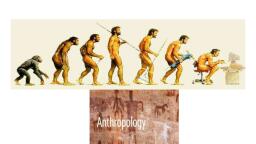
20. It governs relationships between individuals and the government., a. Comparative Politics, c. International Affairs, b. Public Administration, d. Public Law, 21. It is represented by the Java man was believed to be crucial in defining the moments by which, humanity evolved., a. Homo Neanderthalensis, c. Homo Erectus, b. Homo Habilis, 22. They were mans primitive in comparison to endoderm humans but they exhibited similar mental, sophistication by wearing animal skins and fuss., a. Homo Erectus, c. Homo Neanderthalensis, b. Homo Habilis, 23. Learned how to communicate symbols and languages., a. Homo Erectus, c. Homo Habilis, b. Homo Sapiens, 24. It is the long process of improving the humans everyday living through innovation, discovery,, enhancing routines, and counting mechanisms., a. Humanization, b. Harmonization, c. Evolution, 25. The process by which beings develop from earlier beings., a. Evolution, b. Harmonization, c. Humanization, 26. It is believed to be the earliest stage of human development, which took development over .5 mya, to 10 tya., a. Neothic Age, b. Polesthic Age, c. Iron Age, 27. In this age, many of the great civilization was found to have grown., a. Copper Age, b. Bronze Age, c. Iron Age, 28. It is a system of should behaviour,, a. Society, b. Culture, c. Symbols, 29. It is a group of people who share a common culture., a., Symbols, b., Culture, c., Society, 30. It pertains t the belief that one’s native culture is superior to or the most natural among other cultures, a. Ethnocentrism, b. Xenocentrism, c. Cultural relationship, 31. Many Filipinos prefer imported products rather than locally made ones, thinking the quality is better, if the product is made abroad. What kind of orientation in viewing other culture?, a. Ethnocentrism, b. Xenocentrism, c. Culture relationship, 32. It requires an open mind and enthusiasm to adapt to the new culture., a. Cultural relationship, b. Xenocentrism, c. Ethnocentrism, 33. It is the primary agent of socialization., a. Family, b. School, c. Church, 34. It refers to the learned ways of living – the norms, values and beliefs one gets accordance to a, society., a. Social Environment, c. Geographic Environment, b. Cultural Environment, 35. It refers to differences in personality are found among individuals living in different location with, different culture and topography., a. Social Environment, c. Geographical Environment, b. Culture Environment, 36. This form of deviance refers to use of unadvised or illegal methods to adhere social goals., a. Innovation, b. Ritualism, c. Retreation, 37. From the term itself, it is strictly obscure the norms set by the society., a. Innovation, b. Ritualism, c. Retreation, 38. It is the complete rejection of norms., a. Retreation, b. Innovation, c. Rebellion, 39. It is a number of people with similar norms, values, and expectations who regularly interact with one, another, a. Group, b. Status, c. Imitation, 40. It is defined as a person’s position in a social system., a. Roles, b. Status, c. Personality, [END OF TEST], , 2