Page 1 :
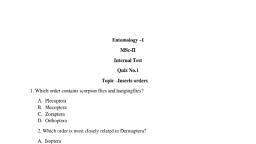
Entomology, MSc-II, Internal Test, Quiz No.1, Topic —Insects orders, 1, Which order contains scorpion flies and hangingflies?, , A. Plecoptera, , B. Mecoptera, C. Zoraptera, D. Orthoptera, , 2. Which order is most closely related to Dermaptera?, A. Isoptera, B. Psocodea, C. Mecoptera, D. Coleoptera, 3, Which insect order is NEVER associated with plants?, A. Hymenoptera, B. Hemiptera, C. Thysanoptera, D. Siphonaptera, 4. Which of the following are the main characteristic features of an Insect?, , A. Pair of antennae, B. Three pairs of legs, C. Pair of wings, D. All of the above, 5. Which of the following is called the resting and inactive stage in the insect life cycle?, , A. The Egg stage, B. The Larva stage, C. The pupa stage, D. The Adult stage, , 6. Which of the following is not a natural predator of BPH?
Page 2 :
Bugs, Red ants, . Spiders, , 9 nw >, , . All of the above, 7. Insects, which feed on one type of food, are called, , A. Polyphagous, B. Monophagous, , C. Entomophagy, D. None of the above, , 8. Which of the following statements is true for Entomophagy?, , A. Refers to eating birds, B. Refers to eating insects, C. Refers to eating fishes, D. None of the above, , 9, The total number of abdominal legs in the larval stage of the mustard sawfly is, , A. 2 pairs, B. 4 pairs, C. 6 pairs, D. 8 pairs, 10, Aphid, small, sap-sucking insects are examples of, A. Oviparous, B. Viviparous, C. Paedogenesis, D. Parthenogenesis, , 11, Which of the following statements is true about the Anatomy of a cockroach?, , A. A pair of testes are present in the 2nd segment, , B. A pair of ovarics are present in the 4th segment, , C. The thorax of a cockroach is divided into 6 segments, , D. The abdomen region of a cockroach is divided into 10 segments, , 12. Insects breathe through, , , , A. Gills, B. Nostrils, C. Spiracles
Page 3 :
D. None of the above, 13, Which one of these insects does not lay eggs in its lifecycle?, , A. Bee, , B. Grasshopper, C. Tsetse fly, D. Housefly, , 14. Which of these are characteristic of all insects?, A. Complete metamorphosis and possession of three pairs of jointed legs., B. Possession of three pairs of jointed legs and body divided into three main parts., C. Possession of one or two pairs of wings and having three pairs of jointed legs,, D. Complete metamorphosis and body divided into three main parts., , 15. Which one of the following functions of the skeleton applies only to insects?, , A. Providing camouflage., , B. Protection, , C. Leavers of locomotion., , D, Determining body shape exactly,, , 16, Which of the following groups of insects all have similar feeding habits?, , A. Bee, mosquito, caterpillar,, , B. Housefly, cockroach, praying mantis., C. Tsetsefly, housefly, caterpillar., , D. Bee, butterfly, bedbug., , 17, Father of insect physiology is..?, , A. Wiggelworth., B. Jonathan., , C. J.P, Dastur,, D. Nelson., , 18. What insects are found in the order Siphonaptera?, , A. Ticks, B. Termites, C. Lice, D. Fleas, , 19. True bugs are in which order?, , A. Hemiptera, B, Mantodea, , C. Hymenoptera, D. Embiidina
Page 4 :
20. The order Hymenoptera does not include which insects?, , A. Whiteflies, B. Bees, , C. Sawflies, D. Wasps, , 21, What order contains grasshoppers, crickets, and katydids?, , A. Trichoptera, B. Grylloblattaria, C. Orthoptera, D. Pthiraptera, , 22. Which insect helongs in the order Diptera?, , A. Fishflies, B. Crane flies, C. Snakeflies, D. Dobsontflies, , 23. A naiad is best described as a -----A. Predatory larva, B. Aquatic nymph, C. Wingless adult, D. Scavenger, 24. Hemiptera and Hymenoptera are similar because both have:, A. Holometabolous development, B. Piercing-sucking mouthparts, C. Neopterous wings, D. All of these, , 25. Which insect order is most commonly found in soil litter?, A. Collembola, B. Lepidoptera, C. Neuroptera, D, Phasmatodea
Page 5 :
True/False:, , All arthropods have jointed legs with claws., , A. True, B. False, , . All ametabolous insects are apterygote., , A. True, B. False, , . All orthopteroid orders are hemimetabolous,, , A. True, B. False, , . All holometabolous orders are Endopterygota., , A. True, B. False, , . All chelicerate arthropods are aquatic., A. True, , B. False