Page 1 :
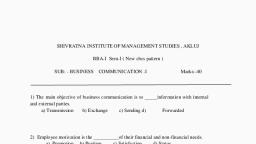
1. The term “communis” derived from ___ word., , A. Greek., , B. Latin., , C. Chinese., D. English., , 2. Communication means ____ information, feeling and, thoughts, with others., , A. To receive., B. Exchange of., C. Conveying., D. All the above., , 3. Grapevine communication is associated with, ____ communication., , A. Formal, , B. Informal, C. Horizontal, D. Vertical., , 4. Lateral communication is between, , A. Superior and subordinate., B. Same cadre of personal., C. Subordinate and superior., D. Among all., , 5. Audio Visual communication combines, A. Auditory only., B. Visual only., , C. Both auditory & visual., D. Written., , 6. Communication problems otherwise known as, , A. Enquire.
Page 2 :
B. Barriers., C. Encoding., D, Decoding., , 7. Posters fall under communication., , A. Oral., , B. Visual., C. Written., D. Spoken., , 8. Informal communication is otherwise known as, communication., , A. Grapevine., B. Lateral., C. Visual., D. Horizontal,, , 9. Horizontal communication flows through, , A. Face-to-face discussion., B. Telephonic talk., , C. Periodical meeting., , D. All the above., , 10. Gestural communication is a, , A. Non-Verbal Message., B. Direct conversation., C. oral communication, D. Written., , 11. Physical Barriers to communication are, , A. Time and distance., , B. Interpretation of words., C. Denotations., , D. Connotations.
Page 3 :
12. Communication is derived from a Latin word, “Communis” which means, , A. Community, B. Share, , Cc. Common, D. Marxist, , 13. Communication starts with:, , A. Encoding, B. Sender, C. Channel, D. Feedback, , 14. The number of key elements in the communication, process is :MCQs-Business Communication, , A. Five, B. Six, , C. Seven, D. Four, , 15. The two broad areas of communication are:, , A. Oral and written communication, , B. Verbal and written communication, , C. Verbal and non-verbal communication, D. Ora! and non-verbal communication, , 16. Which of the following combination is /are example/s, of oral communication?, , A. Meetings, memos and presentations, , B. Meetings, memos and performance reviews, , C. Meetings, presentations and performance reviews, D. All the above

Page 4 :
17. Which of the following combination is /are example/s, of written communication?, , A. Letters and voicemail, B. Reports and email, , C. Circulars and voicemail, D. All the above., , 18. Orders and directives are the example of:, , A. Downward communication, B. Upward communication, C. Diagona! communication, , D. Horizontal communication, , 19. Communication between HR manager and, salesman is an example of:, , A. Horizontal! communication, B. Lateral communication, , C. Diagona! communication, D. Vertical communication, , 20. Diagonal communication is also known as:, , A. Cross ward communication, B. Horizonta! communication, C. Vertical communication, , D. Any of the above, , 21. Communication between HR manager and Finance, manager is an example of:, , A. Downward communication, B. Upward communication, C. Diagona! communication, D. Horizontal communication
Page 5 :
22. Down ward communication and Upward, communication are :, , A. Vertical communication, B. Horizonta! communication, C. Diagona! communication, D. None of these, , 23. Placement of purchase order to supplier of material, IS ---------- communication., , A. Vertical communication, B. Horizontal! communication, C. Internal communication, , D. External communication, 24. Receiving a sales order is an example of:, , A. Vertical communication, B. Horizonta! communication, C. Internal communication, , D. External communication, , 25. --------- Communication can be inward or outward:, , A. Vertical communication, , B. Horizonta! communication, C. Internal communication, D. External communication, , 26. Functional coordination is one important reason for, communicating with:, , A. Superiors, , B. Peers, , C. Subordinates, , D. Employees’ unions, , 27. Communication with superiors involves: