MCQ Test of PSYCHOLOGY Recorded Class, Child Development & Learning VYGOTSKY, KOHLBERG, PIAGET - Study Material
Question 1 :
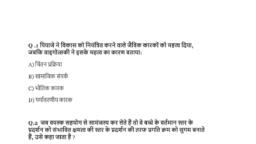
According to Lev Vygotsky, the primary cause of learning and development is:
(a) stimulus-response pairing
(b) social interaction
(c) adjustment of mental schemas
(d) equilibration
Question 2 :
In the context of Kohlberg’s stages of moral reasoning, under which stage would the given typical response of a child fall? “Your parents will be proud of you if you are honest. So you should be honest.
(a) Social contract orientation
(b) Punishment-obedience orientation
(c) Good girl-good boy orientation
(d) Law and order orientation
Question 3 :
According to Jean Piaget, which of the following is necessary for learning?
(a) Active exploration of the environment by the learner
(b) Observing the behaviour of adults
(c) Belief in immanent justice
(d) Reinforcement by teachers and parents
Question 4 :
According to Vygotsky, children learn
(a) by maturation.
(b) when reinforcement is offered.
(c) by imitation.
(d) by interacting with adults and peers.
Question 5 :
Kohlberg has given
(a) the stages of cognitive development.
(b) the stages of physical development.
(c) the stages of emotional development.
(d) the stages of moral development
Question 6 :
In Vygotsky's theory, which aspect of development gets neglected
(a) Social
(b) Cultural
(c) Biological
(d) Linguistic
Question 7 :
Which of the following is based on Vygotsky’s socio cultural theory?
(a) Operant conditioning
(b) Reciprocal teaching
(c) Culture-neutral cognitive development
(d) Insight learning
Question 8 :
Vygotsky emphasized the significance of the role played by which of the following factors in the learning of children?
(a) Moral
(b) Physical
(c) Social
(d) Hereditary
Question 9 :
According to Kohlberg, a teacher can instill moral values in children by
(a) giving strict instructions on 'how to behave'
(b) involving them in discussions on moral issues
(c) laying clear rules of behaviour
(d) giving importance to religious teachings
Question 10 :
The concept of ‘private speech’ of children as proposed by Vygotsky
(a) shows that children are stupid and thus need guidance of adults.
(b) illustrates that children are egocentric.
(c) shows that children love themselves.
(d) illustrates that children use speech to guide their own actions.



 Learn better on this topic