Page 1 :
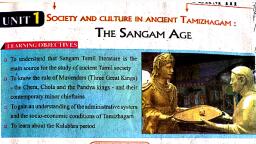
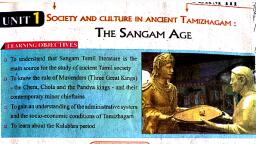
Unit El, , Society and Culture in, Ancient Tamizhagam:, The Sangam Age, , Learning Objectives, , , , , , , , , , , , , + To understand that Sangam Tamil literature is the main source for the study of, , ancient Tamil society, , + To know the rule of Muvendars (Three Great Kings) - the Chera, Chola and the, Pandya kings — and their contemporary minor chieftains, + To gain an understanding of the administrative system and the socio-economic, , conditions of Tamizhagam, + To learn about the Kalabhra period, , , , The Sangam Age, , The word ‘Sangam’ refers to the association, of poets who flourished under the royal, patronage of the Pandya kings at Madurai., The poems composed by these poets are, collectively known as Sangam literature., The period in which these poems were, composed is called the Sangam Age., , Sources, , ArumugaNavalar (Jaffna), U.V.Swaminatha, Tyer and Damodharam Pillai (Jaffna) strove, hard and spent many years in retrieving and, , publishing the Tamil classics and the ancient, Tamil texts, which were originally present as, palm leaf manuscripts., , , , Inscriptions Hathigumpha Inscription of King Karavela of Kalinga,, Pugalur (near Karur) Inscription, Ashokan Edicts II and, XIII, and inscriptions found at Mangulam, Alagarmalai, and Kilavalavu (all near Madurai), , Copper Plates Velvikudi and Chinnamanur copper plates