Page 1 :
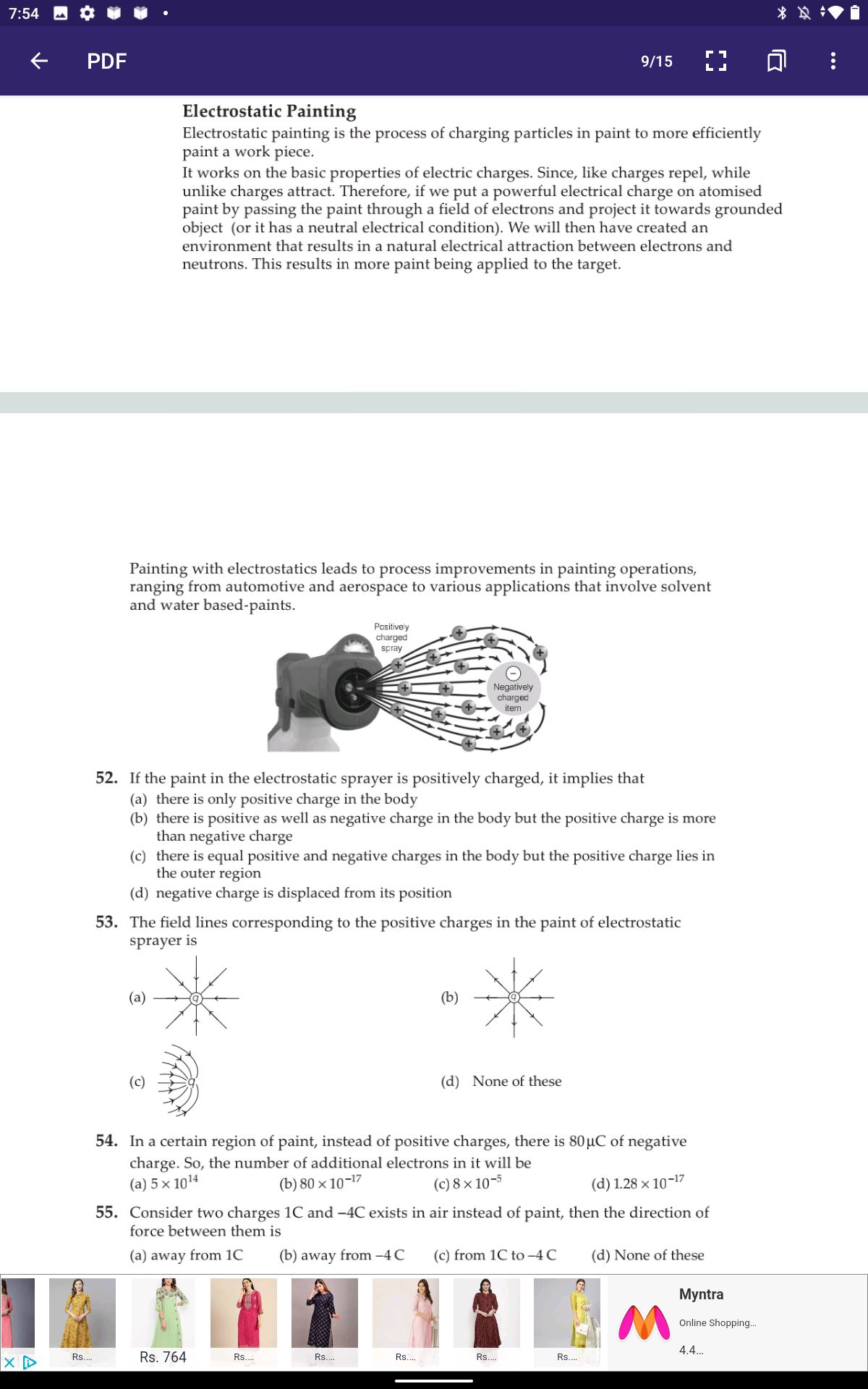
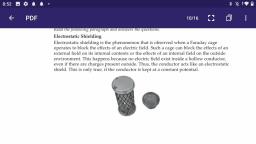
reo we], , ee Pg, , L IRV, , a, , , , 52., , 53., , 54., , 55., , Electrostatic Painting, , Electrostatic painting is the process of charging particles in paint to more efficiently, paint a work piece., , It works on the basic properties of electric charges. Since, like charges repel, while, unlike charges attract. Therefore, if we put a powerful electrical charge on atomised, paint by passing the paint through a field of electrons and project it towards grounded, object (or it has a neutral electrical condition). We will then have created an, environment that results in a natural electrical attraction between electrons and, neutrons. This results in more paint being applied to the target., , Painting with electrostatics leads to process improvements in painting operations,, ranging from automotive and aerospace to various applications that involve solvent, and water based-paints., , Positively, charged, , , , If the paint in the electrostatic sprayer is positively charged, it implies that, (a) there is only positive charge in the body, (b) there is positive as well as negative charge in the body but the positive charge is more, than negative charge, (c) there is equal positive and negative charges in the body but the positive charge lies in, the outer region, (d) negative charge is displaced from its position, The field lines corresponding to the positive charges in the paint of electrostatic, sprayer is, (a) (b), (c) ») (d) None of these, “), In a certain region of paint, instead of positive charges, there is 80C of negative, charge. So, the number of additional electrons in it will be, (a) 5x 10⁴ (b) 80 x 1077 (c)8x 10⁷ (d) 1.28 x 1077, Consider two charges 1C and —4C exists in air instead of paint, then the direction of, , force between them is, (a) away from1C —(b) away from-4C_—(c) from 1C to-4C._—_—(d) None of these, , , , xp ®, , ro Myntra, :, b ii AA eee, i \ al, Rs. Rs. Re,, , Rs. 764 Rs Aan