Notes of TYBBI Auditing, Auditing Auditing techniques and internal audit.pdf - Study Material
Page 1 :
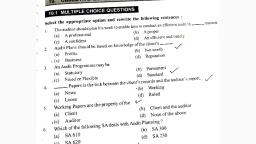
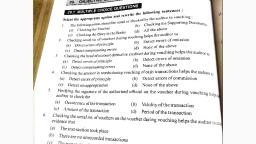
ee, GG, | OBJECTIVE QUESTIONS, , IPLE CHOICE QUESTIONS, , , , pel ihe appropriate option and rewrite the following sentences q, , ne ' , Pes, , Audil Sampling’ enables the auditor to audit evi, ——-_ vidence a, , selected. nce about some characteristic of, , the Hems, (a) tynore (b) Obtain and evaluate, w Manipulate (d) None of the above, , When designing an audit sample, the auditor should consider , (a) The specific audit objectives, , (b), ce), (d) All the above, , that, although the sample result does not support the auditor’s assessment of control, rate would support such an assessment, is known as , ‘The population from which the auditor wishes to sample, , The sample size, , , , , The risk, rivk, the actual compliance, , Risk of Over Reliance (b) Risk of Under Reliance, , Risk of Incorrect Rejection (d) Risk of Incorrect Acceptance, , jy The visk that, although the sample result supports the auditor’s assessment of control risk, the, actual compliance rate would not support such an assessment is known as , (b) Risk of Incorrect Rejection, , (c) Risk of Incorrect Acceptance (d) Risk of Over Reliance, , ple result supports me conclusion that a recorded account balance, d, in fact it is not materially mis-stated is known, , 1, , , , (a), (c), , (a) Risk of Under Reliance, , The risk that, although me sam, or class of transactions is materially misstate, , us, (a) Risk of Incorrect Rejection (b) ‘Risk of Over Reliance, , (c) Risk of Under Reliance (d) Risk of Incorrect Acceptance
Page 2 :
6 The risk that, although the sample, , ter, OF Class of transactions is not me, (a) Risk of Over Reliance . ), ; eee] is, (c) Risk of Incorrect Acceptar, , corre, and the risk of 1, , , , 7 The risk of over relianc ! cand, (a) Affect audit effectiveness inion on the fir, erroneous O|, (b) May lead toan erron, (c) Both (a) and (b) above 7, (d) None of (a) or (b) ahr _— orincorre’, eliance and the rls, & The risk of under reliance a, (a) Affect audit efficiency, (b) Lead to additional work being p |, would be ,,, (c) Neither (a) nor (b) above a the no cn a, (d) Both (a) and (b) above populate achiever, , ection, , mie Entity, the auditor, OF V, ed bY, er forme, , rin the Je ha, 9 Tolerable error is the ———— e101 the 2, accept, and still conclude that (by Reas oi, (a) Minimum (d)_ Insignifie, , c) Maximum ia thé, 10. ‘ eee procedures, the tolerable ee bod 0000, (a) Maximum rate of deviation from a pre, willing to accept /, (b) Minimum monetary error in an, accept, (c) Minimum rate of deviation from a P', willing to accept r, (d) Maximum monetary error in an account, , accept, , t balance that the auditer ,, in, , t the auditor would be ,,, , , , account balance tha’, , ance that the audite, ,, A count balan, rescribed ac, , , , lance that the auditor would he ,, ala, , 11. In tests of control, the tolerable error is the, , i trol, (a) Maximum rate of deviation from a prescribed con, be willing to ignore, , ; hat the audits, ,, (b) Minimum rate of deviation from a prescribed control procedure tha’ oe, willing to accept avdis, , (c) Maximum rate of deviation from a prescribed control procedure that the audi:-, ,, , be willing to accept, , (d) Minimum rate of deviation from a prescribed control procedure that the auditor vcs,, , willing to ignore, , 12. This method of selectin, , of selection., (a) Random Selection, , (c) Haphazard selection, , procedure that the audi-., ., , 'g sample ensures that all items in the population have an equal +4, , (b) Systematic Selection, (d) None of above, , electing items using a constant interval “, M start., , 13. This method of sample selection involves s, selections, the first interval having a rando, (a) Random Selection, , (b) - Systematic Selection, (c) Haphazard selection, , (4) None of above
Page 3 :
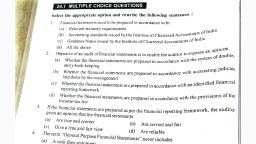
wag Techniques and, , fit Int, , itt ernal Aud;, lit, , si of, “ spetter of Weakness’ deals w;, , , , ti . ith, i @ Statutory Audit Weaknesses in 157, ic) Financial Position (b), , rhe following is suitable fo, _ is eal Controls, 5 Opening and closing etisis checking, ‘One of the above, , () Bank Reconciliation Stat ‘S, , © Transactions on which en ; |, , Payments mad itor must i, , d) sshidledie’ e by ab, k, durin Teport under the Companies Act, , SA which deals with Audit Sam, fe '& audit ofa bank, iq) 530 Pling, , 0) 610 (6) 400, , The responsibility for ado, control rests with the, (a) Chief Accoutant, , (c) Financial statement auditor (b) Company management, , obtain an understanding of internal contr eesti audit department, ‘Ols, , : @) Auditor is responsible, () Both are responsible, Internal control does NOT aim to achieve, a) Reliability of financial Teporting, (b) Efficiency and effectiveness of operations, (c) Compliance with laws and regulations, (d) Zero business risk, , (b) Management is responsible, (4) Neither are responsible, , , , 10. i vines ; svotep : ann Concerned with the objective of internal control relating to, (b) Reliability of financial reporting, , (c) Effectiveness of operations, , (d) Compliance with applicable laws and regulations, , Ql. Internal controls, , (a) are implemented by and are the responsibility of the auditors, , (b) consist of policies and procedures designed to provide reasonable assurance that the, , company achieves its objectives and goals, (c) guarantee that the company complies with all laws and regulations, (d) only apply to public limited companies, | Internal controls are not designed to provide reasonable assurance that, (a) all frauds will be detected, , (b) transactions are executed in accor, (c) the company’s resources are used efficiently and effectively, , (@) company personnel comply with applicable rules and regulations, tablishing a private company’s internal control ?, , dance with management's authorisation, , Which of the following is responsible for es He, (a) Senior Management (b) Tnteenal Au ita, (c) ICAI (d) Audit Committee, °) IC
Page 5 :
TPs Sip,, Ene., a, , tepartn, &, od ‘Nt, to Prey,, q, , e SeBrey.,, ques, , "Ments, , Uditor,, ‘ir Wor, Timen, 12 ag 4, bly, , , , see, , , , , Checking means to selec, : tand e ‘, Ait items. examine a representative sample from a large number of, .g and closing entries, oni ,, _ reconciliation Staismenta.. (are / are not) suitable for test checking., Checking is the checking of te (are / are not) suitable for test checking., . Ol, postings into the ledgers etc. tals and calculations etc. in subsidiary books,, Uae y i >, fe SA 930: pudtt Means the, Vv within an account balance. a, , fhe irons, 5 jis the entire set of d., s lata from whi, which the auditor wishes to sample in order t0 reach, , checking,, , pplication of audit procedures to less than 100% of, , , , ne olusion., Es a6 individual diems that make up the, a =f aoleeindetetie sree in the population that the auditor would be, a (smaller / gre: “ the result from the sample has achieved the audit obje, _(s greater) the tolerable error, the greater the sample size will need to be., , e size will need to be., , Jer the tolerable erro:, . mes (smaller / greater) the samp!, rror is :, or is the maximum rate of deviation from a prescribed control, cted to be, , —— are known as sampling units., willing to, ctive., , ace, , , , he smal, l jn tests ofcontrol, the, , ne :, that the auditor would be willing to accept, pt., , ocedure, auditor should select sample i 4, ple items in such a way that the sample can be expe, , , , 1, , !, , qhe, , u of the population., ethod of selecti, , my ecting sample ensures that all items in the population have an equal, , chance of selection., rational / : we, (Op Accounting) Controls aim to ensure that the management policies 10, , ib f erati ie, respect of pe operations and administration of the concern are implemented., i? sharers component of Internal Control established to determine whether other, jnternal Controls are well designed and properly operated., The imernal audit department (should be / should not be) involved in the performance of, executive actions., The copy of the report of the internal auditor (should be / should not be) made available to the, , external, , statutory auditor., work (should be / should not be) planned in consultation with the, , The Internal Audit, , q, quditor., gement / shareholders). ~~, ). 4, , internal Auditor is appointed by the (mana, y the central governmen, , sal Auditor can be removed (by the management /b, , an integral aspect of (internal check/test check)., k is divided in such a way that the documents prepare!, , Intert, _ Division of work is, in(routine check / internal check) the wor', by one person are automatically checked by other persons., , es are changed from time to tim, , / internal check) the duties of the employe:, , 3 In (internal audit



 Learn better on this topic