Notes of 4th Sem, Haematology 1 aplastic anemia.pdf - Study Material
Page 3 :
The highest frequency of aplastic anemia occurs in persons between, the ages of 15 and 25 years; a second peak occurs between the ages of, 65 and 69, The number of marrow CD34+, cells (multipotential hematopoietic progenitors) and their derivative, colony-forming unit–granulocyte-macrophage (CFU-GM) and, burstforming, unit–erythroid (BFU-E) are reduced markedly in patients with, aplastic anemia
Page 4 :
Autoreactive Cytotoxic T Lymphocytes, • This mechanism could explain the response to immunosuppressive, treatment in cases that follow exposure to an exogenous agent., Spontaneous or mitogen-induced increases in mononuclear cell, production of interferon-γ,28,29 interleukin (IL)-2,29 and tumor, necrosis factor-α (TNF-α)30,31 occur.
Page 6 :
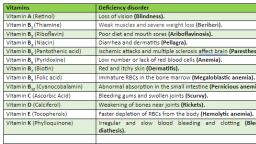
ØNutritional:, • Copper deficiency, • Vitamin B12, • Folic acid, Ø Chemicals:, • Benzene, • Insecticides, • Pesticides, • Radiation, ØOther Associations:, • Pregnancy, • Inflammatory and autoimmune (e.g. systemic lupus erythematosus), • Graft-versus-Host-Disease
Page 10 :
CLINICAL FEATURES, • The onset is insidious, and the initial symptom is frequently related to, anemia or bleeding, although fever or infections may be noted at, presentation. Specific manifestations include the following:, ØAnemia: May manifest as pallor, headache, palpitations, dyspnea,, fatigue,or foot swelling, ØThrombocytopenia: May result in mucosal and gingival bleeding or, petechial rashes, ØNeutropenia: May manifest as overt infections, recurrent infections,, or mouth and pharyngeal ulcerations.
Page 12 :
• CBC AND PERIPHERAL SMEAR: A paucity of platelets, red blood cells, (RBCs), granulocytes, monocytes, and reticulocytes is found in, patients with aplastic anemia in CBC. Mild macrocytosis is, occasionally observed., • A peripheral blood smear may be helpful in distinguishing aplasia, from infiltrative disease causes. In aplastic anemia, there will be no, abnormal cells. Teardrop poikilocytes and leukoerythroblastic changes, suggest an infiltrative process.
Page 13 :
PERIPHERAL BLOOD TESTS:, , Peripheral blood tests in patients with suspected aplastic anemia may, include the following:, , • Hemoglobin electrophoresis and blood-group testing: may show elevated, levels of fetal hemoglobin and red cell I antigen, suggesting stress, erythropoiesis., • Biochemical profile: LDH levels, LFTs, bilirubin levels, pregnancy test, copper, and zinc levels, vitamin B12 and folate levels., • Viral Serology: hepatitis virus panel, CMV, EBV, parvovirus, VZV, HSV, HHV6,, HIV, adenovirus., • Flow cytometry of peripheral blood: for Paroxysmal Nocturnal, Hemoglobinuria (PNH), • Histocompatibility testing: should be conducted early to identify potential, related donors, those for young patients.
Page 14 :
BONE MARROW ASPIRATION AND BIOPSY:, • BONE MARROW ASPIRATION: In aplastic anaemia, the specimens are, hypocellular. Aspiration samples alone may appear hypocellular, because of technical reasons (eg, dilution with peripheral blood), or, they may appear hypercellular because of areas of focal residual, haematopoiesis., • BONE MARROW BIOPSY: By comparison, core biopsy better reveals, cellularity and thus It helps to confirms the diagnosis of aplastic, anemia. The specimen is considered hypocellular if it is less than 30%, cellular in individuals younger than 60 years or if it is less than 20%, cellular in those older than 60 years.
Page 15 :
MRI:, • It is used in a small minority of pts. In which there are pockets of, hypercellularity which can give false negative results of bone marrow, biopsy if it the sample is taken from one of those areas.
Page 16 :
Staging of aplastic anemia is based on the criteria, of the International Aplastic Anemia Study Group, (IAASG).



 Learn better on this topic