Notes of 2nd PU PCMB C Section, Physics IMG-20220211-102131.jpeg - Study Material
Page 1 :
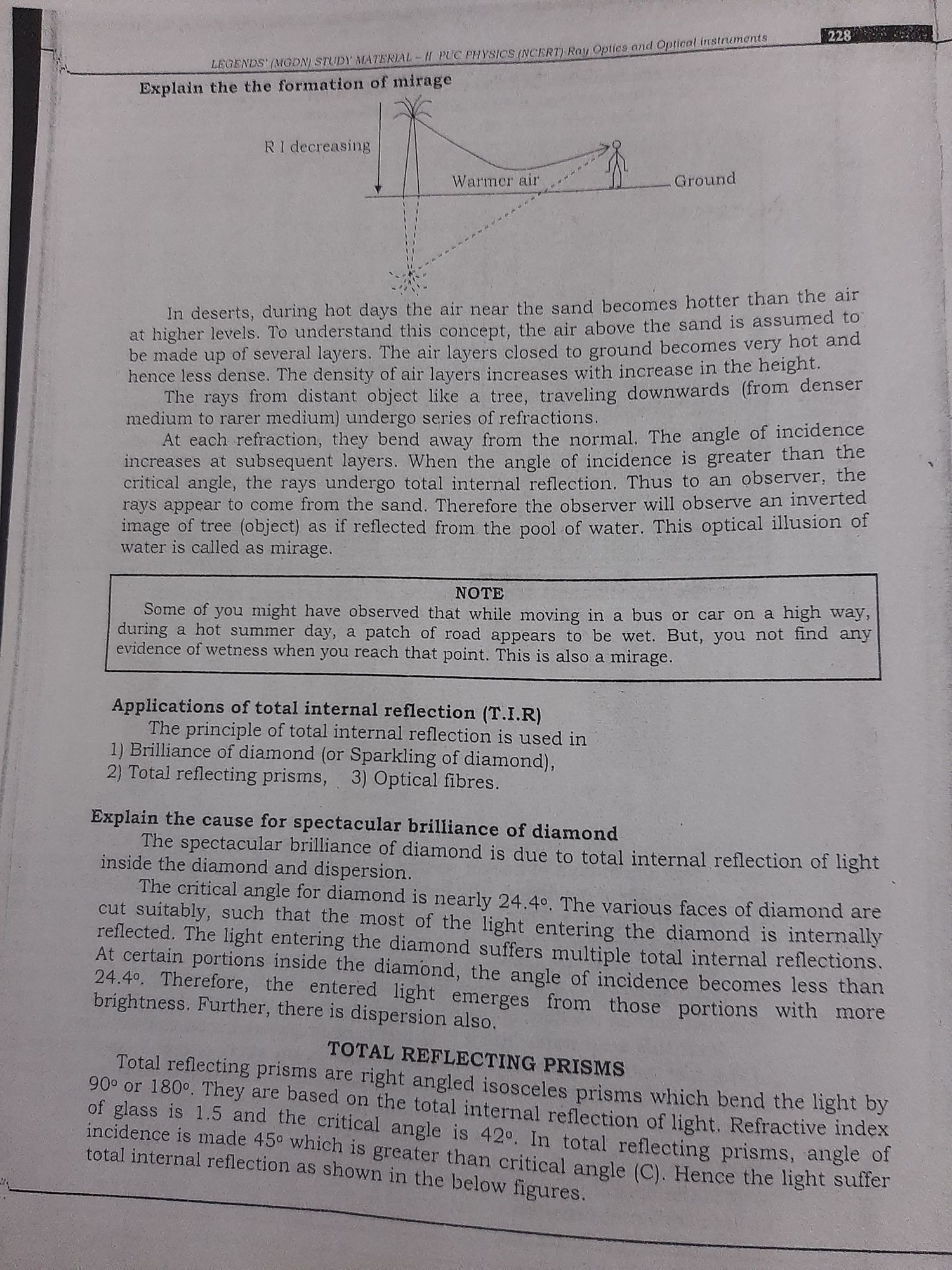
4, {, , }, q struments \, Optics and Opie at wotuments SAI |, 5 OO, , i PUC PHYSICS (NCERT) Ray, SL cael, , DP, __— Ground, , LEGENDS! (MGON) STL IDY MATERIAL, , Explain the the formation of mirage, , , , R ] decreasing, , , , Ae ane, Warmer @, , ir, , ; t ir, air near the sand becomes hotter than Le, ve the sand is assumed to, , es very hot and, the height., (from denser, , In deserts, during hot days the, at higher levels. To understand this concept, the air abo, be made up of several layers. The air layers closed to ground becom, hence less dense. The density of air layers increases with increaseé In, , The rays from distant object like a tree, traveling downwards, medium to rarer medium) undergo series of refractions., , At each refraction, they bend away from the normal, The angle of incidence, , r+ than the, , increases at subsequent layers. When the angle of incidence is greate :, critical angle, the rays undergo total internal reflection. Thus to an observer. the, , rays appear to come from the sand. Therefore the observer will observe an inverted, , image of tree (object) as if reflected from the pool of water. This optical illusion of, , water is called as mirage., , , , , , NOTE, , Some of you might have observed that while moving in a bus or car on a high way,, during a hot summer day, a patch of road appears to be wet. But, you not find any, evidence of wetness when you reach that point. This is also a mirage., , , , , Applications of total internal reflection (T.I.R), , The principle of total internal reflection is used in, 1) Brilliance of diamond (or Sparkling of diamona), 2) Total reflecting prisms, 3) Optical fibres., , Explain the cause for spectacular brilliance of diamond, , The spectacular brill i 1, nie oe ee es is due to total internal reflection of light, € critical angle for diamond i r |, cut suitably, such that the ae bere a, reflected. The light entering the diamond th “, At certain portions inside the diamc mee, 24.4°. Therefore, the entered lioht, brightness, Further e, , The various faces of diamond are, tering the diamond is internally, multiple total internal reflections., , tere emerges, , there is dispersion also, , Total Teflecting prisms are, , 90° or 180¢ They are bas, : ed, of glass is 1.5 and the epiti reflecti i, of § \ ct ie inde, fncideihe @ aa. ue. ve angle is 420, In oe tee Refractive index, total internal reflection as sh ® 8reater than critical ang] Ge coat. anes a, yh ®wn In the below figures cette Eon