Notes of XII, Botany notes 2 - Study Material
Page 1 :
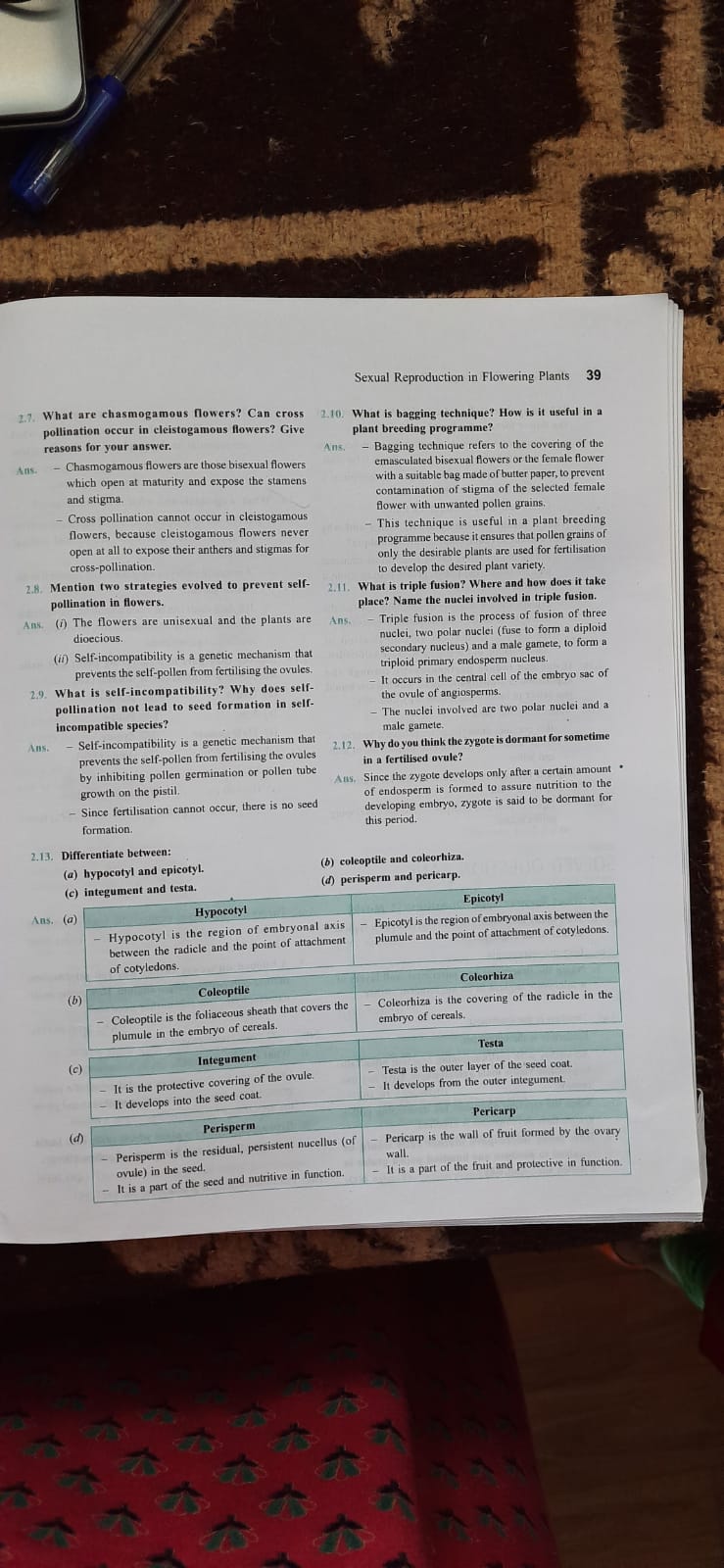
What are chasmogamous lowers? Can cross, , pollination occur in cleistogamous flowers? Give, , reasons for your answer., , , , — Chasmogamous flawers are those bisexual flowers., which open at maturity and expose th, and stigma, , , , Cross pollination cannot occur in eleistogamous, flowers, because cleistogamous flowers never, open at all to expose their anthers and stigmas for, cross-pollination., , Mention two strategies evolved to prevent self, pollination in flowers., , (i The flowers are unisexual and the plants are, dioecious., , (i Self-incompatibility is a genetic mechanism that, prevents the self;pollen from ferilising the ovules., , What is sel-incompatibility? Why does self, ation not lead to seed formation in se, , , , , , poll, , incompatible spe, , ~ Self-incompatibility is @, , prevents the self-pollen from ferilising the ovules, , by inhibiting pollen germination or pollen tube, growth on the pistil, , tion eannot occur, there is no seed, , , , , , genetic mechanism that, , Since fertlisa, , formation., Differentiate betwee, (a) hypocotyl and epicotyl., , , , o, , (6) integument and testa @, , ore, , @ Ee =, Hypocotyl is the region of et, | between thé, , of cotyledons. a, , , , , , , , , , , , , , , , , , oz ao, coronene tet tt eve, Cee kee, () = Ss yment, — his the protective covering ofthe ove, ee canes, —_—mas - s, lieapenis ent nucellus:, , , , J regen itl ri, , covule) in the seed, prt ofthe seed and uti, , | = tise tive in function., , _—,, , fe radicle and the point of attachment |, , 39, , Sexual Reproduction in Flowering Plants, , (0. What is bagging technique? How is it useful in a, plant breeding programme?, ys = Bagging technique refers to the covering of the, emasculated bisexual flowers or the female flower, witha suitable bag made of butter paper, to prevent, contamination of stigma of the selected female, flower with unwanted pollen grains,, This technique is useful in a plant breeding., programme because it ensures that pollen grains of, only the desirable plants are used for fertilisation, to develop the desired plant variety., 11. What is triple fusion? Where and how does it take, place? Name the nuclei involved in triple fusion., , , , , , , , , , ns. — Triple fusion is the process of fusion of three:, nuclei, two polar nuclei (fuse to form a diploid, secondary nucleus) and a male gamete, (o form #, triploid primary endosperm nucleus, , the central cell of the embryo sac of, , , , Tt occurs, the ovule of angiosperms., ~The nuclei involved are two polar nuclei and, male gamete, Why do you thi, in a fertilised ov, Since the zygote develops only after a certain amount, Sf endosperm is formed to assure nutrition to the, developing embryo, zygote is said lo be dormant for, this petiod, , sk the zygote is dormant for sometime, , , , ccoleoptile and coleorhiza., , perisperm and pericarp., , a Eoin, , Epicor isthe region of embryonal axis between the, , plumule andthe point of tachment of cotyledons, , , , ~ Coleorhiza is the covering of the radicle in the, , embryo of cereals, , “Testa, , ‘Testa is the outer layer of the seed coat, , | = TRdevelops fm the our ne gument, , , , , , Periearp, , Pericarp is the wall, , a of fut famed by he oa, oon, , | — his part of the fruit and protetive in funtion