Notes of St .Verona 11th Class, Biology Animal kingdom.pdf - Study Material
Page 1 :
Point to Remember, Basis of Classification :, Animals are classiied on the basis of following few fundamental features—, 1. Levels of Organisation :, (1) Cellular level : Cells are arranged as loose cell aggregates, e.g.,sponges., (2) Tissue level : The cells performing the same function are arranged into, tissues, e.g., Coelenterates., (3) Organ level : Tissues are grouped together to form organs, each, specialised for a particular function. e.g., platyhelminthes., (4) Organ system level : organs are associated to form functional systems, e.g., Annelids, Arthropods, Molluscs, Echinoderms and Chordates., Example : Circulatory System., Open type : Blood pumped out through heart. Not conined to blood vessels., Cells and tissues are directly bathed in it., Closed types : Blood is circulated through blood vessels (arteries,veins and, capillaries), 2. Symmetry :, Asymmetrical : Cannot be divided into equal halves through median plane, e.g., Sponges., Radial symmetry : Any plane passing through central axis can divide organism, into identical halves. e.g., coelentrates,Ctenophores and echinoderms., Bilateral symmetry : Only one plane can divide the organism into two identical, left and right halves e.g., Annelids and Arthropods., 3. Germinal Layers :, Diploblastic : Cells arranged in two embryonic layers i.e., external ectoderm, and internal endoderm. (Mesoglea may be present in between ectoderm and, endoderm) e.g., porifers and Coelentrates. (Cnidarians), Triploblastic : Three layers present in developing embryo i.e., ectoderm,, mesoderm and endoderm. e.g., Platyhelminthes to Chordates., , www.cleariitmedical.com
Page 2 :
4. Coelom (Body cavity which is lined by mesoderm), Coelomates : Have coelom e.g., Annelids, Arthropods, molluscs, Echinoderms,, Chordates etc., Pseudocoelomates : No true coelem as mesoderm is present in scattered, pouches between ectoderm and endoderm. e.,g., Aschelminthes., Acoelomates : Body cavity is absent e.g., Platyhelminthes., 5. Segmentation (A) True Metamerism : Found Annelida,Arthropoda,, Chordata :, Segmentation is external as well as a internal in Annelids., Segmentation is external in Arthropods., Segmentation is internal in chordates., Metamerism : If body is externally and internally divided into segments, (metameres) with serial repetition of atleast some organs, then phenomenon is, called metamerism e.g., Earthworm. (B) Pseudometamerism : Found in, tapeworm. The proglottids (segments of tapeworm) budded off from neck, not embryonic in origin., 6. Notochord :, Rod-like structure formed during embryonic development on t he dorsal side., It is mesodermally derived e.g., Chordates., Non-chordates do not have notochord .e.g., porifera to echinoderms., , Phylum Porifera :, , , , , , , , , , , Also called sponges., Are usually marine and asymmetrical., Have cellular level of organisation and diploblastic animals., Food gathering, respiratory exchange and removal of wastes occurs through, water canal system. Digestion intracellular., Ostia (minute pores on body), spongocoel (body cavity) and osculum help, in water transport. They are lined by choanocytes (collar cells)., Body wall has skeleton of spicules or spongin ibres., Animals are hermaphrodite. Fertilisation internal. Development is indirect, (i.e., has a larval stage distinct from adult stage) e.g., Sycon, Euspongia., Spongilla (Fresh water sponge), , Phylum Coelenterata :, , , , , Also called Cnidarians., Are usually marine and radially symmetrical., Sessile or free swimming., , www.cleariitmedical.com
Page 3 :
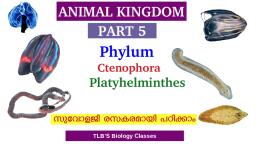
, , , , , , , , , , , , Have tissue level of organisation., Are diploblastic (with mesogloea), Capture of prey, anchorage and defence occurs through cnidoblasts/cnidocytes, (have stinging capsules nematocytes) present on tentacles., Digestion extracellular and intracellular., Have a central gastro-vascular cavity and an opening, hypostome., Body wall of some composed of calcium carbonate. e.g. corals., exhibit two body forms : polyp and medusa e.g., Hydra, Aurelia., Alternation of generation between body forms called metagenesis ocurs in, Obelia where :, Medusa, Polyp. (Sessile and cylindrical), (free swimming &, umbrella shaped), e.g., Physalia, Adamsia, Pennatula, Gorgonia,Meandrina., , Phylum Ctenophora :, , , Also called as sea walnuts or comb jellies., , , , Are exclusively marine, radially symmetrical., , , , Have tissue level organisation, are diploblastic., , , , Digestion both extra and intracellular., , , , Body has eight external rows of ciliated comb plates for locomotion., , , , Show Bioluminescence (Property of living organisms to emit light)., , , , Hermaphrodite (sexes are not separate)., , , , Only sexual reproduction occurs. Exernal fertilization. Indirect development., e.g., Ctenoplana, Pleurobrachia., , Phylum Plathyhelminthes :, , , , , , , , , Also called as ‘lat worms’., Have dorsoventrally lattened body. Are mostly endoparasites in animals., Are bilaterally symmetrical, triploblastic, acoelomate,with organ level of, orgnisation., Absorb nutrients through body surface., Parasitic forms have hooks and suckers., ‘Flame cells’ help in osmoregulation and excretion., , www.cleariitmedical.com
Page 4 :
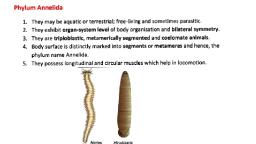
, , , Sexes not separate., Fertilisation internal. Many larval stages present. Planaria has high, regeneration capacity. e.g., Taenia, Fasciola., , Phylum Aschelminthes :, , , , , , , , , , Also called ‘round worms’., May be free living, parasitic, aquatic or terrestrial., Are bilaterally symmetrical, triploblastic, pseudocoelomate., Alimentary canal complete (has muscular pharynx), wastes removed through, excretory pore., Sexes separate. (dioecious), Females longer than males., Fertilisation internal. Development direct or indirect. e.g., Ascaris,Wuchereria,, Ancylostoma., , Phyum Annelida :, , , , , , , , , , , , , , , Are aquatic or terrestrial, free-living or parasitic., Are bilaterally symmetrical, triploblastic, organ-system level of organisation, and metamerically segmented body., Are coelomate animals., Have longitudinal and circular muscles for locomation., Have closed circulatory system., Nereis (dioecious and aquatic annelid) has lateral appendages called parapodia, for swimming., Have nephridia for osmoregulation and excretion., Neural system consists of paired gangila connected by lateral nerves to a, double ventral nerve cord., Reproduction is sexual., e.g., Earthworm (Pheretima) and Leech (Hirudinaria) which are hermaph, rodites (i.e., monoecious)., , Phylum Arthropoda :, , , , , , Largest phylum of Animalia., Are bilaterally symmetrical, triplobastic, segmented externally and organ, system level of organisation, coelomate., Body divisible into head, thorax, abdomen and has a chitinous exoskeleton., Jointed appendages are present., , 40, , www.cleariitmedical.com
Page 5 :
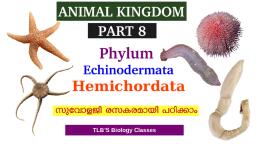
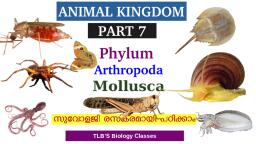
, , , , , Respiration by gills, book gills, book lungs or tracheal system. Excretion, through malpighian tubules., Sensory organs : Antennae, eyes; Organs of balance : Statocysts., Fertilisation usaully internal. Development is indirect or direct. Are mostly, oviparous., e.g., Apis, Bombyx, Laccifer, Anopheles, Culex, Aedes, Locusta, Limulus., , Phulum Mollusca :, , , , , , , , , , , , , Second largest phylum of Animalia., Terrestrial or aquatic, Are bilaterally symmetrical, triplobastic and organ system level of organisation,, coelomate., Body vidisble into head, muscular foot and visceral hump and is covered, by calcareous shell and is unsegmented., Mantle : Soft and spongy layer of skin; Mantle cavity : Space between, visceral hump and mantle., Respiration and excretion by feather like gills in mantle cavity., Head has sensory tentacles. Radula a rasping organ for feeding in mouth., Are oviparous, dioecious, have indirect development., e.g., Plia, Pinctada, Octopus, Sepia, Loligo, Aplysia, Dentalium, Chaetopleura., , Phylum Echinodermata :, , , , , , , , , , , , Are spiny bodied organisms with endoskeleton of calcareous ossicles., Are exclusively marine, radially symmetrical in adult but bilaterally, symmetrical in larval stage. Organ system level of organisation., Triploblastic and coelomate., Digestive system complete. Mouth ventral, Anus on dorsal side., Food gathering, respiration, locomotion carried out by water vascular system., Excretory system is absent., Reproduction–sexual, sexes are separate., Fertilisation external. Development indirect (free swimming larva), e.g., Asterias, Cucumaria, Antedon, Echinus, ophiura., , Phyum Hemichordata :, , , , Represents small group of worm-like organisms., Was earlier placed as sub-phylum of Phyum Chordata., 41, , www.cleariitmedical.com
Page 6 :
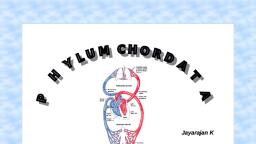
, , , , , , , Bilaterally symmetrical, triploblastic and coelomate with organ system level, of organisation., Body cylindrical, has proboscis, collar and trunk., Circulatory System–open., Respiration by gills, excretion by proboscis gland., Sexes separate, external fertiliastion, indrect development., e.g, Balanoglossus, saccoglossus., , Phylum Chordata :, , , , , , , , , Presence of Notochord., Have dorsal hollow nerve chord., Have paired pharyngeal gill slits., Bilaterally symmetrical, triploblastic, coelomate, organ system level of, organisation., Heart is ventral., Post anal tail present, closed circulatory system., , (i) Sub-Phyla Urochordata /Tunicata, , , Notocohord present only in larval tail., e.g., Ascidia, Salpa, Doliolum, , (ii) Sub-phyla Cephalochordata, , , Notochord extends from head to tail (Persistent), e.g., Amphioxus., , (iii) Sub-Phyla Vertebrata, , , , , Have notochord only during embryonic period., Notochord gets replaced by bony or cartilaginous vertebral column., Have ventral muscular heart, kidneys for excretion and osmoregulation, paired, appendages (ins or limbs), , Vertebrata have two Division :, (a) Agnatha (Lacks Jaw) : Class : Cyclostomata, Live as ectoparasites on some ishes., Have sucking and circular mouth without jaws., Have 6-15 paris of gill slits for respiration., No scales, no paired ins., Cranium and vertebral column is cartilagenous., 42, , www.cleariitmedical.com
Page 7 :
Marine, Migrate to fresh water for spawning and die after spawning., Larva returns to ocean after metamorphosis., e.g., Petromyzon, Myxine, (b) Gnathostomata (Bear Jaws)–divides into two super classes :, , , Super-class : Pisces, 1. Class : Chondrichthyes :, Have cartilagenous endoskeleton, are marine with streamlined body., Mouth ventral., Gill slits without operculum (gill cover)., Skin has placoid scales; jaws–very powerful., No air bladder, so swim constantly to avoid sinking., Teeth are backwardly directed, modiied placoid scales., Notochord is persistent throughout life., Two chambered heart; poikilotherms (cold-blooded), Sexes separate; males have claspers on pelvic ins., Internal fertilisation; viviparous., e.g., Tarpedo, Trygon, Scoliodon, Pristis, Carcharodon, 2. Class : Osteichthyes, Have bony endoskeleton, Aquatic, Mouth is usually terminal. Body-Streamlined, Four pairs of gill slits covered by operculum, heart two chambered, cold, blooded., Sking has cycloid/ctenoid scales., Have air bladder which regulates buoyancy., Sexes separate., Usually oviparous, fertilisation external., Development direct., e.g., Hippocampus, Labeo, Catia, Betla, Clarias, Exocoetus, , Sub-Phylum Vertebrata : Gnathostomata, Super Class : Tetrapoda, 1. Class : Amphibia, Can live in aquatic as well as terrestrial habitats., Body divisible into head and trunk, paired limbs., 43, , www.cleariitmedical.com
Page 8 :
Skin moist. No scales., Tympanum represents ear. Eyes have eyelids., Cloaca is the common chamber where alimentary canal, urinary and, reproductive tracts open., Respiration by gills, lungs or skin., Heart is 3-chambered; cold-blooded; Sexes separate; fertilisation external., Oviparous. Indirect development., e.g., Bufo, Rana, Hyla, Salamandra, Ichthyophis, 2. Class : Reptilla, Creep or crawl to locomote. Mostly terrestrial., Body has dry and corniied skin and epideremal scales or scutes., Tympanum represents ear., Limbs, when present, are two pairs, Snakes and lizards shed, scales as skin cast., Heart 3-chambered but 4-chambered in crocodiles., Sexes Separate; fertilisation internal., Oviparous. Direct development., e.g., Testudo, Naja, Vipera, Calotes, Crocodilus, Hemidactylus, 3. Class : Aves, Presence of feathers except lightless birds and beak (modiied jaws), without teeth., Forelimbs are modiied into wings., Hind limbs have scales, modiied for walking, swimmng or clasping., Skin is dry as no glands on skin except oil gland at base of tail., Endoskeleton bony with air cavities (pneumatic) and hollow bones to, assist in light., Crop and Gizzard—Additional chamber in digestive tract., Air sacs are connected to lungs to supplement respiration., Warm blooded (homoiothermous), Heart–Four chambered., Sexes separate, fertilization internal, Oviparous. Direct development., e.g., Columba, Struthio, Pavo, Corvus, Neophron, Pstittacula Aptenodytes., 4. Class : Mammalia, , Have mammary glands to nourish young ones., , Have two pairs of limbs, adapted to perform special work., , Skin has hairs., , , 44, , www.cleariitmedical.com



 Learn better on this topic