Notes of M.Ed. First Sem 2021-22, Research Methodology Educational Research.pdf - Study Material
Page 1 :
SYLLABI-BOOK MAPPING TABLE, Methodology of Educational Research, , Syllabi, , Unit - I, Nature and Scope of Educational Research, Meaning and Nature, Need and Purpose of Scientific Inquiry, Fundamental-Applied and Action Research, Unit - II, Formulation of Research Problem, Criteria and Sources for Identifying the Problem, Delineating and Operational Variables, Developing assumptions and Hypothesis in Various Types of, Research, Unit - III, Collection of Data, Concept of Population and Sample, Various Methods of Sampling, Characteristics of Good Sample, Unit - IV, Tools and Technique, Characteristics of a Good Research Tool, Types of Research Tools and Techniques and their Uses, Questionnaire-Interviews-Observations, Tests and Scales: Projective and Sociometric Techniques, Unit - V, Major Approaches to Research, Descriptive Research, Ex-post Facto Research, Experimental Research, Field Experiment, Field Studies, Historical Research, , Mapping in Book, Unit 1: Introduction to Educational, Research (Pages 3-35), , Unit 2: Formulation and, Identification of Research Problem, (Pages 37-63), , Unit 3: Data Collection and, Sampling (Pages 65-83), , Unit 4: Tools and Techniques, (Pages 85-132), , Unit 5: Major Approaches to, Research (Pages 133-188)
Page 2 :
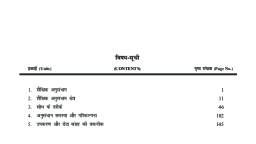
CONTENTS, INTRODUCTION, UNIT 1, , INTRODUCTION TO EDUCATIONAL RESEARCH, , 1, 3-35, , 1.0 Introduction, 1.1 Unit Objectives, 1.2 Meaning and Nature of Educational Research, 1.2.1 Nature of Educational Research, , 1.3 Scope of Educational Research, 1.4 Need and Purpose of Scientific Inquiry, 1.4.1 Nature of Science, , 1.5 Fundamental-Applied and Action Research, , 1.6, 1.7, 1.8, 1.9, 1.10, , 1.5.1 Fundamental Research, 1.5.2 Applied Research, 1.5.3 Action Research, , Summary, Key Terms, Answers to ‘Check Your Progress’, Questions and Exercises, Further Reading, , UNIT 2, , FORMULATION AND IDENTIFICATION OF, RESEARCH PROBLEM, , 37-63, , 2.0 Introduction, 2.1 Unit Objectives, 2.2 Formulation of the Research Problem, 2.2.1 Scientific Thought, 2.2.2 Defining the Research Problem, , 2.3 Criteria and Sources for Identifying the Problem, 2.3.1 Delineating and Operationalizing Variables, , 2.4 Developing Assumptions and Hypothesis in Various Types of Research, , 2.5, 2.6, 2.7, 2.8, 2.9, , 2.4.1, 2.4.2, 2.4.3, 2.4.4, 2.4.5, , Importance of Hypothesis, Formulation of Hypothesis, Criteria of Usable Hypotheses, Statement of Hypothesis, Testing of Hypotheses, , Summary, Key Terms, Answers to ‘Check Your Progress’, Questions and Exercises, Further Reading, , UNIT 3, , DATA COLLECTION AND SAMPLING, , 3.0 Introduction, 3.1 Unit Objectives, , 65-83
Page 3 :
3.2 Collection of Data, , 3.2.1 Primary Data: Meaning, Advantages, Disadvantages and Sources, 3.2.2 Secondary Data: Meaning, Advantages, Disadvantages and Sources, , 3.3 Concept of Population and Sample, 3.4 Various Methods of Sampling, 3.5, 3.6, 3.7, 3.8, 3.9, 3.10, , 3.4.1 Probability Samples, 3.4.2 Non-Probability Samples, , Characteristics of a Good Sample, Summary, Key Terms, Answers to ‘Check Your Progress’, Questions and Exercises, Further Reading, , UNIT 4, 4.0, 4.1, 4.2, 4.3, 4.4, , TOOLS AND TECHNIQUES, , 85-132, , Introduction, Unit Objectives, Characteristics of a Good Research Tool, Types of Research Tools and Techniques and Their Uses, Observation Method, 4.4.1, 4.4.2, 4.4.3, 4.4.4, 4.4.5, , Types of Observation Method, Recording Techniques of Observation Method, Characteristics of Observation for Research, Planning Administration Aspect of Observation, Advantages and Disadvantages of Observation Method, , 4.5 Interview Method, , 4.5.1 Types of Interview, 4.5.2 Important Elements of Research Interview, 4.5.3 Advantages and Disadvantages of the Interview Method, , 4.6 Questionnaires, 4.6.1, 4.6.2, 4.6.3, 4.6.4, 4.6.5, 4.6.6, 4.6.7, , Types of Questionnaire, Questionnaire Administration Modes, Appropriateness of Questionnaire, Steps Preparing and Administering the Questionnaire, Questionnaire Construction Issues, Advantages Disadvantages of Questionnaire Method, Other Methods Used in Questionnaires, , 4.7 Tests and Scales, Projective and Sociometric Techniques, 4.8, 4.9, 4.10, 4.11, 4.12, , 4.7.1 Sociometric Analysis, , Summary, Key Terms, Answers to ‘Check Your Progress’, Questions and Exercises, Further Reading, , UNIT 5, , MAJOR APPROACHES TO RESEARCH, , 5.0 Introduction, 5.1 Unit Objectives, 5.2 Qualitative and Quantitative Approach, 5.2.1 Field Studies and Field Experiment, 5.2.2 Quantitative Technique, , 133-188
Page 4 :
5.3 Historical Research, 5.3.1, 5.3.2, 5.3.3, 5.3.4, 5.3.5, 5.3.6, 5.3.7, , Nature and Value of Historical Research, Advantages and Disadvantages of Historical Research, Process of Historical Research, Sources of Data in Historical Research, Evaluation of Data, Purpose of Historical Research, Problems in Historical Research, , 5.4 Descriptive Survey Research, , 5.4.1 Steps of Descriptive Survey, 5.4.2 Values of Descriptive Research in Education, 5.4.3 Types of Surveys, , 5.5 Experimental Research, 5.5.1, 5.5.2, 5.5.3, 5.5.4, , Steps in Experimental Research, Variables, Experimental Designs, Internal and External Validity in Experimental Research, , 5.6 Ex-Post Facto Research, 5.7, 5.8, 5.9, 5.10, 5.11, , 5.6.1 Types of Causal-Comparative Research Designs, 5.6.2 Causal-Comparative versus Experimental Research, , Summary, Key Terms, Answers to ‘Check Your Progress’, Questions and Exercises, Further Reading
Page 6 :
INTRODUCTION, Research is the search for knowledge or a systematic investigation in order to, establish facts. The basic aim of research is to discover, interpret and develop, methods and systems to advance human knowledge on diverse scientific matters., Research methodology refers to the way research can be conducted. It is also, known as the process of collecting data for various research projects., , Introduction, , NOTES, , Research methodology is the science of studying how research is conducted, scientifically. It helps to understand both the products as well as the process of, scientific enquiry.A research process involves selection and formulation of a research, problem, research design, sample strategy or sample design, as well as the, interpretation and preparation of research report. Research can be undertaken in, the form of descriptive/survey research, applied or fundamental research, quantitative, or qualitative research, conceptual or empirical research, and other types of, research., A few important factors in research methodology include the validity and, reliability of research data and the level of ethics. A job is considered half done if, the data analysis is conducted properly. Formulation of appropriate research, questions and sampling probable or non-probable factors are followed by, measurement using survey and scaling techniques. This is followed by research, design that may be experimental., Research helps to solve problems, it also helps to add value to existing, ideas by enriching them with experience, new perspectives and a wholeness of, purpose. Researchers working in the field of education have a huge task in front of, them. The state of education system and educational policies in India has thrown, up many fundamental questions. These questions can only be answered through, comprehensive and thorough research that follows a scientific and data-centric, methodology., Since the issues in education are complex and manifold, the research required, is also multi-layered and time-consuming. This book covers the multiple aspects, related to educational research and educational statistics, including the scope of, educational research, review of related literature, formulation of research problem,, the significance of hypotheses in any kind of research, sampling, tools of educational, research, and the various approaches to research., This book, Methodology of Educational Research, has been designed, keeping in mind the self-instruction mode format and follows a SIM pattern, wherein, each unit of the book begins with an ‘Introduction’ to the topic followed by the, ‘Unit Objectives’. The content is then presented in a simple and easy-to-understand, manner and is interspersed with ‘Check Your Progress’ questions to test the reader’s, understanding of the topic. ‘Key Terms’ and ‘Summary’ are useful tools for effective, recapitulation of the text. A list of ‘Questions and Exercises’ is also provided at the, end of each unit, which includes short-answer as well as long-answer questions., , Self-Instructional Material, , 1
Page 8 :
UNIT 1 INTRODUCTION TO, EDUCATIONAL RESEARCH, , Introduction to Educational, Research, , NOTES, , Structure, 1.0 Introduction, 1.1 Unit Objectives, 1.2 Meaning and Nature of Educational Research, 1.2.1 Nature of Educational Research, , 1.3 Scope of Educational Research, 1.4 Need and Purpose of Scientific Inquiry, 1.4.1 Nature of Science, , 1.5 Fundamental-Applied and Action Research, , 1.6, 1.7, 1.8, 1.9, 1.10, , 1.0, , 1.5.1 Fundamental Research, 1.5.2 Applied Research, 1.5.3 Action Research, , Summary, Key Terms, Answers to ‘Check Your Progress’, Questions and Exercises, Further Reading, , INTRODUCTION, , Human knowledge as it exists today broadly consists of facts and theories. New, facts, new concepts and new ways of doing things increase their quantum with the, passage of time. This knowledge enables us to understand, comprehend, explain,, control, predict, or cope with a given situation. The sources from which we obtain, knowledge range from those that are highly reliable to those that are either less, reliable or completely unreliable. The knowledge obtained from the less reliable or, completely unreliable sources is based on assumptions, beliefs, and untested, generalizations. Such generalizations are usually accepted on faith, tradition, or, authority and no effort is made to verify their validity. In contrast, reliable knowledge, is based on objective verification of generalizations., The acquisition and expansion of knowledge is not an automatic and selfperpetuating process. On the contrary, it requires constant and planned effort by, intelligent and highly trained people or researchers. The present level of knowledge, is an outcome of the various methods such as research method adopted by man, over a period of several centuries. Research may be defined as the application of, the scientific method in the study of problems. Educational research refers to a, systematic attempt to gain a better understanding of the educational process, generally, with a view to improving its efficiency. In this unit, you will get acquainted with the, meaning, nature and scope of educational research; the concept of scientific inquiry;, and the types of research., Self-Instructional Material, , 3
Page 9 :
Introduction to Educational, Research, , 1.1, , UNIT OBJECTIVES, , After going through this unit, you will be able to:, , NOTES, , • Discuss the meaning, characteristics and nature of educational research, • Describe the scope of educational research, • Assess the need and purpose of scientific inquiry, • Analyse the three types of research: fundamental, applied and action, , 1.2, , MEANING AND NATURE OF EDUCATIONAL, RESEARCH, , Research may be defined as the application of the scientific method in the study of, problems. The terms research and scientific method are sometimes used, interchangeably., Research is considered to be a more structured and systematic process of, carrying out a scientific method of analysis that is directed towards discovery and, development of an organized body of knowledge. It is a planned activity to obtain, answers to meaningful questions about phenomena or events through the application, of scientific approach. Research is an objective, impartial, empirical and logical, analysis, and recording of controlled observations that may lead to the development, of generalizations, principles or theories, resulting to some extent in prediction and, control of events that may be consequences or causes of specific phenomena., Research is scientific, and as such, is not satisfied with isolated facts, but seeks to, integrate and systematize its findings. It is concerned with the objective verification, of generalizations. Such verification requires logical analyses of problems and devising, of appropriate methodologies for obtaining evidence., Best and Kahn (1992, pp. 18-20) have summarized the main characteristics of, research as under:, 1. Research is directed towards the solution of a problem. It may attempt to, answer a question or to determine the relation between two or more variables., 2. Research emphasizes the development of generalizations, principles, or theories, that will be helpful in predicting future occurrences. Research usually goes, beyond the specific objects, groups or situations investigated and infers, characteristics of a target population from the sample observed. Research is, more than information retrieval, the simple gathering of information. Although, many school research departments gather and tabulate statistical information, that may be useful in decision-making, these activities are not properly termed, research., 3. Research is based upon observable experience or empirical evidence. Certain, interesting questions do not lend themselves to research procedures because, they cannot be observed. Research rejects revelation and dogma as methods, 4 Self-Instructional Material
Page 10 :
of establishing knowledge and accepts only what can be verified by, observation., 4. Research demands accurate observation and description. The researcher, uses quantitative, numerical measuring devices, the most precise means of, description. The researcher selects or devises valid data gathering instruments, or procedures and employs appropriate mechanical, electronic, or, psychometric devices to refine human observation, recording, computation,, and analysis of data., , Introduction to Educational, Research, , NOTES, , 5. Research involves gathering new data from primary or first-hand sources or, using existing data for a new purpose. Teachers frequently assign a so-called, research project that involves writing a paper dealing with the life of a prominent, person. The students are expected to read a number of encyclopaedias, books,, or periodical references, and synthesize the information in a written report., This is not research, for the data are not new. Merely recognizing or restating, what is already known and has already been written, valuable as it may be as, a learning experience, is not research. It adds nothing to what is known., 6. Although research activity may at times be somewhat random and, unsystematic, it is more often characterized by carefully designed procedures,, always applying rigorous analysis. Although trial and error are often involved,, research is rarely a blind, shotgun investigation—trying something to see what, happens., 7. Research requires expertise. The researcher knows what is already known, about the problem and how others have investigated it. He has searched the, related literature carefully. He is also thoroughly grounded in the terminology,, the concepts, and the technical skill necessary to understand and analyse the, data that he has gathered., 8. Research strives to be objective and logical, applying every possible test to, validate the procedures employed, the data collected, and the conclusions, reached. The researcher attempts to eliminate personal bias. There is no, attempt to persuade or to prove an emotionally held conviction. The emphasis, is on testing rather than on proving the hypothesis. Although absolute objectivity, is as elusive as pure righteousness, the researcher tries to suppress bias and, emotion in his or her analysis., 9. Research involves the quest for answers to unsolved problems. Pushing back, the frontiers of ignorance is its goal, and originality is frequently the quality of, a good research project. However, previous important studies are deliberately, repeated, using identical or similar procedures, with different subjects, different, settings, and at a different time. This process is replication, a fusion of the, words repetition and duplication. Replication is always desirable to confirm, or to raise questions about the conclusions of a previous study., 10. Research is characterized by patient and unhurried activity. It is rarely, spectacular and the researcher must accept disappointment and, discouragement as he pursues the answers to difficult questions., Self-Instructional Material, , 5
Page 11 :
Introduction to Educational, Research, , NOTES, , 11. Research is carefully recorded and reported. Each important term is defined,, limiting factors are recolonized, procedures are described in detail, references, are carefully documented, results are objectively recorded, and conclusions, are presented with scholarly cautions and restraint. The written report and, accompanying data are made available to the scrutiny of associates or other, scholars. Any competent scholar will have the information necessary to, analyse, evaluate, and even replicate the study., 12. Research sometimes requires courage. The history of science reveals that, many important discoveries were made in spite of the opposition of political, and religious authorities. The Polish scientist Copernicus (1473-1543) was, condemned by Church authorities when he announced his conclusion, concerning the nature of the solar system. His theory that the sun, not the, earth was the centre of the solar system in direct conflict with the older, Ptolemaic theory, angered supporters of prevailing religious dogma, who, viewed his theory as a denial of the story of creation as described in the book, of Genesis. Modern researchers in such fields as genetics, sexual behaviour,, and even business practices have aroused violent criticism from those whose, personal convictions, experiences, or observations were in conflict with some, of the research conclusions., From the examination of the above characteristics, it is evident that the, knowledge gained by research is of the highest order. It is not based on assumptions,, beliefs, and untested generalizations. To seek such knowledge, a researcher must, develop scholarship, accurate observation, integrity, willingness to spend long hours, to collect and study all forms of evidence before arriving at conclusions, scholarship, and ability to recognize causal relationships, and originality and objectivity in thinking., However, it must be recognized that such ideals serve as goals for which researchers, should strive. Being human beings, it is difficult for researchers to realize all ideals, completely., , 1.2.1 Nature of Educational Research, Educational research refers to a systematic attempt to gain a better understanding, of the educational process, generally with a view to improving its efficiency. It is an, application of scientific method to the study of educational problems. Travers (1958,, p. 5) states:, Educational research…represents an activity directed towards the development, of an organised body of scientific knowledge about the events with which, educators are concerned. Of central importance are the behaviour patterns of, pupils, and particularly those to be learned through the educational process. A, scientific body of knowledge about education should enable the educators to, determine just what teaching and other learning conditions to provide in order, to produce desired aspects of learned behaviour among young people who, attend school., , Since education is a behavioural science, the major concern of educational, research is to understand, explain, and to some degree predict and control human, 6 Self-Instructional Material
Page 12 :
behaviour. It is an activity directed towards the development of organized and useful, body of scientific knowledge about the events with which educators are concerned., Education, like any other social science, draws its purposes and substance, from the equally dynamic and complex social content which includes all aspects of, life such as social, economic, political, ethical, religious, etc. These aspects operate, interdependently and simultaneously from micro sub-group to the larger group contexts, and then to the society at large. As a result of multifarious interactions within each, of the aspects, two significant characterizations of society in the form of social, experience and the knowledge-base emerge. The social experience is the totality, of human experiences cumulated up to a point in time. It includes continuation of, some of the older experiences and addition of newer ones. Through this continuous, process of social experience, several forms of social action and practice evolve,, which are unique to each society. The knowledge-base comprises the understandings, and explanations developed by the society about the natural and human phenomena, in varied forms. These forms represent conceptualization that is underlying the, educational processes, practices and their organization. Educational research, primarily aims at conceptualization and theorization of these processes and practices, so as to understand the educational events and phenomena., , Introduction to Educational, Research, , NOTES, , Need for Research in Education, Research in education as in the other fields is essential for providing useful and, dependable knowledge through which the process of education can be made more, effective. There are various considerations which emphasize the need for research, in education. They are:, • Education has strong roots in the fields like philosophy, history, economics,, psychology, and sociology. It is through an intensive process of scientific, enquiry about the philosophical, historical, economical, psychological, and, sociological impact on various aspects of education that sound educational, theories can be established., • Education is considered as much a science as an art. As a science, it has a, corpus of knowledge concerning the nature of human mind, its growth and, development; theories of administration and supervision; educational, programmes, curricula and practices prevalent in different countries and their, results. The quantum of knowledge is indicated by the courses in education, prescribed by various organizations and institutions for earning degrees in this, field and also by the research material which is being produced and continuously, reported in different educational research journals. Since education depends, on a corpus of knowledge, there is need to add new scientific knowledge to it, for enrichment and improvement. The clarification and reinterpretation of, existing knowledge in the field is also necessary. This will facilitate making, adjustments in educational programmes accordingly. As an art, education, seeks to impart knowledge effectively. For example, ‘How can a teacher, play an effective role in the classroom and outside?’ is a vital question before, educationists, and needs careful research efforts to enhance a teacher’s, effectiveness., Self-Instructional Material, , 7
Page 13 :
Introduction to Educational, Research, , NOTES, , • The slogan of democratization of education since 1870 resulted in the expansion, of education. It has given rise to numerous problems like the problems of, individual differences, expansion, buildings, discipline and so on. Solutions of, such problems by trial and error or by experience from tradition and authority, often yielded erroneous results. Moreover, growth in knowledge by experience, is very slow and accidental. We need solutions based on research so that the, coming generation is not left to the mercy of errors of outright sins of tradition,, ignorance and prejudice., • There is need for educational research because of the changing conception, of education. The Internal Commission on the Development of Education in, its report ‘Learning to Be’ (UNESCO, 1972, p. 143) emphasizes:, o Education from now on can no longer be defined in relation to a fixed, content which has to be assimilated, but must be conceived of as a process, in the human being, who thereby learns to express himself, to communicate, and to question the world, through his various experiences, and, increasingly—all the time—to fulfil himself. It has strong roots, not only in, economics and sociology, but also in findings from psychological research, which indicate that man is an unfinished being and can only fulfil himself, through constant learning. If this is so, then education takes place at all, ages of life, in all situations and circumstances of existence. It returns to, its true nature, which is to be total and life long, and transcends the limits, of institutions, programmes and methods imposed on it down the centuries., o In the context of the above nature of education, the limits of educational, research have to be extended from the formal and conventional modes of, education to the non-formal, open and innovative systems based on, ecological and cybernetic models., • During the last four decades, great changes have taken place as a result of, the rapid scientific and technological developments. Education has to play an, important role so that we can accept the change in a smooth way. It can do, so by bringing improvements in the existing curricula, textbooks, methods of, teaching, and evaluation., , History of Various Developments in Educational Research, The scientific era in the physical sciences began in the seventeenth century. The, emergence of education as a science is about hundred years old. It was due to not, only the complex nature of the phenomena to be studied, but also due to the slow, progress in the development of the measuring tools and techniques for collecting, data of educational interest. The history of various developments in educational, research, therefore, is closely linked with some of the significant developments in, the history of measurement and testing., Educational research as a discipline has passed through several stages before, it could take the shape of modern movement for the scientific study of the problems, relating to educational phenomena. The history of its growth may conveniently be, divided into four phases., 8 Self-Instructional Material
Page 14 :
(i) Educational Research before 1900, As early as 1803, Johann Heinrich Pestalozzi proposed the scientific study of pedagogy, and established his pedagogical school; Sheldon began experimentation at Oswego,, New York in 1860. In 1894, Granville Stanley Hall printed the first series of, questionnaires to be used in securing information about children. His questionnaires, mainly dealt with educational topics, such as ‘The Beginnings of Reading and, Writing’, ‘School Statistics’, ‘Number and Mathematics’, ‘Examination and, Recitations’ and ‘Some Characteristics and Tendencies of School Children’ (Harris,, 1960, p. 1162)., , Introduction to Educational, Research, , NOTES, , Educational research before 1900 was greatly influenced by the experiments, in the field of psychology. A number of studies of the threshold of sensitivity were, conducted by Weber and Fechner. Wilhelm Maximilian Wundt started his experiments, as early as 1861 and established his experimental laboratory at Leipzig in Germany, in 1879. Hermann Ebbinghaus conducted his experiments on memory and, demonstrated that memory could be measured by some techniques accurately. The, famous works of Sir Francis Galton, such as Hereditary Genius: An Inquiry into, Laws and Consequences, published in 1869 and Inquiries into Human Faculty, and its Development, published in 1883 are the evidence of his particular interest in, individual differences and mental inheritance. James McKeen Cattell, influenced by, Francis Galton, began a systematic investigation of individual differences in reaction, time in sensory-motor functions in relation to human intelligence. In 1890, he wrote, a classic article called ‘Mental Tests and Measurement’ in which the ‘Mental Test’,, was first introduced into literature. Joseph M. Rice proposed, in 1897, that uniform, spelling tests be given to students. He is recognized as the pioneer in the educational, research movement., , (ii) Educational Research from 1900 to 1920, During the period 1900-1920, there was widespread interest in the exploration and, development of measuring instruments needed by the researchers in the field of, education and psychology. In 1904, Edward Thorndike influenced by James McKeen, Cattell and others, published the first book dealing directly with the subject of mental, measurement. A year later, Alfred Binet, who had been working with psychological, tests in France for about 10 to 15 years, published, in collaboration with Simon, the, Binet-Simon General Intelligence Scale. This was followed by the Stanford Revision, by Lewis Terman. In 1908, Cliff Stone, a student of Thorndike, published his Arithmetic, Test, which is considered to be the first standardized achievement test. This was, followed by a very large number of tests in several subjects. The Hillegas Composition, Scale and Ayres’ Hand-writing Scale appeared in 1912. Buckingham Spelling Scale,, Starch’s Reading Tests, Kelley Kansas Silent Reading Test, the Trabue Completion, Test Language Scales, the Thorndike-McCall Reading Scale for Understanding of, Sentences, and Monroe’s Standardized Silent Reading Tests appeared in the years, immediately following the year 1912 (Harris, 1960, p. 1163)., Group tests of intelligence were first developed during the First World War,, Aptitude tests, such as the Seashore Test of Musical Talent, also emerged during, this period., Self-Instructional Material, , 9
Page 15 :
Introduction to Educational, Research, , NOTES, , In addition to the emphasis upon the development of measuring tools, the, activities like school surveys were also taking place to promote the scientific study, of education during the period 1900 to 1920. The Pittsburgh Survey in 1907 was the, first school survey. The New York City Survey in 1911-12 was the first survey in, which arithmetic achievement tests were used. The Cleveland Survey of 1915-16, studied many phases of the school’s programme such as student achievement, the, curriculum and methods of teaching, administrative organization, school finance, the, school plant, staff and personnel, and pupil accounting., The organizations like the National Society for the Study of Education, the, American Educational Research Association, and the National Society of College, Teachers of Education were all organized in the US during the years 1900 to 1920., Many books, monographs and journals dealing with the subject of psychological and, educational measurements, statistics, child development, and educational psychology, were also published during this period. The Journal of Educational Psychology was, founded in 1910 and the Journal of Educational Research in 1920., , (iii) Educational Research from 1920 to 1945, The period from 1920 to 1945 is considered a period of self-criticism and improvement, in educational research techniques and designs. Harris (1960, p. 1164) points out, that the four kinds of criticism that greatly influenced educational research methods, during this period were: (a) research workers gave too little attention to the less, tangible aspects of education; (b) research workers provided inadequate theoretical, orientation for their efforts; (c) single variable laboratory research was inadequate, for the complex field conditions actually met in education; and (d) educational research, gave too little attention to the individual. The research workers, in order to be objective,, concentrated their efforts mainly upon the things that could be readily counted or, measured. Among the early counting investigations were the age-grade progress, studies, the questionnaire surveys, and the frequency studies. Much attention was, given to the measurement of attitudes, thinking process, and personal adjustment, with the help of tests and scales. A great emphasis was laid on the concept of, validity and reliability of measuring tools during the years 1920 to 1945. The American, Educational Research Association (AERA) produced the Encyclopaedia of, Educational Research, the first edition of which appeared in 1940. It gives a detailed, account of the earlier research efforts., , (iv) Educational Research after 1945, Since 1945, research methods and procedures have been improved with the aim of, attaining more objective and reliable information. Many new methods of data, collection and analysis were devised. New developments in research design, which, were closely related to developments in statistical procedures such as the analysis, of variance and of co-variance, made possible field experiments or trials for which, randomization provides controls on extraneous variables and for which more than, one variable of interest may be studied at the same time. These designs clearly, extend the possibilities for the study of complex phenomena in the field of education, (Harris, 1960, p. 1165)., 10 Self-Instructional Material
Page 16 :
The scope and fields of educational research have greatly expanded. A number, of researches are being conducted all over the world for determining the effectiveness, of different aspects of the curriculum, teaching methods, evaluation guidance,, administrative practices and planning. The development of the concept of action, research by Corey (1953) has been very useful in improving school practices and in, solving educational problems of local nature., , Introduction to Educational, Research, , NOTES, , In India, the importance of educational research has been recognized rather, late. Most of the research in the field of education was conducted after independence., More and more universities started M.Ed., M.A., M.Phil., and Ph.D. courses in, Education. The organizations like National Council of Educational Research and, Training, State Institutes of Education, National Institute of Educational Planning, and Administration, etc. were established in the country to promote and coordinate, educational research at different levels of instruction. Many journals like Indian, Educational Review, Indian Journal of Education, Journal of Higher Education, Journal, of Education and Psychology, Indian Journal of Applied Psychology, Journal of, Psychological Researches, Journal of Educational Planning and Administration,, Perspectives in Education and other periodicals were also started to publish, information and articles relating to research findings in the field of education in the, Indian context. The University Grants Commission, the Ministry of Human Resource, Development, the Indian Council of Social Sciences Research, the National Council, of Educational Research and Training, and some such other organizations provide, financial aids to research workers in education and other related fields to undertake, and accomplish useful research., The brief outline has presented only some highlights in the development of, educational research in the world. For a fuller and exhaustive discussion on the, history of educational research in India and abroad, the reader is referred to the, Encyclopaedia of Educational Research (Monroe, 1950; Harris, 1960; Ebel, 1969),, The Third Indian Year Book of Education: Educational Research (Adaval, 1968),, the First, Second, Third, Fourth, Fifth and Sixth Surveys of Research in Education, (Buch, 1973, 1979, 1987, 1991; NCERT, 1997, 2006), and Encyclopedia of Indian, Education (NCERT, 2004)., , Limitations of Educational Research, In spite of the application of scientific method and refinement of research techniques,, tools and designs, education, like other social and behavioural sciences, has not, attained the perfection and scientific status of physical sciences. It has not been, able to establish generalizations equivalent to the theories of physical sciences in the, scope of explanation, prediction and control. Frequently, there is lack of unanimity, among researchers in the field, as to what the established facts are or what, explanations are satisfactory for the assumed facts. Ary et al. (1972, pp. 18-20), have pointed out several limitations which are involved in the application of scientific, method in education. They are of the opinion that it is because of these limitations, that education like other social sciences can hardly realize the objectives of science, as meaningfully and completely as the physical sciences., Self-Instructional Material, , 11
Page 17 :
Introduction to Educational, Research, , NOTES, , • Complexity of subject matter: The researcher in the field of education, deals with the complex nature of human subjects. He is not concerned, with a limited number of variables as is the case with a scientist who, deals with physical or biological phenomena. To understand the complex, nature of human subjects, he has to deal with a number of variables,, acting independently and in interaction. Each individual is unique in the, way he grows, in his total personality. The researcher in the field of, education, therefore, has to study the individual in groups and the impact, of the behaviour of group members on an individual., • Difficulties in observation: Observation of human behaviour is more, subjective than the observation of physical or biological phenomena. The, subjectivity on the part of the observer has a direct impact on the, interpretation and findings on which he bases his conclusions., • Difficulties in replication: The physicist can find objectively and, accurately resistance of a wire in the laboratory. He can report his findings, and the experiment can be easily replicated by others. This is not easily, possible in education. A teacher in India may not be able to reproduce the, conditions of an American teacher’s experimental teaching method with, the same precision of replication as that with which an Indian physicist, can reproduce an American physicist’s experiment. Educational, phenomena are singular events and can hardly be replicated for the, purposes of observation with the same degree of precision and objectivity., • Interaction of observer and subjects: The researcher in the field of, education is also a human being. His presence as an observer in a situation, may change the behaviour of his human subjects. For example, the school, children may not exhibit their natural behaviour when they know that they, are being observed for a particular type of behaviour., • Difficulties in control: The rigid control of experimental conditions is, possible in the laboratory of physical or biological sciences. It is not possible, in educational studies in which the researcher has to deal with the human, subjects and many variables simultaneously., • Measurement problems: The tools for measurement and data collection, in the educational studies are much less valid and reliable than the tools of, the physical scientist., , Steps in Educational Research, As mentioned earlier, the educational research is the application of scientific method, to the study of educational problems. The steps in educational research, therefore,, are more or less identical, but more structured, systematic and intensive to those of, scientific method., • The research problem: Educational research starts with the selection of, a problem that the researcher identifies from the area or field of his, interest. It must be a question that can be answered through scientific, inquiry. The problem should be such that can be clearly and precisely, stated. The statement of the problem must be complete. It must be presented, 12 Self-Instructional Material
Page 18 :
in a form that makes absolutely clear what data or evidence must be, obtained in order to solve the problem., • Formulation of hypotheses: Educational research should make use of, carefully formulated hypotheses. These may be formally stated or implied. In, formulating hypotheses, the researcher should keep in mind that the hypotheses, are tentative generalizations about the nature of the difficulty under, consideration, calling attention to fundamental relationships or possible solution., The manner of formulating hypotheses is an important aspect of educational, research and the researcher should give much thought to it., , Introduction to Educational, Research, , NOTES, , • The method to be used: The selection of research method to be used is of, utmost importance in the research process. It refers to the general strategy, followed in collecting and analysing the data necessary for solving the problem., The researches are generally classified in three categories: (i) Historical;, (ii) Descriptive; and (iii) Experimental. The method or approach used in the, study is dictated by the nature of the problem and the type of data required, for answering the questions relating to the problem., • Data collection: Whereas the research method describes the overall approach, to the problem, this step is concerned with the procedures and techniques to, be adopted for data collection. It refers to the nature of the sample to be, chosen for study, and selection and development of data gathering devices, such as tests, questionnaires, rating scales, interviews, observations, checklists,, and the like., • Analysis and interpretation of data: Good research is characterized by, the care taken in the analysis and interpretation of data. It includes the selection, of appropriate quantitative and qualitative techniques to be used for processing, the data collected for the study., • Reporting the result: This is the last and important step of the research, process. It is characterized by carefully formulated inferences, conclusions,, or generalizations. The researcher must report his procedures, findings, and, conclusions with utmost objectivity to others who may be interested in his, study and its results., , CHECK YOUR PROGRESS, 1. Mention one characteristic of research as given by Best and Kahn., 2. What is the primary aim of educational research?, 3. Who is regarded as the pioneer in the educational research movement?, 4. What were the four kinds of criticism that greatly influenced educational, research methods during this the period from 1920 to 1945?, , Self-Instructional Material, , 13
Page 19 :
Introduction to Educational, Research, , 1.3, , SCOPE OF EDUCATIONAL RESEARCH, , The field of educational research can be classified into the following categories:, , NOTES, , (i) Educational psychology: Researchers in this field help the teacher to, understand the child in the classroom in order to improve the teaching–learning, process. This research provides the following information:, • Relative effectiveness of socio-cultural forces on the development of, children, • Usefulness of learning theories in various educational settings, • Relative effectiveness of various learning theories via field experiments, • Identification of factors conducive to learning, • Role of physical/intellectual inefficiencies and defects in learning, • Understanding the personality of children in the class, • Effects of parental and teacher’s attitude toward children on learning, • Understanding the problems of physically and socially handicapped children, in the school system, • Role of teachers and textbooks in removing delinquency in adults, (ii) Philosophy of education: Research in this field can provide us the following, information:, • Role of logic in various areas of education from concept information to, theory development, • Role of knowledge, beliefs and values in developing educational theories, • Role of ideologies and religion for improving educational practices, • Development of a practical philosophy in the Indian context, • Discovering new implications of ancient Indian philosophies in the present, scenario, • Determining the contributions of various Indian philosophers and their, implications at present, • Reorganization of the social structure and educational system in India, (iii) Sociology of education: Various dimensions of research in this field are, given below:, • Effects of changes in the demographic structure on education, • Effects of the New Education Policy (1986, 1992) on expansion of, education and employment, • Role of educational institutions in bringing about social change and vice, versa, • Role of social and cultural factors in bringing about social and educational, equity, • Role of teachers as agents of social change, modernization and social, equity, • Education in disadvantaged sections of the society, , 14 Self-Instructional Material
Page 20 :
• Minorities and their problems, • Reservation policy and its impact on the social system, (iv) Educational management and administration: Research in this field can, help us understand the following aspects:, • Problems of educational administration in India and its impact on, performance of students, • Impact of educational planning and legislations on the performance of the, students, • Development of management theories and their implications on educational, institutions, • Role of teachers and principal in enhancing the performance of students, • Impact of recruitment policies on output, • Supervision and performance, • Contribution of NGOs to education, • Effects of liberalization and privatization of higher education in India, , Introduction to Educational, Research, , NOTES, , (v) Comparative education: Research in this field helps us understand the, following aspects of education:, • Administrative and educational policies of different countries and their, impact on society as a whole, • Impact of various systems of education in the world on each other, • Comparison of educational progress in various countries of the world, • Impact of economic progress on education, • Allocation of budget on education in different countries and its impact on, educational progress, (vi) Curriculum development: Nature and scope of research in this field can, be understood by the following topics:, • Structure of the curriculum in India from the primary to higher level, • Analysis of psychological demands of learners at different stages of, education, • Analysis and organization of curriculum in various subjects, • Curriculum in relation to needs of the learner and the society, • Analysis of textbooks at different stages of learning, • Modernization of curriculum in relation to changing needs, • Inculcation of national values through curriculum development, (vii) Guidance and counselling: Research in this field helps us to understand, the following aspects of education:, • Role of the family and neighbourhood in teaching children to adjust to, society, • Construction of tools for diagnosing adjustment problems of students, • Methodology of vocational guidance for children belonging to different, strata of society, Self-Instructional Material, , 15
Page 21 :
• Identification of factors contributing to success in the life of students, • Adaptation of foreign tests and inventories to Indian situations, , Introduction to Educational, Research, , NOTES, , (viii) Educational technology: Research in this field contributes in the:, • Development of new teaching strategies by action researches, • Role of technology in teaching-learning process, • Application of psychology in solving teaching problems, • Application of technological equipment and laws in education, • Development of new audio-visual aids, (ix) Problems of indian education: This research covers:, • Pre-primary education, • Primary education, • Secondary education, • Higher education, • Vocational and technical education, • Non-formal education, • Distance education, • Recommendations of commissions and committees on education, • Continuous and comprehensive evaluation, • Value education, • Women’s education, • Inclusive education, • Teacher education, (x) Inclusive education: Physical handicaps can be genetic or acquired. From, diagnosis to their rehabilitation, we come across a number of problems that, are to be investigated scientifically to arrive at a definite solution., , CHECK YOUR PROGRESS, 5. What help do researchers provide in the educational psychological field?, 6. What contribution does research make in the field of educational, technology?, , 1.4, , NEED AND PURPOSE OF SCIENTIFIC, INQUIRY, , The methods by which man from the earlier times sought answers to his problems, can be classified under the following categories: (1) authority, (2) tradition,, (3) experience, (4) deductive reasoning, (5) inductive reasoning, and (6) scientific, inquiry method., 16 Self-Instructional Material
Page 22 :
Authority, Appeal to authority and seeking its advice was a well-established method of solving, problems even in the earliest civilizations. We can find examples of reliance upon, authority for truth, particularly during the ancient times, when floods, famines, or, disease terrified man. He used to appeal to his elders and accepted their ancestral, explanations for such incidents. At moments, he prayed to supernatural powers for, help. During the Middle Ages, ancient scholars such as Plato and Aristotle, the early, Fathers of Church, and others, were accepted as sources of truth than first-hand, experience and analysis of facts. The modern man, sometimes, also seeks advice, from authorities for the solution of the problem faced by him. These authorities may, be the persons who have had long experience with that problem and who have, studied and thought much about it. In a court of law, for example, a judge may, recognize a psychiatrist as an authority to testify the sanity of the defendant, or ask, a handwriting specialist to compare signatures. When factual evidence cannot be, obtained to solve a problem, one may have to rely upon authoritative opinion, temporarily as the only possible method for solution. In such a situation, care must, be employed in choosing authorities and evaluating their claims to knowledge. One, should check not only the credentials of authorities but also the arguments and, evidence upon which they base their judgements., , Introduction to Educational, Research, , NOTES, , Tradition, Closely related to authority is tradition, upon which man depends for solutions to, many of his problems. He unquestioningly accepts many traditions of his forefathers, or culture, such as the customary styles of dress, food, speech, and worship. In, school settings, teachers often rely on tradition or past experiences as a dependable, guide. Although automatic acceptance of tradition and custom is often necessary,, one should not always assume that everything that has customarily been done is, right and valid. If we examine the historical records, we will find that many theories, based upon tradition which prevailed for years were later found to be erroneous and, had to be rejected. One should, therefore, evaluate custom and tradition carefully, before he accepts them as truth., , Experience, Our own personal experience or that of others is the most primitive, and yet most, familiar and fundamental, source of knowledge. In ancient times, nomads and various, tribes from their personal experience probably remembered that certain wild fruits, always made them ill, that grains ripened at particular times of the year, and that, sudden floods in the rivers during the rainy season were due to the fact that water, does not generally stay on hills. When confronted with a problem, modern man often, tries to seek its answers from his own personal experience or from others who are, familiar with the problem. Children often consult their teachers, parents or even, their older siblings to derive answer to their questions., Turning to personal experience or to that of others is a useful method to obtain, knowledge, but its uncritical use may lead to incorrect conclusions. According to, Van Dalen (1973, p. 5):, Self-Instructional Material, , 17
Page 23 :
Introduction to Educational, Research, , NOTES, , A person may make errors when observing or when reporting what he has seen, or done. He may (1) omit evidence that does not agree with his opinion, (2) use, measuring instruments that require many subjective estimates, (3) establish a, belief on insufficient evidence, (4) fail to observe significant factors relating to a, specific situation, or (5) draw improper conclusions or inferences owing to, personal prejudices., , In the light of these remarks, one should cautiously and critically use, experience as an avenue for obtaining knowledge., , Deductive Reasoning, A significant contribution towards the development of a systematic method for, obtaining reliable knowledge was made by the ancient Greek philosophers like, Aristotle and his followers. Aristotle developed the syllogism, which can be, described as a thinking process in which one proceeds from general to specific, statements by deductive reasoning. It provides a means of testing the validity, of any given conclusion or idea by proceeding from the known to the unknown., The syllogistic reasoning consists of: (1) a major premise based on a self-evident, truth or previously established fact or relationship; (2) a minor premise concerning, a particular case to which the truth, fact, or relationship invariably applies; and (3), a conclusion. If the major and minor premises can be shown to be true, the, conclusion arrived at is necessarily true. To use a simple example, consider the, following proposition:, • All animals are mortal (Major Premise), • Dog is an animal (Minor Premise), • Therefore, dog will die (Conclusion), The method of syllogism or deduction, however useful, has the following limitations:, • The conclusion of a syllogism is always derived from the content of premises., Therefore, if the premises are unrelated or if one of the premises is erroneous,, the conclusion arrived at will not be valid., • Another serious limitation of the deductive reasoning is its dependence upon, verbal symbolism., • Deductive reasoning can systematise what is already known and can identify, new relationships as one proceeds from known to unknown, but it cannot be, relied upon as a self-sufficient method for securing reliable knowledge., , Inductive Reasoning, The conclusions derived from generalities and from statements of presumed authorities, by deductive reasoning are true only if they are based upon true premises. To, determine whether the premises are true, Francis Bacon stressed the need for basing, general conclusions upon specific facts gathered through direct observations. This, is what is known as inductive reasoning, that is, going from the particular to the, general. Rather than accepting premises laid down by authorities as absolute truths,, Bacon advised man to observe nature closely, to experiment, to tabulate all the, facts, to study these facts in order to reach minor generalizations, and then to proceed, 18 Self-Instructional Material
Page 24 :
from minor generalizations to greater ones. He, however, cautioned against, formulating any hypothesis or any probable solution to a problem until all the facts, had been gathered., In deductive reasoning, the premises or generalizations must be known before, a conclusion can be reached. On the other hand, in inductive reasoning, a conclusion, is reached by observing instances and generalizing from instances to the whole, phenomenon. In order to be absolutely certain of an inductive conclusion, all instances, must be observed. Under Baconian system of reasoning, it is known as perfect, induction. In practical situations, however, it is not possible to examine every instance, of a phenomenon to which a generalization refers. When examining all the instances, of phenomenon under study is not practical, one may arrive at a generalization or, theory by observing only some instances that make up the phenomenon. This is, known as imperfect induction., , Introduction to Educational, Research, , NOTES, , Although imperfect induction does not help us to arrive at infallible conclusions,, it can provide some knowledge upon which one can make reasonable decisions., Both inductive and deductive methods when used independently of each other, have limitations. If premises are true, deductive reasoning helps to arrive at absolutely, true conclusions. These conclusions, however, do not probe beyond that, which is, already known—already present, at least implicitly, in the premises. The use of, inductive method solely does not help in providing a completely satisfactory way for, the solution of problems. For instance, random collection of individual observations, in the absence of a unifying concept is rarely helpful in drawing a generalization., Also, while studying a phenomenon the same set of observations can lead to different, conclusions which may ultimately support different generalizations or theories. The, conclusions reached by imperfect inductive reasoning do contain information that is, not present, even implicitly, in one of the premises (the observed instances). If all the, premises (observed instances) are true, the probability of conclusions arrived at, may be of varying degrees., , Scientific Inquiry Method, The exclusive use of Bacon’s inductive method resulted in the accumulation of, isolated bits of information, and therefore, it made little contribution to the advancement, of human knowledge. Moreover, many problems could not be solved by Aristotle’s, deductive method alone because in some situations, the acceptance of incomplete, or false major premises, based on old dogmas or unreliable authority, could only lead, to erroneous conclusions. In view of these limitations, it was superseded by the, deductive-inductive method. This method, generally attributed to Charles Darwin,, integrates the most important aspects of the deductive and inductive methods which, is now recognised as scientific inquiry method., The scientific method is a back-and-forth movement of thought in which man first, operates inductively from partially known or sometimes confused information learned, from experience, previous knowledge, reflective thinking, observation and so on,, towards a meaningful whole or hypothesis, and then deductively from suggested, whole or hypothesis to the particular parts in order to connect these with one another, Self-Instructional Material, , 19
Page 25 :
Introduction to Educational, Research, , NOTES, , in a meaningful pattern to find valid relationships. In the words of (Dewey 1933,, p. 87):, While induction moves from fragmentary details (or particulars) to a connected, view of situation (universal), deduction begins with the latter and works back, again to particulars, connecting them and binding them together., , Although, in practice, scientific method involves a double movement of, reasoning from induction to deduction, in its simplest form, it consists of working, inductively from observations to hypotheses and then deductively from the hypotheses, to the logical implications of the hypotheses in relation to what is already known., Steps in the Scientific Inquiry Method, Scientific method, as pointed out earlier, differs from other methods of acquiring, knowledge on the basis of generalizations from authority, tradition, experience, and, syllogism. It also differs from the methods of chance, of trial-and-error, and of, intuition. When using the scientific method, one engages himself in a thinking process, called reflective thinking. The five stages of reflective thinking furnished by Dewey, (1911) may be summarised as under (Van Dalen 1973, p. 13; Whitney 1964, p. 3):, • The occurrence of a felt difficulty: Man comes across some obstacle,, experience, or problem that puzzles him., o He lacks the means to achieve the end desired., o He feels difficulty in identifying the character of an object., o He is unable to explain an unexpected event., • Identification and definition of the difficulty in terms of a problem, statement: Man makes observations and gathers facts so that he is able to, define his difficulty more precisely., • Suggested solutions of the problem—hypotheses: Man makes intelligent, guesses about possible solutions of the problem from the preliminary study of, the facts. Such guesses that he makes to explain the facts about the cause of, difficulty are called hypotheses., • Deriving consequences of the suggested solutions with the help of, deductive reasoning: With the help of deductive arguments, man reasons, that if each hypothesis is true, certain consequences should follow., • Experimental verification of the hypotheses: Man verifies each hypothesis, by searching for observable evidence that will confirm whether or not the, consequences that follow actually occur. This process enables him to test, which hypothesis is in conformity with observable facts., The stages involved in reflective thinking presented above suggest a pattern, that is employed in the scientific method. It will be seen that the pattern describing, this method runs parallel to the stages involved in reflective thinking., The scientific inquiry method also consists of five definite steps:, 1. Identification and definition of the problem: A scientific inquiry starts, with the identification of a problem that is in need of solution. The problem, 20 Self-Instructional Material
Page 26 :
identified must be defined in such a manner that observation or experimentation, in the natural world can provide a solution., 2. Formulation of a hypothesis: Once the problem is defined, the next step is, to formulate the hypothesis, which provides an intelligent guess for the solution, of the problem. It requires a critical review of the knowledge or information, related to the problem., , Introduction to Educational, Research, , NOTES, , 3. Implication of hypothesis through deductive reasoning: The next step, after the formulation of a hypothesis is to deduce the implications of the, suggested hypothesis, that is, what would be observed if the hypothesis is, true., 4. Collection and analysis of evidence: The deduced implications of the, hypothesis are tested by collecting relevant evidence related to them through, observation, testing, and experimentation., 5. Verification, rejection, or modification of hypothesis: Once the evidence, has been collected and analysed, the results are analysed in order to verify, whether the evidence support the hypothesis. It may be noted that the, characteristic of scientific method is not to prove the hypothesis in terms of, absolute truth but to conclude that the evidence does or does not support the, hypothesis., , 1.4.1 Nature of Science, From the earlier times, man has been curious about anything he could not understand., Slowly and gradually he developed the scientific method of thinking and of investigating, his problems which, today is producing astonishing results. It is an orderly system of, searching for truth which, by basing conclusions upon factual evidence, and by using, reasoning as a means of showing relationship between ideas, has given him better, and more accurate answers to his many problems, not only in physical and biological, sciences, but also in behavioural and social sciences. By attempting to apply this, method of inquiry to behavioural and social sciences, the fields of psychology,, economics, political science, sociology, anthropology, and education have become, recognized as sciences. The term science, therefore, is now thought of as a method, or attitude rather than a field of subject matter. It is described as a method of inquiry, that permits man to examine the phenomena of interest to him., Science is based on certain beliefs and assumptions which are briefly described as, under:, • All events in nature are, at least to a degree, lawful or ordered, predictable, and regular. This order, predictability and regularity of nature can be discovered, through the activities of the scientific method., • Truth can ultimately be derived only from observation. Scientist does not, depend upon authority as a source of truth, but relies upon empirical, observation. Thus, the phenomena that can actually be observed to exist are, within the domain of scientific method., Self-Instructional Material, , 21
Page 27 :
Introduction to Educational, Research, , NOTES, , • The scientist maintains a doubtful attitude towards data. He regards findings, as tentative unless they are verified. Verification of the findings requires that, other scientists must be able to repeat the observations and get the same, results., • The scientist is objective, impartial and logical in collecting and interpreting, data or making observations. His personal bias does not in any way influence, the truth and facts even when they are not in conformity with his own opinions., • A scientist does not bother about the moral implications of his findings. He, always deals with facts and does not consider what finding is good or what is, bad for us., • The ultimate goal of science is to integrate and systematize findings into a, meaningful pattern or theory. The theory, however, is regarded as tentative, and not the ultimate truth. It is subject to revision or modification as new, evidence is found., , Role of Scientific Theories, Theories are statements that explain a particular segment of phenomena by specifying, certain relationships among variables. According to Kerlinger (1978, p. 9):, A theory is a set of interrelated constructs (concepts), definitions, and, propositions that present a systematic view of phenomena by specifying relations, among variables, with the purpose of explaining and predicting the phenomena., , This definition emphasises three things:, • First, a theory is a set of statements comprising interrelated constructs,, definitions and propositions., • Second, a theory sets out the relations among the set of constructs, definitions, or propositions in order to present a systematic view of the phenomena., • Third, a theory explains a phenomena by specifying what variables are related, to what variables and how they are related, thus, enabling the scientist to, predict from certain variables to certain other variables., A teacher, for example, has a theory of low academic achievement. His, variables might be home environment, intelligence, verbal and numerical aptitudes,, anxiety, economic factors and achievement motivation. The phenomenon to be, explained is low academic achievement. It is explained by specified relations between, each of the seven variables and low academic achievement, or by combinations of, the seven variables and low academic achievement. The teacher seeks to understand, low academic achievement with the help of this set of relations or constructs. He is, then able to ‘explain’ and to some extent at least ‘predict’ it. Moreover, he can also, to some extent ‘control’ the low academic achievement by making changes in the, environment or manipulating some of the variables., Scientific theories serve as means and ends in the development of science., As means, they provide a framework which guides a scientist in making observation, and discovery. Theories summarize knowledge and put in order the knowledge within, a given field. They also clarify and provide meaning to this summarized knowledge, 22 Self-Instructional Material
Page 28 :
comprising of isolated empirical findings. As ends, theories provide scientists, explanations for observed events and relationships for specific phenomena with, maximum objectivity. They do so by showing what variables are related and how, they are related. On the basis of such relationships, scientists make deductions and, predict about what will happen in certain situations under specified conditions. In, this way, theories help in the development of new knowledge., , Introduction to Educational, Research, , NOTES, , Characteristics of a Sound Theory, A sound theory must meet the following criteria if it is to serve its purpose in the, development of science., • A theory must be stated in simple and precise terms. A theory that explains, the most in a simple form is preferred to one that has more complexities and, assumptions. This is the Law of Parsimony., • A theory must be in conformity both with the observed and with the previously, established body of knowledge or validated theories., • A theory must provide means for its own interpretation and verification. In, other words, it must provide deductions which can be tested empirically., • A theory must guide new discoveries and identify areas which are in need of, investigation. It can do so if it is based on empirical facts and relationships., • Theories often offer a crude and general explanation of phenomena. They, are refined and modified as knowledge in the form of facts accumulates. The, discovery of pertinent facts is essential in order to determine whether a theory, can be confirmed or should be rejected or reformulated. For example, if the, facts found do not substantiate the theory, a scientist must reject or reformulate, the theory to fit the new facts., , CHECK YOUR PROGRESS, 7. Name the philosopher who developed the syllogism., 8. What is imperfect induction?, 9. Why is theory regarded as tentative and not the ultimate truth?, , 1.5, , FUNDAMENTAL-APPLIED AND ACTION, RESEARCH, , Generally, research is classified into three types: (i) basic research, (ii) applied, research and (iii) action research. This classification is based on the objectives or, purposes the researcher intends to accomplish. If the purpose is the generation of, new knowledge for knowledge’s sake, which has no immediate or planned application,, the research is basic; whereas in case of applied research, the purpose is improving, a process or testing the application of theoretical concepts in actual problem solutions., Action research is concerned with the real problem faced by the practitioner followed, Self-Instructional Material, , 23
Page 29 :
Introduction to Educational, Research, , NOTES, , by attempts made to find solutions of the problem. Its focus is on immediate application, in a local setting, not on the development of theory as in case of basic research or on, general application which is the concern of applied research., , 1.5.1 Fundamental Research, Basic research is primarily concerned with the formulation of a theory or contribution, to the existing body of knowledge. Its major aim is to obtain and use the empirical, data and evidences to formulate, expand or evaluate theory. Some have termed this, research as pure or fundamental as the words ‘basic’, ‘pure’ or ‘fundamental’ are, often used synonymously. Basic research draws its pattern and spirit from the physical, sciences. It represents a rigorous and structured type of analysis. It employs careful, sampling procedures in order to extend the findings beyond the group or situation, and thus develops theories by discovering proved generalizations or principles., The main aim of basic research is the discovery of new knowledge solely for, the sake of knowledge. It ultimately leads to a clear and sharper definition of the, laws which govern nature and also to the understanding of natural phenomena., Basic research is not directed towards the solution of immediate practical problems., It has little concern for the application of the findings or social usefulness of the, findings. The findings of the basic research have universal validity. According to, Menon (1982):, Basic research by definition, is at the frontiers of our knowledge; and the quality, of work and achievements have to be judged by the entire international scientific, community. Quite clearly those who would accomplish such research have to, possess capabilities necessary for work at frontiers of science on competitive, international basis., , Basic research is characterized by high quality research designs and, sophisticated techniques involving originality, imagination and inventiveness. Its, methodology is rigorous involving highly structured, intensive and systematic scientific, processes. It employs careful sampling techniques in order to extend the findings, beyond the selected sampled groups and draws broad generalizations or principles, leading to development of theories., , 1.5.2 Applied Research, Applied research is directed towards the solution of immediate, specific, and practical, problems. It is performed in relation to actual problems and under the conditions in, which they are found in practice. The goal of applied research in terms of adding, scientific knowledge acquires only a secondary position., The applied research also uses the scientific method of inquiry. It has most of, the characteristics of basic research. Its methodology, however, is not as rigorous as, that of basic research. Moreover, its findings are to be evaluated in terms of local, applicability and not in terms of universal validity. Applied research has very definite, practical objectives. It is not the degree of creative process involving originality,, imagination and inventiveness that distinguishes basic from applied research but the, clear practical direction that applied research aims at. The fundamental difference,, 24 Self-Instructional Material
Page 30 :
as pointed out by Menon (1982), lies in motivation. The motivation in case of basic, research is the desire to know something, whereas in case of applied research it is, the desire to do something., An example given by Turney and Robb (1971, p.7) would make the distinction, between basic and applied research more clear. If a researcher were to conduct a, study using white rats to determine the effect of positive versus negative, reinforcement on learning to run a maze successfully, he would be conducting basic, research. If he rewarded one group of rats with food pellets for correct turns in, maze, but administered electric shocks to the group of rats making incorrect turns,, he could then determine which group mastered the maze in a shorter period of time., Even though this information has no immediate application to motivation, it might be, useful in the building of a theory concerning motivation and learning. Whereas food, and electrical shock might be impractical to use in the classroom, the researcher, could conduct an experiment using praise and criticism as motivational factors in, human learning. This type of experiment would be directed towards the solution of, a practical problem and, thus, would be classified as applied research., , Introduction to Educational, Research, , NOTES, , There is no conflict between basic research and applied research. The, difference is in emphasis, not in the method or spirit. Each type is committed to, the high standards of scientific objectivity and scholarship. The researcher in each, type of research attempts to define the problem being studied with precision, to, derive his hypotheses from a rich background of information related to the problem,, to design the study so that it will result in a genuine test of hypotheses, to collect, and analyse facts or evidence carefully, and to draw generalizations objectively., The conditions under which the two researchers carry out their inquiries, however,, may differ in terms of control and precision. In basic research, the researcher, tries to control a situation by the use of laboratory techniques or other techniques,, but the precision is gained at the expense of relevance of the findings. The, researchers engaged in applied research in education, for example, conduct inquires, in the complicated psycho-sociological climate of on-going school activities. Because, of the multiplicity of variables involved, the research is often lacking in control and, precision. The findings however, have relevance for practice, because, they are, derived from a research conducted in a real situation. Moreover, the researcher, gets highly motivated, because he wants immediate solution of the problem. On, the other hand, the motivation for the researcher in the basic research is the, intrinsic value of the research and its possible contribution to the advancement of, knowledge. Such type of motivation may not have sustaining value for the researcher, as it has in applied research., It should be noted that certain applications are made from the theory based, on basic research. For example, the teacher applies the theories of learning or, motivation in the actual classroom situations. The teachers, as professional, practitioners, should be familiar with the findings of basic research, particularly in, the areas of their specialization. However, basic research may depend upon the, findings of applied research for building and testing theories., , Self-Instructional Material, , 25
Page 31 :
Introduction to Educational, Research, , NOTES, , 1.5.3 Action Research, Action research, according to Corey (1953, p. 145), the originator of the term, is the, research undertaken by practitioners so that they may improve their practices. It, helps a practitioner to perceive, understand and assess the situation, and it further, facilitates a systematic analysis and working out plausible reasons, for the, unsatisfactory condition. With action research, a practitioner can try out alternative, strategies till the problem is solved satisfactorily., Action research is a type of applied research. Some people are inclined to, differentiate action research from applied research in as much as the former has, relevance only to classroom situations while the latter can probe into practical problems, of greater complexity and wider applicability. Lehmann and Mehrens (1971, p. 6), define action research as a type of applied or decision oriented research, but with, the stipulation that researcher is the same person as the practitioner who will make, and live with the decision. A practitioner in the Indian educational set up could be a, classroom teacher, a principal or a headmaster of a school, a block education officer,, an inspector of schools, or a teacher-educator at the DIET level/Teacher Training, Institution level., Action research helps functionaries to bring certain amount of improvement, or change in the operational areas where they have any direct control or responsibility., For example, a teacher is expected to interact with students in a classroom to, understand their needs and provide them necessary functional competencies for, solving their academic and other related problems. A teacher in a primary school, may find some students of class V are not able to do well in mathematics despite her, best efforts. The teacher realizes that there is something wrong somewhere; but, she is not clear about the reasons or causes of the non-performance of the students, in mathematics. In order to identify these causes, the teacher may undertake action, research. The problems specifically pertaining to language teaching in respect of, mistakes is spellings or pronunciation are also appropriate for undertaking action, research by the teachers., In the context of universalization of elementary education, a teacher or any, other functionary in a village may identify some children who have dropped out from, the school. The situation is so specific that the solutions are not available in books or, any other source. The concerned teacher or the functionary has to identify the, specific reasons or causes of the drop out himself/herself and suggest remedial, measures. This situation is also appropriate for undertaking action research., The teacher educators at the DIET level, para teachers at NFE/alternate, school level are expected to understand the needs of learners and provide those, functional competencies with which they can solve the problems in real life situations., Action research may be undertaken for identifying and understanding the needs of, learners. It will help the functionaries to critically analyse situations and arrive at, inferences. The problems of inclusion of illiterate girls of a village in the functional, literacy programme along with other programmes related to health, hygiene, nutrition, and child rearing practices are also better understood through action research, , 26 Self-Instructional Material
Page 32 :
approach. In the identification and selection of remedial programmes or introduction, of some small interventions by teachers, where they have the functional responsibility, for bringing the desired changes, action research could be used., , Characteristics of Action Research, Action research has some characteristics which distinguish it from applied research., NCERT (2003, pp. 7-8) in its Handbook on Action Research for Primary Teachers, has described these as under:, , Introduction to Educational, Research, , NOTES, , 1. The need for action research emerges due to the perceived dissatisfaction, from a situation by the practitioner and also due to the feeling that there is a, need to bring improvement in the existing situation. The perceived, dissatisfaction may be in the form of sensing the gap, or deviations from, normal pattern, or weaknesses of the current practices. For example, the, teacher is dissatisfied with the present performances of her students in, mathematics., 2. Action research has implications for changes in the ways and means of doing, things. The practitioners have also a clear vision of goal towards which they, want to take the present situation., 3. Action research is a small-scale intervention. It aims at bringing out changes, in the functioning of the practitioner. It may or may not have a consequence, for others. It is a narrowly focussed research undertaken by the practitioners, in a given context. For example, the teacher wants to reduce the spelling, errors of her students., 4. Action research is concerned with the real problem faced by the practitioner,, followed by attempts made to find solutions of the problem. Finding solutions, of the problem is an important process of action research, in the absence of, which it cannot be termed as action research., 5. Action research enables teachers/practitioners to engage in critical reflection, on specific aspects of their curriculum and pedagogy and bring out desired, changes therein., 6. Action research helps teachers to know their students well, interact with, them, observe them, and gather data., 7. Action research can be conducted by a single teacher or by a team of teachers., In the first case, the teacher tries to find the solutions of the problems faced, by the teacher in the teaching-learning process. Action research can also be, conducted in a co-operative manner by a group of practitioners of a school. It, can be collaborative also where practitioners facing similar problems in nearby, schools can collaborate to find solutions of a problem., 8. Quantitative and qualitative methods can be employed in conducting an action, research., 9. An important feature of action research is its contextual nature. The teacher, of a particular school may feel a particular problem but the same problem, may not be observed in other schools/areas., Self-Instructional Material, , 27
Page 33 :
Introduction to Educational, Research, , NOTES, , It may be noted that a teacher or any other functionary may wish to bring, certain amount of change in those operational areas where he/she has any direct, control or functional responsibility. For example, if a teacher-educator serving in a, DIET wants to see enhanced achievement in a rural school and if he wants to, introduce some interventions through some programmes, with the help of teachers,, then he is not conducting action research, as he is resorting to only applied research., In contrary, if he undertakes a research related to those issues and interventions, where he has the legitimate functional responsibility, where he can bring in the, desired changes, that becomes an action research., Action research is a systematic problem solving strategy. It helps a teacher,, practitioner or any functionary to perceive, understand and assess the situation, and, it further facilitates a systematic analysis and working out plausible reasons for the, unsatisfactory conditions. With this, different alternative strategies can be tried out, till the problem is solved satisfactorily. Action research as a strategy can be used in, different situations., , Steps in Conducting Action Research, It is clear from the above discussion that action research is focussed on immediate, application, not on the development of theory or general application. It places its, emphasis on a problem here and now in a specific local setting. But it does apply, scientific thinking and methods to solve real-life problems of immediate concern, using the following steps in a systematic manner:, • Identification of a problem: The problem for action research emerges out, of perceived dissatisfaction with the existing situation and also with the need, for bringing out improvement in situation. Here the focus is on the questions:, What is causing dissatisfaction? Why is it happening? What can be done, about it? How can it be done?, • Defining, analysing and explaining the problem: Once the problem is, identified, it needs to be defined, analysed and explained in operational terms. It, requires the understanding of various issues that surround the perceived problem., • Listing and stating the probable causes: This step involves the, identification and stating of probable causes in unambiguous terms. Here the, practitioner also needs to spell out the possible strategies with which the, problem can be solved in the best possible manner., • Development of propositions/formulation of hypothesis(es): After, stating the probable causes, it is necessary to develop a conceptual and, functional relationship which tentatively aims to explain a given situation in, the form of hypothesis(es). This facilitates the process of conducting action, research., • Planning, development, implementation and evaluation of action, research plan: This step involves planning and development of a suitable, intervention programme, its implementation and examining its effectiveness., The duration of the intervention, modality of its implementation with respect, to remediation measures etc. need to be carefully planned., 28 Self-Instructional Material
Page 34 :
• Drawing conclusions and taking decisions: The impact of intervention, programme is judged on the basis of the conclusions which are helpful in, taking decisions. For this it is required to compare the present results with, that of the previous performance. The graphic presentation of the results, along with the use of simple statistical procedures are also helpful and easily, understood by others., , Introduction to Educational, Research, , NOTES, , • Sharing of results: After the completion of the study, it is beneficial to share, the results and findings with the colleagues, administrators, practitioners and, other functionaries who may find the study useful. The sharing can be done, through presentation in seminars, conferences, and also publication in journals,, newspapers etc., In concluding the discussion on action research, it is important to realize that, action research is a methodology which brings out professionalism in our work as, well as day-to-day life activities. The most significant feature of this approach is to, bring out changes in either the methods, inputs, interpersonal interactions, or a, combination of these factors to reach the defined objectives. In order to bring out, change, it is essential that the practitioner must be dissatisfied with the present, conditions and is willing to undertake responsibilities to bring out change in the system, (NCERT, 2003, p. 42). Thus, teachers as action researchers are concerned to improve, a situation through active intervention and in collaboration with the parties involved., In this process they assume the role of reflective practitioners which empower them, in bringing out improvement in the education system., , CHECK YOUR PROGRESS, 10. State the main focus of action research., 11. What is the main aim of basic research?, 12. Define action research as provided by Lehmann and Mehrens., , 1.6, , SUMMARY, • Research may be defined as the application of the scientific method in the, study of problems. The terms research and scientific method are sometimes, used interchangeably., • Research is an objective, impartial, empirical and logical analysis, and recording, of controlled observations that may lead to the development of generalizations,, principles or theories, resulting to some extent in prediction and control of, events that may be consequences or causes of specific phenomena., • Research is characterized by patient and unhurried activity. It is rarely, spectacular and the researcher must accept disappointment and, discouragement as he pursues the answers to difficult questions., Self-Instructional Material, , 29
Page 35 :
Introduction to Educational, Research, , NOTES, , • Educational research refers to a systematic attempt to gain a better, understanding of the educational process, generally with a view to improving, its efficiency., • Research in education as in the other fields is essential for providing useful, and dependable knowledge through which the process of education can be, made more effective., • The slogan of democratization of education since 1870 resulted in the expansion, of education. It has given rise to numerous problems like the problems of, individual differences, expansion, buildings, discipline and so on., • The scientific era in the physical sciences began in the seventeenth century., The emergence of education as a science is about hundred years old., • In spite of the application of scientific method and refinement of research, techniques, tools and designs, education, like other social and behavioural, sciences, has not attained the perfection and scientific status of physical, sciences. It has not been able to establish generalizations equivalent to the, theories of physical sciences in the scope of explanation, prediction and control., • The researches are generally classified in three categories: (i) Historical; (ii), Descriptive; and (iii) Experimental., • Researchers in the educational psychological field help the teacher to, understand the child in the classroom in order to improve the teaching–learning, process., • Various dimensions of research in the field of sociology of education are:, o Effects of changes in the demographic structure on education, o Effects of the New Education Policy (1986, 1992) on expansion of, education and employment, o Role of educational institutions in bringing about social change and vice, versa, • The methods by which man from the earlier times sought answers to his, problems can be classified under the following categories: (1) authority,, (2) tradition, (3) experience, (4) deductive reasoning, (5) inductive reasoning,, and (6) scientific method., • Appeal to authority and seeking its advice was a well-established method of, solving problems even in the earliest civilizations. We can find examples of, reliance upon authority for truth, particularly during the ancient times, when, floods, famines, or disease terrified man., • Aristotle developed the syllogism, which can be described as a thinking process, in which one proceeds from general to specific statements by deductive, reasoning., • The conclusions derived from generalities and from statements of presumed, authorities by deductive reasoning are true only if they are based upon true, premises., , 30 Self-Instructional Material
Page 36 :
• The scientific method is a back-and-forth movement of thought in which man, first operates inductively from partially known or sometimes confused, information learned from experience, previous knowledge, reflective thinking,, observation and so on, towards a meaningful whole or hypothesis, and then, deductively from suggested whole or hypothesis to the particular parts in, order to connect these with one another in a meaningful pattern to find valid, relationships., , Introduction to Educational, Research, , NOTES, , • A scientific inquiry starts with the identification of a problem that is in need of, solution. The problem identified must be defined in such a manner that, observation or experimentation in the natural world can provide a solution., • The ultimate goal of science is to integrate and systematize findings into a, meaningful pattern or theory. The theory is regarded as tentative and not the, ultimate truth. It is subject to revision or modification as new evidence is, found., • Scientific theories serve as means and ends in the development of science., As means, they provide a framework which guides a scientist in making, observation and discovery., • Generally, research is classified into three types: (i) basic research, (ii) applied, research and (iii) action research. This classification is based on the objectives, or purposes the researcher intends to accomplish., • Basic research is primarily concerned with the formulation of a theory or, contribution to the existing body of knowledge. Its major aim is to obtain and, use the empirical data and evidences to formulate, expand or evaluate theory., • Applied research is directed towards the solution of immediate, specific, and, practical problems. It is performed in relation to actual problems and under, the conditions in which they are found in practice. The goal of applied research, in terms of adding scientific knowledge acquires only a secondary position., • Action research, according to Corey (1953, p. 145), the originator of the, term, is the research undertaken by practitioners so that they may improve, their practices. It helps a practitioner to perceive, understand and assess the, situation, and it further facilitates a systematic analysis and working out, plausible reasons, for the unsatisfactory condition., • Action research is a systematic problem solving strategy. It helps a teacher,, practitioner or any functionary to perceive, understand and assess the situation,, and it further facilitates a systematic analysis and working out plausible reasons, for the unsatisfactory conditions., • Teachers as action researchers are concerned to improve a situation through, active intervention and in collaboration with the parties involved. In this process, they assume the role of reflective practitioners which empower them in bringing, out improvement in the education system., , Self-Instructional Material, , 31
Page 37 :
Introduction to Educational, Research, , 1.7, , KEY TERMS, • Research: It may be defined as the application of the scientific method in, the study of problems., , NOTES, , • Educational research: It refers to a systematic attempt to gain a better, understanding of the educational process, generally with a view to improving, its efficiency., • Syllogism: It can be described as a thinking process in which one proceeds, from general to specific statements by deductive reasoning; it provides a, means of testing the validity of any given conclusion or idea by proceeding, from the known to the unknown., • Inductive reasoning: It is the need for basing general conclusions upon, specific facts gathered through direct observations, that is, going from the, particular to the general., • Imperfect induction: When examining all the instances of phenomenon, under study is not practical, one may arrive at a generalization or theory by, observing only some instances that make up the phenomenon, this is known, as imperfect induction., • Scientific method: It is a back-and-forth movement of thought in which, man first operates inductively from partially known or sometimes confused, information learned from experience, previous knowledge, reflective thinking,, observation and so on, towards a meaningful whole or hypothesis, and then, deductively from suggested whole or hypothesis to the particular parts in, order to connect these with one another in a meaningful pattern to find valid, relationships., , 1.8, , ANSWERS TO ‘CHECK YOUR PROGRESS’, , 1. Best and Kahn (1992, pp. 18-20) have summarized the main characteristics, of research as under:, Research is directed towards the solution of a problem. It may attempt to, answer a question or to determine the relation between two or more variables., 2. Educational research primarily aims at conceptualization and theorization of, these processes and practices so as to understand the educational events and, phenomena., 3. Joseph M. Rice proposed, in 1897, that uniform spelling tests be given to, students. He is recognized as the pioneer in the educational research, movement., 4. Harris (1960, p. 1164) points out that the four kinds of criticism that greatly, influenced educational research methods during this period were: (a) research, workers gave too little attention to the less tangible aspects of education;, (b) research workers provided inadequate theoretical orientation for their, 32 Self-Instructional Material
Page 38 :
efforts; (c) single variable laboratory research was inadequate for the complex, field conditions actually met in education; and (d) educational research gave, too little attention to the individual., 5. Researchers in the educational psychological field help the teacher to, understand the child in the classroom in order to improve the teaching–learning, process., , Introduction to Educational, Research, , NOTES, , 6. Research in the educational technology field contributes in the:, • Development of new teaching strategies by action researches, • Role of technology in teaching-learning process, • Application of psychology in solving teaching problems, • Application of technological equipment and laws in education, • Development of new audio-visual aids, 7. Aristotle developed the syllogism, which can be described as a thinking process, in which one proceeds from general to specific statements by deductive, reasoning., 8. When examining all the instances of phenomenon under study is not practical,, one may arrive at a generalization or theory by observing only some instances, that make up the phenomenon. This is known as imperfect induction., 9. The ultimate goal of science is to integrate and systematize findings into a, meaningful pattern or theory. The theory is regarded as tentative and not the, ultimate truth. It is subject to revision or modification as new evidence is, found., 10. Action research is concerned with the real problem faced by the practitioner, followed by attempts made to find solutions of the problem. Its focus is on, immediate application in a local setting, not on the development of theory as, in case of basic research or on general application which is the concern of, applied research., 11. The main aim of basic research is the discovery of new knowledge solely for, the sake of knowledge., 12. Lehmann and Mehrens (1971, p. 6) define action research as a type of applied, or decision oriented research, but with the stipulation that researcher is the, same person as the practitioner who will make and live with the decision., , 1.9, , QUESTIONS AND EXERCISES, , Short-Answer Questions, 1. What is research? What are its main concerns?, 2. State the major concern of educational research., 3. What are the limitations of educational research?, 4. Mention the steps involved in educational research., Self-Instructional Material, , 33
Page 39 :
Introduction to Educational, Research, , NOTES, , 5. What are the various dimensions of research in the field of sociology of, education?, 6. What are the various methods by which man from earlier times sought answers, to his problems?, 7. What is syllogism? Construct two syllogisms: (a) one that is logically sound,, and (b) one that is faulty. Indicate the nature of the fallacy., 8. What is scientific method? List and describe its various steps., 9. List the characteristics of a sound theory., 10. Define basic research, applied research, and action research. Give examples, to bring out the distinctions between them., , Long-Answer Questions, 1. Discuss the characteristics of research as summarized by Best and Kahn., 2. Assess the need for research in education., 3. Trace the history of educational research since the year 1803., 4. Explain the scope of educational research., 5. What is inductive reasoning? Give two examples of inductive reasoning:, (a) one that is sound, and (b) one that is faulty. Indicate the nature of the, fallacy., 6. What is science? Discuss the role of scientific theories in the development of, science., 7. Differentiate between basic and action research. Describe the distinctive, features of action research and bring out its need and utility in education., 8. How does research help in the development of educational theory and, improvements of classroom practices?, , 1.10 FURTHER READING, Johnson, R. Burke and Larry Christensen. 2014. Educational Research:, Quantitative, Qualitative and Mixed Approaches (Fifth Ed.). USA: SAGE, Publication., Koul, Lokesh. 2009. Methodology of Educational Research (Fourth Ed.). New, Delhi: Vikas Publishing House., Chawla, D. and N. Sondhi. 2011. Research Methodology. New Delhi: Vikas, Publishing House., Kothari, C. R. 2008. Research Methodology. New Delhi: New Age Publishers., Kumar, B. 2006. Research Methodology. New Delhi: Excel Books., Paneerselvam, R. 2009. Research Methodology. New Delhi: Prentice Hall of India., Payne, Geoff and Judy Payne. 2004. Key Concepts in Social Research. London:, SAGE Publications., 34 Self-Instructional Material
Page 40 :
Ahuja, M. K., K. A. Chudoba and C. J. Kacmar. 2007. ‘IT Road Warriors: Balancing, Work –family Conflict, Job Autonomy and Work Overload to Mitigate Turnover, Intentions.’ MIS Quarterly 31(1): 1–17., Yegidis, B. and R. Weinback. 1991. Research Methods for Social Workers., New York: Longman., , Introduction to Educational, Research, , NOTES, , Yussefi, M and H Miller. 2002. Organic Agriculture World Wide 2002, Statistics, and Future Prospects. International Federation of Organic Agriculture, Movements. Germany., Zikmund, William G. 1997. Business Research Methods. 5th edn. Bengaluru:, Thompson South-Western., , Self-Instructional Material, , 35
Page 42 :
UNIT 2 FORMULATION AND, IDENTIFICATION OF, RESEARCH PROBLEM, , Formulation and, Identification of, Research Problem, , NOTES, , Structure, 2.0 Introduction, 2.1 Unit Objectives, 2.2 Formulation of the Research Problem, 2.2.1 Scientific Thought, 2.2.2 Defining the Research Problem, , 2.3 Criteria and Sources for Identifying the Problem, 2.3.1 Delineating and Operationalizing Variables, , 2.4 Developing Assumptions and Hypothesis in Various Types of Research, , 2.5, 2.6, 2.7, 2.8, 2.9, , 2.0, , 2.4.1, 2.4.2, 2.4.3, 2.4.4, 2.4.5, , Importance of Hypothesis, Formulation of Hypothesis, Criteria of Usable Hypotheses, Statement of Hypothesis, Testing of Hypotheses, , Summary, Key Terms, Answers to ‘Check Your Progress’, Questions and Exercises, Further Reading, , INTRODUCTION, , The first step in the research process is the choice of a suitable problem for, investigation. Research starts with a felt difficulty. It takes place when there is a, problematic situation and a need to solve the problem. This unit will deal with the, formulation and identification of research problems., In each field or area of educational research, several problems exist which, may have reference to the pure, applied, or action research. It is essential to identify, such problems, solve them and thereby enrich the corpus of knowledge constituting, the science of education., The identification of a research problem is a difficult but an important phase, of the entire research process. It requires a great deal of patience and logical thinking, on the part of the researcher. A beginner finds the task of identifying a research, problem a difficult one. This may be due to his limited knowledge of the research, process and his unpreparedness for identifying the problem. He may also be unfamiliar, with the areas in which research is needed, and the procedures he is to follow for, selecting a suitable problem from the area in which he is interested., It is first necessary for a researcher to choose a broad field within which he, will conduct the study. The researcher should have a deep interest in the field. His, , Self-Instructional Material, , 37
Page 43 :
Formulation and, Identification of, Research Problem, , NOTES, , enthusiasm and real curiosity enhance his motivation for the successful completion, of the study. The field selected should be one in which the researcher is capable of, demonstrating necessary initiative, originality and good judgment., A thorough understanding of the known facts and ideas in the field or area in, which the researcher is interested constitutes the first and most important step in, selecting a problem for study. If the researcher is familiar with his field and knows, what studies have already been conducted in it, he will also know about the problems, which have remained unsolved. A survey of suggestions for further research given, at the end of research reports and review of research is helpful to the researcher in, getting an idea about the gaps which exist in knowledge in a particular field of, educational research. Periodicals and annual bibliographies which appear in most, fields of educational research are helpful in keeping the researcher informed about, the research going on in the field in which he has competence and interest., , 2.1, , UNIT OBJECTIVES, , After going through this unit, you will be able to:, • Describe the deductive and inductive reasoning strategies to formulate a, research problem, • Discuss the criteria and sources for identifying the research problem, • Assess the characterization and operationalization of variables, • Analyse the importance, formulation, criteria and testing of hypothesis, , 2.2, , FORMULATION OF THE RESEARCH, PROBLEM, , The crux of the scientific approach to identifying and pursuing a research path is to, identify the ‘what’, i.e., what is the exact research question to which you are seeking, an answer. The second important thing is that the process of arriving at the question, should be logical and follow a line of reasoning that can lend itself to scientific, enquiry. However, we would like to sound a note of caution here. The challenge for, a business manager is not only to identify and define the decision problem; the, bigger challenge is to convert the decision into a research problem that can lend, itself to scientific enquiry. As Powers et al. (1985) have put it ‘Potential research, questions may occur to us on a regular basis, but the process of formulating them in, a meaningful way is not at all an easy task’. One needs to narrow down the decision, problem and rephrase it into researchable terms. Yegidis and Weinback (1991) have, also referred to the complexity of phrasing the decision in research terms., The second concern in formulating business research problems is the fact, that more often than not, managers become aware of problems, seek information, and arrive at decisions under conditions of bonded rationality. A concept formalized, by March and Simon (1958) which implies that managers do not always work and, take decisions in a perfectly rational sequence. The model says that information, 38 Self-Instructional Material
Page 44 :
search or problem recognition phase like any other behaviour has to be motivated., Unless the manager is driven by present levels of dissatisfaction or by high expected, value of outcomes, the process does not start. The next implication of the model is, that in most instances, a manager does not have access to complete and perfect, information. And further, the manager might try to seek reasonably convenient and, quick information that meets minimal rather than optimal standards., , Formulation and, Identification of, Research Problem, , NOTES, , 2.2.1 Scientific Thought, The real requirement is not the identification of the decision situation but applying a, thought process that can take a panoramic view of the business decision. One needs, to reason logically and effectively to cover all the probable alternatives that need to, be addressed in order to arrive at any concrete basis for decision making. This, reasoning approach could be deductive or inductive or a combination of both., Deductive thought: This kind of logic is a culmination, a conclusion or an inference, drawn as a consequence of certain reasoned facts. The reasons cited have to be, real and not a figment of the researcher’s judgement and second, the deductions or, conclusions must essentially be an outcome of the same reasons. For example, if we, summarize for Ms Dubey’s problem that:, All well-executed projects have well-integrated teams., , (Reason 1), , The ABC project has many shortfalls., , (Reason 2), , The ABC project team is not a very cohesive and integrated team., (Inference), A note of caution here is that the above could be only two probable reasons;, this inference is justified if we look at only these facts. Thus, unless all probable, reasons have been isolated and identified, the nature of the inference is incomplete., Inductive thought: On the other end of the continuum is inductive thought. Here, there is no strong and absolute cause and effect between the reasons stated and the, inference drawn. Inductive reasoning calls for generating a conclusion that is beyond, the facts or information stated. In the same example of the ABC project, we might, begin by asking a question, ‘What is the reason for the ABC project not being, executed on time?’ And a probable answer could be that the project team is not, making a coordinated effort. Again, this is only one explanation and there could be, other inductive hypotheses as well, for example:, The vendors and suppliers are ineffective in maintaining and managing the, raw material and supplies., or, The local authorities are extremely corrupt. At each stage, they deliberately, put an official spoke in the wheel and do not let the next phase of the project be, achieved till their ‘rightful’ share is negotiated and delivered., or, The workers union in the area is very strong and is on a go-slow call which, prevents the execution of work on time., Self-Instructional Material, , 39
Page 45 :
Formulation and, Identification of, Research Problem, , NOTES, , Thus, the fact of the matter is that inductive thought draws assumptions and, hypothesis which could explain the phenomena observed and yet there could be, other propositions which might explain the event as well as the one generated by the, manager/researcher. Each one of them has a potential truth in it. However, we have, more confidence in some over the others, so we select them and seek further, information in order to get confirmation., In practice, scientific thought actually makes use of both inductive and, deductive reasoning in a chronological order. We might question the phenomena by, an inductive hypothesis and then collect more facts and reasons to deduct that the, hypothesized conclusion is correct., , 2.2.2 Defining the Research Problem, The first and the most important step of the research process is to identify the path, of enquiry in the form of a research problem. It is like the onset of a journey, in this, instance the research journey, and the identification of the problem gives an indication, of the expected result being sought. A research problem can be defined as a gap or, uncertainty in the decision makers’ existing body of knowledge which inhibits efficient, decision making. Sometimes it may so happen that there might be multiple reasons, for these gaps and identifying one of these and pursuing its solution, might be the, problem. As Kerlinger (1986) states, ‘If one wants to solve a problem, one must, generally know what the problem is. It can be said that a large part of the problem, lies in knowing what one is trying to do.’ The defined research problem might be, classified as simple or complex (Hicks, 1991). Simple problems are those that are, easy to comprehend and their components and identified relationships are linear and, easy to understand, e.g., the relation between cigarette smoking and lung cancer., Complex problems on the other hand, talks about interrelationship between, antecedents and subsequently with the consequential component. Sometimes the, relation might be further impacted by the moderating effect of external variables as, well, e.g., the effect of job autonomy and organizational commitment on work, exhaustion, at the same time considering the interacting (combined) effect of autonomy, and commitment. This might be further different for males and females. These, kinds of problems require a model or framework to be developed to define the, research approach., Thus, the significance of a clear and well-defined research problem cannot, be overemphasized, as an ambiguous and general issue does not lend itself to scientific, enquiry. Even though different researchers have their own methodology and, perspective in formulating the research topic, a general framework which might, assist in problem formulation is given below., , CHECK YOUR PROGRESS, 1. What is the crux of the scientific approach to research?, 2. State the most important step of the research process., 40 Self-Instructional Material
Page 46 :
2.3, , CRITERIA AND SOURCES FOR IDENTIFYING, THE PROBLEM, , The problem recognition process invariably starts with the decision maker and some, difficulty or decision dilemma that he/she might be facing. This is an action oriented, problem that addresses the question of what the decision maker should do. Sometimes,, this might be related to actual and immediate difficulties faced by the manager, (applied research) or gaps experienced in the existing body of knowledge (basic, research). The broad decision problem has to be narrowed down to information, oriented problem which focuses on the data or information required to arrive at any, meaningful conclusion. Given in Figure 2.1 is a set of decision problems and the, subsequent research problems that might address them., , Formulation and, Identification of, Research Problem, , NOTES, , Management Decision Problem, The entire process explained above begins with the acknowledgement and, identification of the difficulty encountered by the business manager/researcher. If, the manager is skilled enough and the nature of the problem requires to be resolved, by him or her alone, the problem identification process is handled by him or her, else, he or she outsources it to a researcher or a research agency. This step requires the, author to carry out a problem appraisal, which would involve a comprehensive audit, of the origin and symptoms of the diagnosed business problem. For illustration, let us, take the first problem listed in Figure 2.1. An organic farmer and trader in Uttarakhand,, Nirmal farms, wants to sell his organic food products in the domestic Indian market., However, he is not aware if this is a viable business opportunity and since he does, not have the expertise or time to undertake any research to aid in the formulation of, the marketing strategy, he decides to outsource the study., , Discussion with Subject Experts, The next step involves getting the problem in the right perspective through discussions, with industry and subject experts. These individuals are knowledgeable about the, industry as well as the organization. They could be found both within and outside the, company. The information on the current and probable scenario required is obtained, with the assistance of a semi-structured interview. Thus, the researcher must have, a predetermined set of questions related to the doubts experienced in problem, formulation. It should be remembered that the purpose of the interview is simply to, gain clarity on the problem area and not to arrive at any kind of conclusions or, solutions to the problem. For example, for the organic food study, the researcher, might decide to go to food experts in the Ministry for Food and Agriculture or, agricultural economists or retailers stocking health food as well as doctors and, dieticians. This data however is not sufficient in most cases while in other cases,, accessibility to subject experts might be an extremely difficult task as they might not, be available. The information should, in practice, be supplemented with secondary, data in the form of theoretical as well as organizational facts., , Self-Instructional Material, , 41
Page 47 :
Formulation and, Identification of, Research Problem, , NOTES, , Fig 2.1 Converting Management Decision Problem into Research Problem, , Review of Existing Literature, A literature review is a comprehensive compilation of the information obtained from, published and unpublished sources of data in the specific area of interest to the, researcher. This may include journals, newspapers, magazines, reports, government, publications, and also computerized databases. The advantage of the survey is that, it provides different perspectives and methodologies to be used to investigate the, problem, as well as identify possible variables that may need to be investigated., Second, the survey might also uncover the fact that the research problem being, considered has already been investigated and this might be useful in solving the, decision dilemma. It also helps in narrowing the scope of the study into a manageable, research problem that is relevant, significant and testable., Once the data has been collected from different sources, the researcher, must collate all information together in a cogent and logical manner instead of just, listing the previous findings. This documentation must avoid plagiarism and ensure, that the list of earlier studies is presented in the researcher’s own words. The logical, 42 Self-Instructional Material
Page 48 :
and theoretical framework developed on the basis of past studies should be able to, provide the foundation for the problem statement., The reporting should cite clearly the author and the year of the study. There, are several internationally accepted forms of citing references and quoting from, published sources. The Publication Manual of the American Psychological, Association (2001) and the Chicago Manual of Style (1993) are academically, accepted as referencing styles in management., , Formulation and, Identification of, Research Problem, , NOTES, , To illustrate the significance of a literature review, given below is a small part, of a literature review done on organic purchase., Research indicates organic is better quality food. The pesticide residue in, conventional food is almost three times the amount found in organic food. Baker, et al. (2002) found that on an average, conventional food is more than five times, likely to have chemical residue than organic samples. Pesticides toxicity has, been found to have detrimental effects on infants, pregnant women and general, public (National Research Council, 1993; Ma et al., 2002; Guillete et al., 1998), Major factors that promote growth in organic market are consumer awareness of, health, environmental issues and food scandals (Yossefi and Willer, 2002)., , This paragraph helps justify the relevance and importance of organic versus, non organic food products as well as identify variables that might contribute positively, to the growth in consumption of organic products., , Organizational Analysis, Another significant source for deriving the research problem is the industry and, organizational data. In case the researcher/investigator is the manager himself/herself,, the data might be easily available. However, in case the study is outsourced, the, detailed background information of the organization must be compiled, as it serves, as the environmental context in which the research problem has to be defined. It is, to be remembered at this juncture that the organizational context might not be essential, in case of basic research, where the nature of study is more generic., This data needs to include the organizational demographics—origin and history, of the firm; size, assets, nature of business, location and resources; management, philosophy and policies as well as the detailed organizational structure, with the job, descriptions., , Qualitative Survey, Sometimes the expert interview, secondary data and organizational information might, not be enough to define the problem. In such a case, an exploratory qualitative, survey might be required to get an insight into the behavioural or perceptual aspects, of the problem. These might be based on small samples and might make use of, focus group discussions or pilot surveys with the respondent population to help uncover, relevant and topical issues which might have a significant bearing on the problem, definition., In the organic food research, focused group discussions with young and old, consumers revealed the level of awareness about organic food and consumer, Self-Instructional Material, , 43
Page 49 :
Formulation and, Identification of, Research Problem, , sentiments related to purchase of more expensive but a healthy alternative food, product., , Management Research Problem, NOTES, , Once the audit process of secondary review and interviews and survey is over, the, researcher is ready to focus and define the issues of concern, that need to be, investigated further, in the form of an unambiguous and clearly-defined research, problem. Once again it is essential to remember that simply using the word ‘problem’, does not mean there is something wrong that has to be corrected, it simply indicates, the gaps in information or knowledge base available to the researcher. These might, be the reason for his inability to take the correct decision. Second, identifying all, possible dimensions of the problem might be a monumental and impossible task for, the researcher. For example, the lack of sales of a new product launch could be due, to consumer perceptions about the product, ineffective supply chain, gaps in the, distribution network, competitor offerings or advertising ineffectiveness. It is the, researcher who has to identify and then refine the most probable cause of the, problem and formalize it as the research problem. This would be achieved through, the four preliminary investigative steps indicated above., Last, the researcher must be able to isolate the underlying issues from the, symptoms of the problem. For example, in the organic food study, the manufacturer, has an outlet in an up market area in Delhi, and is constantly doing some attractive, sales promotion but there is no substantial increase in sales. Here the real problem is, lack of awareness and motivation on the part of the consumer about the benefits of, organic food. Thus the low sales are primarily a consequence of lack of awareness, and purchase intention., The unit of analysis: The researcher must specify in the problem statement the, individual(s) from whom the research information is to be collected and on whom, the research results are applicable. This could be the entire organization, departments,, groups or individuals. In the organic food study, for example, the retailer who has to, be targeted for stocking the product as well as the end consumer could be the unit of, analysis. Thus, the information required for decision might sometimes require, investigation at multiple levels., , 2.3.1 Delineating and Operationalizing Variables, The research problem also requires identification of the key variables under the, particular study. To carry out an investigation, it becomes imperative to convert the, concepts and constructs to be studied into empirically testable and observable, variables. A variable is generally a symbol to which we assign numerals or values. A, variable may be dichotomous in nature, that is, it can possess only two values such, as male-female or customer–non-customer. Values that can only fit into prescribed, number of categories are discrete variables, for example, very important (1) to very, unimportant (5). There are still others that possess an indefinite set, e.g., age, income, and production data., , 44 Self-Instructional Material, , Variables can be further classified into five categories, depending on the role, they play in the problem under consideration.
Page 50 :
Dependent variable: The most important variable to be studied and analysed in, research study is the dependent variable (DV). The entire research process is, involved in either describing this variable or investigating the probable causes of the, observed effect. Thus, this in essence has to be reduced to a measurable and, quantifiable variable. For example, in the organic food study, the consumer’s purchase, intentions and the retailers stocking intentions as well as sales of organic food products, in the domestic market, could all serve as the dependent variable., , Formulation and, Identification of, Research Problem, , NOTES, , A financial researcher might be interested in investigating the Indian, consumers’ investment behaviour, post the financial slow down. In another study,, the HR head at Cognizant Technologies would like to study the organizational, commitment and turnover intentions of short and long tenure employees in the, company., Hence, as can be seen from the above examples, it might be possible that in, the same study there might be more than one dependent variable., Independent variable: Any variable that can be stated as influencing or impacting, the dependent variable is referred to as an independent variable (IV). More often, than not, the task of the research study is to establish the causality of the relationship, between the independent and the dependent variable(s). The proposed relations are, then tested through various research designs., In the organic food study, the consumers’ attitude towards healthy lifestyle, could impact their organic purchase intention. Thus, attitude becomes the independent, and intention the dependent variable. Another researcher might want to assess the, impact of job autonomy and role stress on the organizational commitment of the, employees; here job autonomy and role stress are independent variables., Moderating variables: Moderating variables are the ones that have a strong, contingent effect on the relationship between the independent and dependent, variables. These variables have to be considered in the expected pattern of relationship, as they modify the direction as well as the magnitude of the independent–dependent, association. In the organic food study, the strength of the relation between attitude, and intention might be modified by the education and the income level of the buyer., Here, education and income are the moderating variables (MVs)., In a consulting firm, the management is looking at the option of introducing, flexi-time work schedule. Thus, a study might need to be unvertaken to see whether, there will be an increase in productivity of each individual worker (DV) subsequent, to the introduction of a flexi-time (IV) work schedule., In real time situations and actual work settings, this proposition might need to, be revised to take into account other impacting variables. This second independent, variable might need to be introduced because it has a significant contribution on the, stated relationship. Thus, we might like to modify the above statement as follows:, There will be an increase in productivity of each individual worker (DV), subsequent to the introduction of a flexi-time (IV) work schedule, especially amongst, women employees (MV)., Self-Instructional Material, , 45
Page 51 :
Formulation and, Identification of, Research Problem, , NOTES, , There might be instances when confusion might arise between a moderating, variable and an independent variable., Consider the following situation:, Proposition 1: Turnover intention (DV) is an inverse function of organizational, commitment (IV), especially for workers who have a higher job satisfaction level, (MV)., While another study might have the following proposition to test., Proposition 2: Turnover intention (DV) is an inverse function of job satisfaction, (IV), especially for workers who have a higher organizational commitment (MV)., Thus, the two propositions are studying the relation between the same three, variables. However the decision to classify one as independent and the other as, moderating depends on the research interest of the decision maker., Intervening variables: An intervening variable (IVV) has a temporal connotation, to it. It generally follows the occurrence of the independent variable and precedes, the dependent variable. Tuckman (1972) defines it as ‘that factor which theoretically, affects the observed phenomena but cannot be seen, measured, or manipulated; its, effects must be inferred from the effects of the independent variable and moderator, variables on the observed phenomenon.’, For example, in the previous case, there is an increase in job satisfaction, (IVV) of each individual worker, subsequent to the introduction of a flexi-time (IV), work schedule, which eventually affects the Individual’s productivity (DV), especially, amongst women employees (MV). Another example would be, the introduction of, an electronic advertisement for the new diet drink (IV) will result in increased brand, awareness (IVV), which in turn will impact the first quarter sales (DV).This would, be significantly higher amongst the younger female population (MV)., Extraneous variables: Besides the moderating and intervening variables, there, might still exist a number of extraneous variables (EVs) which could affect the, defined relationship but might have been excluded from the study. These would, most often account for the chance variations observed in the research investigation., For example, a tyrannical boss; family pressures or nature of the industry could, impact the flexi-time impact, but since these would be applicable to individual cases,, they might not heavily impact the direction of the findings. However, in case the, effect is substantial, the researcher might try to block their effect by using an, experimental and a control group., At this stage, we can clearly distinguish between the different kinds of variables, discussed above. An independent variable is the prime antecedent condition which, is qualified as explaining the variance in the dependent variable; the intervening, variable follows the occurrence of the independent variable and may in turn impact, the dependent variable; the moderating variable is a contributing variable which, might impact the defined relationship; the extraneous variables are outside the domain, of the study and responsible for chance variations, but in some instances, their effect, might need to be controlled., , 46 Self-Instructional Material
Page 52 :
Theoretical Foundation and Model Building, Having identified and defined the variables under study, the next step requires, operationalizing the stated relationship in the form of a theoretical framework. This, is an outcome of the problem audit conducted prior to defining the research problem;, it can be best understood as a schema or network of the probable relationship between, the identified variables. Another advantage of the model is that it clearly demonstrates, the expected direction of the relationships between the concepts. There is also an, indication of whether the relationship would be positive or negative., , Formulation and, Identification of, Research Problem, , NOTES, , This step however is not mandatory as sometimes the objective of the research, is to explore the probable variables that might explain the observed phenomena, (DV) and the outcome of the study helps to theorize and propose a conceptual, model., The theoretical framework, once formulated, is a powerful driving force behind, the research process and ought to be comprehensively developed. It requires a, thorough understanding of both theory and opinion., Given below is a predictive model for turnover intentions developed to explain, the high rate of attrition amongst BPO professionals. Once validated, it is of course, possible to test it in different contexts and differing respondent population., , The Turnover Intention Model, The proposed model to predict turnover intention is specified as mentioned below:, TI = f (WE, OC, A, MS, TWE), Where,, , ...(1), , TI = Turnover intention, WE = Work exhaustion, OC = Organizational commitment, A = Age, MS = Marital status, , TWE = Total work experience, The theoretical construct of work exhaustion is influenced by Perceived, Workload (PWL), Fairness of Reward (FOR), Job Autonomy (JA) and Work Family, Conflict (WFC) (Adapted from Ahuja, Chudoba and Kacman, 2007). This can be, mathematically written as:, WE = f (PWL, FOR, JA, WFC), , ...(2), , Similarly, Organizational Commitment depends upon Job Autonomy, Work–, Family Conflict, Fairness of Reward and Work Exhaustion (WE) (Adapted from—, Ahuja, Chudoba and Kacman, 2007). Therefore, this can be stated mathematically, as, OC = f (JA, WFC, FOR, WE), , ...(3), , The model is diagrammatically represented in Figure 2.2., The formulated framework has been explained verbally as a verbal model., The flowchart of the relationship between independent and intervening variables, , Self-Instructional Material, , 47
Page 53 :
Formulation and, Identification of, Research Problem, , NOTES, , has been demonstrated in graphical form as a graphical model and the same have, been also reduced to three mathematical equations specifying the relationship between, the same in the form of a mathematical model. What needs to be understood is, that all three compliment each other and are basically representatives of the same, framework., , Statement of Research Objectives, Next, the research question(s) that were formulated need to be broken down and, spelt out as tasks or objectives that need to be met in order to answer the research, question., , Fig 2.2 Proposed Model for Turnover Intention, , Based on the framework of the study, the researcher has to numerically list, the thrust areas of research. This section makes active use of verbs such as ‘to find, out’, ‘to determine’, ‘to establish’, and ‘to measure’ so as to spell out the objectives, of the study. In certain cases, the main objectives of the study might need to be, broken down into sub-objectives which clearly state the tasks to be accomplished., In the organic food research, the objectives and sub-objectives of the study were as, follows:, 1. To study the existing organic market: This would involve:, • To categorize the organic products available in Delhi into grain, snacks,, herbs, pickles, squashes and fruits and vegetables, • To estimate the demand pattern of various products for each of the above, categories, • To understand the marketing strategies adopted by different players for, promoting and propagating organic products, 2. Consumer diagnostic research: This would entail:, • To study the existing consumer profile, i.e., perception and attitudes, towards organic products and purchase and consumption patterns, • To study the potential customers in terms of consumer segments, level of, awareness, perception and attitude towards health and organic products, 48 Self-Instructional Material
Page 54 :
3. Opinion survey: To assess the awareness and opinions of experts such as, doctors, dieticians and chefs in order to understand organic consumption and, propagation, 4. Retail market: This would involve:, • To find the gap between demand and supply for existing retailers, • To forecast demand estimates by considering the existing as well as, potential retailers, , Formulation and, Identification of, Research Problem, , NOTES, , Fig 2.3 Problem Identification Process, , CHECK YOUR PROGRESS, 3. How does the problem recognition process begin?, 4. What is a literature review?, 5. Define an independent variable., , Self-Instructional Material, , 49
Page 55 :
Formulation and, Identification of, Research Problem, , NOTES, , 2.4, , DEVELOPING ASSUMPTIONS AND, HYPOTHESIS IN VARIOUS TYPES OF, RESEARCH, , Once the selection and definition of the problem have been accomplished, the derivation, of hypothesis is the most important step in the research process., Etymologically, hypothesis is made up of two words, ‘hypo’ (less than) and ‘thesis’,, which mean less than or less certain than a thesis. It is the presumptive statement of, a proposition or a reasonable guess, based upon the available evidence, which the, researcher seeks to prove through his study. The terms hypothesis, theory and, conclusion occur frequently in research literature and need some clarification. The, hypothesis is precisely defined as a tentative or working proposition suggested as a, solution to a problem, and the theory as the final hypothesis which is defensibly, supported by all the evidence. The final hypothesis which fits all the evidence becomes, the chief conclusion inferred from the study. According to Hillway (1964, p.123):, From the research scholar’s point of view, the hypothesis may be conveniently, considered as a tentative or working assumption, and the theory as the surviving, or final hypothesis which is most defensibly supported by all the evidence. But, since knowledge arrived at through the scientific method is subject to revision, in the light of new data, a theory is in only one sense always only a working, assumption, so that the conventional distinction between hypothesis and theory, (on the basis of increasing adequacy of evidence and hence a greater certainty), is a relative one. For all practical purposes, the duality of the term hypothesis, need not concern the research scholar except to serve as a salutary reminder that, no conclusion reached by the scientific method is necessarily a fixed and final, truth., , The hypothesis is a powerful tool in research process to achieve dependable, knowledge. It helps the researcher to relate theory to observation and observation, to theory., Hypothesis is formulated only as the suggested solution to the problem, with, the objective that the ensuing study may lead either to its rejection or to its retention., It enables the researcher to locate and identify the variables involved in the study, and suggest methodological procedures that are to be employed., , 2.4.1 Importance of Hypothesis, The importance of hypothesis is generally recognized more in the studies which aim, to make predictions about some outcome. In experimental research, the researcher, is interested in making predictions about the outcome of the experiment or what the, results are expected to show and therefore the role of hypothesis is considered to be, of utmost importance. In the historical or descriptive research, on the other hand,, the researcher is investigating the history of a city or a nation, the life of a man, the, happening of an event, or is seeking facts to determine the status quo of some, situation and thus may not have a basis for making a prediction of results. A hypothesis,, therefore, may not be required in such fact-finding studies. Hillway (1964, p. 130), 50 Self-Instructional Material
Page 56 :
too is of the view that ‘when fact-finding alone is the aim of the study, a hypothesis, may not be required’., Most historical or descriptive studies, however, involve not only fact-finding but, interpretation of facts to draw generalizations. If a researcher is tracing the history, of an educational institution or making a study about the results of a coming assembly, poll, the facts or data he gathers will prove useful only if he is able to draw, generalizations from them. Whenever possible, a hypothesis is recommended for all, major studies to explain observed facts, conditions, or behaviour and to serve as a, guide in the research process. If the hypotheses are not constructed, a researcher, may waste much time and energy in gathering extensive empirical data and then, find that he cannot state facts clearly and detect relevant relationships between, variables as there is no hypothesis to guide him. The importance of hypotheses may, be summarised as under (Ary et al. 1972, pp. 73-74):, , Formulation and, Identification of, Research Problem, , NOTES, , 1. Hypotheses facilitate the extension of knowledge in an area. They provide, tentative explanations of facts and phenomena, and can be tested and validated., Such explanations, if held valid, lead to generalizations which help significantly, in understanding a problem and thereby extend the existing knowledge in the, area to which they pertain., 2. Hypotheses provide the researcher with rational statements, consisting of, elements expressed in a logical order of relationships which seek to describe, or to explain conditions or events, that have not yet been confirmed by facts., Some relationships between the elements or variables in hypotheses are known, facts and others transcend the known facts to give reasonable explanations, for known conditions. The hypotheses enable the researcher to relate logically, known facts to intelligent guesses about unknown conditions., 3. Hypotheses provide direction to the research. They represent specific, objectives and thus help the researcher to determine the type of data needed, to test the proposition. The hypotheses tell the researcher specifically what, he needs to do and find out in his study. They help in the selection of relevant, facts and variables that the researcher needs in his study. Hypotheses provide, a basis for selecting the sample and the research procedures to be used in the, study. The statistical techniques needed in the analysis of data, and the, relationships between the variables to be tested, are also implied by the, hypothesis. Furthermore, the hypotheses help the researcher to delimit his, study in scope so that it does not become broad or unwieldy., For example, a researcher is interested in studying the effect of test anxiety, on the academic achievement of sixth grade children. He hypothesises: ‘There, is a negative relationship between the test anxiety and academic achievement, of sixth grade students.’ It is clear from the statement of the hypothesis that, the researcher would use an experimental method in which he may compare, the academic achievement of a group of sixth grade students with low test, anxiety with the achievement of a similar sample of students with high test, anxiety. The significance of the difference between the mean academic, achievement scores of the two groups could be analysed by using t-test or, analysis of variance technique., , Self-Instructional Material, , 51
Page 57 :
Formulation and, Identification of, Research Problem, , NOTES, , 4. Hypotheses provide the basis of reporting the conclusions of the study. The, researcher will find it very convenient to test each hypothesis separately and, state the conclusions that are relevant to each. On the basis of these, conclusions, he can make the research interesting and meaningful to the reader., , 2.4.2 Formulation of Hypothesis, Hypotheses are guesses or tentative generalizations, but these guesses are not merely, accidents. Collection of factual information alone does not lead to successful, formulation of hypotheses. Hypotheses are the products of considerable speculation, and imaginative guess work. They are based partly on known facts and explanations,, and partly conceptual. There are no precise rules for formulating hypotheses and, deducing consequences from them that can be empirically verified. However, there, are certain necessary conditions that are conducive to their formulation. Some of, them are:, 1. Richness of background knowledge: A researcher may deduce hypotheses, inductively after making observations of behaviour, noticing trends or probable, relationships. For example, a classroom teacher daily observes student, behaviour. On the basis of his experience and his knowledge of behaviour in, a school situation, the teacher may attempt to relate the behaviour of the, students to his own, to his teaching methods, to changes in the school, environment, and so on. From these observed relationships, the teacher may, inductively formulate a hypothesis that attempts to explain such relationships., Background knowledge, however, is essential for perceiving relationships, among the variables and to determine what findings other researchers have, reported on the problem under study. One finds limitless knowledge in almost, any area of human pursuit which has accumulated in the form of literature as, a result of painstaking efforts of past generations. New knowledge, new, discoveries, and new inventions should always form continuity with the already, existing corpus of knowledge and, therefore, it becomes all the more essential, to be well-versed with the already existing knowledge. The researcher may, be led astray, if he does not have thorough acquaintance with and mastery of, the existing knowledge., Relevant to a particular problem, various researchers may have different, hypotheses, but the soundness of the hypotheses will depend upon the quantum, of knowledge that one possesses of the area of investigation. Significant, researches have not taken place accidentally and if it be a mere accident to, come cross some important discovery, the researcher must have the rich, background knowledge which may enable him to perceive that important, discovery. Closed minds tend to see problems from a narrow and biased, viewpoint, but liberal and objective educated minds look at them from multiple, points of view suggested by their multiple experiences. Hypotheses may be, formulated correctly by persons who have rich experiences and academic, background, but they can never be formulated by those who have poor, background knowledge., , 52 Self-Instructional Material
Page 58 :
2. Versatility of intellect: Hypotheses are also derived through deductive, reasoning from a theory. Such hypotheses are called deductive hypotheses., A researcher may begin a study by selecting one of the theories in his own, area of interest. After selecting the particular theory, the researcher proceeds, to deduce a hypothesis from this theory through symbolic logic or mathematics., This is possible only when the researcher has a versatile intellect and can, make use of it for restructuring his experiences. Creative imagination is the, product of an adventure, sound attitude and agile intellect. In the hypotheses, formulation, the researcher works on numerous paths and he may be led to, blind alleys and only rarely he may be led to the right path. The researcher,, therefore, has to exercise great restraint and command considerable patience., He has to make a consistent effort and develop certain habits and attitudes., Moreover, the researcher has to saturate himself with all possible information, about the problem and then think liberally at it and proceed further in the, conduct of the study., , Formulation and, Identification of, Research Problem, , NOTES, , 3. Analogy and other practices: Analogies also lead the researcher to clues, that he might find useful in the formulation of hypotheses and for finding, solutions to problems. For example, suppose a new situation resembles an old, situation in regard to a factor X. If the researcher knows from previous, experience that the old situation is related to other factors Y and Z as well as, to X, he reasons that perhaps a new situation is also related to Y and Z. The, researcher, however, should use analogies with caution as they are not full, proof tools for finding solutions to problems., At times, conversations and consultations with colleagues and experts from, different fields are also helpful in formulating important and useful hypotheses., , 2.4.3 Criteria of Usable Hypotheses, It is essential that hypotheses be carefully formulated. Travers (1978, pp. 76-78) has, suggested seven criteria to which they should conform:, 1. Hypotheses should be clearly and precisely stated: When hypotheses, are clearly stated, they usually avoid the use of general terms such as, personality, intelligence, social class, etc. in their statements. On the other, hand, the researcher may use ‘personality as measured by the Sixteen, Personality Factor Questionnaire,’ ‘Intelligence as measured by Raven’s, Progressive Matrix’, or ‘social class as defined by Socio-economic Status, Scale by Jalota et al.’ The clear statement of hypotheses generally involves, concise technical language and definition of terms that are better defined, than those in common language., 2. Hypotheses should be testable: Hypotheses should be formulated in such, a way that they can be tested or verified. Such hypotheses enable the, researcher to determine by observation whether those consequences that, are derived deductively, actually do occur or not. If the hypotheses are not, testable, it would be impossible either to confirm or contradict them and, therefore they do not help the researcher to draw conclusions. For example,, Self-Instructional Material, , 53
Page 59 :
Formulation and, Identification of, Research Problem, , NOTES, , the hypothesis: ‘The N.C.C. programme promotes all-round adjustment of, the high school students’ would be hard to test because of the difficulty of, defining and measuring ‘all-round adjustment’. Moreover, it would be difficult, for the researcher to isolate other factors that might contribute to the adjustment, of high school students., Since hypotheses are predictors of the outcome of the study, they must relate, variables that are capable of being measured. It is essential that the tools or, instruments should exist (or can be developed) which will provide measures, of the variables involved. If no tools or means are available for measuring the, variables, then it would be impossible for the researcher to collect the data, necessary to test the validity of the hypotheses. A hypothesis, therefore, should, define the variables operationally by stating the operations or procedures, necessary to measure them. For example, the hypotheses: ‘There is a negative, relationship between neuroticism and achievement in mathematics of fifth, grade students’ meet the criterion of testability because the variables involved, in the statement can be defined operationally. Neuroticism might be defined, as ‘the scores made on the neuroticism-stability scale of Maudsly Personality, Inventory’ and achievement in mathematics defined as ‘marks obtained in, mathematics by the fifth grade students in their annual examination.’, 3. Hypotheses should state the expected relationship between variables:, A satisfactory hypothesis should state explicitly an expected relationship, between the variables. Let us consider two hypotheses:, • High school students who attend N.S.S. programmes show greater moral, growth than those who do not attend N.S.S. programmes., • Extraversion, as measured by the Maudsly Personality Inventory, will be, related positively to achievement in social studies of seventh grade students,, as measured by standardized achievement test X., The first hypothesis is not usable because the term ‘greater moral growth’, does not refer to a variable that is measurable at the present time, or likely to, be measured in the near future. On the other hand, the second hypothesis, refers to the variables ‘extraversions’ and ‘attainment in social studies’ that, can be measured by Maudsly Personality Inventory and the standardized, achievement test X respectively. Moreover, the relationship assumed is that, the personality variable and the attainment variable will be related positively., 4. Hypotheses should be limited in scope: Hypotheses of global significance, are not usable as they are not specific and simple for testing and drawing, conclusions. A beginner in research, however, is overly ambitious in his initial, efforts and formulates hypotheses of global significance. It is partly because, of his earnestness and partly because it takes maturity of viewpoint to realize, how little can be accomplished in a specified period. It is desirable to formulate, hypotheses that are simple to test, and yet are highly significant. Sometimes it, is of course possible to state a rather broad research hypothesis and derive a, number of operational hypotheses from it., , 54 Self-Instructional Material
Page 60 :
5. Hypotheses should be consistent with most known facts: Hypotheses, should not be inconsistent with a substantial body of established facts. They, should be grounded in the well-established theories and laws. Consider the, hypothesis: ‘There is no relationship between the self-concept of adolescent, male students and their rate of physical growth.’ This hypothesis is not worth, testing because the preponderance of evidence supports the relationship, between self-concept and rate of physical growth., , Formulation and, Identification of, Research Problem, , NOTES, , Hypotheses, however, cannot be consistent with all known facts, because in, many areas, the facts themselves contradict one another. In such cases it is, worthwhile to formulate hypotheses that resolve the contradiction., 6. Hypotheses should be stated as far as possible in simple terms: Stating, the hypotheses in simple terms not only makes their meaning clear to others,, but also helps in their testability. Moreover, the simplicity of statement provides, a basis for a clear and easily comprehensible report at the completion of the, study., Hypotheses should not make use of the vague terms or constructs. It is quite, useless to formulate a hypothesis that makes use of the terms or constructs, which do not convey the intended meaning to the reader. The researcher, should make use of such terms that are generally accepted for naming a, phenomenon., 7. The hypotheses selected should be amenable to testing within a, reasonable time: The researcher should not select a problem which involves, hypotheses that are not amenable to testing within a reasonable and specified, time. He must know that there are problems of immense difficulty that cannot, be solved for a long time to come because of the lack of essential techniques, or measures., , 2.4.4 Statement of Hypothesis, A research or substantive hypothesis must be stated in a testable form for its proper, evaluation. As already stressed, this form should indicate a relationship between the, variables in clear, concise, and understandable language., Research hypotheses are classified as being directional or non-directional., The hypotheses which stipulate the direction of the expected differences or, relationships are termed as directional hypotheses. For example, the research, hypothesis: ‘There will be a positive relationship between individual’s attitude towards, high caste Hindus and his socio-economic status,’ is a directional research hypothesis., This hypothesis stipulates that individuals with favourable attitude towards high caste, Hindus will generally come from higher socio-economic Hindu families and therefore, it does stipulate the direction of the relationship. Similarly, the hypothesis: ‘Adolescent, boys with high IQ will exhibit low anxiety than adolescent boys with low IQ’ is a, directional research hypothesis because it stipulates the direction of the difference, between groups., A research hypothesis which does not specify the direction of expected, differences or relationships is a non-directional research hypothesis. For example,, Self-Instructional Material, , 55
Page 61 :
Formulation and, Identification of, Research Problem, , NOTES, , the hypotheses: ‘There will be difference in the adaptability of fathers and mothers, towards rearing of their children’ or ‘There is a difference in the anxiety level of, adolescent girls of high IQ and low IQ’ are non-directional research hypotheses., Although these hypotheses stipulate there will be a difference, the direction of the, difference is not specified., A research hypothesis can take either declarative form, the null form or the, question form., When the researcher makes a positive statement about the outcomes of the, study, the hypothesis takes the declarative form. For example, the hypothesis: ‘The, academic achievement of extroverts is significantly higher than that of the introverts,’, is stated in the declarative form. In such a statement of hypothesis, the researcher, makes a prediction based on his theoretical formulations of what should happen if, the explanations of the behaviour he has given in his theory are correct., In the null form, the researcher makes a statement that no relationship exists., The hypothesis, ‘There is no significant difference between the academic achievement, of high school athletes and that of non-athletes,’ is an example of null hypothesis., Since null hypotheses can be tested statistically, they are often termed as statistical, hypotheses. They are also called the testing hypotheses when declarative hypotheses, are tested statistically by converting them into null form. This often happens in, educational research., A null hypothesis challenges the assertion of a declarative hypothesis and, denies it altogether. It states that even where it seems to hold good it is due to mere, chance. It is for the researcher to reject the null hypothesis by showing that the, outcome mentioned in the declarative hypothesis does occur and the quantum of it is, such that it cannot be easily dismissed as having occurred by chance. The criteria, for rejecting the null hypothesis may differ. Sometimes the null hypothesis is rejected, only when the quantity of the outcome is so large that the probability of its having, occurred by mere chance is 1 time out of 100 or .01 time out of 1. We consider the, probability of it having occurred by chance to be too little and we reject the chance, theory of the null hypothesis and take the occurrence to be due to a genuine tendency., On other occasions, we may be bolder and reject the null hypothesis even when the, quantity of the reported outcome is likely to occur by chance 5 times out of 100 or, .05 time out of 1. Statistically the former is known as the rejection of the null hypothesis, at .01 level of significance and the latter as the rejection at .05 level., It may be pointed out that if the researcher is able to reject the null hypothesis,, he cannot directly uphold the declarative hypothesis. If an outcome is not held to be, due to chance, it does not mean that it is due to the very cause and effect relationship, asserted in the particular declarative statement. It may be due to something else, which the researcher may have failed to control. However, inferentially the case of, the declarative hypothesis becomes quite strong. The less plausible the null hypothesis, is, the more plausible is the declarative one. Hayman (1968, p. 23) is of the opinion, that null hypothesis should not be used as an alternative to the declarative one, but, should be used in combination with it for statistical purposes., , 56 Self-Instructional Material
Page 62 :
In the question form hypothesis, a question is asked as to what the outcome, will be, instead of stating what outcome is expected. Suppose a researcher is interested, in knowing whether programmed instruction has any relationship to test anxiety of, children. The declarative form of the hypothesis might be: ‘Teaching children through, the programmed instruction material will decrease their test anxiety’. This statement, indicates that programmed instruction is related to test anxiety. The null form would, be: ‘Teaching children through programmed instruction material will have no effect, on their test anxiety’. This statement shows that no relationship exists between, programmed instruction and test anxiety. The question form puts the statement in, the form: ‘Will teaching children through programmed instruction decreases their, test anxiety?’, , Formulation and, Identification of, Research Problem, , NOTES, , A novice in research finds it relatively easy to state a hypothesis in question, form. It seems easy for him to write down all of the questions that he wants to, answer in his study. On the other hand, he often experiences some difficulty in, predicting the outcome of the study and stating the hypothesis in declarative form., However, it must be noted by the researcher that the question form is less powerful, than the declarative or null form as a tool for obtaining valid information., , 2.4.5 Testing of Hypotheses, Hypotheses are possible explanations which account for the factors, events, or, conditions that the researcher attempts to understand. After they are formulated, according to the criteria discussed, they are subjected to the empirical as well as, logical testing:, 1. Some hypotheses are simple and can be tested directly. In most situations,, however, they are complex and cannot be so tested. They have to be tested, in terms of their deduced consequences. In scientific thinking process, the, hypotheses involve deduction of consequences. Suppose a researcher wants, to test the hypothesis: ‘Affluence leads to immorality’; he cannot test this, hypothesis directly and he has to proceed indirectly. He might deduce the, consequences emanating out of the situation of affluence, e.g., great, consumption of liquor, thereby leading to loss of reason, giving rise to greater, crime rates, adultery, fast driving, etc. It would then be considerably convenient, to test the hypothesis in terms of its deduced consequences. Indirect method, of handling research problems involve intricate and complex procedures., Intellectual and disciplined effort is needed for the deduction of consequences., In this way the researcher does not test the hypothesis, but tests the deduced, consequences of the hypothesis. Once all the deduced consequences, after, testing, come out to be true, the hypothesis is confirmed. If some of the, consequences are true and some others not, the hypothesis needs to be, examined afresh., In order to test the hypothesis in terms of deduced consequences, it is necessary, to collect evidence by selecting or developing data collecting instruments, to, analyse the data, and then to interpret results in the light of the hypothesis and, its deduced consequences. Any hypothesis then will be confirmed if the, evidence agrees with the deduced consequences., Self-Instructional Material, , 57
Page 63 :
The necessary conditions for confirmation are:, • All factual evidences collected through tests or other means should, correspond with the deduced consequences., • The test situations or data collecting tools should take into account all, factors and conditions that are suggested by the consequences., • The consequences are logically deduced from the hypotheses., , Formulation and, Identification of, Research Problem, , NOTES, , 2. The absence of conflict with the other satisfactorily proved generalizations, lends support to the correctness of a hypothesis., 3. A hypothesis is also confirmed to be correct if the predictions made on its, basis prove to be successful., In quantitative research studies, it is important for the researcher to formulate, hypotheses before data are gathered; whereas in qualitative research study, the, researcher generates hypotheses from the data collected during field work. These, hypotheses are genuine open questions that are answered in depth and detail after, careful analysis of field data., , CHECK YOUR PROGRESS, 6. How can research hypotheses be classified?, 7. What does a null hypothesis challenge and what does it state?, 8. What is a question form hypothesis?, , 2.5, , SUMMARY, • The first step in the research process is the choice of a suitable problem for, investigation. Research starts with a felt difficulty. It takes place when there, is a problematic situation and a need to solve the problem., • The identification of a research problem is a difficult but an important phase, of the entire research process. It requires a great deal of patience and logical, thinking on the part of the researcher., • The crux of the scientific approach to identifying and pursuing a research, path is to identify the ‘what’, i.e., what is the exact research question to, which you are seeking an answer., • The second concern in formulating business research problems is the, fact that more often than not, managers become aware of problems,, seek information and arrive at decisions under conditions of bonded, rationality., • Inductive reasoning calls for generating a conclusion that is beyond the facts, or information stated., , 58 Self-Instructional Material
Page 64 :
• The first and the most important step of the research process is to identify the, path of enquiry in the form of a research problem. It is like the onset of a, journey, in this instance the research journey, and the identification of the, problem gives an indication of the expected result being sought., • A research problem can be defined as a gap or uncertainty in the decision, makers’ existing body of knowledge which inhibits efficient decision making., , Formulation and, Identification of, Research Problem, , NOTES, , • The problem recognition process invariably starts with the decision maker, and some difficulty or decision dilemma that he/she might be facing. This is, an action oriented problem that addresses the question of what the decision, maker should do., • A literature review is a comprehensive compilation of the information obtained, from published and unpublished sources of data in the specific area of interest, to the researcher. This may include journals, newspapers, magazines, reports,, government publications, and also computerized databases., • Sometimes the expert interview, secondary data and organizational information, might not be enough to define the problem. In such a case, an exploratory, qualitative survey might be required to get an insight into the behavioural or, perceptual aspects of the problem., • The researcher must specify in the problem statement the individual(s) from, whom the research information is to be collected and on whom the research, results are applicable. This could be the entire organization, departments,, groups or individuals., • The research problem also requires identification of the key variables under, the particular study. To carry out an investigation, it becomes imperative to, convert the concepts and constructs to be studied into empirically testable, and observable variables. A variable is generally a symbol to which we assign, numerals or values., • Any variable that can be stated as influencing or impacting the dependent, variable is referred to as an independent variable., • Once the selection and definition of the problem have been accomplished, the, derivation of hypothesis is the most important step in the research process., • Hypotheses facilitate the extension of knowledge in an area. They provide, tentative explanations of facts and phenomena, and can be tested and validated., • Hypotheses are the products of considerable speculation and imaginative, guess work. They are based partly on known facts and explanations, and, partly conceptual., • Hypotheses are also derived through deductive reasoning from a theory. Such, hypotheses are called deductive hypotheses. A researcher may begin a study, by selecting one of the theories in his own area of interest., , Self-Instructional Material, , 59
Page 65 :
Formulation and, Identification of, Research Problem, , • Research hypotheses are classified as being directional or non-directional., The hypotheses which stipulate the direction of the expected differences or, relationships are termed as directional hypotheses., • A research hypothesis which does not specify the direction of expected, differences or relationships is a non-directional research hypothesis., , NOTES, , • A research hypothesis can take either declarative form, the null form or the, question form., • In quantitative research studies, it is important for the researcher to formulate, hypotheses before data are gathered; whereas in qualitative research study,, the researcher generates hypotheses from the data collected during field, work., , 2.6, , KEY TERMS, • Research problem: It can be defined as a gap or uncertainty in the, decision makers’ existing body of knowledge which inhibits efficient decision, making., • Simple problems: They are those that are easy to comprehend and their, components and identified relationships are linear and easy to understand., • Complex problems: It talks about interrelationship between antecedents, and subsequently with the consequential component., • Literature review: It is a comprehensive compilation of the information, obtained from published and unpublished sources of data in the specific area, of interest to the researcher., • Independent variable: Any variable that can be stated as influencing or, impacting the dependent variable is referred to as an independent variable., • Moderating variables: They are the ones that have a strong contingent, effect on the relationship between the independent and dependent variables., , 2.7, , ANSWERS TO ‘CHECK YOUR PROGRESS’, , 1. The crux of the scientific approach to identifying and pursuing a research, path is to identify the ‘what’, i.e., what is the exact research question to, which you are seeking an answer., 2. The first and the most important step of the research process is to identify the, path of enquiry in the form of a research problem. It is like the onset of a, journey, in this instance the research journey, and the identification of the, problem gives an indication of the expected result being sought., 3. The problem recognition process invariably starts with the decision maker, and some difficulty or decision dilemma that he/she might be facing. This is, 60 Self-Instructional Material
Page 66 :
an action oriented problem that addresses the question of what the decision, maker should do., 4. A literature review is a comprehensive compilation of the information obtained, from published and unpublished sources of data in the specific area of interest, to the researcher. This may include journals, newspapers, magazines, reports,, government publications, and also computerized databases., , Formulation and, Identification of, Research Problem, , NOTES, , 5. Any variable that can be stated as influencing or impacting the dependent, variable is referred to as an independent variable., 6. Research hypotheses are classified as being directional or non-directional., 7. A null hypothesis challenges the assertion of a declarative hypothesis and, denies it altogether. It states that even where it seems to hold good it is due to, mere chance. It is for the researcher to reject the null hypothesis by showing, that the outcome mentioned in the declarative hypothesis does occur and the, quantum of it is such that it cannot be easily dismissed as having occurred by, chance., 8. In the question form hypothesis, a question is asked as to what the outcome, will be, instead of stating what outcome is expected., , 2.8, , QUESTIONS AND EXERCISES, , Short-Answer Questions, 1. How would you distinguish between a management decision problem and a, management research problem? Do all decision problems require research?, Explain and illustrate with examples., 2. Write a note on the scientific thought in formulating a research problem., 3. Why is it essential to discuss the research problem with subject experts?, 4. What are the components of a sound research problem? Illustrate with, examples., 5. What are variables? How can it be classified?, 6. What is a research hypothesis? Do all researches require hypotheses, formulation?, 7. State the importance of hypothesis., 8. Name and describe the main criteria of usable hypotheses., , Long-Answer Questions, 1. ‘The manager/researcher is not equipped to arrive at a focused and precise, research question, till he carries out a thorough inventory check of the problem, area.’ Examine the above statement and justify with examples why you agree/, disagree with it., Self-Instructional Material, , 61
Page 67 :
Formulation and, Identification of, Research Problem, , NOTES, , 2. Describe the sources for identifying the research problem., 3. Select a research problem, enlist the variables in the problem and formulate a, theoretical framework to demonstrate the link between the variables under, study., 4. Describe the important conditions conductive to the formulation of hypotheses., Also, discuss the various forms of hypothesis., 5. ‘Hypotheses are the guiding force in any research study.’ Justify and explain., 6. The Indian Army wants to ascertain why young students do not select the, armed forces as a career option in their graduation., (a) How would you formulate a research problem to resolve the dilemma?, (b) What would be the variables under study?, (c) How would you generate descriptive and relational hypotheses for your, study?, 7. The training manager at ABC corporation has asked you to identify the kind, of training programmes that should be offered to the young recruits who have, joined as management trainees and are to be imparted five additional general, management programmes along with their specific job training modules. The, trainees are a mixed bunch of engineering and management graduates., (a) Formulate your research problem., (b) Identify the sources you would use to carry out a problem audit., (c) State your research objectives and the research hypotheses., 8. The diet drink manufacturer in the study finds that young women are more, health conscious and are looking at low calorie options. Thus, any, communication or advertisement for the product has to emphasize the health, aspect. The purchase probability is also influenced by their education level, and the nature of their profession. Other factors such as available brands,, celebrity endorsement and dieticians’ recommendations also have an impact, on them., (a) Identify your research problem and hypotheses., (b) Identify and classify the variables under study., (c) Is it possible to generate a theoretical framework for the study?, , 2.9, , FURTHER READING, , Johnson, R. Burke and Larry Christensen. 2014. Educational Research:, Quantitative, Qualitative and Mixed Approaches (Fifth Ed.). USA: SAGE, Publication., Koul, Lokesh. 2009. Methodology of Educational Research (Fourth Ed.)., New Delhi: Vikas Publishing House., , 62 Self-Instructional Material
Page 68 :
Chawla, D. and N. Sondhi. 2011. Research Methodology. New Delhi:, Vikas Publishing House., , Formulation and, Identification of, Research Problem, , Kothari, C. R. 2008. Research Methodology. New Delhi: New Age Publishers., Kumar, B. 2006. Research Methodology. New Delhi: Excel Books., Paneerselvam, R. 2009. Research Methodology. New Delhi: Prentice Hall of India., , NOTES, , Payne, Geoff and Judy Payne. 2004. Key Concepts in Social Research. London:, SAGE Publications., Ahuja, M. K., K. A. Chudoba and C. J. Kacmar. 2007. ‘IT Road Warriors: Balancing, Work –family Conflict, Job Autonomy and Work Overload to Mitigate Turnover, Intentions.’ MIS Quarterly 31(1): 1–17., Yegidis, B. and R. Weinback. 1991. Research Methods for Social Workers., New York: Longman., Yussefi, M and H Miller. 2002. Organic Agriculture World Wide 2002, Statistics, and Future Prospects. International Federation of Organic Agriculture, Movements. Germany., Zikmund, William G. 1997. Business Research Methods. 5th edn. Bengaluru:, Thompson South-Western., , Self-Instructional Material, , 63
Page 70 :
UNIT 3 DATA COLLECTION AND, SAMPLING, , Data Collection and, Sampling, , NOTES, , Structure, 3.0 Introduction, 3.1 Unit Objectives, 3.2 Collection of Data, , 3.2.1 Primary Data: Meaning, Advantages, Disadvantages and Sources, 3.2.2 Secondary Data: Meaning, Advantages, Disadvantages and Sources, , 3.3 Concept of Population and Sample, 3.4 Various Methods of Sampling, 3.5, 3.6, 3.7, 3.8, 3.9, 3.10, , 3.0, , 3.4.1 Probability Samples, 3.4.2 Non-Probability Samples, , Characteristics of a Good Sample, Summary, Key Terms, Answers to ‘Check Your Progress’, Questions and Exercises, Further Reading, , INTRODUCTION, , Data collection is essentially an important part of the research process so that the, inferences, hypotheses or generalizations tentatively held may be identified as valid,, verified as correct, or rejected as untenable. In order to collect the requisite data for, any research problem, the researcher has to sample the population concerned, since, it is not possible to encompass the entire population, to devise appropriate tools and, techniques for measuring the attributes concerned, and to administer these tools on, the selected sample or samples for collecting the relevant data. This unit will deal, with data collection and sampling. The tools and techniques required for collecting, data will be discussed in the next unit., , 3.1, , UNIT OBJECTIVES, , After going through this unit, you will be able to:, • Discuss the meaning, advantages and disadvantages of primary source of, data, • Evaluate the features, uses, advantages and disadvantages of secondary source, of data, • Assess the concept of population and sample, • Describe the steps involved in sampling, Self-Instructional Material, , 65
Page 71 :
• Critically analyse the various methods of sampling, , Data Collection and, Sampling, , NOTES, , • Explain the characteristics of a good sample, , 3.2, , COLLECTION OF DATA, , Finding answers to the questions of the research study is called data collection., Data are facts and other relevant materials—past and present—are considered as, bases for study and analysis. For the study of social science research, the data, requirement can be classified as:, • Data relating to human beings, • Data relating to organizations, • Data relating to territorial or geographical areas, Personal data related to human beings consists of:, • Demographic and socio-economic characteristics of individuals: Family, size, age, gender, social class, lifestyle, education, marital status, occupation,, religion, income, race, location of the household, etc., • Behavioural variables: Intentions, opinions, knowledge, awareness, attitudes,, practice, etc., • Organizational data: It consists of data related to ownership, organizational, beginning, objectives, functions, resources, performance and growth., • Territorial data: These are related to geo-physical characteristics, resource, endowment, population pattern infrastructure, degree of development of special, divisions like villages, tallukas, districts, cities, states and the nation., The data acts as basic raw materials for analysis. No study can be completed, without proper analysis of the available data. No results can be drawn on research, questions. Correct answers are not presented through inferences based on, imagination. The quality of findings in research study depends on adequacy, relevancy, and reliability of data used in research study. In hypothesis formulation, data acts as, a basic important tool. The facts and figures required for constructing measurement, scales and tables are received from data, which are analysed with statistical, techniques for conclusions. Inferences on the results of statistical analysis and tests, of significance provide answers to research questions. Therefore, the scientific, process of measurements, analysis, testing and inferences depends on relevant and, accurate data availability., The classification of data sources can be done as: (a) Primary sources and, (b) Secondary sources., , 3.2.1 Primary Data: Meaning, Advantages, Disadvantages and, Sources, , 66 Self-Instructional Material, , The data directly collected the researcher from original sources is called primary, data and the original source is called the primary source for data collection. For, example, data collected by a researcher to understand the impact of children on
Page 72 :
buying habits of parents in terms of mutual relationship of parents and children, age, factor, education level, brand loyalty, brand awareness, etc. Primary data is collected, through various methods, such as observation, interviewing and mailing., , Advantages of Primary Data, The advantages of primary data are as follows:, , Data Collection and, Sampling, , NOTES, , • It is an original source of data, hence the collected data can be used for, several purposes in research study., • It is possible to capture the changes occurring in the course of time. As time, progresses, many facts change. In this context, secondary data may not be, very useful and the researcher needs primary data which is relevant as well, as accurate., • It is flexible to the advantage of the researcher. The same data can be utilized, by the researcher for multiple dimensions scientifically., • Extensive research study is based on primary data., , Disadvantages of Primary Data, The disadvantages of primary data are as follows:, • Primary data is expensive to obtain. A very high cost is involved in collecting, data from primary sources. Use of manpower, survey tools, etc., involve high, cost., • It is time consuming. A lot of time is required in collecting data from various, primary sources., • It requires extensive skilled research personnel. Availability of skilled people, for research work is also a big challenge in research study in new places., • It is difficult to administer., , Sources of Primary Data, A researcher uses original sources to collect primary data. In this regard, the, researcher collects the data according to the needs of research. He collects the, data according to the suitability of data, timeliness of data and need of data. It is true, that primary data collection is a costly and time consuming affair. For many types of, social science research, secondary data are not available. Therefore, it becomes, difficult to conduct the research furthermore., In a situation where the available data is not pertinent to research study or, available data are inappropriate, obsolete primary data have to be collected. Various, methods can be used to collect data for research study. A ‘method’ is different from, a ‘tool’. The mode or way of gathering the data is known as method and a tool is an, instrument used for the method. For example, a schedule is used for interviewing., The important sources of primary data are:, • Interviewing, • Questionnaires, Self-Instructional Material, , 67
Page 73 :
Data Collection and, Sampling, , • Informal conversations and structure group discussions, • Observation, • Experimentation, , NOTES, , • Mail survey, • Projective technique, • Simulation, , 3.2.2 Secondary Data: Meaning, Advantages, Disadvantages and, Sources, Data that has been collected and compiled by someone else for his own purposes, and is used by a researcher for the interest of his research study is known as, secondary data and the source of information is called secondary source. The, secondary sources contain previously analysed and compiled information and reports, whose data can be utilized by researchers for their research work. Published records, and reports are not the only secondary source of data collection, even unpublished, records like accounting and financial records, personnel records, register of members,, minutes of meeting, inventory records, etc., can also be used as a secondary source., , Features of Secondary Sources, The contents of secondary sources are detailed and diversified, yet certain common, characteristics are:, • First, secondary data is easily available to all researchers and do not contain, the hassles of developing tools and using them., • Second, the data contained in a secondary source is free from researcher's, control in the collection and classification of data. The content as well as, form of the secondary sources are not developed by researchers, in fact they, are shaped by others. Thus, the value of research conducted with the help of, secondary data can be useless if it has not been tested correctly., • Finally, the researcher has to estimate the time, place and conditions of, secondary sources and secondary data, which is not so easy. Practically, the, researcher is not required to be present at the time of collecting data from the, original source., , Uses of Secondary Data, There are three ways to use secondary data by researchers., • First, secondary sources provide needed information to the researcher for, reference purposes. For example, the general statistical information in the, number of co-operative credit societies in the country, their coverage of villages,, their capital structure, volume of business, etc., may be taken from published, reports and quoted as background information in a study on the evaluation of, performance of cooperative credit societies in a selected district-state., , 68 Self-Instructional Material
Page 74 :
• Second, secondary data is used as a benchmark to test the findings of research, for making comparative analysis, e.g., the findings of a local or regional survey, may be compared with the national averages; the performance indicators of, a particular bank may be tested against the corresponding indicators of the, banking industry as a whole, and so on., , Data Collection and, Sampling, , NOTES, , • Finally, secondary data is used as the only source of information for a research, work, such as market trend analysis, financial analysis of companies, etc., Year books, statistical report of government departments, reports of public, organizations of bureau of public enterprises, census reports, etc., serve as, major data sources for such research studies., , Advantages of Secondary Data, Secondary sources have some advantages. They are given below:, • Secondary data is easily accessible and does not cost much to the researcher, depending on its availability. Once their source of documents and reports are, located, collection of data is just a matter of desk work. Even the tediousness, of copying the data from the source can now be avoided, thanks to, photocopying facilities., • Wider and scattered geographical area and long historical period can be, analysed by a researcher with less cost, which is an added advantage of, using secondary data. Therefore, secondary data's usage provides new, horizons to the researcher's limits., • The usage of secondary data ensures the availability of data for making, scientific generalizations from the studies., • Environmental and cultural settings are required for the study., • The secondary data helps a researcher to test the findings obtained through, primary data. It provides additional data for analysis of primary data., , Disadvantages of Secondary Data, Secondary data has its own limitations. Some disadvantages of secondary data are, given below:, • The secondary data availability cannot be as per the research study needs, and it may be possible that the available secondary data is not significant., Significance may vary as time progresses ahead. It may be possible that the, available data is not relevant to the current conditions., • To assess the accuracy of secondary data we need to know the procedure of, the data collected., • Even up-to-date secondary data becomes obsolete when it is presented in, printed form, because of time lag in producing the secondary data. For example,, population census data are published two or three years later after compilation,, and no new figures will be available for another ten years., Self-Instructional Material, , 69
Page 75 :
Data Collection and, Sampling, , • Finally, information about the sources of secondary data may not be available, to all researchers. Even if the location of the source is known, the accessibility, depends primarily on proximity. For example, most of the unpublished official, records and compilation are located in the capital city, and they are not within, the easy reach of researchers based in far-off places., , NOTES, , Sources of Secondary Data, Following are the important sources of secondary data:, • Textbooks, • Specialist books, • Journal papers, • Conference papers, • Magazine articles, • Government and industry reports, • Web pages, • Acts of Parliament, • Company reports, , Evaluation of Secondary Data, When a researcher wants to use secondary data for his research, he should evaluate, them before deciding to use them., , 1. Data Pertinence, The first consideration in evaluation is to examine the pertinence of the available, secondary data to the research problem under study. The following questions should, be considered:, • What are the definitions and classifications? Are they consistent?, • What are the measurements of variables used? What is the degree to which, they conform to the requirements of our research?, • What is the coverage of the secondary data in terms of topic and time? Does, this coverage fit the needs of our research?, On the basis of above consideration, the pertinence of the secondary data to, the research in hand should be determined, as a researcher who is imaginative and, flexible may be able to redefine his research problem so as to make use of otherwise, unusual available data., , 2., , Data Quality, , If the researcher is convinced about the available secondary data for his needs, the, next step is to examine the quality of the data. The quality of data refers to their, accuracy, reliability and completeness. The assurance and reliability of the available, secondary data depends on the organization which collected them and the purpose, 70 Self-Instructional Material
Page 76 :
for which they were collected. What is the authority and prestige of the organization?, Is it well recognized? Is it noted for reliability? Is it capable of collecting reliable, data? Does it use trained and well qualified investigators? The answers to these, questions determine the degree of confidence we can have in the data and their, accuracy. It is important to go back to the original source of the secondary data, rather than to use an immediate source which has been quoted from the original., Then only can the researcher review the cautionary and other comments that were, made in the original source., , Data Collection and, Sampling, , NOTES, , 3. Data Completeness, Completeness refers to the actual coverage of the published data. This depends on, the methodology and sampling design adopted by the original organization. Is the, methodology sound? Is the sample size small or large? Is the sample method, appropriate? Answers to these questions may indicate the appropriateness and, adequacy of the data for the problem under study. The question of possible biasness, should also be examined. Whether the purpose for which the original organization, collecting the data had a particular orientation? Has the study been made to promote, the organization’s own interest? How was the study conducted? These are important, clues. The researcher must be on guard when the source does not report the, methodology and sampling design. Then it is not possible to determine the adequacy, of the secondary data for the researcher’s study., , CHECK YOUR PROGRESS, 1. How can data requirement be classified for the study of social science, research?, 2. On what does the quality of findings in research study depend?, 3. List any two advantages of primary data., 4. What is the next step in the collection of data after the researcher is, convinced about the available secondary data for his needs?, , 3.3, , CONCEPT OF POPULATION AND SAMPLE, , Most of the educational phenomena consist of a large number of units. It would be, impracticable, if not impossible; to test, to interview or observe each unit of the, population under controlled conditions in order to arrive at principles having universal, validity. Some populations are so large that their study would be expensive in terms, of time, money, effort, and manpower. Sampling is the process by which a relatively, small number of individuals or measures of individuals, objects, or events is selected, and analysed in order to find out something about the entire population from which it, was selected. It helps to reduce expenditure, save time and energy, permit, measurement of greater scope, or produce greater precision and accuracy. Sampling, procedures provide generalizations on the basis of a relatively small proportion of, the population., , Self-Instructional Material, , 71
Page 77 :
Data Collection and, Sampling, , NOTES, , The representative proportion of the population is called a sample. To obtain a, representative sample, the researcher selects each unit in a specified way under, controlled conditions. Usually four steps are involved in the process:, • Defining the population, • Listing the population, • Selecting a representative sample, • Obtaining an adequate sample, , Defining a Population, A population refers to any collection of specified group of human beings or of, non-human entities such as objects, educational institutions, time units, geographical, areas, prices of wheat or salaries drawn by individuals. Some statisticians call it, universe., A population containing a finite number of individuals, members or units is, called a finite population. For instance, the population of weights of thirty boys in a, class. A population with infinite number of members is known as infinite population., The population of pressures at various points in the atmosphere is an example of, infinite population. The population of concrete individuals is called existent population,, while the collection of all possible ways in which an event can materialize, as the, hypothetical population. All the 400 students of tenth grade of a particular high, school is an example of existent type of population and the population of heads and, tails obtained by tossing a coin an infinite number of times is an example of, hypothetical population., A population is properly defined so that there is no ambiguity as to whether a, given unit belongs to the population. For example, in a survey of achievement in, mathematics, a researcher will have to define the population of students by age or, by grade and, if necessary, he will also specify the type of schools, the geographical, area and the academic year for which the data will be collected. Inferences concerning, a population cannot be drawn until the nature of the units that comprise it is clearly, identified. If a population is not properly defined, a researcher does not know what, units to consider when selecting the sample., , Listing the Population, In order to select a sample from a given population, it is also necessary to have a, complete, accurate, and up-to-date list of all the units in the population. Such a list is, known as a sampling frame. If a sampling frame is not readily available at the time, of investigation, it is essential to prepare a frame before the samples can be drawn., This task is time consuming and sometimes obstacles may arise that will prevent the, researcher from obtaining the required information. It is very difficult to prepare a, perfect sample frame especially in large scale surveys. The following are some of, the possible defects of such frames:, • The frame may be inaccurate when it either contains wrong information, about the units or it lists the units which do not exist., 72 Self-Instructional Material
Page 78 :
• The frame may be incomplete when all the units are not listed., • The frame may contain units which are listed twice., • The frame may be inadequate when all the categories of material of the, target population are not included., • The frame may be out of date when it contains old list of units., , Data Collection and, Sampling, , NOTES, , Selecting a Representative Sample, After defining a population and listing all the units, a researcher selects a sample of, units from the sampling frame. The process of such a selection is called sampling. In, order to serve a useful purpose, sampling should be unbiased or representative. A, good sample must be as nearly representative of the entire population as possible, and ideally it must provide the whole of the information about the population from, which the sample has been drawn. The logic of the theory of sampling is the logic of, induction, that is we proceed from particular, (i.e., sample) to general (i.e., population), and all the results are expressed in terms of probability., , Obtaining an Adequate Sample, If the population under study is homogeneous, a small sample is sufficient. On the, other hand, a much larger sample is necessary if there is greater variability in the, units of the population. But increasing the size of the sample is of little value, if, units are not chosen in a way that ensures representativeness of the sample. A, small sample is often satisfactory in an intensive laboratory experiment in which, greater precision is desired and in which many measurements are taken upon, each subject. Garrett (1962, p. 208) has pointed out that if the size of the sample, is less than 25, there is often little reason for believing such a small group of units, to be adequately descriptive of any population. If a greater precision of results in, an investigation is needed, the sample should be larger. Greater precision is, sometimes needed when one is dealing in areas where differences are likely to, be small. If the differences between the variables under study are large or when, variables are highly correlated, relatively small samples can be used because, greater precision is not needed. If the differences are small, a greater precision, is needed to locate them, and so larger samples are needed. The adequacy of a, sample will depend upon our knowledge of the population as well as upon the, method used in drawing the sample., , CHECK YOUR PROGRESS, 5. State the usefulness of sampling., 6. What is finite and infinite population? Give examples., 7. State the characteristic of a good sample., , Self-Instructional Material, , 73
Page 79 :
Data Collection and, Sampling, , 3.4, , VARIOUS METHODS OF SAMPLING, , There are basically following two types of samples:, , NOTES, , (i) Probability samples, (ii) Non-probability samples, , 3.4.1 Probability Samples, First we will discuss in detail the probability samples. The probability sampling, incorporates the following techniques:, , (a) Simple Random Sample, A simple random sample is one in which each and every unit of the population has, an equal chance of being selected into the sample. The items that get selected is, purely a matter of chance and the personal bias of the investigator does not influence, the selection. There are two methods that can be used in order to ensure the, randomness of the selection. These are:, (i) Lottery method: This method is more useful in a comparatively small size, universe. All items in the universe are numbered or named on separate pieces, of paper of identical size and shape. These slips of paper are then identically, folded and mixed up in a container. The items from this container are selected, in such a manner that each slip has the same chance of being picked up, until, the desired size of the sample has been selected. This process is sampling, without replacement so that the probability of the first item being selected, out of a total number of N slips of paper is 1/N. For the second particular, piece of paper, this probability is 1/(N-1), since there are only (N-1) slips of, paper left in the container after the first slip has been drawn. Similarly, the, probability of the third slip being picked up is 1/(N-2), and so on. Then this, would constitute a random sample., In case of sampling with replacement, where a number selected is put back, into the container again so that this number has the same chance of being, selected again as others, the probability of each item or person being selected, at each stage of selection is always 1/N., (ii) Using a table of random numbers: The lottery method becomes extremely, cumbersome to use as the size of the population increases. The table of, random numbers can be used to select a representative sample from a, population of a larger size. As an example, assume that there are 3,000 students, in a college. Their names have been filed in alphabetical order. We want to, select a random sample of 300 students out of these 3,000 students for the, purpose of studying their profiles. To start the selection, let us assign a numerical, code of 0001 to the first student, 0002 to the second student and so on until, the last student is assigned the code of 3,000. Using the random number table, with 4 digit sequences and starting at any row or column, we pick random, 74 Self-Instructional Material
Page 80 :
sequences which are 3,000 or less in value. We simply discard the random, number sequence in excess of 3,000 and pick up the next sequence. Similarly,, we discard any 4 digit sequence which has been picked up before, even if it, is less than 3,000, since this is sampling without replacement. We continue, this process until 300 of such sequences have been selected. Then we pick, up the coded files of the students relative to these random numbers. For, instance, if the first 4 digit random sequence picked up is 2,301, then file, number 2,301 will be selected for study and so on., , Data Collection and, Sampling, , NOTES, , (b) Restricted Random Sample, The selection of a totally random sample can be very costly and time consuming., Some alternatives are available that restrict the randomness but still retain the, representation of the population. These alternative methods include:, (i) Stratified sampling: In this type of sampling, the entire population is divided, into a number of homogeneous groups or classes known as stratas and then, a simple random sample is taken from each strata to ensure complete coverage, of all types of items in the population. If the various stratas are fairly, homogeneous in nature, then the number of items drawn from each strata, may be proportional to the size of the strata. However, if the stratas are, highly diversified, then even if the strata size is the same, a larger representation, may be required from such strata with larger variation within itself. As an, example of stratified sampling, assume that an investigator is interested in, securing a particular response that would be representative of undergraduate, college students. He might stratify the population into 4 strata of freshmen,, sophomore, junior and senior students and take a simple random sample from, each strata thus ensuring a better representation., (ii) Systematic sampling: A systematic sample is formed by selecting the first, unit at random, and the remaining units in the sample are automatically selected, in some predetermined pattern. This method is basically used in such cases, where a complete list of the population from which the sample is to be drawn, is available. The process requires that the members of the population be, presented in some kind of order. The population may be prepared alphabetically, or numerically or in any other order. The items are serially numbered and the, process of choosing the sample is determined in advance. For example, we, may choose every 10th name on the list or every 5th person who passes by., This may not be a totally random way of selection, for the names or numbers, in-between have no chance of being selected, but the method is very easy, and convenient to use and may be considered representative if the population, is sufficiently large., (iii) Cluster sampling: The identification and location of an ultimate unit for, sampling in a widely distributed population may require considerable time and, money. However, it is comparatively easy to survey a few neighbouring units,, once a unit to be selected has been located and identified. For this purpose,, Self-Instructional Material, , 75
Page 81 :
Data Collection and, Sampling, , NOTES, , cluster sampling technique has been devised. In this method, the population, is subdivided into groups or clusters and probability samples of these clusters, are then drawn and studied. For example, if we want to study the travel, habits of families in New York city, which is divided into many counties and, sub-counties, we shall first draw a random sample of sub-counties from the, cluster of counties for study and then from these selected sub-counties we, draw random samples of households for our purpose of investigation. This, method is much less costly simply because a survey of nearby units is much, easier, faster and more convenient than surveying units that are scattered, over a vast area or region. The process may not be very efficient or, representative due to the usual tendency of the units in a cluster to be similar., , 3.4.2 Non-Probability Samples, The second type of samples are the non-probability samples which are characterized, by the non-random sampling in the sense that the chance of including any elementary, unit of the population in the sample cannot be determined and hence they do not lend, themselves to an accurate statistical treatment and analysis. Such non-random, sampling methods involve the following techniques:, , (a) Judgement Sampling, In this method of sampling, the choice of sampling items depends exclusively on the, judgement of the investigator. It is simple and useful in situations where only a small, number of sampling units are in the universe and the simple random selection may, miss the more important elements. It is also very practical when the investigator is, highly skilled and the decisions have to be made under time constraints and taking, probability samples would be highly time consuming. The investigator exercises his, own judgement and includes those items in the sample which he thinks are most, typical of the universe with regard to characteristics under investigation. For instance,, if a professor wants to investigate the spending habits of 50 students in his class, he, may pick a sample of 10 students who in his opinion represent the class. In this, method of sampling, a bias can be introduced if the investigator has a pre-conceived, set of notions about certain characteristics of the items in the universe. In the above, example, if the professor thinks that the students usually spend a lot of pocket money,, he may pick the students who are better dressed for his sample, thus introducing, bias in the sample., , (b) Convenience Sampling, A convenient sample is obtained by selecting population units that are convenient, for the investigator to select. It is also known as chunk sampling, where a chunk or, a part of the population is selected not by probability or judgement but by convenience., For example, you could pick out 100 people to be surveyed simply from the telephone, directory, or you may simply stand in the corner of a street and sample the first 100, people who pass by. This is a relatively easy way to collect data, but hardly, representative of the population. For instance, if you are standing outside a movie, house and sample everyone who is going in, it is more likely you would only sample, 76 Self-Instructional Material
Page 82 :
the young college kids. This method may, however, be used for pilot studies before, a final sampling plan is decided upon., , (c) Quota Sampling, Quota sampling is a type of judgement sampling. In this technique, quotas are set up, according to given criteria but the selection of sample units within the prescribed, quota is made according to the personal judgement of the investigator. As an example,, if the investigator is sent out to interview 400 persons in a given area with regard to, their television watching habits with a pre-established criterion that for each 100, persons interviewed, 50 should be housewives, 25 should be males and 25 should be, children, then the investigator is free to choose the sample items within this quota, and conditions. Even though this technique is easier to use, there is a risk of personal, prejudice and bias entering the process of selection. This may be due to the fact that, the sample includes only those units that are available at a given time and also those, who respond, otherwise the investigator will simply select the next unit. Accordingly,, the sample may not be representative of the population., , Data Collection and, Sampling, , NOTES, , CHECK YOUR PROGRESS, 8. What are the two types of samples?, 9. How is the population divided in stratified sampling?, 10. What is chunk sampling?, , 3.5, , CHARACTERISTICS OF A GOOD SAMPLE, , It is necessary to take a representative sample from the population, since it is, extremely costly, time consuming and cumbersome to do a complete census. Then,, depending upon the conclusions drawn from the study of the characteristics of such, a sample, we can draw inferences about the similar characteristics of the population., If the sample is truly representative of the population, then the characteristics of the, sample can be considered to be the same as those of the entire population. For, example, the taste of soup in the entire pot of soup can be determined by tasting one, spoonful from the pot if the soup is well stirred. Similarly, a small amount of blood, sample taken from a patient can determine whether the patient’s sugar level is, normal or not. This is so because the small sample of blood is truly representative of, the entire blood supply in the body., Sampling is necessary because of the following reasons: First, as discussed, earlier, it is not technically or economically feasible to take the entire population into, consideration. Second, due to dynamic changes in business, industrial and social, environment, it is necessary to make quick decisions based upon the analysis of, information. Managers seldom have the time to collect and process data for the, Self-Instructional Material, , 77
Page 83 :
Data Collection and, Sampling, , NOTES, , entire population. Thus a sample is necessary to save time. The time element has, further importance in that if the data collection takes a long time, then the values of, some characteristics may change over the period of time so that data may no longer, be up to date, thus defeating the very purpose of data analysis. Third, samples, if, representative may yield more accurate results than the total census. This is due to, the fact that samples can be more accurately supervised and data can be more, carefully selected. Additionally, because of the smaller size of the samples, the routine, errors that are introduced in the sampling process can be kept at a minimum. Fourth,, the quality of some products must be tested by destroying the products. For example,, in testing cars for their ability to withstand accidents at various speeds, the environment, of accidents must be simulated. Thus a sample of cars must be selected and subjected, to accidents by remote control. Naturally, the entire population of cars cannot be, subjected to these accident tests and hence a sample must be selected., One important aspect to be considered is the size of the sample. The sampling, size—which is the number of sampling units selected from the population for, investigation—must be optimum. If the sample size is too small, it may not appropriately, represent the population or the universe as it is known, thus leading to incorrect, inferences. Too large a sample would be costly in terms of time and money. The, optimum sample size should fulfill the requirements of efficiency, representativeness,, reliability and flexibility. What is an optimum sample size is also open to question., Some experts have suggested that 5 per cent of the population properly selected, would constitute an adequate sample, while others have suggested as high as, 10 per cent depending upon the size of the population under study. However, proper, selection and representation of the sample is more important than size itself. The, following considerations may be taken into account in deciding about the sample, size:, (a) The larger the size of the population, the larger should be the sample size., (b) If the resources available do not put a heavy constraint on the sample size, a, larger sample would be desirable., (c) If the samples are selected by scientific methods, a larger sample size would, ensure greater degree of accuracy in conclusions., (d) A smaller sample could adequately represent the population, if the population, consists of mostly homogeneous units. A heterogeneous universe would require, a larger sample., , CHECK YOUR PROGRESS, 11. Why is it necessary to take a representative sample from the population?, 12. What is the sampling size?, , 78 Self-Instructional Material
Page 84 :
3.6, , SUMMARY, • Data collection is essentially an important part of the research process so, that the inferences, hypotheses or generalizations tentatively held may be, identified as valid, verified as correct, or rejected as untenable., , Data Collection and, Sampling, , NOTES, , • Finding answers to the questions of the research study is called data collection., Data are facts and other relevant materials—past and present—are considered, as bases for study and analysis., • The data acts as basic raw materials for analysis. No study can be completed, without proper analysis of the available data., • The classification of data sources can be done as: (a) Primary sources and, (b) Secondary sources., • The data directly collected by the researcher from original sources is called, primary data and the original source is called primary source for data collection., • A researcher uses original sources to collect primary data. In this regard, the, researcher collects the data according to the needs of research. He collects, the data according to the suitability of data, timeliness of data and need of, data., • Data that has been collected and compiled by someone else for his own, purposes and is used by a researcher for the interest of his research study is, known as secondary data and the source of information is called secondary, source., • Secondary data is used as a benchmark to test the findings of research for, making comparative analysis, e.g., the findings of a local or regional survey, may be compared with the national averages; the performance indicators of, a particular bank may be tested against the corresponding indicators of the, banking industry as a whole, and so on., • If the researcher is convinced about the available secondary data for his, needs, the next step is to examine the quality of the data. The quality of data, refers to their accuracy, reliability and completeness., • Sampling is the process by which a relatively small number of individuals or, measures of individuals, objects, or events is selected and analysed in order, to find out something about the entire population from which it was selected., • The representative proportion of the population is called a sample. To obtain, a representative sample, the researcher selects each unit in a specified way, under controlled conditions., • A population refers to any collection of specified group of human beings or of, non-human entities such as objects, educational institutions, time units,, geographical areas, prices of wheat or salaries drawn by individuals., • In order to select a sample from a given population, it is also necessary to, have a complete, accurate, and up-to-date list of all the units in the population., Such a list is known as a sampling frame., Self-Instructional Material, , 79
Page 85 :
• A good sample must be as nearly representative of the entire population as, possible and ideally it must provide the whole of the information about the, population from which the sample has been drawn., , Data Collection and, Sampling, , • The adequacy of a sample will depend upon our knowledge of the population, as well as upon the method used in drawing the sample., , NOTES, , • There are basically following two types of samples:, o Probability samples, o Non-probability samples, • A simple random sample is one in which each and every unit of the population, has an equal chance of being selected into the sample., • The non-probability samples are characterized by the non-random sampling, in the sense that the chance of including any elementary unit of the population, in the sample cannot be determined and hence they do not lend themselves to, an accurate statistical treatment and analysis., • Quota sampling is a type of judgement sampling. In this technique, quotas are, set up according to given criteria but the selection of sample units within the, prescribed quota is made according to the personal judgement of the, investigator., • If the sample is truly representative of the population, then the characteristics, of the sample can be considered to be the same as those of the entire, population., • Managers seldom have the time to collect and process data for the entire, population. Thus a sample is necessary to save time. The time element has, further importance in that if the data collection takes a long time, then the, values of some characteristics may change over the period of time so that, data may no longer be up to date, thus defeating the very purpose of data, analysis., • One important aspect to be considered is the size of the sample. The sampling, size—which is the number of sampling units selected from the population for, investigation—must be optimum., , 3.7, , KEY TERMS, • Data collection: Finding answers to the questions of the research study is, called data collection., • Primary data: The data directly collected by the researcher from original, sources is called primary data and the original source is called primary source, for data collection., • Secondary data: Data that has been collected and compiled by someone, else for his own purposes and is used by a researcher for the interest of his, research study is known as secondary data., , 80 Self-Instructional Material
Page 86 :
• Sampling: It is the process by which a relatively small number of individuals, or measures of individuals, objects, or events is selected and analysed in, order to find out something about the entire population from which it was, selected., • Sample: The representative proportion of the population is called a sample., , Data Collection and, Sampling, , NOTES, , • Population: It refers to any collection of specified group of human beings or, of non-human entities such as objects, educational institutions, time units,, geographical areas, prices of wheat or salaries drawn by individuals., • Simple random sample: It is one in which each and every unit of the, population has an equal chance of being selected into the sample., , 3.8, , ANSWERS TO ‘CHECK YOUR PROGRESS’, , 1. For the study of social science research, the data requirement can be classified, as:, • Data relating to human beings, • Data relating to organizations, • Data relating to territorial or geographical areas, 2. The quality of findings in research study depends on adequacy, relevancy and, reliability of data used in research study., 3. The advantages of primary data are as follows:, • It is an original source of data, hence the collected data can be used for, several purposes in research study., • It is flexible to the advantage of the researcher. The same data can be, utilized by the researcher for multiple dimensions scientifically., 4. If the researcher is convinced about the available secondary data for his, needs, the next step is to examine the quality of the data. The quality of data, refers to their accuracy, reliability and completeness., 5. Sampling helps to reduce expenditure, save time and energy, permit, measurement of greater scope, or produce greater precision and accuracy., 6. A population containing a finite number of individuals, members or units is, called a finite population. For instance, the population of weights of thirty, boys in a class. A population with infinite number of members is known as, infinite population. The population of pressures at various points in the, atmosphere is an example of infinite population., 7. A good sample must be as nearly representative of the entire population as, possible and ideally it must provide the whole of the information about the, population from which the sample has been drawn., 8. There are basically following two types of samples:, (i) Probability samples, (ii) Non-probability samples, Self-Instructional Material, , 81
Page 87 :
Data Collection and, Sampling, , NOTES, , 9. In stratified type of sampling, the entire population is divided into a number of, homogeneous groups or classes known as stratas and then a simple random, sample is taken from each strata to ensure complete coverage of all types of, items in the population., 10. A convenient sample is obtained by selecting population units that are, convenient for the investigator to select. It is also known as chunk sampling,, where a chunk or a part of the population is selected not by probability or, judgement but by convenience., 11. It is necessary to take a representative sample from the population, since, it is extremely costly, time consuming and cumbersome to do a complete, census., 12. The sampling size is the number of sampling units selected from the population, for investigation., , 3.9, , QUESTIONS AND EXERCISES, , Short-Answer Questions, 1. What is data collection? What are personal data related to human beings?, 2. How can data sources be classified?, 3. What is primary data? What are its sources?, 4. List the features and uses of secondary data., 5. Define population. How is the listing of a population done?, 6. What are the two methods used to ensure the randomness of the selection of, a sample?, 7. What is judgement sampling?, 8. List the considerations taken into account in deciding the sample size., , Long-Answer Questions, 1. Discuss the meaning, advantages and disadvantages of primary source of, data., 2. Evaluate the features, uses, advantages and disadvantages of secondary source, of data., 3. Assess the evaluation of secondary data., 4. Describe the steps involved in sampling., 5. Critically analyse the various methods of sampling., 6. Explain the characteristics of a good sample., , 82 Self-Instructional Material
Page 88 :
3.10 FURTHER READING, , Data Collection and, Sampling, , Johnson, R. Burke and Larry Christensen. 2014. Educational Research:, Quantitative, Qualitative and Mixed Approaches (Fifth Ed.). USA: SAGE, Publication., , NOTES, , Koul, Lokesh. 2009. Methodology of Educational Research (Fourth Ed.). New, Delhi: Vikas Publishing House., Chawla, D. and N. Sondhi. 2011. Research Methodology. New Delhi: Vikas, Publishing House., Kothari, C. R. 2008. Research Methodology. New Delhi: New Age Publishers., Kumar, B. 2006. Research Methodology. New Delhi: Excel Books., Paneerselvam, R. 2009. Research Methodology. New Delhi: Prentice Hall of India., Payne, Geoff and Judy Payne. 2004. Key Concepts in Social Research. London:, SAGE Publications., Ahuja, M. K., K. A. Chudoba and C. J. Kacmar. 2007. ‘IT Road Warriors: Balancing, Work –family Conflict, Job Autonomy and Work Overload to Mitigate Turnover, Intentions.’ MIS Quarterly 31(1): 1–17., Yegidis, B. and R. Weinback. 1991. Research Methods for Social Workers. New, York: Longman., Yussefi, M and H Miller. 2002. Organic Agriculture World Wide 2002, Statistics, and Future Prospects. International Federation of Organic Agriculture, Movements. Germany., Zikmund, William G. 1997. Business Research Methods. 5th edn. Bengaluru:, Thompson South-Western., , Self-Instructional Material, , 83
Page 90 :
UNIT 4 TOOLS AND TECHNIQUES, Structure, 4.0, 4.1, 4.2, 4.3, 4.4, , Introduction, Unit Objectives, Characteristics of a Good Research Tool, Types of Research Tools and Techniques and Their Uses, Observation Method, 4.4.1, 4.4.2, 4.4.3, 4.4.4, 4.4.5, , Tools and Techniques, , NOTES, , Types of Observation Method, Recording Techniques of Observation Method, Characteristics of Observation for Research, Planning Administration Aspect of Observation, Advantages and Disadvantages of Observation Method, , 4.5 Interview Method, , 4.5.1 Types of Interview, 4.5.2 Important Elements of Research Interview, 4.5.3 Advantages and Disadvantages of the Interview Method, , 4.6 Questionnaires, 4.6.1, 4.6.2, 4.6.3, 4.6.4, 4.6.5, 4.6.6, 4.6.7, , Types of Questionnaire, Questionnaire Administration Modes, Appropriateness of Questionnaire, Steps Preparing and Administering the Questionnaire, Questionnaire Construction Issues, Advantages Disadvantages of Questionnaire Method, Other Methods Used in Questionnaires, , 4.7 Tests and Scales, Projective and Sociometric Techniques, 4.8, 4.9, 4.10, 4.11, 4.12, , 4.0, , 4.7.1 Sociometric Analysis, , Summary, Key Terms, Answers to ‘Check Your Progress’, Questions and Exercises, Further Reading, , INTRODUCTION, , A researcher will require many data-gathering tools and techniques which may vary, in their complexity, design, administration and interpretation. Each tool or technique, is appropriate for the collection of certain type of evidence or information. The, researcher has to select from the available tools, which will provide data, he requires, for the testing of the hypotheses. In some situations, he may find that the existing, research tools do not suit his purpose and so he may have to modify them or construct, his own. For this, the researcher should familiarize himself with the nature, merits, and limitations of the existing research tools and should also develop skill in the, construction and use of each of these research tools. This unit will deal with the, various tools and techniques used in data collection such as questionnaire, observation,, and interview method, projective and sociometric techniques., Self-Instructional Material, , 85
Page 91 :
Tools and Techniques, , 4.1, , UNIT OBJECTIVES, , After going through this unit, you will be able to:, , NOTES, , • Describe the characteristics of a good research tool, • Explain the types of research tools and techniques and their uses, • Assess the observation method as a tool used in data collection, • Discuss the importance of the interview method in data collection, • Analyse the questionnaire method of data collection, • Describe the projective and sociometric techniques used in data collection, , 4.2, , CHARACTERISTICS OF A GOOD RESEARCH, TOOL, , Primary data source available to the researcher is original, first-hand data. This, might be qualitative or quantitative in nature (as shown in Figure 6.1). Qualitative, research as an approach contributing to management thought took a very long time, to be accepted as such. There was considerable interest generated when in 1825,, JB Savarin published The Physiology of Taste, where he stated ‘Tell me what you, eat and I will tell you what you are.’ Personality and human emotions and needs, were being analysed in the area of organizational behaviour. However, the analysis, was usually done by structured, quantitative, measurable techniques. William Henry, (1956) with his Thematic Apperception Tests (TAT) provided subjective methods, which could be used to analyse and interpret certain reasons behind why people, think and behave in a certain way. This was perceived to have a lot of merit in, understanding the employees in an organization and secondly, it could explain how, brands were symbolic of their lives. No matter what is the management area one is, using a qualitative approach, one has to begin with the most significant proponents, of the movement—Glaser and Strauss (1967). In the Discovery of Grounded, Theory, they challenged the positivists and used an inductive approach (based on, simple real life observations) to understand various human and business processes, and used these to formulate a formal theory. There have been a number of proponents, of the movement who have taken this thought forward, developed and modified the, method of capturing this fluid reality and attempted to make sense from the symbolic, behaviour and words used by the individuals, organizations and policy-makers. Locke, (2001) an active supporter of the theory, vouches for the use of this theory in the, field of management as it is able to make sense of the complexity of the phenomena, observed, has realistic usefulness and is especially useful in the new areas where, change is constant and the variables are multiple. Thus, the presumption is that there, are multiple realities as experienced and interpreted by different people in their own, unique fashion., , 86 Self-Instructional Material
Page 92 :
Tools and Techniques, , NOTES, , Fig 4.1 Classification of Qualitative Data Sources, , Qualitative research, thus, is presumed to go beyond the obvious of constructs, and variables that are not visible or measurable; rather they have to be deduced by, various methods. There are a variety of such methods which will be discussed in, detail in this chapter. However, common premise of all these are that they are, relatively loosely structured and require a closer dialogue or interaction between the, investigator and the respondent. The information collected is more in-depth and, intensive and results in rich insights and perspectives than those delivered through a, more formal and structured method. However, since the element of subjectivity is, high, they require a lot of objectivity on the part of the investigator while collecting, and interpreting the data. Conducting a qualitative research is an extremely skillful, task and requires both aptitude and adequate training in order to result in valuable, and applicable data., , Premise for Using Qualitative Research Methods, The rationale for using qualitative research methods is essentially to provide inputs, that are helpful in uncovering the motives behind visible and measurable occurrences., The information extracted becomes critical when explaining and interpreting the, findings obtained through quantitative methods. Qualitative methods might be used, for exploratory studies, for formulating and structuring the research problem and, hypotheses, as inputs for designing the structured questionnaires, as the primary, sources of research enquiry for a clinical analysis, where the task is to unearth the, reasons for certain occurrences and with segments like children., Thus, there are multiple arguments for using these data-collection techniques:, • Developing an in-depth understanding of the individuals, beliefs, attitudes and, behaviour. For example, why is it such a difficult task to sell old age homes to, Indian families?, Self-Instructional Material, , 87
Page 93 :
Tools and Techniques, , NOTES, , • Providing insights into verbal and non-verbal language and identifying the, parameters that can be used for mapping a subject’s attitude and behaviour, • Understanding the dynamics of industry and key issues (expert interactions), • Sometimes, direct and structured questions or information needed might not, be obtainable, in which case one needs to obtain it through a more flexible, and unstructured approach. Would you get into a live-in relationship? Or even, a relatively simple question like what aspects of your boss do you think need, correction?, • Checking how individuals interpret the work-related policies or occurrences, or product attributes/message/pricing, • Getting reactions to ideas and identifying likes/dislikes of human beings, • Sparking off new ideas and brainstorming. What does a consumer look for in, probiotic curd, digestive enzymes or low fat? Tata’s Nano might mean, something for a two-wheeler owner and something entirely different for a, four-wheeler owner. Based upon the reaction to the car, the company can, decide its positioning., • Certain behaviour seems to be non-comprehensible by the respondent also, in, which case the latent motives need to be unearthed through other methods., For example, why do you want to get a tattoo on your arm? Or why do you, not take any initiative in a team discussion even when your senior asks you, to? The classic example in this case is the half-filled glass, interpreted differently, by optimists and pessimists., • Each individual’s organization of reality is unique and his reaction would be, uniquely dependent on that. Thus, it becomes critical to make sense of this, through an unstructured and ambiguous stimulus (Kerlinger, 1986)., , Distinguishing Qualitative from Quantitative Data Methods, To comprehend the distinction between the two approaches, one needs to appreciate, the contribution of each to the research process., , Research objective, Qualitative research: It can be used to explore, describe or understand the reasons, for a certain phenomena. For example, to understand what a low-cost car means to, an Indian consumer, this kind of investigation would be required., Quantitative research: When the data to be studied needs to be quantified and, subjected to a suitable analysis in order to generalize the findings to the population at, large or to be able to quantify and explain and predict the occurrence of a certain, phenomena. For example, to measure the purchase intentions for Nano as a function, of the demographic variables of income, family size and distance travelled, one, would need to use quantitative methods., , Research design, Qualitative research: The design is exploratory or descriptive, loosely structured, and open to interpretation and presumptions., 88 Self-Instructional Material
Page 94 :
Quantitative research: The design is structured and has a measurable set of, variables with a presumption about testing them., , Tools and Techniques, , Sampling plan, Qualitative research: Only a small sample is manageable as the information, required needs to be extracted by a flexible and sometimes lengthy procedure., , NOTES, , Quantitative research: Large representative samples can be measured and the, data collected can be based upon a shorter time span with a larger number. Chances, of error in extrapolating it to a larger population are less and measurable., , Data collection, Qualitative research: The data collection is in-depth and collected through a more, interactive and unstructured approach. Data collected includes both the verbal and, non-verbal responses. Methodology requires a well-trained investigator., Quantitative research: The data collected is formatted and structured. The nature, of interrogation is more of stimulus-response type. The data collected is usually, verbal and well-articulated. Interrogation does not need extensive training on the, part of the investigator., , Data analysis, Qualitative research: Interpretation of data is textual and usually non-statistical., Quantitative research: Interpretation of data entails various levels of statistical testing., Research deliverables, Qualitative research: The initial and ultimate objective is to explain the findings, from more structured sources., Quantitative research: The findings must be conclusive and demonstrate clear, indications of the decisive action and generalizations., Before we discuss the various methods of qualitative nature, it is essential to, remember that even though the information obtained is rich and extensive, it is, diagnostic and not evaluative in nature, thus, should not be used for generalizations, on to larger respondent groups. Secondly, because of the nature of the conduction,, they always cover smaller sample groups or individuals. Thus, they are indicative, rather than predictive in nature. And lastly, they indicate the direction of respondent, sentiments and should not be mistaken for the strength of the reactions. Thus, what, is advocated is that the two approaches—qualitative and quantitative—are not to be, treated as the extreme ends of a theoretical continuum. A business researcher should, take them as complementary and supportive in order to get measurable as well as, humanistic inputs for taking informed decisions., , CHECK YOUR PROGRESS, 1. What is the common premise of the various qualitative research tools and, techniques?, 2. For what purposes can qualitative methods be used?, Self-Instructional Material, , 89
Page 95 :
Tools and Techniques, , NOTES, , 4.3, , TYPES OF RESEARCH TOOLS AND, TECHNIQUES AND THEIR USES, , The major data-gathering tools and techniques of research may be classified broadly, into the following categories:, • Psychological tests, • Inquiry forms, o Questionnaires, • Observation, • Interview, • Sociometric techniques, , Psychological Tests, Psychological tests are among the most useful tools of educational research. They, have been devised to evaluate or measure behaviour in a standardized way for the, purpose of selection, classification, prediction and guidance as well as for the, evaluation of educational programmes. Tests consist of a series of tasks which the, subject is required to perform. They are designed to measure general mental ability, or intelligence; special abilities or aptitudes; creativity; achievement; personality traits, and adjustment, interests and values., Cronbach (1964, p.21) defines a test as a systematic procedure for comparing, the behaviour of two or more persons at a particular time; or one or more persons at, different times. Psychological tests yield objective and standardized descriptions of, behaviour which can be quantified by numerical scores. For purposes of educational, research, standardized tests are the most commonly used ones because they are, considered more objective than the non-standardized ones. A standardized test is, one that has specific direction for administration and scoring, a fixed set of test, items, and has been administered to representative samples taken from the population, for whom the test is intended for the purpose of establishing norms. Norms are, usually the average scores made by the representative groups of individuals at different, age or grade levels. They make it possible to compare an individual’s performance, with other individuals belonging to this age or grade level. Thus, the chief value of, standardized tests for research purposes in education lies in their use as tools of, comparison. It may be noted that the standardized tests are as objective as possible,, their scoring is unambiguous and simple., , 90 Self-Instructional Material, , In selecting tests for collecting data in research situations, a researcher must, evaluate their validity, reliability and usability. These evaluative criteria are considered, desirable for a good test. The test, as a data collection tool, must produce information, that is not only relevant but free form systematic errors; that is, it must produce valid, information. A test must be reliable, that is, it must have the ability to consistently, yield the same results when repeated measurements are taken of the same individuals, under the same conditions. If an individual receives a score of 60 on an achievement, test, for example, and is assigned a rank, he should receive approximately the same
Page 96 :
rank when the test is administered on the second occasion. The usability of a test, includes objectivity, economy of time and cost, simplicity and ease of administration,, scoring and interpretation in using test for collecting data in a research study. A test, should yield objective results, that is, the results should be independent of personal, judgment of the researcher using the test., , Tools and Techniques, , NOTES, , Inquiry Forms, Inquiry forms are a set of data-gathering research tools which make use of properly, designed proformas for inquiring into and securing information about certain, phenomena under investigation. Tools included in this category are questionnaire,, schedule, checklist, rating scale, score card and opinionnaire or attitude scale., A questionnaire is a device consisting of a series of questions dealing with, some psychological, social, educational, etc; topic(s) sent or given to an individual or, a group of individuals, with the object of obtaining data with regard to some problems, under investigation. Goode and Hatt (1952, p. 33) state that in general the word, ‘questionnaire’ refers to a device for securing answers to a series of questions by, using a form which the respondent fills in himself. Barr et. al. (1953, p. 65) define, questionnaire as a systematic compilation of questions that are administered to a, sample of population from which information is desired., Schedule is a device consisting of a set of questions which are asked and, filled in by an interviewer in a face to face situation with another person. It differs, from the questionnaire in that the former is administered personally to a respondent, or a group of respondents while the latter is usually mailed. The schedule has many, advantages over the questionnaire. It is administered personally and therefore it, provides opportunity to the researcher to establish rapport with the respondents., This helps the researcher to explain the nature and purpose of the investigation and, to make the meaning of the questions clear to the respondents if they misinterpret a, question or give incomplete or indefinite responses. The schedule also economizes, time and expense of the investigation. It ensures almost all complete and usable, returns. A schedule has some limitations also. It may not be possible to contact, personally all the respondents either individually or in a group., A checklist is a simple device consisting of a prepared list of items which are, thought by the researcher to be relevant to the problem being studied. After each, item a space is provided for the observer to indicate the presence or absence of the, item by checking ‘yes’ or ‘no’, or a type or number of items may be indicated by, inserting the appropriate word or number. A checklist draws the attention of the, observer to relevant factors and enables him to record the data quickly and, systematically. Thus the responses to the checklist items are a matter of ‘fact’, not, of ‘judgement’., Rating scale refers to a scale with a set of points which describe varying, degrees of the dimension of an attribute being observed. The rating scale procedures, exceed all psychological-measurement methods that depend upon human judgment,, for popularity, use and ease of administration. They are used in the evaluation of, individuals, their reactions and in the psychological evaluation of stimuli. Rating scales, are also used to record quantified observations of a social situation. They may be, Self-Instructional Material, , 91
Page 97 :
Tools and Techniques, , NOTES, , used to describe the behaviour of individuals, the activities of an entire group, the, changes in the situation surrounding them, or many other types of data., The score-card is an elaborate form of rating scale. It usually provides for, the appraisal of a large number of aspects or characteristics. The presence of each, characteristic or aspect is evaluated in terms of a ‘numerical point value’ and the, evaluation of the object observed is done with the help of ‘total weighted score’., Score cards are commonly used in evaluating schools, textbooks, building sites,, libraries, laboratories, worth of any literary or educational institution, etc., The inquiry form that attempts to assess the attitude or belief of an individual, is known as an opinionnaire or attitude scale., , Observation, Observation is the process in which one or more persons observe what is occurring, in some real-life situation, and classify and record pertinent happenings according to, some planned scheme. It is used to evaluate the overt behaviours, events, and the, contexts surrounding the events and behaviours in controlled and uncontrolled, situations. This will be discussed in detail later in the same unit., , Interview, The interview is a process of communication or interaction in which the subject or, interviewee gives the needed information verbally in a face-to-face situation. Although, the interview is generally associated with counselling or psychotherapy, it can be, used effectively to collect useful information about individuals in many research, situations., , Sociometric Techniques, The term sociometry is defined as the measurement of the social relationships that, exists among the members of a group. Sociometric techniques attempt to describe, attractions or repulsions between group members by asking them to indicate whom, they would select or reject in various situations. Such techniques are used in various, educational situations to study social adjustment, group dynamics, learning, motivation,, discipline, and other problem areas that involve social relations., Numerous sociometic techniques are used to measure social interaction within, groups, but sociogram, sociometric matrix, guess-who technique and social, distance scale are most frequently used in educational research., , CHECK YOUR PROGRESS, 3. How can the major data-gathering tools and techniques of research be, classified?, 4. What are the tools included in inquiry forms?, 5. Name the sociometric techniques most frequently used in educational, research., 92 Self-Instructional Material
Page 98 :
4.4, , OBSERVATION METHOD, , Observations have led to some of the most important scientific discoveries in human, history. Charles Darwin used his observations of animal and marine life in the, Galapagos Islands to help him formulate his theory of evolution that he described in, the The Origin of Species. Today, social scientists, natural scientists, engineers,, computer scientists, educational researchers and many others use observation as a, primary research method., , Tools and Techniques, , NOTES, , The kind of observations one makes depends on the subject being researched., Traffic or parking patterns on a campus can be observed to ascertain what, improvements could be made. Clouds, plants, or other natural phenomena can be, observed as can people, though in the case of the latter one may often have to ask, for permission so as to not violate any privacy issues., Observation may be defined as a process in which one or more persons, monitor some real-life situation and record pertinent occurrences. It is used to, evaluate the overt behaviour of the individual in controlled and uncontrolled situations., According to Marie Jahoda: Observation method is a scientific technique, to the extent that it (a) serves a formulated research purpose, (b) is planned, systematically rather than occurring haphazardly, (c) is systematically recorded, and related to more general propositions than presented as a set of interesting, curios, and (d) is subjected to checks and controls with respect to validity,, reliability, and precision much as is all other scientific evidence., According to Good and Hatt: Observation may take many forms and is at, once the most primitive and the most modern of research techniques. It includes, the most casual, uncontrolled experiences as well as the most exact film records, of laboratory experimentation., , 4.4.1 Types of Observation Method, Observation method may be classified in two types:, • Participant observation: In the process of ‘participant observation’ the, observer becomes more or less one of the group members and may actually, participate in some activity or the other of the group. The observer may play, any one of the several roles in observation, with varying degrees of participation,, as a visitor, an attentive listener, an eager learner, or as a participant observer., • Non-participant observation: In the process of ‘non-participant observation’,, the observer takes a position where his presence is not felt by the group. He, may follow the behaviour of an individual or characteristics of one or more, groups closely. In this type of observation, a one-way ‘vision screen’ permits, the observer to see the subject but prevents the subject from seeing the, observer., , Self-Instructional Material, , 93
Page 99 :
Tools and Techniques, , NOTES, , 94 Self-Instructional Material, , Observations may also be classified into the following categories:, (i) Natural observation: Natural observation involves observing the, behaviour in a normal setting and in this type of observation; no efforts, are made to bring any type of change in the behaviour of the observed., Improvement in the collection of information can be done with the help, of natural observations., (ii) Subjective and objective observation: All observations consist of, two main components, the subject and the object. The subject refers to, the observer whereas the object refers to the activity or any type of, operation that is being observed. Subjective observation involves the, observation of one’s own immediate experience, whereas the, observations involving an observer as an entity apart from the thing, being observed are referred to as the ‘objective observation’. Objective, observation is also known as the ‘retrospection’., (iii) Direct and indirect observation: With the help of the direct method, of observation, one comes to know how the observer is physically present,, in which type of situation is he present and then this type of observation, monitors what takes place. Indirect method of observation involves, studies of mechanical recording or recording by some other means like, photographic or electronic. Direct observation is relatively, straightforward as compared to indirect observation., (iv) Structured and unstructured observation: Structured observation, works according to a plan and involves specific information of the units, that are to be observed and also about the information that is to be, recorded. The operations that are to be observed and the various features, that are to be noted or recorded are decided well in advance. Such, observations involve the use of special instruments for the purpose of, data collection that are also structured in nature. But in the case of, unstructured observation, its basics are diametrically against the, structured observation. In such observations, the observer has the, freedom to note down what he feels is correct and relevant to the point, of study. This approach of observation is very suitable for exploratory, research., (v) Controlled and non-controlled observation: Controlled observations, are the observations made under the influence of some external forces., Such observations rarely lead to improvement in the precision of the, research results. However, these observations can be very effective if, these are made to work in coordination with mechanical synchronizing, devices, film recordings, etc. Non-controlled observations are made in, the natural environment, and contrary to the controlled observation these, observations involve no influence or guidance of any type of external, force.
Page 100 :
4.4.2 Recording Techniques of Observation Method, Many different techniques may be employed to study and document a subject’s, behaviour. The data collection techniques are all accurate but may be suitable for, different purposes. While certain methods help gather detailed descriptions of, behaviour, certain others facilitate documenting behaviour promptly and with bare, minimum description., , Tools and Techniques, , NOTES, , • Anecdotal records: Anecdotal records refer to a few sentences jotted down, in a notebook. These sentences pertain to what the subject is engaged in at a, particular moment. Only those behaviours that can be seen or heard and that, can be counted are documented while creating an anecdotal record., • Narrative description: Narrative description is also known as running, behaviour record and specimen record, and is a formal method of observation., When following this technique, you are supposed to record continuously, as, detailed as possible, what the subject is doing and saying when alone or when, interacting with other people. In its methodology, it is similar to anecdotal, record but is definitely more detailed. The researcher studies the context, setting, the behaviour patterns, and the order in which they take place. The, main aim of this technique is to gain an objective description of a subject’s, behaviour without conjecture, analysis, or assessment., • Checklists: Checklists are usually standardized forms which list specific, skills and behaviours based on standard levels, or are specifically compiled by, the researcher for a particular research study., • Interviewing: In this observation technique, the researching team tries to, identify the subject’s feelings or beliefs that are not visible through simple, observation. During the process of interviewing, everything that the subject, says must be recorded exactly as it is. The interviewer should avoid any kind, of editing of the interview subscript., • Time sampling: This method is distinct from others in two ways—it monitors, and keeps account of a few chosen samples of subject’s behaviour, and only, during prearranged periods of time. When a behaviour pattern is seen during, the specified time interval, it is recorded. This technique, therefore, helps to, gather representative examples of behaviour., • Frequency counts: In some cases, a researcher may be more interested in, studying the frequency of an occurrence or behaviour or another pattern,, such as how often a consumer buys a particular product or how often an, individual started a conversation with a colleague. To get this data, the researcher, will need to keep a count of the frequency of the particular behaviour and, study how long the behaviour lasts. This is usually done by simply marking an, occurrence on a chart each time the behaviour is repeated., • Event sampling: This technique is focused on observing specific behaviours, or events in a subject’s behaviour pattern. However, it does not take into, account the frequency or the length of the recording interval., Self-Instructional Material, , 95
Page 101 :
Tools and Techniques, , NOTES, , 4.4.3 Characteristics of Observation for Research, The characteristics of observation for research are as follows:, • Observation schedule should be specific., • Steps should be systematic., • It should be quantitative., • It should be recorded immediately., • It should be made by experts., • Schedule should be scientific. We should be able to check and substantiate, the results., Symonds gives a list of nine essential characteristics of good observation:, (i) Good eyesight, (ii) Alertness, (iii) Ability to estimate, (iv) Ability to discriminate, (v) Good physical condition, (vi) An immediate record, (vii) Good perception, (viii) Freedom from preconceptions, (ix) Emotional disinterest, , 4.4.4 Planning Administration Aspect of Observation, Planning administration aspect of observation includes the following:, • Securing an appropriate group of persons to observe, • Deciding and arranging any special conditions for the group, • Determining the length of each observation period, the interval between, periods and the number of periods, Points to be considered while defining the activities are:, • Inclusion of those activities which are true representatives of the general, category one is studying, • Defining those activities very carefully, While arranging for the record, the following points should receive attention:, • Deciding the form for recording so as to make note taking easy and, rapid, • Deciding the use of appropriate symbols, abbreviations and some use, of shorthand, One can train oneself to record by:, • Training oneself to observe others as perception improves with practice, • Studying manuals that list observation techniques, , 96 Self-Instructional Material
Page 102 :
Planning effective observation includes the following:, , Tools and Techniques, , • Sampling to be observed should be adequate. There should be an appropriate, group of subjects., • Units of behaviour should be defined as accurately as possible., , NOTES, , • Method of recording should be simplified., • Detailed instructions may be given to observers to eliminate the difference in, perspective of observers., • Too many variables may not be observed simultaneously., • Excessively long periods of observation without interspersed rest periods should, be avoided., • Observers should be fully trained., • Observers should be well equipped., • Conditions of observation should remain constant., • Number of observations should be adequate., • Records of observation must be comprehensive., • Length of each observation period, interval between periods and number of, periods should be clearly stated., • Interpretations should be carefully made., , 4.4.5 Advantages and Disadvantages of Observation Method, The advantages of observation method are as follows:, • This technique is employed to observe the characteristics of various designs, of school buildings and equipment., • For coaching purposes, an observation of various skills in games and athletics, is made., • A study of the significant aspects of personality which express themselves in, behaviours can be made., • The behaviour of the children in a classroom situation can be effectively, analysed., • The behaviour of those who cannot read, write or speak can be observed., • Observation of skills in workshops is made directly., • Observation of pupils’ behaviour as recorded in the cumulative records of, pupils could serve as anecdotal evidence and supply data for the research, study., The disadvantages of observation method are as follows:, • It is very difficult to establish the validity of observations., • Many items of observation cannot be defined., Self-Instructional Material, , 97
Page 103 :
• The problem of subjectivity is involved., , Tools and Techniques, , • Observation may give undue stress to aspects of limited significance simply, because they can be recorded easily, accurately and objectively., • Various observers observing the same event may concentrate on different, aspects of a situation., , NOTES, , • The observer has little control over the physical situation., • Children being observed become conscious and begin to behave in an unnatural, manner., • Many children try to pose and exhibit at the time of observation., • There are certain situations which the observer is not allowed to observe, and, he is helpless in that way to produce an accurate account., • It may not be feasible to classify all the events to be observed., • Observation is a slow and laborious process., • There may be lack of agreement among the observers., • The data to be observed may be unmanageable., • Observation needs competent observers and it may be difficult to find them., • Observation is a costly affair. It involves lot of expenses on travelling, staying, at the places where the event is taking place and purchase of sophisticated, equipment., , CHECK YOUR PROGRESS, 6. Name the two types of observation., 7. What are anecdotal records?, 8. List any two disadvantages of the observation method., , 4.5, , INTERVIEW METHOD, , One of the main methods of data collection is conducting interviews. It takes place, as a two-way conversation between the researcher and the respondent, whereby, information is gathered by asking topic related questions., We learn not only from the respondents’ responses but also his gestures,, facial expressions and pauses. Interviewing can be conducted either face-to-face, or over the telephone by a skilled personnel by using a structured schedule or an, unstructured guide., According to J. Francis Rummel: The interview method of collecting data, requires the actual physical proximity of two or more persons, and generally, requires that all the normal channels of communication be open to their use. It, 98 Self-Instructional Material
Page 104 :
is necessary to see one another, to hear each other’s voices, to understand one, another’s language, and to use all that is psychologically inherent in physical, proximity. It usually entails a non-reciprocal relation between the individuals, concerned. One party desires to get information from another—one party, interviews the other—for a particular purpose., , Tools and Techniques, , NOTES, , Theodore L. Torgerson has stated that the interview method of study extends, certain aspects of the observational technique., Thus, the interview method permits the gathering of development data to, supplement the cross-sectional data obtained from observations. The interviewer, can probe into causal factors, determine attitudes, discover when the problem started,, enlist the interviewee in an analysis of his own problem and secure his support of the, therapy to be applied., , Personal Interview, An interview is a method of collecting data that involves presentation of oral and, verbal stimuli and the reply is in oral and verbal responses. The most common, method of interview is personal interview., A personal interview involves two persons, i.e., the interviewer and the, interviewee. The interviewer is the person who questions the interviewee. There is, a face-to-face discussion between them. There can be more than one interviewer, while taking a personal interview. There are two types of interviews: direct personal, interview and indirect oral interview., In a direct personal interview, the interviewer collects information from the, concerned sources. He should be present at the site from where the data has to be, collected. This method is most appropriate for intensive investigations, but this method, may not be suitable in situations where a direct contact with the concerned person is, not possible. In such cases, an indirect oral examination or investigation takes place, where the interviewer cross-examines the interviewee to check his knowledge about, the problem under investigation. The information exchanged between the interviewee, and the interviewer is recorded for future reference., A personal interview can be of the following types:, • Structured interview: If the personal interview takes place in a structured, way, it is called a structured interview. In this type of personal interview,, the set of questions to be asked is predefined and the techniques used to, record the information are highly standardized. Structured interviews are, economical, as they do not require much information from the interviewer, and are used as the main technique to collect information for descriptive, research studies. The following are samples of structured interview, questions:, o What is the main function of your production department?, o Why do we need to check an order for clearing a product when they, have already been cleared for production?, • Unstructured interview: If the personal interview takes place in an, unstructured way, it means that the questions to be asked to the interviewee, Self-Instructional Material, , 99
Page 105 :
Tools and Techniques, , NOTES, , are decided at the time of the interview. In this type of personal interview,, the set of questions to be asked is not predetermined and there are no, standardized techniques to be used. A list of additional questions is provided, to the interviewer and it depends on him to ask them or not. This method, demands deep knowledge and greater skills of the interviewer. You can, use an unstructured interview as the main technique to collect information, in the explorative manner and formulate research studies. The following, are samples of unstructured interview questions:, o How would you evaluate the benefits of new machinery that is installed, in your production department?, o If you are provided with a choice, how would you have designed the, present production department?, , 4.5.1 Types of Interview, The different types of interviews are as follows:, • Group interview: A proper setting for group interviews requires a group of, not more than 10 to 12 persons with some social, intellectual, and educational, homogeneity, which ensures effective participation by all. For a full spontaneous, participation of all, it is better to arrange a circular seating arrangement., • Diagnostic interview: Its purpose is to locate the possible causes of an, individual’s problems, getting information about his past history, family relations, and personal adjustment problem., • Clinical interview: Such an interview follows after the diagnostic interview., It is a means of introducing the patient to therapy., • Research interview: Research interview is aimed at getting information, required by the investigator to test his hypothesis or solve his problems of, historical, experimental, survey or clinical type., • Single interviewer or panel interviews: For the purpose of research, a, single interviewer is usually present. In case of selection and treatment purposes,, panel interviews are held., • Directed interview: It is structured, includes questions of the closed type, and is conducted in a prepared manner., • Non-directive: It includes open-ended questions and allows much freedom, to the interviewee to talk freely about the problem under study., • Focused interview: It aims at finding out the responses of individuals to, exact events or experiences rather than on general lines of enquiry., • Depth interview: It is an intensive and searching type of interview. It, emphasizes certain psychological and social factors relating to attitudes,, emotions or convictions., It may be observed that on occasions several types of interviews are used to, obtain the needed information., 100 Self-Instructional Material
Page 106 :
Other classifications of interviews are:, • Intake interview, as the initial stage in clinic and guidance centres, • Brief talk contacts as in schools and recreation centres, • Single-hour interview, • Clinical-psychological interview, stressing psychotherapeutic counselling, and utilizing case history data and active participation by the counsellor in, the re-education of the client, • Psychiatric interviews, similar to psychological counselling, but varying, with the personality and philosophical orientation of the individual worker, and with the setting in which used, • Psychoanalytic interviews, • Interview form of test, • Group interviews for selecting applicants for special course, • Research interview, , Tools and Techniques, , NOTES, , 4.5.2 Important Elements of Research Interview, The important elements of research interview are as follows:, (i) Preparation for Research Interview, • Decide the category and number of persons that you would like to interview., • Have a clear conception of the purpose and the information required, • Prepare a clear outline, a schedule or a check list of the best sequence of, questions that will systematically bring out the desired information, • Decide the type of interview that you are going to use, i.e., structured or nonstructured interview, • Have a well thought-out plan for recording responses, • Fix up the time well in advance, • Procure the tools to be used in recording responses, (ii) Executing an Interview, • Be friendly and courteous and put the respondent at ease so that he talks, freely, • Listen patiently to all opinions and never show surprise or disapproval of a, respondent’s answer, • Assume an interested manner towards the respondent’s opinion, and as far, as possible do not divulge your own, • Keep the direction of the interview in your own hands and avoid irrelevant, conversation and try to keep the respondent on track, • Repeat your questions slowly and with proper emphasis in case respondent, shows signs of failing to understand a particular question, , Self-Instructional Material 101
Page 107 :
Tools and Techniques, , NOTES, , (iii) Obtaining the Response, Perhaps the most difficult part of the job of an interviewer is to obtain a specific,, complete response. People can often be evasive and answer ‘do not know’ if they, do not want to make the effort of thinking. They can also misunderstand the question, and answer incorrectly in which case the interviewer would have to probe more, deeply., An interviewer should be skilled in the technique as only then can he gauge, whether the answers are incomplete or non-specific. Each interviewer must fully, understand the motive behind the asking of the particular question and whether the, answer is giving the information required. He should form the habit of asking himself,, ‘Does that completely answer the question that I just asked?’, Throughout, the interviewer must be extremely careful not to suggest a possible, reply. The interviewer should always content himself with mere repetition (if the, question is not understood to answer)., (iv) Reporting the Response, There are two chief means of recording opinion during the interview. If the question, is preceded, the interviewer need only check a box or circle or code, or otherwise, indicate which code comes closest to the respondent’s opinion. If the question is not, preceded, the interviewer is expected to record the response verbatim., The following points may be kept in view in this respect:, • Quote the respondents directly, just as if the interviewers were newspaper, reporters taking down the statement of an important official without, paraphrasing the reply, summarizing it in the interviewer’s own words,, ‘polishing up’ any slang, or correcting bad grammar that distorts the, respondent’s meaning and emphasis., • Ask the respondent to wait until the interviewer gets down ‘that last, thought’., • Do not write as soon as you have asked the question and do not write, while the respondent talks. Wait until the response is completed., • Use common abbreviations., • Do not record and evaluate the responses simultaneously., (v) Closing the Interview, It should be accompanied by an expression of thanks in recognition of the respondent’s, generosity in sparing time and effort., (vi) Use of Tape Recorder in Interview, • It reduces the tendency of the interviewer to make an unconscious selection, of data favouring his biases., • The tape recorded data can be played more than once, and thus it permits a, thorough study of the data., • Tape recorder speeds up the interview process., • Tape recorder permits the recording of some gestures., , 102 Self-Instructional Material
Page 108 :
• The tape recorder permits the interviewer to devote full attention to the, respondent., • No verbal productions are lost in a tape recorded interview., • Other things being equal, the interviewer who uses a tape recorder is able to, conduct more interviews during a given time period than an interviewer who, takes notes or attempts to reconstruct the interview from memory after the, interview has been completed., , Tools and Techniques, , NOTES, , Indifferent Attitude of the Respondent and the Role of the Research, Worker, It is observed that the research worker is likely to encounter several problems arising, out of the apathy of the respondents. In such a situation the following points may be, kept in view:, (i) When the respondent is really busy and has no time, the field worker may, request for a more convenient time., (ii) When the respondent simply wants to avoid the interview and is not inclined, to be bothered about it, the field worker should try to explain to him the, importance of the study, and how his own response is of material value in the, case., (iii) When the respondent is afraid to give the interview as it affects his boss or, the party to which he belongs or any other cause which is likely to harm his, interest, the field worker must assure the respondent that absolute secrecy, would be maintained by the researcher and the organization., (iv) When the respondent does not hold a high opinion about the outcome of such, interviews in general, or has a poor opinion about the research organization or, institution conducting it, it is the duty of the research worker at such times to, explain to him the importance of the problem and convince him regarding the, status of the research body., (v) When the respondent is suspicious and he thinks that the enquiry is either, from the income tax department or some other secret agency, at such times, he may generally ask such questions. Who are you? Who told you our name?, Have you interviewed the neighbours? The research worker should try to, eliminate his suspicion. A letter of authority, the letter head or the seal of the, research body would prove to be useful on such occasions., (vi) When the respondent is unsocial or otherwise confined to his own family, (such a tendency is mostly found in the case of newly married couples), the, research worker at such times should try to create his interest in the subject, of investigation., (vii) When the respondent is too haughty and thinks it below his dignity to grant an, interview to petty research workers, the investigator should get a letter of, introduction from an influential person., Self-Instructional Material 103
Page 109 :
Tools and Techniques, , 4.5.3 Advantages and Disadvantages of the Interview Method, Advantages of Interview Over Other Techniques, , NOTES, , • A well-trained interviewer can obtain more data and greater clarity by altering, the interview situation. This cannot be done in a questionnaire., • An interview permits the research worker to follow-up leads as contrasted, with the questionnaire., • Questionnaires are often shallow and they fail to dig deeply enough to provide, a true picture of opinions and feelings. The interview situation usually permits, much greater depth., • It is possible for a skilled interviewer to obtain significant information through, motivating the subject and maintaining rapport, other methods do not permit, such a situation., • The respondents when interviewed may reveal information of a confidential, nature which they would not like to record in a questionnaire., • Interview techniques can be used in the case of children and illiterate persons, who cannot express themselves in writing. This is not possible in a, questionnaire., • The percentage of response is much higher than in case of a mailed, questionnaire., Apart from the above mentioned advantages there are some other benefits of, interview methods which are given below:, • Removal of misunderstanding: The field worker is personally present to, remove any doubt or suspicion regarding the nature of enquiry or meaning of, any question or term used. The answers are, therefore, not biased because of, any misunderstanding., • Creating a friendly atmosphere: The field worker may create a friendly, atmosphere for proper response. He may start a discussion, and develop the, interest of the respondent before showing the schedule. A right atmosphere is, very conducive for getting correct replies., • Possible to secure confidential interview: The interviewee may disclose, personal and confidential information which he would not ordinarily place in, writing on paper. The interviewee may need the stimulation of personal, contacts in order to be drawn out., • Advantages of clues: The interview enables the investigator to follow-up, leads and to take advantage of small clues, in dealing with complex topics and, questions., • Permits exchange of ideas: The interview permits an exchange of ideas, and information. It permits ‘give and take’., , 104 Self-Instructional Material, , • Useful in the case of some categories of persons: The interview enables, the interviewee to deal with young children, illiterates and those with limited, intelligence or who’s state of mind is not quite normal.
Page 110 :
• Useful apart from research purposes: Interviews are also used for pupil, counselling, for selection of candidates for instructional purposes, for, employment, for psychiatric work, etc., • Possibility of asking supplementary questions: The respondent does, not feel tired or bored. Supplementary questions may be put to enliven the, whole discussion., , Tools and Techniques, , NOTES, , • Avoiding handwriting: The difficulties of bad handwriting of the respondent,, use of pencil, etc., are also avoided as every schedule is filled in by the, interviewer., • A probe into life pattern is possible: The personal contact with the, respondent enables the field worker to probe more deeply into the character,, living conditions and general life pattern of the respondent. These factors, have a great bearing in understanding the background of any reply., • Reliable information: The information gathered through interviews have, been found to be fairly reliable., • Deeper probe: It is possible for the interviewer to probe into attitudes, discover, the origin of the problem, etc., • Interview technique is very close to the teacher: It is generally accepted, that no research technique is as close to the teacher’s work as the interview., • Possibility of repetition: Sometimes interviews can be held at suitable, intervals to trace the development of behaviour and attitudes., • Useful for several purposes: Interviews can be used for student counselling,, occupational adjustment, selection of candidates for educational courses, etc., • Wide applicability: Interviews can be used for all kinds of research, methods—normative, historical, experimental, case studies and clinical studies., • Cross questioning: Interview techniques provide scope for cross questioning., • Command of the interviewer: This technique allows the interviewer to, remain in command of the situation throughout the investigation., • Wider opportunities to know the interviewee: Through the respondent’s, incidental comments, facial expression, bodily movements, gestures, etc., an, interviewer can acquire information that could not be obtained easily by other, means., • Useful for judging frankness, etc.: Cross questioning by the interviewer, can enable him to judge the sincerity, frankness and insight of the interviewee., , Disadvantages of the Interview Method, The method of interview, in spite of its numerous advantages also has the following, limitations:, • Very costly: It is a very costly affair. The cost per case is much higher in this, method than in case of mailed questionnaires. Generally speaking, the cost, per questionnaire is much less than the cost per interview., Self-Instructional Material 105
Page 111 :
A large number of field workers may have to be engaged and trained in the, work of collection of data. All this entails a lot of expenditure and a research, worker with limited financial means finds it very difficult to adopt this method., , Tools and Techniques, , • Biased information: The presence of the field worker while encouraging, the respondent to reply, may also introduce a source of bias in the interview., At times the opinion of the respondent is influenced by the field worker and, his replies may not be based on what he thinks to be correct but what he, thinks the investigator wants., , NOTES, , • Time consuming: It is a time consuming technique as there is no guarantee, how much time each interview can take, since the questions have to be explained,, interviewees have to be assured and the information extracted., • Expertness required: It requires a high level of expertise to extract, information from the interviewee who may be hesitant to part with this, knowledge., Among the important qualities to be possessed by an interviewer are objectivity,, insight and sensitivity., , CHECK YOUR PROGRESS, 9. Name the most common method of interview., 10. State the requirement for a proper setting of group interviews., 11. State any one advantage of the interview method over other techniques of, data collection., , 4.6, , QUESTIONNAIRES, , A questionnaire is a tool for research, comprising a list of questions whose answers, provide information about the target group, individual or event. Although they are, often designed for statistical analysis of the responses, this is not always the case., This method was the invention of Sir Francis Galton. Questionnaire is used when, factual information is desired. When opinion rather than facts are desired, an, opinionative or attitude scale is used. Of course, these two purposes can be combined, into one form that is usually referred to as ‘questionnaire’., Questionnaire may be regarded as a form of interview on paper. The, procedure for the construction of a questionnaire follows a pattern similar to that of, the interview schedule. However, because the questionnaire is impersonal, it is all, the more important to take care of its construction., A questionnaire is a list of questions arranged in a specific way or randomly,, generally in print or typed and having spaces for recording answers to the questions., It is a form which is prepared and distributed for the purpose of securing responses., Thus a questionnaire relies heavily on the validity of the verbal reports., 106 Self-Instructional Material
Page 112 :
According to Goode and Hatt, In general, the word questionnaire refers to, a device for securing answers to questions by using a form which the respondent, fills himself’., Barr, Davis and Johnson define questionnaire as, A questionnaire is a, systematic compilation of questions that are submitted to a sampling of, population from which information is desired’ and Lundberg says,, ‘Fundamentally, questionnaire is a set of stimuli to which literate people are, exposed in order to observe their verbal behaviour under these stimuli., , Tools and Techniques, , NOTES, , 4.6.1 Types of Questionnaire, Figure 4.2 depicts the types of questionnaire that are used by researchers., Questionnaire, Closed form, , Open form, , Mailed, , Personally administered, , Pictorial, , Individual, In groups, In print, Projected, , Fig 4.2 Types of Questionnaire, , Commonly used questionnaires are:, (i) Closed form: Questionnaire that calls for short, check-mark responses, are known as closed-form type or restricted type. They have highly, structured answers like mark a yes or no, write a short response or, check an item from a list of suggested responses. For certain types of, information, the closed form questionnaire is entirely satisfactory. It is, easy to fill out, takes little time, keeps the respondent on the subject, is, relatively objective and is fairly easy to tabulate and analyse., Example: How did you obtain your Bachelors’ degree? (Put a tick, mark against your answer), (a) As a regular student, (b) As a private student, (c) By distance mode, These types of questionnaires are very suitable for research purposes., It is easy to fill out, less time consuming for the respondents, relatively, objective and fairly more convenient for tabulation and analysis. However,, construction of such a type of questionnaire requires a lot of labour and, thought. It is generally lengthy as all possible alternative answers are, given under each question., , Self-Instructional Material 107
Page 113 :
Tools and Techniques, , NOTES, , (ii) Open form: The open form, or unrestricted questionnaire, requires the, respondent to answer the question in their own words. The responses, have greater depth as the respondents have to give reasons for their, choices. The drawback of this type of questionnaire is that not many, people take the time to fill these out as they are more time consuming, and require more effort, and it is also more difficult to analyse the, information obtained., Example: Why did you choose to obtain your graduation degree through, correspondence?, No alternative or plausible answers are provided. The open form, questionnaire is good for depth studies and gives freedom to the, respondents to answer the questions without any restriction., Limitations of open form questionnaire are as follows:, • They are difficult to fill out., • The respondents may never be aware of all the possible answers., • They take longer to fill., • Their returns are often few., • The information is too unwieldy and unstructured and hence difficult, to analyse, tabulate and interpret., Some investigators combine the approaches and the questionnaires carry, both the closed and open form items. In the close ended questions, the, last alternative is kept open for the respondents to provide their optimum, response. For example, ‘Why did you prefer to join B.Ed. programme?, (i) Interest in teaching (ii) Parents’ wish (iii) For securing a government, job (iv) Other friends opted for this (v) Any other.’, (iii) Pictorial form: Pictorial questionnaires contain drawings, photographs, or other such material rather than written statements and the respondents, are to choose answers in terms of the pictorial material. Instructions or, directions can be given orally. This form is useful for working with, illiterate persons, young children and persons who do not know a specific, language. It keeps up the interest of the respondent and decreases the, subjects’ resistance to answer., , 4.6.2 Questionnaire Administration Modes, Main modes of questionnaire administration are:, • Through mail: Mailed questionnaires are the most widely used and also, perhaps the most criticized tool of research. They have been referred to as a, ‘lazy person’s way of gaining information’. The mailed questionnaire has a, written and signed request as a covering letter and is accompanied by a selfaddressed, written and stamped envelope for the return by post. The method, of mailing out the questionnaire is less expensive in terms of time, funds, required; it provides freedom to the respondent to work at his own convenience, and enables coverage of a large population., 108 Self-Instructional Material
Page 114 :
• Personal contact/face-to-face: Personally administered questionnaires both, in individual and group situations are also helpful in some cases and have the, following advantages over the mailed questionnaire: (i) the investigator can, establish a rapport with the respondents; (ii) the purpose of the questionnaire, can be explained; (iii) the meaning of the difficult terms and items can be, explained to the respondents; (iv) group administration when the respondents, are available at one place is more economical in time and expense; (v) the, proportion of non-response is cut down to almost zero; and (vi) the proportion, of usable responses becomes larger. However, it is more difficult to obtain, respondents in groups and may involve administrative permission which may, not be forthcoming., , Tools and Techniques, , NOTES, , • Computerized questionnaire: It is one of the modes where the questions, need to be answered on the computer., • Adaptive computerized questionnaire: It is the one presented on the, computer where the next questions are adjusted automatically according to, the responses given as the computer is able to gauge the respondent’s ability, or traits., , 4.6.3 Appropriateness of Questionnaire, The qualities and features which make questionnaires an effective instrument of, research and help to elicit maximum information are discussed below:, • Type of information required: The usefulness and effectiveness of a, questionnaire is determined by the kind of information sought. Not every type, of questionnaire can be elicited through it. A questionnaire which will consume, more than 10-20 minutes is unlikely to be responded to well. Also, the questions, should be explicit and capable of clear-cut replies., • Type of respondent reached: A good deal depends upon the types of, respondents covered by the questionnaire. All types of individuals cannot be, good respondents. Only literate and socially conscious individuals would give, any consideration to a questionnaire. Also, the respondent must be competent, to answer the kind of questions contained in a particular questionnaire., • Accessibility of respondents: Questionnaires sent by mail can help to survey, the opinion of the people living in far-flung places., • Precision of the hypothesis: Appropriateness of the questionnaire also, depends upon how realistic is the hypothesis in the mind of the researcher., The researcher must frame his questions in such a manner that they elicit, responses needed to verify the hypothesis., , Types of Questions, There are many types of questions that can be asked, but the way to get to the, correct answer is to know which the right question is. It requires knowledge and, expertise to design the correct type of questionnaire., , Self-Instructional Material 109
Page 115 :
Tools and Techniques, , NOTES, , The following is a list of the different types of questions which can be included, in questionnaire design:, • Open format questions: Open format questions are those which give, the respondent a chance to communicate their individual opinions. There, are no set answers to choose from. Responses from open format, questionnaires are insightful and even unexpected. Qualitative questions, are an example of open format questions. An ideal questionnaire is one, which ends with an open format question giving the respondent the, chance to state their opinion or ask for their suggestions., Example: ‘State your opinion about the grading system in education.’, A respondent’s answer to an open-ended question is coded into a, response scale afterwards. An example of an open-ended question is a, question where the testee has to complete a sentence (sentence, completion item)., • Closed format questions: Multiple choice questions are the best, example of closed format questions. Closed format questions generate, responses that can be statistics or percentages in nature. Preliminary, analysis can also be performed with ease. Closed format questions, have the added advantage of being able to monitor opinions over a, period of time as they can be put to different groups at different intervals., Example: ‘Who is not an educationist among the following?’, (i) Prof Yashpal, (ii) John Dewy, (iii) Milkha Singh, (iv) Rabindranath, Tagore., • Leading questions: These types of questions force the audience to, give a particular type of answer., Example: ‘How would you rate the grading system in India?’, (i) Fair, (ii) Good, (iii) Excellent and (iv) Superb., • Likert questions: Likert questions can help you ascertain how strongly, your respondent agrees with a particular statement. Likert questions, can also help to assess liking and disliking., Example: ‘Are you punctual in attending your classes?’, (i) Always, (ii) Mostly, (iii) Normally, (iv) Sometimes and (v) Never., • Rating scale questions: In rating scale questions, the respondent is, asked to rate a particular issue on a scale that may range from poor to, good. Rating scale questions usually have an even number of choices,, so that respondents are not given the choice of a middle option., Example: ‘How was the food at the restaurant?’, (i) Good, (ii) Fair, (iii) Poor and (iv) Very Poor., , Questions to be Avoided during a Questionnaire, The following questions should be avoided when preparing a questionnaire:, • Embarrassing questions: Embarrassing questions are those that ask, respondents about their personal and private life. Embarrassing questions are, mostly avoided., 110 Self-Instructional Material
Page 116 :
• Positive/negative connotation questions: While defining a question, strong, negative or positive overtones must be avoided. Depending on the positive or, negative association of our question, we will get different data. Ideal questions, should have neutral or subtle overtones., • Hypothetical questions: Hypothetical questions are questions that are based, on assumption and hope. An example of a hypothetical question would be ‘If, you were a Director in the Education department what changes would you, bring about?’ These types of questions force the respondent to give his ideas, on a particular subject. However, these kinds of questions do not give consistent, or clear data., , Tools and Techniques, , NOTES, , Improving the Validity of a Questionnaire, The validity of the information collected through a questionnaire can be improved by, using the following techniques:, • The questions should be relevant to the subject or problem., • The questions should be perfectly clear and unambiguous., • The questions should be retroactive and not repulsive., • Check whether the information has been collected from a reasonably good, proportion of respondents., • The information should show a reasonable range of variety., • The information should be consistent with what is already known or is expected., • Use another external criterion like consultation of documents, or interview, with a small group of respondents to cross check the truthfulness of the, information given through the questionnaire., Question sequence should be the following:, • Questions should flow logically from one to the next., • The researcher must make sure that the answer to a specific question is not, prejudiced by earlier questions., • Questions should flow from the more general to the more specific., • Questions should follow an order which goes from the least sensitive to the, most sensitive., • Questions should flow from factual and behavioural questions to attitudinal, and opinion questions., • Questions should flow from unaided to aided questions., The three stages theory (also known as the sandwich theory) should be applied, when sequencing questions. The order to be followed should be first, screening, and rapport questions; second, the product specific questions; and third,, demographic questions., , Self-Instructional Material 111
Page 117 :
Tools and Techniques, , 4.6.4 Steps Preparing and Administering the Questionnaire, The steps involved in preparing and administering the questionnaire are as follows:, , NOTES, , (i) Planning the questionnaire: One should get all the help possible in planning, and constructing the questionnaire. Other questionnaires should be studied, and items should be submitted for criticism to other members of the class or, faculty., (ii) Modifying questions: Items can be refined, revised or replaced by better, items. If a computer is not readily available for easily modifying questions, and rearranging the items, it is advisable to use a separate card or slip for, each item. This procedure also provides flexibility in arranging items in the, most appropriate psychological order before the instrument is finalized., (iii) Validity and reliability of questionnaire: Questionnaire designers rarely, deal with the degree of validity or reliability of their instrument. There are, ways to improve both validity and reliability of questionnaires. Basic to the, validity of a questionnaire is asking questions in the least ambiguous way. The, meaning of all terms must be clearly defined so that they have the same, meaning to all respondents. The panel of experts may rate the instrument in, terms of how effectively it samples significant aspects of content validity., The reliability of the questionnaire may be tested by a second administration, of the instrument with a small sub-sample, comparing the responses with, those of the first. Reliability may also be estimated by comparing the responses, of an alternate form with the original from., (iv) Try out or pilot testing: The questionnaire should be tried on a few, friends and acquaintances. What may seem perfectly clear to the researcher, may be confusing to the other person who does not have the frame of, reference that the researcher has gained from living with and thinking, about an idea over a long period. It is also a good idea to pilot test the, instrument with a small group of persons similar to those who will be used, in the study. They may reveal defects that can be corrected before the, final form is printed., (v) Information level of respondents: It is important that the questionnaire be, sent only to those who possess the desired information and are likely to be, sufficiently interested to respond objectively and conscientiously. A preliminary, card asking whether the individual would respond is recommended by some, research authorities., (vi) Getting permission: If the questionnaire is to be used in a public school, it, is essential that approval for the project is secured from the Principal. Students, should be informed that participation is voluntary. If the desired information is, delicate or intimate in nature, the possibility of providing for anonymous, responses should be considered. The anonymous instrument is most likely to, produce objective and honest responses., , 112 Self-Instructional Material
Page 118 :
(vii) Cover letter: A courteous, carefully constructed cover letter should be, included to explain the purpose of the study. The cover letter should assure, the respondent that all information will be held in strict confidence. The letter, should promise some sort of inducement to the respondent for compliance, with the request. In educational circles, a summary of questionnaire results is, considered an appropriate reward, a promise that should be scrupulously, honoured after the study has been completed., , Tools and Techniques, , NOTES, , (viii) Follow-up procedures: Recipients are often slow to return completed, questionnaires. To increase the numbers of returns, a vigorous follow-up, procedure may be necessary. A courteous postcard reminding the recipient, may bring in some additional responses. A further step in follow-up may, involve a personal letter or reminder. In extreme cases, it may be appropriate, to send the copy of questionnaire with a follow-up letter., (ix) Analysing and interpreting questionnaire responder: Data obtained by, the questionnaire is generally achieved through calculation and counting. The, totals are converted into proportion or percentages. Calculation of contingency, coefficient of correlation is often made in order to suggest probability of, relation among data. Computation of chi-square statistics in it is also advisable., , 4.6.5 Questionnaire Construction Issues, The following are the various issues in construction of questionnaire:, • It is very important to know exactly how you are going to use the information, received from the research conducted. If the research or information cannot, be implemented or acted upon, then the research would just have been a, waste of time, money and effort., • Clear parameters regarding the research’s aims and scope should be drawn, before starting the research. This would include the questionnaire’s time frame,, budget, manpower, intrusion and privacy., • The target audience selected will depend on how arbitrarily one has chosen, the respondents and what the selection criteria are., • The framework of expected responses should be clearly defined so that the, responses received are not random., • Only relevant questions should be included in the questionnaire as unrelated, questions are a burden on the researcher and respondent., • If you have formed a hypothesis which you want to research then you will, know what questions need to be asked., • The respondents’ background and education should not influence the way, they answer the questions., • The type of scale, index or typology to be used shall be determined., , Self-Instructional Material 113
Page 119 :
Tools and Techniques, , NOTES, , • The way the data has been compiled will determine what information can be, gathered, e.g., if the response option is yes/no then you will only know how, many or what per cent of your sample answered yes/no, we will not know, how the average respondent answered., • The questions asked (closed, multiple-choice, and open) should adhere to the, statistical data analysis techniques available and your goals., • Questions and prepared responses to choose from should not be biased. A, biased question or questionnaire influences the responses given., • The order in which the questions are presented or asked is also important as, the earlier questions and their responses may influence the later ones., • The wording should be kept simple to avoid ambiguity. Ambiguous words, may cause misunderstanding, possibly invalidating questionnaire results. Double, negatives should also be avoided., • Questions should address only one issue at a time so that the respondent is, not confused as to what response is required., • The list of possible responses should be comprehensive so that respondents, should not find themselves without a suitable response. A solution to this, would be to add the category of ‘other’., • Categories in the questionnaire should be kept separate. For example, in both, the ‘married’ category and the ‘single’ category—there may be a need for, separate questions on marital status and living situation., • Writing style should be informal yet to the point and suitable for the target, audience., • Personal questions about age, income, marital status, etc. should be placed at, the end of the survey so that even if the respondent is hesitant to give out, personal information, they would still have answered the other questions., • Questions which try to trick the respondent may end in inaccurate responses., • Presentation which is pleasing to the eye with the use of colours and images, can end up distracting the respondent., • Numbering the questions would be helpful., • Whoever administers the questionnaire, be it research staff, volunteers or, whether self-administered by the respondents, it should have clear, detailed, instructions., , Factors Affecting Reliability of Answers, The following are the various factors that affect the reliability of answers:, • Confusing questions: If the questions are not easily intelligible or they are, capable of being interpreted in more than one way, the answers are unreliable,, because the answer may be the result of misinterpretation of the questions, not intended by the researcher., 114 Self-Instructional Material
Page 120 :
• Prejudice regarding sample: The responses received from the sample, may not be true representations of the sample., • Lack of coverage to illiterates: This method is inapplicable to illiterates, and semi-illiterates as they will be unable to read the questions., • Response selectivity: The respondents of a questionnaire may belong to a, selected group. Therefore the conclusions lack the kind of objectivity and, representativeness essential for its validity., , Tools and Techniques, , NOTES, , 4.6.6 Advantages Disadvantages of Questionnaire Method, The advantages of questionnaire methods are as follows:, • Questionnarie method is cost effective., • This technique of data collection is impartial as the respondents are allowed, to answer questions according to their own views and understanding., • All the respondents of the questionnaire are provided enough time to answer, the questions., • In this technique, a large sample of questions can be used to make the results, more reliable., , Importance of Questionnaire Method, As a matter of fact, this method can be applied in a very narrow field. It can be used, only if the respondents are educated and willing to cooperate. However, it is still, widely used, owing to the following merits:, • Economical: The questionnaire requires paper, printing and postage only., There is no need to visit the respondents personally or continue the study, over a long period., • Time saving: Besides saving money, the questionnaire also saves time. Data, can be collected from a large number of people within a small time frame., • Most reliable in special cases: It is a perfect technique of research in, some cases., • Research in wide area: Mailed questionnaire comes very handy if the sample, comprises of people living at great distances., • Suitable in specific type of responses: The information about certain, problems can be best obtained through questionnaire method., , Disadvantages of Questionnaire Method, Like all other methods, the questionnaire is also limited in value and application. This, means that it cannot be used in every situation and that its conclusions are not, always reliable. The chief limitations of the method are:, • Limited response: As noted earlier, this method cannot be used with illiterate, or semi-illiterate groups. The number of persons who cooperate and respond, to the questionnaire is very small., , Self-Instructional Material 115
Page 121 :
Tools and Techniques, , NOTES, , • Lack of personal contact: There is very little scope of personal contact in, this method. In the absence of personal contact, very little can be done to, persuade the respondents to fill up the questionnaire., • Useless In-depth problems: If a problem requires deep and long study, it, is obvious that it cannot be studied by the questionnaire method., • Possibility of wrong answers: A respondent may not really understand a, question or may give the answer in a casual manner. In both cases, there is a, strong likelihood of misleading information being given., • Illegibility: Some persons write so badly that it is difficult to read their, handwriting., • Incomplete response: There are people who give answers which are so, brief that the full meaning is incomprehensible., , 4.6.7 Other Methods Used in Questionnaires, In a questionnaire, the use of standardized questions can help capture more data, that is reliable. By using questionnaires, the system analyst can collect valuable, information from people in the organization who may be affected by the current and, proposed systems., The various tasks associated with the questionnaire method are as follows:, • Acquiring information before conducting the interview with the, questionnaire, • Gaining information in order to prove facts found in the interview, • Acquiring information on how the users feel about the current system, • Finding out whether there are any problems that remain unsolved, • Figuring out what people expect from a new or modified system, The following are situations in which questionnaires should be used:, • When the people to be questioned belong to different departments or, branches of the same organization, • When the project involves a large number of people and you want to, know what proportion of a given group approves or disapproves of a, particular feature of the proposed system, • When you want to determine the overall opinion before a project is given, any specific direction, Questions included in a questionnaire can either be closed-ended or openended., Exhibit 4.1 is a sample design of a questionnaire., A version of Microsoft Word is installed on your computer. Please indicate, the extent to which you agree or disagree with the following statements:, , 116 Self-Instructional Material
Page 122 :
Exhibit 4.1, A, , Agree, , SA, , Strongly Agree, , D, , Disagree, , SD, , Strongly Disagree, , N, , Neutral, , The Microsoft Word Software is not very difficult to use., , Tools and Techniques, , NOTES, , A, , SA, , D, , SD, , N, , I am able to understand the contents of the menus and, toolbars., It is easy to understand and operate., The software is very flexible., It is very easy to discover the new features., It is very pleasing to use the software., , Open-Ended Questions, Open-ended questions are questions that do not require a specific response. Examples, of such questions are as follows:, • How will you evaluate the benefits of a newly installed system?, • How would you design the Management Information System?, • What is your opinion of the current income tax policy?, , Closed-Ended Questions, Closed-ended questions are used when the systems analyst is able to effectively list, all the possible responses to a question. The possible responses to closed-ended, questions should be mutually exclusive. Such questions can be categorized into the, following types:, , (i) Fill-In-The-Blank Questions, These questions require specific responses either in a word or a sentence and can, be analysed statistically. Examples of this type of questions are as follows:, • What is your name?, • What is the name of your organization?, • How many employees are there in the accounts department of your, organization?, • How many automated systems are installed in your organization?, , (ii) Dichotomous Questions, These questions offer two answers, yes and no. Examples of this type are as follows:, • Are you working with manual systems?, Yes or No, Self-Instructional Material 117
Page 123 :
Tools and Techniques, , • If yes, do you need to switch over to automated systems?, Yes or No, , NOTES, , • If no, are you satisfied with the performance of manual systems?, Yes or No, , (iii) Ranking Scale Questions, Ranking scale questions allow the researcher to arrange the list of items in order of, their importance and preference. Consider the following question:, Please arrange the following in alphabetical order:, • London, • America, • India, • Italy, , (iv) Multiple-Choice Questions, These questions allow you to select from a list of options. Examples of this type of, question are as follows:, • What is the number of automated systems running in your organization?, — 0–9, — 10–19, — 20–29, — More than 29, • What is the type of organization you are working in?, — Bank, — Manufacturing Company, — Computer/IT Sector, — Others, , (v) Rating Scale Questions, In this type of question, a user is required to rate the options according to his opinion., Examples of this type of question are as follows:, How skilled are you in your work?, (Helps in rating your skills), Once Twice Many times Never, , 118 Self-Instructional Material, , • Number of times you received appreciation, , 1, , 2, , 3, , 4, , • Number of times you were criticized for work, , 1, , 2, , 3, , 4
Page 124 :
Designing a Questionnaire, , Tools and Techniques, , A questionnaire is a data collection technique in which the questions to be answered, by the people are composed in the written form., The points that should be kept in mind while designing a questionnaire are as, follows:, , NOTES, , • The goal of the questionnaire must specify and the respondent the questions, to be asked., • The questions in the questionnaire must not be confusing and unfamiliar. They, should be easy to understand, short and simple so that it is easy to complete., • The questions must be properly stated. They should not contain questions, regarding salary, age, etc., • Questions that are out-of-order or out-of-context should be avoided. There, should be specific questions, followed by general, easy-to-answer questions., • The questionnaire should be finally reviewed and edited to ensure that it is, ready for administration., • Reliable and valid questionnaires are designed using the scaling construction, technique. With the help of this technique, the researcher can focus on the, content, wording and format of the questions., , CHECK YOUR PROGRESS, 12. Name the scholar who invented the questionnaire method., 13. What are closed format questions?, 14. List any two points to be kept in mind while designing a questionnaire., , 4.7, , TESTS AND SCALES, PROJECTIVE AND, SOCIOMETRIC TECHNIQUES, , The idea of projecting oneself or one’s feelings on to ambiguous objects is the basic, assumption in projective techniques. The 19th century saw the origin of these, techniques in clinical and developmental psychology. However, it was after second, World War that these techniques were adopted for use in advertising agencies and, market research firms. Ernest Dichter (1960) was one of the pioneers who used, these techniques in consumer and motivational research. Consumer Surveys and, research were considered incomplete if they did not make use of projective techniques, (Henry, 1956; Rogers and Beal, 1958; Newman, 1957). However, with the advent, of technology and computer-aided analysis, these subjective methods were generally, forgotten., It was only in the 1990s that work done on semiotics, in-depth interviews and, renewed interest in human emotions and needs, especially the latent needs and, brand personalities led to resurgence of these methods (Belk et al., 1997 and Zaltman,, 1997)., , Self-Instructional Material 119
Page 125 :
Tools and Techniques, , NOTES, , Unlike the other approaches discussed in the unit, these methods involve, indirect questioning. Instead of asking direct questions, the method involves a relatively, ambiguous stimuli and indirect questions related to imaginary situations or people., The purpose of the research is to present a situation to the respondents to project, their underlying needs, emotions, beliefs and attitudes on to this. The ambiguity of, the situation is non-threatening and thus the person has no hesitation in revealing his, true inner motivations and emotions. The more the degree of ambiguity, the more is, the range of responses one gets from the respondents. In the theoretical sense,, projective techniques unearth beliefs, attitudes and feelings that might underlie certain, behaviour or interaction situations. Thus, the respondents’ attitudes are uncovered, by analysing their responses to the scenarios that are deliberately constructed to, stimulate responses from the right side of the brain, which is stated to be the affective, side. The second premise of projective techniques is to uncover the different levels, of consciousness (Freud, 1911). Generally, the structured methods look at primary, motivations; however, it is the underlying latent needs which might drive the individual, to behave in a certain manner. The third is to reveal data that is inhibited by sociallydesirable and correct responses. Sometimes individuals hesitate to express their, prejudices or feelings towards other individuals, groups or objects. Indirect and, ambiguous stimuli might reveal startling results in such cases. In psychology there, are a wide variety of techniques available. These can be categorized on the basis of, the conduction process. Some of these techniques are briefly discussed below., (i) Association techniques: These are the most frequently used methods in, management research. They essentially involve presenting a stimulus to the, respondent and he needs to respond with the first thing that comes to his, mind. The method is essentially borrowed from clinical psychology, the most, well-known being the Rorschach Inkblot test. The set of inkblots are ambiguous, in nature, however, these are standardized blots symmetrical in nature. The, first few are in shades of black and white and the others are coloured. Each, of these is presented in a sequence to the consumer. The responses, time, taken, the direction in which the blot is turned, are noted. There are norms, and scores available for evaluating the personality of the individual. They, require a considerable amount of training in conduction and interpretation, and, thus, are not commonly used. A technique based on the same principle is, called the word association test. This found its earliest uses in 1936 by, Houghton for advertising evaluations. The technique involves presenting a, basket of words and the respondent needs to respond instantly with the first, thing that comes to his mind. The critical words are disguised and come after, a few neutral or mundane words. The idea is that the element of surprise will, reveal associations that lie in the subconscious or the unconscious mind. The, words which are selected to address the objectives of the study are called, test words and the others are called fillers., For example, to attest the extent of eco-friendly attitude of a community, one, could have a number of words like ‘environment’, ‘plastic’, ‘water’, ‘earth’,, ‘tigers’, ‘clean’, etc. These would be embedded in the fillers to see the extent, to which the consumer is aware. The person’s exact response is either noted, , 120 Self-Instructional Material
Page 126 :
or recorded; in case one is doing this manually, it is critical to note the reaction, time of the person, as hesitating would mean that there was a latent response, which the person was not comfortable about revealing. In this case, the, response needs to be discarded or evaluated through other responses. Another, variation of the test used in individual and brand personality is to ask the, person to think of an animal/object that one associates with a brand or a, person., , Tools and Techniques, , NOTES, , For example, the word ‘wall’ is associated with a famous Indian cricketer., The obtained answers are measured in terms of:, (a) The similarity of responses given to a test word by a number of, respondents, (b) Unique responses, (c) The time taken for a response, (d) Non-response, In case a person does not respond at all, it is assumed that the emotional, block hampering the person is considerable. A person’s attitudes and feelings, related to the topic can be measured by this technique., Illustration: Talking to elders: A popular pharmaceutical firm produces a, range of expensive products meant for old age consumers. The company, plans to use television advertising to create awareness about the products., Word association was used to study old people’s attitudes towards medication, and supportive therapy. Six men and six women were selected to administer, the test; they were matched on income, class, age, education and current, status of living with their married sons/daughters. The test words used and, the responses obtained are in Table 4.1., Table 4.1 Word Association Test, Test words, Health, Life, Medicines, Walking stick, Adult diapers, Treatment, Bones, Death, , Responses, Care (3), Difficult (2), Necessity (4), Support (3), Embarrassment (4), In time (2), Weak (3), The end (1), , Bad (2), Relaxed (3), Prevention (2), Avoid (2), Necessity (2), Expensive (4), Brittle (3), Inevitable (5), , Good (1), Good (1), Avoid (1), Carved ivory (1), , The major responses are highlighted and reveal that the seniors are not afraid, of dying, are realistic about failing health and supportive medicines or walking, stick. However, they have clearly stated that they do not want to be, embarrassed. Thus, talking about their health problems on a public medium, and offering solutions would not be welcome. They are conscious and positive, about medicines being essential, however, their dignity must be kept intact., , Self-Instructional Material 121
Page 127 :
Tools and Techniques, , NOTES, , This research was taken as a reflection of the attitude of the elderly at large, and the company does not use television advertising at all, rather it relies on, doctors and chemists to push the product., An extension of the association technique is the completion technique., Completion techniques: These techniques involve presenting an incomplete, object to the respondent, which can be completed by the respondent in any, way., Old age is………………………………….., Sentence completion is the most popular of all projective techniques and is, inevitably used in almost all measuring instruments as an open-ended question., However, the incomplete sentence of a typical projective test needs to be, more ambiguous than a typical open-ended question. Generally, they are given, a single word or phrase and asked to fill it in, for example:, Working at IBM is………………………………………. Or, McDonald is ………………………………………., Another extension of the technique is story completion. Here, the individual is, given an incomplete story or idea. One provides a backdrop and a background, for a possible topic. However, the possible end is left open-ended. The subject, is supposed to complete the story and provide a conclusion. The theoretical, assumption is that the completion of the story/sentence reflects the underlying, attitude and personality traits of the person., (ii) Construction techniques: These techniques might appear similar to, completion technique, however here, the focus is on the completed object,, which could be a story, a picture, a dialogue or a description. Here, again, the, level of ambiguity and scope for letting loose the respondents’ imagination is, vast., Clinical psychology has a whole range of construction techniques, but here, we will refer only to the ones which are actively used in business research., These are:, Story construction tests: The most often used test is the thematic apperception, test (TAT) developed by Henry (1956). There are a total of 20 pictures, most, of them having the profile of a man, woman or child either clearly visible or, diffused. The pictures are given to the respondent and he is asked about what, is happening here? What happened or led to this? What do you think is going, to happen now? The assumption is, that in most instances the person puts, himself/herself into the shoes of the protagonist and actually indicates how, he/she would respond in the given situation. The story gives an indication of, the person’s personality and need structure. For example, an individual may, be characterized as extroverted, or a pessimistic or high on creativity or high, on dogmatism, and so on. The TAT is used extensively, in parts (a few selected, pictures) or in totality in a number of organizations, including the armed forces., The usage is majorly done for selection and recruitment process., , 122 Self-Instructional Material
Page 128 :
Cartoon tests: The tests make use of animated characters in a particular, situation (Masling, 1952). They are considered ambiguous as the figures bear, no resemblance to a living being and thus are considered non-threatening., The cartoon usually has a picture that has two or more characters talking to, each other; usually the statement/question by one character is denoted and, one needs to fill in the response made by the other character. The picture has, a direct relation with the topic under study and is assumed to reveal the, respondent’s attitude, feelings or intended behaviour. They are one of the, easiest to administer, analyse and score., , Tools and Techniques, , NOTES, , (iii) Choice or ordering techniques: These techniques involve presenting the, respondents with an assortment of stimuli—in the form of pictures or, statements—related to the study topic. The subject is supposed to sort them, into categories, based on the study instructions given. For example, in a study, on measuring desired supervisor–subordinate relations, a set of Tom and Jerry, cartoon pictures were used, some in which Tom is overpowering Jerry, some, neutral pictures where they are carrying out their respective tasks and others, where Jerry, the mouse outwits Tom. The respondent needs to sort them into, good, neutral and bad picture piles., These sets are not similar to cartoon tests as they do not require completion, or closure. These require sorting, in order to measure any stereotyped or, typical behaviour of the respondent. The pictures that have been given to the, person carry an expert score (that is they have been categorized on a rating, scale to reveal different degrees of the attitude). The higher the selection of, pictures with extreme scores, the more rigid is the respondent’s attitude and, in case modification or enhancement is required, the task would be more, difficult. The test is used to measure attitudes and the strength of the existing, attitude., (iv) Expressive techniques: The focus on the other five techniques was on the, end result or the output. However, in expressive techniques, the method or, means or expressions used in attempting the exercise are significant. The, subject needs to express not his/her own feelings and opinions but those of, the protagonist(s) in a given verbal or visual situation. Again the presumption, is that people are uncomfortable giving personal opinion on a sensitive issue,, but, do not mind or are less inhibitive when it is in the third person. There are, many examples: Clay modelling—here the emphasis is on the manner in which, the person uses or works with clay and not on the end result., Psychodrama (Dichter, 1964)—here the person needs to take on the roles of, living or inanimate object, like a brand(s) and carry out a dialogue., Object personification (Vicary, 1951)—here the person personifies an, inanimate object/brand/organization and assigns it human traits., Role playing is another technique that is used in business research. The, respondents are asked to play the role or assume the behaviour of someone, else. The details about the setting are given to the subject(s) and they are, asked to take on different roles and enact the situation., Self-Instructional Material 123
Page 129 :
Tools and Techniques, , NOTES, , The third-person technique is again considered harmless as here, the respondent, is presented with a verbal or visual situation and needs to express what might, be the person’s beliefs and attitudes. The person may be a friend, neighbour,, colleague, or a ‘typical’ person. Asking the individual to respond in the third, person reduces the social pressure, especially when the discussion or study is, about a sensitive issue. For example, no respondent even when assured of, anonymity, would own up to being open to an extra-marital affair; however, if, asked whether a colleague/friend/person in his/her age group might show an, inclination for the same, the answers might be starkly different., , Evaluating Projective Techniques, Thus, as can be seen from the description of the techniques available to the researcher,, the projective techniques are unsurpassed in revealing latent yet significant responses., These would not surface through a more structured or standardized techniques like, focus group discussions or interviews. The ambiguity and the third-person setting, give the respondent a sufficient camouflage and confidence to feel comfortable, about revealing attitudes, interests and beliefs about sensitive issues. There might, also be instances where the respondent is unaware of his underlying motivations,, beliefs and attitudes that are operating at a subconscious level. Projective techniques, are helpful in unearthing these with considerable ease and expertise., However, this richness of data also has its disadvantages. The conduction, and analysis of the technique requires specialists and trained professionals. This is, also the reason why the tests are expensive and time consuming in usage. Most of, the techniques require varying degrees of ambiguity and the higher the ambiguity,, the richer is the response. But, at the same time, it makes the analysis and, interpretation difficult and subjective. Role playing and psychodrama require, interaction and participation by the subject, thus the person who volunteers to, participate in the study, might be unusual in some way. Therefore, generalizing the, results of the analysis might be subject to error., , 4.7.1 Sociometric Analysis, This is a technique that has the group rather the individual as its unit of analysis and, thus has its origin in sociology. Sociometry involves measuring the choice,, communication and interpersonal relations of people in different groups. The, computations made on the basis of these choices indicate the social attraction and, avoidance in a group. The individual could be asked such sociometric questions like, ‘in the group (describe) with whom you would like to work/interact socially with’,, ‘out of the following (list of acquaintances) whom would you find as acceptable, neighbours on either side of your home?’ One may ask the individual to also carry, out the reverse, that is, indicate whom from the group do they think would choose, him/her?, Sociometric analysis of data: The data obtained by these kinds of sociometric, questions can be subjected to a quantitative analysis. For the behavioural researcher,, the sociometric matrices and sociometric indices have research possibilities., 124 Self-Instructional Material
Page 130 :
Sociometric matrices: The matrix in this case is an n × n matrix, where n is the, number of people in the group. The choice matrix is based upon the answers given, by the subjects to the sociometric question. For example, to a five-member group,, we ask a sociometric question, ‘from the group indicate two people you would like, to take in your project team’. A selection is marked as one, otherwise the person, gets a score of 0 (Table 4.2)., , Tools and Techniques, , NOTES, , Table 4.2 Sociometric Matrix of Team Choices: Team Project Question, CHOICE SET, Nimit, , Shanti, , Pooja, , Ravdeep, , Asmit, , Rini, , Nimit, , 0, , 1, , 1, , 0, , 0, , 0, , Shanti, , 1, , 0, , 0, , 0, , 1, , 0, , Pooja, , 1, , 1, , 0, , 0, , 0, , 0, , Ravdeep, , 0, , 1, , 0, , 0, , 1, , 0, , Asmit, , 0, , 1, , 0, , 0, , 0, , 1, , Rini, , 0, , 1, , 0, , 0, , 1, , 0, , Σ, , 2, , 5, , 1, , 0, , 3, , 1, , Note: The summation at the bottom indicates the number of times the person was chosen by, his friends/colleagues. The choices are to be read row-wise, for example, Nimit chooses, Shanti and Pooja, while Shanti chooses Nimit and Asmit., , The interpretation of the matrix is first done at the macro level to add up the, score for each person and assess the individual popularity of each person. For, example, Ravdeep is the least popular and Shanti is the most popular person in the, group. The micro analysis is to assess a one-way choice, a mutual choice and no, choice. Based on these choices, one, two and non-directional graphs are made in, the form of a sociogram, where a one-way arrow indicates a one-way choice and, a two-way arrow indicates a mutual choice. However, this is simple when one has, a small group but becomes complicated and difficult to decipher as the number of, members increases., Sociometric indices: Based on the matrix drawn and the indicated choices, it is, possible to obtain two quantitative measures. One is for the choice status of the, person, i.e., how popular he/she is and the second is related to cohesion in a group., The following is the formula for measuring the popularity or choice status of, a person., CS j, , Cj, n 1, , CSj = the choice status of person j, Σcj = the sum of choices in column j, and, n = number of people in the group who were asked the sociometric question. For, Shanti, CSs = 5/5 = 1.00 and for Ravdeep CSr = 0/5 = 0., , Self-Instructional Material 125
Page 131 :
Tools and Techniques, , NOTES, , However, in an organizational set up, one is more interested in the group, cohesiveness and how that would impact the functioning. Another popular index is, the one to measure group cohesiveness. The person could be permitted to choose as, many as he/she wants from the group for the task. The formula, then, is as follows:, CO, , (| j), n(n 1), 2, , Group cohesiveness is represented by Co and Σ(I ↔ j) = sum of mutual, choices (or mutual pairs). It divides the study pair by the ideal situation of all possible, pairs. In the six-member group that we had, the number of possible pairs and the, total number of possible pairs is 6 people taken 2 at a time., 6, 2, , 6(6 1), 15, 2, , If, in an unlimited choice situation, there were 2 mutual choices, then Co = 3/, 15 = 0.2, a rather low degree of cohesiveness. In case of limited choice, the formula, is:, CO, , (| j |), dn / 2, , Where d = the number of choices each individual is permitted (in the study, case only 2). Thus the cohesiveness becomes Co = 3/(2 × 6/2) = 3/6 = .50, a, reasonable degree of cohesiveness., The above technique is useful in evaluating informal channels of communication, in an organization. It can also be used effectively to measure the social and, organizational prejudices that people might have. In a community or social group,, one is also able to measure the star or potential leaders or opinion leaders, as they, would have substantial influence in impacting the attitude of the group towards a, product, brand or organizational change. The disadvantage of the method is that the, findings do not have widespread applicability and can be used only for a limited, group. The second limitation is that it is only indicative of the personal choice and not, of the actual choice which might depend upon other factors. The person who is, selected as the most popular might not be chosen because of his/her personal traits, but on the basis of perceived benefits/power the person might have. Thus, it is, advisable to use the method in conjunction with other, more structured techniques., , CHECK YOUR PROGRESS, 15. Which century saw the origin of the projective techniques?, 16. What does sociometry involve?, , 126 Self-Instructional Material
Page 132 :
4.8, , SUMMARY, • A researcher will require many data-gathering tools and techniques which, may vary in their complexity, design, administration and interpretation. Each, tool or technique is appropriate for the collection of certain type of evidence, or information., , Tools and Techniques, , NOTES, , • The researcher has to select from the available tools, which will provide data,, he requires for the testing of the hypotheses., • Primary data source available to the researcher is original and first-hand, data. This might be qualitative or quantitative in nature., • Qualitative research is presumed to go beyond the obvious of constructs and, variables that are not visible or measurable; rather they have to be deduced, by various methods., • The common premise of all the qualitative research tools and techniques are, that they are relatively loosely structured and require a closer dialogue or, interaction between the investigator and the respondent., • Qualitative methods might be used for exploratory studies, for formulating, and structuring the research problem and hypotheses, as inputs for designing, the structured questionnaires, as the primary sources of research enquiry for, a clinical analysis, where the task is to unearth the reasons for certain, occurrences and with segments like children., • The major data-gathering tools and techniques of research may be classified, broadly into the following categories:, o Psychological tests, o Inquiry forms, o Observation, o Interview, o Sociometric techniques, • Inquiry forms are a set of data-gathering research tools which make use, ofproperly designed proformas for inquiring into and securing information, about certain phenomena under investigation. Tools included in this category, are questionnaire, schedule, checklist, rating scale, score card and opinionnaire, or attitude scale., • Rating scale refers to a scale with a set of points which describe varying, degrees of the dimension of an attribute being observed. They are used in the, evaluation of individuals, their reactions and in the psychological evaluation of, stimuli. Rating scales are also used to record quantified observations of a, social situation., • Observation is the process in which one or more persons observe what is, occurring in some real-life situation, and classify and record pertinent, happenings according to some planned scheme., Self-Instructional Material 127
Page 133 :
Tools and Techniques, , NOTES, , • The term sociometry is defined as the measurement of the social relationships, that exists among the members of a group., • In the process of ‘participant observation’ the observer becomes more or, less one of the group members and may actually participate in some activity, or the other of the group., • Controlled observations are the observations made under the influence of, some external forces., • The advantages of observation method are as follows:, o This technique is employed to observe characteristics of various designs, of school buildings and equipment., o For coaching purposes, an observation of various skills in games and, athletics is made., • One of the main methods of data collection is conducting interviews. It takes, place as a two-way conversation between the researcher and the respondent,, whereby information is gathered by asking topic related questions., • An interview is a method of collecting data that involves presentation of oral, and verbal stimuli and the reply is in oral and verbal responses. The most, common method of interview is personal interview., • Perhaps the most difficult part of the job of an interviewer is to obtain a, specific, complete response. People can often be evasive and answer ‘do not, know’ if they do not want to make the effort of thinking. They can also, misunderstand the question and answer incorrectly in which case the, interviewer would have to probe more deeply., • A well-trained interviewer can obtain more data and greater clarity by altering, the interview situation. This cannot be done in a questionnaire., • A questionnaire is a tool for research, comprising a list of questions whose, answers provide information about the target group, individual or event., • The open form, or unrestricted questionnaire, requires the respondent to answer, the question in their own words., • Multiple choice questions are the best example of closed format questions., Closed format questions generate responses that can be statistics or, percentages in nature. Preliminary analysis can also be performed with ease., • In a questionnaire, the use of standardized questions can help capture more, data that is reliable. By using questionnaires, the system analyst can collect, valuable information from people in the organization who may be affected by, the current and proposed systems., • The idea of projecting oneself or one’s feelings on to ambiguous objects is the, basic assumption in projective techniques. The 19th century saw the origin of, these techniques in clinical and developmental psychology., , 128 Self-Instructional Material
Page 134 :
• Projective methods involve indirect questioning. Instead of asking direct, questions, the method involves a relatively ambiguous stimuli and indirect, questions related to imaginary situations or people. The purpose of the research, is to present a situation to the respondents to project their underlying needs,, emotions, beliefs and attitudes on to this., , Tools and Techniques, , NOTES, , • Sociometry involves measuring the choice, communication and interpersonal, relations of people in different groups. The computations made on the basis, of these choices indicate the social attraction and avoidance in a group., • Sociometry is useful in evaluating informal channels of communication in an, organization. It can also be used effectively to measure the social and, organizational prejudices that people might have., , 4.9, , KEY TERMS, • Test: It is a systematic procedure for comparing the behaviour of two or, more persons at a particular time; or one or more persons at different times., • Inquiry forms: They are a set of data-gathering research tools which make, use of properly designed proformas for inquiring into and securing information, about certain phenomena under investigation., • Questionnaire: It is a tool for research, comprising a list of questions whose, answers provide information about the target group, individual or event., • Schedule: It is a device consisting of a set of questions which are asked and, filled in by an interviewer in a face to face situation with another person., • Checklist: It is a simple device consisting of a prepared list of items which, are thought by the researcher to be relevant to the problem being studied., • Rating scale: It refers to a scale with a set of points which describe varying, degrees of the dimension of an attribute being observed., • Opinionnaire/Attitude scale: The inquiry form that attempts to assess the, attitude or belief of an individual is known as an opinionnaire or attitude scale., • Observation: It is the process in which one or more persons observe what, is occurring in some real-life situation, and classify and record pertinent, happenings according to some planned scheme., • Interview: It is a process of communication or interaction in which the subject, or interviewee gives the needed information verbally in a face-to-face situation., • Sociometry: It is defined as the measurement of the social relationships that, exists among the members of a group., • Anecdotal records: It refer to a few sentences jotted down in a notebook., These sentences pertain to what the subject is engaged in at a particular, moment., Self-Instructional Material 129
Page 135 :
Tools and Techniques, , NOTES, , 4.10 ANSWERS TO ‘CHECK YOUR PROGRESS’, 1. The common premise of all the qualitative research tools and techniques are, that they are relatively loosely structured and require a closer dialogue or, interaction between the investigator and the respondent. The information, collected is more in-depth and intensive and results in rich insights and, perspectives than those delivered through a more formal and structured method., 2. Qualitative methods might be used for exploratory studies, for formulating, and structuring the research problem and hypotheses, as inputs for designing, the structured questionnaires, as the primary sources of research enquiry for, a clinical analysis, where the task is to unearth the reasons for certain, occurrences and with segments like children., 3. The major data-gathering tools and techniques of research may be classified, broadly into the following categories:, • Psychological Tests, • Inquiry Forms, o Questionnaires, • Observation, • Interview, • Sociometric Techniques, 4. Tools included in inquiry forms are questionnaire, schedule, checklist, rating, scale, score card and opinionnaire or attitude scale., 5. Numerous sociometic techniques are used to measure social interaction within, groups, but sociogram, sociometric matrix, guess-who technique and social, distance scale are most frequently used in educational research., 6. The two types of observation method are: Participant observation and nonparticipant observation., 7. Anecdotal records refer to a few sentences jotted down in a notebook. These, sentences pertain to what the subject is engaged in at a particular moment., 8. The disadvantages of observation method are as follows:, • It is very difficult to establish the validity of observations., • Many items of observation cannot be defined., 9. The most common method of interview is personal interview., 10. A proper setting for group interviews requires a group of not more than 10 to, 12 persons with some social, intellectual, and educational homogeneity, which, ensures effective participation by all., 11. A well-trained interviewer can obtain more data and greater clarity by altering, the interview situation. This cannot be done in a questionnaire., 12. The questionnaire method was the invention of Sir Francis Galton., , 130 Self-Instructional Material
Page 136 :
13. Multiple choice questions are the best example of closed format questions., Closed format questions generate responses that can be statistics or, percentages in nature. Preliminary analysis can also be performed with ease., 14. The points that should be kept in mind while designing a questionnaire are as, follows:, • The goal of the questionnaire must specify the respondent and the questions, to be asked., • The questions in the questionnaire must not be confusing and unfamiliar., They should be easy to understand, short and simple so that it is easy to, complete., , Tools and Techniques, , NOTES, , 15. The idea of projecting oneself or one’s feelings on to ambiguous objects is the, basic assumption in projective techniques. The 19th century saw the origin of, these techniques in clinical and developmental psychology., 16. Sociometry involves measuring the choice, communication and interpersonal, relations of people in different groups. The computations made on the basis, of these choices indicate the social attraction and avoidance in a group., , 4.11 QUESTIONS AND EXERCISES, Short-Answer Questions, 1. What is qualitative research? What are the various methods used in qualitative, research?, 2. Elaborate on the basic premise for using qualitative research methods., 3. How is a schedule different from a questionnaire?, 4. Define the term observation. List the recording techniques of observation, method., 5. What steps are taken to ensure that observation is effective? Discuss with, the help of examples., 6. What are the steps involved in preparing a schedule for a research interview?, 7. List the steps involved in preparing and administering a questionnaire., 8. State the importance of the questionnaire method., 9. How are projective techniques evaluated?, 10. What is sociometric analysis?, , Long-Answer Questions, 1. Distinguish between the qualitative and the quantitative sources of data, collection. Can qualitative methods be used for a conclusive research study?, Justify your answer with suitable illustrations., 2. Describe the various types of research tools and techniques used in data, collection., Self-Instructional Material 131
Page 137 :
Tools and Techniques, , 3. Assess the importance of the observation method as a tool used for data, collection., 4. Discuss the types of interviews with special reference to personal interview., , NOTES, , 5. Evaluate the advantages and disadvantages of the interview method., 6. Discuss the types of commonly used questionnaires., 7. Explain the different types of questions. Give examples to support your answer., 8. How are projective techniques different from the others?, , 4.12 FURTHER READING, Johnson, R. Burke and Larry Christensen. 2014. Educational Research:, Quantitative, Qualitative and Mixed Approaches (Fifth Ed.). USA: SAGE, Publication., Koul, Lokesh. 2009. Methodology of Educational Research (Fourth Ed.). New, Delhi: Vikas Publishing House., Chawla, D. and N. Sondhi. 2011. Research Methodology. New Delhi: Vikas, Publishing House., Kothari, C. R. 2008. Research Methodology. New Delhi: New Age Publishers., Kumar, B. 2006. Research Methodology. New Delhi: Excel Books., Paneerselvam, R. 2009. Research Methodology. New Delhi: Prentice Hall of India., Payne, Geoff and Judy Payne. 2004. Key Concepts in Social Research. London:, SAGE Publications., Ahuja, M. K., K. A. Chudoba and C. J. Kacmar. 2007. ‘IT Road Warriors: Balancing, Work –family Conflict, Job Autonomy and Work Overload to Mitigate Turnover, Intentions.’ MIS Quarterly 31(1): 1–17., Yegidis, B. and R. Weinback. 1991. Research Methods for Social Workers. New, York: Longman., Yussefi, M and H Miller. 2002. Organic Agriculture World Wide 2002, Statistics, and Future Prospects. International Federation of Organic Agriculture, Movements. Germany., Zikmund, William G. 1997. Business Research Methods. 5th edn. Bengaluru:, Thompson South-Western., , 132 Self-Instructional Material
Page 138 :
UNIT 5 MAJOR APPROACHES TO, RESEARCH, , Major Approaches to, Research, , NOTES, , Structure, 5.0 Introduction, 5.1 Unit Objectives, 5.2 Qualitative and Quantitative Approach, , 5.2.1 Field Studies and Field Experiment, 5.2.2 Quantitative Technique, , 5.3 Historical Research, 5.3.1, 5.3.2, 5.3.3, 5.3.4, 5.3.5, 5.3.6, 5.3.7, , Nature and Value of Historical Research, Advantages and Disadvantages of Historical Research, Process of Historical Research, Sources of Data in Historical Research, Evaluation of Data, Purpose of Historical Research, Problems in Historical Research, , 5.4 Descriptive Survey Research, , 5.4.1 Steps of Descriptive Survey, 5.4.2 Values of Descriptive Research in Education, 5.4.3 Types of Surveys, , 5.5 Experimental Research, 5.5.1, 5.5.2, 5.5.3, 5.5.4, , Steps in Experimental Research, Variables, Experimental Designs, Internal and External Validity in Experimental Research, , 5.6 Ex-Post Facto Research, 5.7, 5.8, 5.9, 5.10, 5.11, , 5.0, , 5.6.1 Types of Causal-Comparative Research Designs, 5.6.2 Causal-Comparative versus Experimental Research, , Summary, Key Terms, Answers to ‘Check Your Progress’, Questions and Exercises, Further Reading, , INTRODUCTION, , Educational research has changed dramatically since its introduction in the late 19th, century. The earliest researcher on this subject was John Dewey, who worked to, combine philosophy, psychology and education. Next came Judd whose preference, for quantitative data collection and analysis and his emphasis on the scientific method, with a particular focus on psychology, had an influential impact on educational, research during the early 20th century. Another researcher was Thorndike, who did, not encourage the collection of data for census purposes but rather for the production, of statistics and precise measurements that could be analysed. Thorndike became a, Self-Instructional Material 133
Page 139 :
Major Approaches to, Research, , NOTES, , very influential educational scholar and his approach to educational research became, popular both in the United States and abroad., In this unit, various techniques and approaches to educational research are, discussed in detail. Each technique has its advantages and limitations, and it is up to, the researcher to ascertain which technique would be best suited for a specific, situation., , 5.1, , UNIT OBJECTIVES, , After going through this unit, you will be able to:, • Discuss the qualitative and quantitative techniques of research, • Describe field studies and field experiments as a qualitative technique of data, collection, • Assess historical research as an approach to research, • Evaluate the descriptive and experimental approaches to research, • Explain the ex-post facto approach to research, , 5.2, , QUALITATIVE AND QUANTITATIVE, APPROACH, , Qualitative technique seeks to describe or explain psycho-social events from the, point of view of people involved. It is not easy to provide explanations if there are no, defined thoughts or ideas to start with. The researcher takes this into consideration, and has an open mind while undertaking collection and analysis of data. In the, qualitative technique, the data that is collected is usually derived from interviews, that are conducted individually or in groups, participant or non-participant observations,, notes in diaries and other documented studies or analysis., The qualitative technique provides depth and detailed information for a, research. Depth and detail emerge through direct questioning and careful descriptions., The extent of depth and detail will vary depending upon the nature and purpose of a, particular study. The responses to open-ended questions in a questionnaire are detailed, and comprehensive. These responses are neither systematic nor standardized., However, they permit the researcher to understand situations as seen and felt by, him. Since the responses to open-ended questions are longer and detailed, they help, the researcher to understand in depth the points of view of other people, their level, of emotions, their characteristics, their attitudes and values, and their experiences., The data gathered through participant observation or interviews are also, descriptive in nature. These strategies are most comprehensive for fully understanding, the complexities of a particular situation. Participant observation provides detailed, first-hand information to the researcher about a social event. Data gathered through, participant observation generally includes: (i) Description of the setting of the social, situation; (ii) Activities that take place in the setting; and (iii) Description about, 134 Self-Instructional Material
Page 140 :
people who participated in the activities and their extrinsic behaviour during the, activities. The descriptions may be in the form of field notes, specifying some basic, information pertaining to the place where the observation takes place, the persons, present during the observation, nature of the settings, type and nature of various, types of interactions and activities during the observation. The field notes taken, during observation contain direct quotations from the people who participated in the, observation as well as the observer’s own feelings and reactions., , Major Approaches to, Research, , NOTES, , It is not possible to find out what is in the other individuals’ mind while observing, their extrinsic behaviour. Through participant observation, it is difficult for an observer, to know the feelings, thoughts and intentions of others and also about the behaviours, that took place in earlier situations. However, through open-ended/unstructured, interviews, it is possible to find out what had happened earlier or what could not be, observed during the participant observation. It provides a framework within which, the researcher should be able to gather information from people conveniently and, accurately. The information mostly pertains to a programme, the reaction of, participants about the programme and the type of change the participants perceive, in them after their involvement in the programme. The data are mostly in the form of, responses to structured and unstructured questions put forward to the respondents, by the researcher during an informal conversation. The responses are generally, direct quotations from respondents in their own words and provide details about, situations, events, people, experience, behaviours, values, customs, etc. The, information gathered during or after an interview includes notes taken by an, interviewer along with his detailed comments on what people have to say about their, experiences, what they think and feel about the phenomena under study, and what, they know about the phenomena., Social science researchers use several qualitative methods by which they explore, diverse issues. These are:, • Phenomenology: This is a philosophy or a method of inquiry that is used, in education. Phenomenology entails the researcher trying to access, individuals’ ‘life worlds’—their world of experiences. It is where, consciousness exists., • Ethnography: This is derived from anthropology and usually involves, observation of participants and obtaining information through natural inquiry., It reveals a very comprehensive understanding of behaviours and interactions,, which are set within the specific social and cultural contexts., • Narrative analysis: This is a method that is deployed to study the structure, and the content of the stories that people narrate about the important events, in their lives. It helps us to understand the ways people arrive at meaning in, their lives., • Grounded theory: This method was created to be used in sociology. It is, based largely on interviews but may also rely on observation and documentary, sources in order to develop new theoretical accounts of social situations and, interactions. It provides a well-defined approach for data analysis., Self-Instructional Material 135
Page 141 :
Major Approaches to, Research, , NOTES, , Organization of Qualitative Data, The amount of qualitative data gathered by using an open-ended questionnaire,, participant observation and in-depth interviews is huge. It needs to be structured and, categorized into specific patterns, types, and descriptive units to avoid any confusion., However, before any such classification, it is advisable to make some copies of all the, data. Patton (1982) suggests that one should make four copies and store one complete, copy in a safety deposit box as this data is priceless and unique. In case of loss of any, data, it is impossible to recapture what was actually observed during participant, observation or what exact conversation took place during an open-ended in-depth, interview. The second copy should be used for further treatment of the data throughout., It is essential to ensure that the field notes taken during participant observation or, open-ended interview are complete. The third copy may be used to fill the missing, gaps, if any, identified during their scrutiny by the researcher. Additional notes can also, be recorded in this copy. The organization of qualitative data involves a lot of cutting, and pasting for which the fourth copy may be used., The actual classification or organization can begin only after the copies are, made. There are no formal or universal rules which a researcher may follow in, organizing the data in various units, patterns, or categories. It requires a creative, approach and a lot of perseverance to give a meaningful look to the data. The, contents of field notes about the interview or observation may be read carefully by, the researcher and he may note down his comments in the margins or attach small, pieces of paper with his written notes using staples or tags. The next step is to, arrange the data in topics for which the researcher may use abbreviations. The, abbreviated topics are written either in the margins of the relevant data or on a slip, of paper which may be attached with the relevant page. However, it may be noted, that the researcher should read the information or data several times before it is, indexed. The process of classifying or labelling various kinds of data and preparing, a data index is the essential step in the organization of qualitative data. Sometimes,, there are large amounts of data and it is not possible to develop a simple classification, system. In such situations, the data is organized with the help of computers. Computers, help in developing systematic and comprehensive classification schemes using code, numbers for different categories and sub-categories. The computerized classification, system permits the use of organized data by several groups of people over a long, period of time. It permits easy cross-classification and cross comparison of descriptive, narrations for complex analysis., , Analysis and Interpretation, Analysis of qualitative data requires studying the organized material in order to, discover inherent facts. These data are studied from as many angles as possible, either to explore the new facts or to reinterpret the already known existing facts., Content analysis, inductive analysis and logical analysis are mostly used in the analysis, of qualitative material., Content Analysis: Content analysis is concerned with the classification, organization, and comparison of the content of a document or communication. In the context of, 136 Self-Instructional Material
Page 142 :
communication research, Berelson (1952) remarked that content analysis is a, research technique for the objective, systematic, and quantitative description of the, manifest content of communication., Cartwright (1970) used the terms ‘content analysis’ and ‘coding’, interchangeably as both the processes involve objective, systematic, and quantitative, description of any symbolic behaviour. Since content analysis is concerned with the, classification, evaluation and comparison of the content of communication or, document, it is sometimes referred to as ‘documentary activity’ or ‘information, analysis’. The communication may be in the form of responses to open-ended, questionnaire, conversation as a result of interview, or description of an observed, activity. It may also be in the form of official records (census, birth, accident, crime,, school, institutional and personal records), judicial decisions, laws, budget and financial, records, cumulative records, courses of study, content of textbooks, reference words,, newspapers periodicals or journals, prospectus of various educational institutions or, universities, etc., direct quotations, and notes from an interview., , Major Approaches to, Research, , NOTES, , Steps in Content Analysis, The steps involved in the process along with some issues related to this operation, are:, (i) Defining the unit of analysis: The material may be confined to single words,, phrases, complete sentences, paragraphs, or to even larger amounts of, materials, such as articles or complete books. Either of these can be considered, an entity whose specified characteristics can be determined and analysed., Hayman (1968) suggested that the unit should be comprehensive enough to, provide meaning through some content at least, but small enough not to allow, subjectivity in its use., (ii) Specifying variables and categories: After the unit of analysis is defined,, the researcher then analyses it with the purpose of creating data which is, objective and can be reproduced. This can be deployed for scientific treatment, as well as generalization beyond merely the actual set of symbolic material, analysed. For converting this symbolic material into objective data, the, ‘variables’ need to be explicit in terms of which descriptions are to be made., The variables are sometimes referred to as ‘dimensions’ or ‘types of attributes’., A few examples of such variables are: number of words, percentages of, personal pronouns, attitude towards privatization, attractive traits of teachers,, degree of confidence in a friend, etc., After the selection of a variable, viz., degree of confidence in a friend, there, are many ways in which this variable may be broken down into categories as:, (a) Unqualified confidence, (b) Qualified confidence, (c) Confidence and, mistrust equally balanced, (d) Qualified mistrust, (e) Unqualified mistrust,, (f) Question not asked by interviewer, (g) Question asked, but answer not, classifiable in above categories. A second classification of categories of the, same variable may be: (a) High, (b) Low, (c) Not classifiable in either. It may, be pointed out that if two independent persons were to code the same material,, Self-Instructional Material 137
Page 143 :
Major Approaches to, Research, , NOTES, , one using the first set of categories and the other using the second, they, would come out with different descriptions of the same material. Hence,, explicit specification of the system of categories to be used with each variable, is necessary for reproducible analysis., (iii) Frequency, direction and intensity: Once the unit of analysis is defined,, and the variables and their categories specified, the analysts will then classify, units as well as the material to be analysed, according to their frequency,, direction and intensity., For frequency, the analyst merely counts the number of units which fall into, each of his categories. Cartwright (1970) refers to it as a ‘unit of enumeration’., The ‘unit of enumeration’ and ‘recording unit’ are not necessarily the same., But when the analyst merely counts the number of recording units which get, a certain categorization, the recording unit is exactly the same as the, enumeration unit. For example, in the analysis of public speech by an economist,, it can be the number of times ‘privatizations of higher education’ may be, employed as an ‘argument’ for a certain policy of government. In this case,, an ‘argument’ is taken both as the recording unit and the enumeration unit., Another example would be of an analyst analysing an editorial on ‘privatization, of higher education’ for its favourableness or unfavourableness. For purposes, of quantification, he counts the number of column inches of the whole editorial., In this case, a column inch would be the unit of enumeration, whereas the, editorial as a whole would be the recording unit, and hence the two units are, not identical., In certain situations, it is useful to further classify the units according to direction, and intensity. Direction refers to whether the reference was favourable,, unfavourable, or neutral. It might be pleasant/unpleasant, interesting/, uninteresting, and threatening/non-threatening. Intensity indicates the emotional, impact of the unit analysed. Is it large or small, and in what direction? Judging, direction and intensity is more subjective than merely counting for frequency., (iv) Contingency analysis: The contingency analysis takes into account the, content within which the unit exists. A researcher should assess the unit in, light of the entire communication so that its actual meaning is not lost., (v) Sampling: One of the major and practical problems in content analysis is, sampling. For the results to be generalized, the analysed unit must be, representative of the total material with which the researcher is concerned., Invariably, a researcher undertakes the analysis of a specific content in order, to reveal something about the universe of data than just those symbolic, materials with which he deals., (vi) Preparation of content analysis outline: The following are the six steps, for arriving at a satisfactory content analysis outline:, Step 1: Specify Needed Data, In laying out a satisfactory analysis outline, a researcher should clearly specify the, data that are required by him in the total research design so that he may face less, , 138 Self-Instructional Material
Page 144 :
difficulties in the long run. The specification of needed data is helpful in planning the, final tables which the researcher may use at later stages of content analysis., , Major Approaches to, Research, , Step 2: Map out Plans for Tabulation, A researcher can avoid a number of problems if he makes clear plans for the, tabulation of coded data. He should decide well in advance whether the coded data, are to be tabulated by hand or computers., , NOTES, , Step 3: Lay Out the Outline, The researcher should list the variables in terms of which the content is to be coded., For example, if the study pertains to analysing interviews, these variables will be, used to classify not only the various features of the answers to the questions about, the psychological make-up of the respondent but also matters, such as his age,, qualification, income, marital status, and other demographic and behavioural, characteristics. In listing the variables to be included in the outline, the researcher, should ensure that all the information needed has been entered in the computer via, a Microsoft Excel spreadsheet. The outline should contain provision for coding the, name of the study, the number of each enumeration unit (interview, issue of journal, or newspaper, etc.), the name of coder, and any other relevant information., Step 4: Fill in Categories for Each Variable, A researcher should use a classification which is thorough with mutually exclusive, categories. Its categories are mutually exclusive if there is one and only one place to, put an item within that system of categories. After defining all the categories in a, structure, a manual of instructions should be prepared with operational definitions of, the categories., Step 5: Establish Procedure for Unitizing Material, It is essential for a researcher to establish a procedure for unitizing material. Specific, working definitions to be used in the content analysis should be formulated in such a, way that various coders can all use the same material in the same way. These, definitions should be written down as part of the coding instructions., Step 6: Try Out the Analysis Outline and Unitizing Procedure, The analysis outline and unitizing procedure on a sample of material should be given, a try out in order to discover what modifications are needed. This trying out of the, coding procedures is also used as training for those who are to be involved in the, final coding. Coding procedures may include:, • The coder must be a sensitive person, well differentiated with respect to, symbolic materials. He should be able to detect slight differences of meaning, but also to neglect differences that do not have an effect on the specific, purpose. In other words, he must be able to make use of the genotypic, categories required by the analysis outline. In most psycho-social research,, this means that the coder must be acquainted with the concepts of social, psychology. If the analysis outline requires only phenotypic categories or, categories defined in terms of everyday usage, the coder may well be an, Self-Instructional Material 139
Page 145 :
Major Approaches to, Research, , NOTES, , intelligent layman. A reasonably good level of intelligence is the minimal, requirement of any content analysis., • The successful and meaningful use of a well-developed outline depends upon, the selection of efficient coders and their effective training in the outline, being used under good supervision so that the proper procedures of coding, are followed. If the content is large, the process of coding involves the repetitive, application of the analysis outline to the material. It demands the same, operational definition of categories, the same frame of reference, the same, degrees of differentiation, etc. throughout the entire coding operation. In such, cases, a person who is easily satisfied with repetitive work should not be, selected as a coder., • After the selection of efficient coders, it is necessary to train them in the use, of analysis outline so that they have a full understanding of the objectives of, the project., • At the stage of final coding, the coder can add new categories to some of the, variables of the outline if he comes across a recording unit for which there is no, category. However, the merit of adding a new category should be assessed by, determining whether a new category would be meaningful within the rationale, of the system of categories. It is also desirable to hold periodic discussions, among the coders to ensure that the same frame of reference and operational, definitions of categories are maintained throughout the coding period., , Validation of Qualitative Analysis, This section is concerned with the major strategies that are helpful for validating and, verifying the result of qualitative analysis., (i) Rival explanations, Once the researcher has described the patterns and their explanations, it is important, to look for rival or competing themes and explanations both inductively and logically., Inductively means looking for other ways of organizing the data that might lead to a, different result. Logically, it involves searching for other logical possibilities and then, finding if those possibilities can be supported by the data. However, it may be noted, that when considering rival hypotheses and competing explanations, the strategy to, be employed by the researcher is not one of attempting to disprove the alternatives,, but to look for data that supports alternative explanations. In this strategy, the, researcher should give due weightage to supporting evidence and look for the best, ‘fit’ between data and analysis., (ii) Negative cases, The search for negative cases and instances that do not fit within the identified, pattern and their understanding is also important in the verification and validation of, the result., (iii) Triangulation: Comparing multiple qualitative data sources, This type of triangulation involves comparing and cross-checking consistency of, data derived by different means at different times using qualitative methods. It means:, 140 Self-Instructional Material
Page 146 :
(a) Comparing observational data with interview data, (b) Comparing observational, data with questionnaire data, (c) Comparing what participants of a programme say, in public with what they say in private, (d) Checking for the consistency the opinion, of the participants abut a programme over a period of time, and (e) Comparing the, opinions of the participants of a programme with others who were associated with, the programme in one capacity or the other. The triangulation of data sources within, qualitative methods will seldom lead to a single totally consistent picture. But such, triangulations are helpful to study and understand when and why there are differences., , Major Approaches to, Research, , NOTES, , (a) Reconciling qualitative and quantitative Data, This type of triangulation aims at comparing data collected through some kind, of quantitative methods with data collected through same kind of qualitative, methods. It is highly likely that qualitative methods and quantitative methods, will eventually lead to different findings and not to a single and well integrated, picture of the situation. It is because qualitative data are commonly used for, ‘generating hypotheses’ or ‘describing hypotheses’ and quantitative data are, used to ‘analyse outcomes’, or ‘verify hypotheses’. However, in endorsing, the notion of triangulation, Trend (1978), quoted by Patton (1980), maintains, that it is useful to bring a variety of data and methods to bear on the same, problem in order to reduce system basis in interpreting results of study. The, findings of some studies could be strengthened by supplementing a qualitative, approach with quantitative analysis., (b) Multiple perspectives from multiple observers, The aim of this kind of triangulation is to involve triangulating observers using, several interviewers so as to reduce the potential bias or subjectivity as a, result of observation by a single observer., (iv) Design, The nature of research design and methodology also contribute to distortion in results., Sampling gives rise to three types of errors. These are: (a) Distortion in the situations, that were sampled for observation, (b) Distortion introduced by the time periods, during which observations took place, and (c) Distortion because of selectivity in the, people who were sampled either for observation or interviews. Thus, the researcher, must be careful to limit results of his study to those situations, time periods, people,, and contents for which the data are applicable., (v) Evaluator effects, The presence of the researcher during the observation or interview can distort the, results of the study. The distortion may be due to: (a) Reactions of programme, participants and others associated with it to the presence of researcher, (b) Changes, in the researcher during the process of observation or interview, (c) Biases of, researcher, and (d) Incompetence of the researcher. The presence of a researcher, during an observation or interview may create a halo effect, and consequently the, participants of the programme are motivated to ‘show off’. Their deviation from, normal behaviour will lead to distorted findings. It is desirable to undertake longterm observations for minimizing the halo effect. Researchers sometimes become, Self-Instructional Material 141
Page 147 :
Major Approaches to, Research, , NOTES, , personally involved with programme participants and therefore lose their sensitivity, to the full range of events occurring during the process of observation of interview., A record of the changes in the researcher, field notes and conversation with the, people associated with the programme are helpful to overcome evaluator effects., The basic objective of qualitative analysis is to provide useful, meaningful and, objective answers to the research questions of researchers, decision-makers and, information users. To be useful, answers provided must relate directly to the questions, that have been asked; to be meaningful the answers must be understandable and, clearly presented; to be objective the researcher must demonstrate that answers, (findings) will stand the test of careful scrutiny., , 5.2.1 Field Studies and Field Experiment, Field studies are one among the various qualitative methods used by market, researchers to better understand customers’ requirements. These studies are either, conducted in natural settings or where the variables naturally occur. Moreover, it, involves the collection of data outside the experimental or the laboratory setting., This method can be adopted in various ways for various academic disciplines. This, method of data collection is considered to be expensive and time-taking, however,, the expanse and variety of data collected can be indispensable., This method of data collection is vital as it assures the collection of original, and exceptional data through surveys, direct observation and face-to-face interviews., This method is usually used as a preliminary form of research since the data collected, is explicit only to the motive for which it was collected. Hence, it cannot be used by, the general public., Field studies should be carried out in a planned and prepared manner so that, the data collected is precise, effective and collected efficiently. The tool required for, data collection will depend on the type of study being conducted. The process of, field studies first begins with clearly defining the research problem and the expanse, of study. After that, a hypothesis is put forward to describe any incidences expected, for the specified group or phenomenon. Therefore, it is significant to recognize the, data or the phenomenon to be used before conducting a field study., After the hypothesis has been recognized, the data can then be categorised, and scaled in order to make the categorization of information easier. The type of, observations required is classified as all the field observations are not required so, that the observer will know what to consider and what not to consider while, conducting the study. Observations are also scaled so as to know the significance or, importance of what has been observed. Once the observations are done, the data, collected is analysed and administered so that it can resolve the problem that was, primarily presented or to accept or reject the hypothesis presented., , Field experiment, There are two types of environments in which the experiment can be conducted., These are called laboratory environment and field environment. In a laboratory, experiment, the researcher conducts the experiment in an artificial environment, 142 Self-Instructional Material
Page 148 :
constructed exclusively for the experiment. Suppose the interest is in studying the, effectiveness of a TV commercial. If the test units are made to see a test commercial, in a theatre or in a room, the environment would be of a laboratory experiment. The, field experiment is conducted in actual market conditions. There is no attempt to, change the real-life nature of the environment. Showing of test commercial in an, actual TV telecast is an example of a field experiment., , Major Approaches to, Research, , NOTES, , There are certain advantages of laboratory experiments over field experiments., Laboratory experiments have higher internal validity as they provide the researcher, with maximum control over the maximum number of confounding variables. Since, the laboratory experiment is conducted in a carefully monitored environment, the, effect of history can be minimized. The results of a laboratory experiment could be, repeated with almost similar subjects and environments. Laboratory experiments, are generally shorter in duration, make use of smaller number of test units, easier to, conduct and relatively less expensive than field experiments., However, laboratory experiments lack in external validity i.e., it is not possible, to generalize the results of the experiment. Experiments conducted in the field have, lower internal validity. The ability to generalize the results of the experiment is possible, in case of a field experiment, thereby leading to higher external validity. In the light, of the abovementioned facts, researchers need to take a decision whether to use a, laboratory experiment or a field experiment. These two types of experiments play, complementary roles in real life situations., , 5.2.2 Quantitative Technique, In this technique, the data are studied from a variety of angles to explore new facts., Analysis requires an observant, flexible and open-minded. It is worthwhile to prepare, a plan of analysis before the actual collection of data. Good, Barr and Scates (1941), suggest four helpful modes to get started on analysing the gathered data:, (i) To think in terms of significant tables that the data permits, (ii) To examine carefully the statement of the problem and earlier analysis and to, study the original records of the data, (iii) To get away from the data and to think about the problem in layman’s terms,, or to actually discuss that problem with others, (iv) To attack the data by making various statistical calculations, The exploratory modes may prove very helpful in the analysis of data of any, research study and no seminaries, differences, trends and significant factors would, go unnoticed by the researcher., Statistical techniques have contributed greatly in gathering, organizing,, analysing and interpreting numerical data. The processing of numerical data through, statistics calls for competence in the use of statistical methods and for understanding, concepts that underline their development and their application. The researcher, must know the strengths and the weaknesses of the statistical methods which he, uses so that he may not mislead or be misled by such methods., Self-Instructional Material 143
Page 149 :
Major Approaches to, Research, , NOTES, , A discussion of two major areas of statistics, descriptive statistics and inferential, statistics, is presented in some detail. The main purpose of such discussion is to help, the researcher develop an understanding of statistical terminology, and the concepts, necessary to study with understanding the literature dealing with educational research., It also serves to help the student develop competence and know-how to conduct, investigations using simple types of statistical analysis., , Organization of Quantitative Data, Organization of data includes editing, classifying and tabulating quantitative, information. Editing implies checking of the gathered raw data for accuracy,, usefulness and completeness. Classification refers to dividing the data into different, categories, classes, groups or heads. For this, the researcher is guided by the nature, of the problem, the hypotheses to be verified, or by the responses or characteristics, of the samples he has selected. If the problem or hypotheses, for example, involved, the difference between attitudes of men and women teachers towards co-education, at the secondary school stage, the categories male and female serving in government, and private aided schools would be clearly indicated. In some situations when the, group is sufficiently homogeneous, no breakdown into categories or subgroups is, necessary and it is desirable to describe the group as a whole. However, in the, situations where the group is sufficiently heterogeneous, it is desirable to divide the, group into homogeneous sub-groups or categories that have in common some, distinctive attributes significant for the purpose of analysis., (i) Tabulation is the process of transferring classified data from data gathering, tools to the tabular form in which they may be systematically examined. This, process may be performed in a number of ways. In simple and less, sophisticated types of research, hand-sorting and tabulating procedures are, usually employed. More extensive and sophisticated investigations make use, of the card-tabulating process., • Hand-sorting and hand-tabulation: Hand-sorting and hand-tabulation, require careful planning. It includes the method of hand-sorting and, recording on tabulation sheets in accurate mathematical terms by marking, and counting frequency tallies for different items on which information, is sought. The sorting of response sheets in case of psychological tests, or scales in various categories must be done before the tabulation of, responses. At times without proper planning, a researcher may waste, his time and energy by tabulating the responses first before it occurs to, him that it would be interesting to compare the responses of the various, sub-groups comprising the sample under investigation. This process would, require another handling of the response sheets, scales or opinionnaires, and would involve reticulating the responses., • Modern computational mechanical aids: Modern computational, mechanical aids are a boon to the modern researcher. They are used to, save time and effort, and to minimize error during the organizing and, analysis of research data. The increasing and popular use of these, computational devices has advanced educational research in terms of, 144 Self-Instructional Material
Page 150 :
both quality and quantity. The computational mechanical aids commonly, used are ‘calculators’ and ‘computers’., , Major Approaches to, Research, , (ii) Calculators, The most common computational mechanical device available to the researcher, is the calculator. Its principal advantages are speed and accuracy in performing, addition, subtraction, multiplication and division tasks. These operations are, performed easily, merely by the pressing of the necessary keys to enter the, data and another key to begin the desired operation. The calculations involving, combinations of the fundamental operations can also be performed by setting, their order as required in computational problem. The desk calculator provides, reliable results. At times, improper input of the data or incorrect operations of, the machine, or both, furnish erroneous result., , NOTES, , The electromechanical calculators perform the calculations by electrically, operated mechanical devices. On the other hand, electronic calculators, developed recently operate electronically and perform calculations without, the use of mechanical counters and with greater speed. Some of these, electronic calculators are capable of performing operations beyond the four, basic operations of addition, subtraction, multiplication and division. These, additional operations include interpolation, extraction of square roots and, reciprocals., The manufacturers of calculators usually provide instruction manuals with, them for the use of their operators. These manuals provide directions even, for simple operations. If they are studied carefully, the user may not face any, difficulty in performing any operation., (iii) Computers, A computer system operates in accordance with specific instructions. Each, instruction defines an operation to be performed. It also specifies the data,, device, or mechanism needed to carry out the operation. These instructions, are referred to as a program. A computer is useless until a programmer, writes a detailed set of instructions to be loaded into its internal storage, (memory) unit. There has been a revolution in the field of information, technology in recent times. Simultaneously, programming of computers has, made it easy to analyse data. Statistical Programming in Social Sciences, (SPSS) is used by researchers to analyse and interpret the results. Another, program is MS EXCEL which can analyse large volumes of data., The researcher should keep the following factors in view while interpreting, the results:, • Influence of unstudied factors: In any type of educational research,, the researcher is generally guided by the factors or variables which he, has studied during the research process. He totally ignores the influence, or effect of unstudied factors while interpreting the results of his study., To totally ignore the unstudied factors and ascribe the findings of the, research to the occurrence of studied factors alone may be, misinterpreting the actual truth, for the findings in any research are, Self-Instructional Material 145
Page 151 :
Major Approaches to, Research, , NOTES, , 146 Self-Instructional Material, , conditioned not by one or two but innumerable variables. It is truer in, the case of experimental or causal-comparative type of research in, which the researcher studied a very limited number of variables. For, example, a researcher, finds that a group of eighth class students following, programmed instruction material in social studies has performed better, compared to another group of students of the same class taught through, lecture method. If he were to ascribe the better achievement of the, first group to the method alone and ignore the other possible determining, factors like high general mental ability, high achievement motivation,, better study habits, interest in the subject and better socio-economic, conditions found among the higher achieving group, he will be, misinterpreting the truth., • Selective factors: A researcher may hideously misrepresent the truth, if he ignores the selective factors. This is more evident in the studies, where a selective group is made the subject of investigation or where a, particular factor is operating in the situation studied. For example, if a, researcher finds that the boys of a particular tribe are mostly low in, intelligence and then concludes, therefore, that the boys of all tribes, have a low intelligence, is ignoring the fact that there exist outside the, particular tribe, many tribal boys with average or high intelligence., Similarly, to find that in a particular secondary school, the number of the, tenth class students failing in mathematics is greater than the number of, students failing in other subjects and to conclude from this that, mathematics is comparatively more difficult than other subjects of study, is ignoring the fact that the students of mathematics did not receive, good instruction in the subject., • Expected results: While interpreting the expected results, the, researcher has to keep in mind that he does not go beyond his data, support and that he does not forget the limitations of the study. The, researcher has to be cautious in reporting all such factors which could, account for the results., • Negative results: Researchers, often, on arriving at results contrary, to what they had hypothesized, jump to develop a sort of defiance, mechanism by exaggerating all the factors that could have possibly, vitiated the results. They often list shortcomings in terms of the use of, inadequate tools or sample fluctuations. These things may be true and, there is no harm in reporting all such factors which come in the way of, making the study precise. Nevertheless, it is not always correct to get, results that confirm hypotheses., Hypotheses arise from guesswork and cannot be accepted as correct, without being tested for confirmation. Only after the research is, completed is the researcher in a position to declare his results with, certainty. When the results contradict the original hypothesis of the, study, the interpretation and discussion of results should include the, researcher’s reconsideration of the original hypothesis in the light of his
Page 152 :
findings. At times, researchers are reluctant to discuss results that, contradict the existing known facts. This attitude is not fair and is likely, to impede the progress of research. It must be noted that hypotheses, are tentative and results can differ from them., • Results when the null hypothesis is retained: A retained null, hypothesis may occur when:, , Major Approaches to, Research, , NOTES, , (a) There is no relationship between the variables; or the experimental, variable is not more effective than the control variable., (b) The null-hypothesis is false, but the internal validity problems of, the data contaminated the investigation so badly that the actual, relationship between variables could not be established., , CHECK YOUR PROGRESS, 1. What is the source of data collected in the qualitative technique?, 2. What does data gathered through participant observation include?, 3. Define tabulation., , 5.3, , HISTORICAL RESEARCH, , History is a meaningful record of past events. It is a valid integrated account of, social, cultural, economic and political forces that had operated simultaneously to, produce historical events. It is not simply a chronological listing of events but an, integrated assessment of the relationship between people, events, time and places., It is used to understand the present on the basis of what we know about past events, and developments., Historical research attempts to establish facts so as to arrive at a conclusion, concerning past events. It is a process by which a researcher is able to come to a, conclusion as to the likely truth of an event in the past by studying objects available, for observation in the present. Historical research is a dynamic account of the past,, which seeks to interpret past events in order to identify the nuances, personalities, and ideas that have had an influence on these events., According to Fred Kerlinger: Historical research is the critical investigation, of events, developments, and experience of the past, the careful weighing of, the evidence of the validity of sources of information of the past, and the, interpretation of the weighed evidence., According to Gay (1981): Historical research is the systematic collection, and objective evaluation of data related to past occurrences in order to test, hypotheses concerning causes, effects, or trends of those events which may, help to explain present events and anticipate future events., Therefore, it can be concluded that true historical research is a process of, reconstructing the past through systematically and objectively collecting, evaluating,, Self-Instructional Material 147
Page 153 :
Major Approaches to, Research, , NOTES, , verifying and synthesizing evidence relating to the past events to establish facts and, defensible conclusions, often in relation to particular hypotheses (if appropriate), to, arrive at a scholarly account of what happened in the past., , 5.3.1 Nature and Value of Historical Research, The main aim of historical research is to obtain an exact account of the past to gain, a clearer view of the present. Historical research tries to create facts to arrive at, conclusions concerning past events. It is usually accompanied by an interpretation, of these events at the end of their relevance to present circumstances and what, might happen in the future. This knowledge enables us, at least partially, to predict, and control our future existence., • Historical research as many other types of research, includes the delimitation, of a problem, formulating hypothesis or tentative generalization, gathering, and analysing data, and arriving at conclusions or generalizations, based upon, deductive-inductive reasoning. However, the historian faces greater difficulties, than researchers in any field., • The job of the historian becomes more complicated when he derives truth, from historical evidence. The major difficulty lies in the fact that the data on, which historical facts are based cannot be substantiated and is relatively, inadequate., • It may be difficult to determine the date of occurrence of a certain historical, event partly because of changes brought in the system of calendar and partly, due to incomplete information. The historian lacks control over both treatment, and measurement of data., Historical research has great value in the field of educational research because, it is necessary to know and understand educational achievements and trends of the, past in order to gain perspective on present and future direction. Knight (1943),, Good, Barr and Scates (1941) have given the following analysis of the value of, historical research:, Knowledge of the history of schools and other education agencies is an important, part of the professional training of the teacher or school administrator., (i) Much of the school work is traditional. The nature of work is restrictive and, tends to foster prejudices in favour of familiar methods. The history of, education is the ‘sovereign solvent’ of educational prejudices., (ii) The history of education enables the educational worker to delete facts and, drills in whatever form they appear, and it serves as a necessary preliminary, to educational reforms., (iii) Only in light of their origin and growth can the numerous educational problems, of the present be viewed sympathetically and without bias by the teacher,, administrator or public., (iv) The history of education shows how the functions of social institutions shift, and how the support and control of education have changed., , 148 Self-Instructional Material, , (v) It inspires respect for and reverence for great teachers.
Page 154 :
The history of education serves to present the educational ideas and standards, of other times, and it enables a social worker to avoid mistakes of the past., , Major Approaches to, Research, , Types of Historical Research, The various types of historical research are:, , NOTES, , • Legal research: It is of immense value and interest to educational, administrators. It seeks to study the legal basis of educational institutions run, by different religions and castes, central and state schools, school finance,, etc. But this type of researches need special training in the field of law., Anybody without this training is not competent to do this type of research., • Biographic research: It aims at determining and presenting truthfully the, important facts about the life, character and achievements of famous and, important educators, e.g., contributions of Dr. Radha Krishnan, Prof. B.K., Passi, Prof. L.C. Singh, etc., • Studying the history of ideas: This involves the tracing of major philosophical, or scientific thoughts from their origins through their different stages of, development. It aims at tracing changes in popular thought and attitudes over, a given period of time., • Studying the history of institutions and organizations: While studying, such history, the same general method applies for the study of a University., For example, one may study the history of the growth and development of, National Law Universities, IIMs, etc., , 5.3.2 Advantages and Disadvantages of Historical Research, The advantages of historical research are:, • The researcher is not physically involved in the situation under study., • There is danger of experimenter-subject interaction., • Documents are located by the researcher, data are gathered, and conclusions, are drawn out of sight., • Historical method is much more synthetic and eclectic in its approach than, other research methods, using concepts and conclusions from many other, disciplines to explore the historical record and to test the conclusions arrived, at by other methodologies., • Perhaps more than any other research method, historical research provides, librarians with a context. It helps to establish the context in which librarians, carry out their work. Understanding the context can enable them to fulfil, their functions in society., • It provides evidence of ongoing trends and problems., • It provides a comprehensive picture of historical trends., • It uses existing information., Self-Instructional Material 149
Page 155 :
Major Approaches to, Research, , NOTES, , Historical research suffers from several limitations, some are natural due to the, very nature of the subject and others extraneous to it and concerning the capabilities, of the researcher., • A good historical research is slow, painstaking and exacting. An average, researcher finds it difficult to cope with these requirements., • Historical research requires a high level of knowledge, language skills and art, of writing on the part of the researcher., • Historical research requires a great commitment to methodological scholarly, activity., • Sources of data in historical researches are not available for the direct use of, the researcher and historical evidence is, by and large, incomplete., • Interpretation of data is very complex., • Through historical research, it is difficult to predict the future., • Scientific method cannot be applied to historical evidence., • Modern electronic aids (like computers) have not contributed much towards, historical research., • It is not possible to construct ‘historical laws’ and ‘historical theories’., • Man is more concerned with the present and future and has a tendency to, ignore the past., • It is time-consuming., • Resources are scarce., • Data can be contradictory., • The research may not be conclusive., • Gaps in data cannot be filled as there are no additional sources of information., A historian can generalize but not predict or anticipate, can take precautions, but not control; can talk of possibilities but not probabilities., , 5.3.3 Process of Historical Research, Historical research includes the delimitation of a problem, formulating hypothesis or, tentative generalizations, gathering and analysing data, and arriving at conclusions, or generalizations based upon deductive-inductive reasoning. However, according, to Ary, et al., (1972) the historian lacks control over both treatment and measurement, of data. He has relatively little control over sampling and he has no opportunity for, replication. As historical data is the closed class of data located along a fixed temporal, locus, the historian has no choice of sampling his data. He is supposed to include, every type of data that comes his way. Historical research is not based upon, experimentation, but upon reports of observation, which cannot be authenticated., The historian handles data which are mainly traces of past events in the form of, various types of documents, relics, records and artefacts, which have a direct or, indirect impact on the event under study., In deriving the truth from historical evidence, the major difficulty lies in the, fact that the data on which historical research is based are relatively inadequate., 150 Self-Instructional Material
Page 156 :
It may be difficult to determine the data of occurrence of a certain historical, event partly because of changes brought out in the system of calendar and partly, due to incomplete information., Historical research attempts to establish facts to arrive at a conclusion, concerning the past events., , Major Approaches to, Research, , NOTES, , Steps in historical research: The steps involved in undertaking a historical, research are not different from other forms of research. But the nature of the, subject matter presents a researcher with some peculiar standards and techniques., In general, historical research involves the following steps:, Selection of a Problem, , Formulation of, Hypothesis, Selection of Sources of, Historical Evidence, , Primary Sources, , Secondary Sources, , Collection of, Historical Evidence, , External Criticism, , Internal Criticism, , Interpretation of Data, , Qualitative, , Quantitative, , Preparation of Report, , Fig 5.1 Steps Involved in Historical Research, , Step 1: The first step is to make sure the subject falls in the area of the, history of education. One topic could be the study of the various educational systems, and how they have changed with the passing of time. On the other hand, studying, ‘contributions of education’ as a component of national history can be of interest to, a researcher. The researcher may be interested in a historical investigation of those, aspects of education that have not been touched upon by any studies yet. Moreover,, the researcher may be interested in re-examining the validity of current interpretations, of certain historical problems which have already been studied., Self-Instructional Material 151
Page 157 :
Major Approaches to, Research, , NOTES, , Step 2: This necessitates that a thought is given to the various aspects of the, problem and various dimensions of the problem are identified. Hypothesis also needs, to be formulated. The hypothesis in historical research may not be able to be tested,, they are written as explicit statements that tentatively explain the occurrence of, events and conditions. While formatting a hypothesis, a researcher may formulate, questions that are most appropriate for the past events he is investigating. Research, is then directed towards seeking answers to these questions with the help of the, evidence., Step 3: Collection of historical evidence involves the following two sub-steps:, (i) Selection of sources of historical evidence, (ii) Cutting out the historical evidence from them, Historical evidence is hidden broadly in two types of historical sources and is, useful to the researcher in many respects. The primary sources, however, are closest, to the researcher’s heart and kept at the highest pedestal., Step 4: Historical evidence collected must be truthful; hence for establishing, the validity of these sources, the dual processes of external and internal criticism are, used. External criticism is undertaken to establish the authenticity of the documents, of source, correctness of author or builder, data or period to which it belongs, etc., Internal criticism is done to judge the correctness of the contents of sources., Step 5: Though statistical testing of hypothesis is not possible, the relationship, among various facts still needs to be established, and synthesis and integration of the, facts in terms of generalization needs to be done., Three strategies are used to analyse educational concepts. These are:, (i) Generic analysis: It identifies the essential meanings of a concept and, isolates those elements that distinguished the concept from other words., (ii) Differential analysis: It is used when a concept means to have more, than one standard meaning and the basis for differentiating between, meanings is unclear., (iii) Conditions analysis: It involves identification of the context condition, in which it can be safely said that the concept was present. Such, conditions are rejected, revised and new conditions added., In this type of investigation, the researcher must be very cautious while dealing, with the ‘cause and effect’ relationship., Step 6: The final stage of the study is the preparation of a systematic and, comprehensive report. It is not just the data which is of significance in such a study., Of prime relevance are the ideas and insights of the researcher, particularly his, assessment of the interaction between the data and the ideas that are used to explain, the data., , 5.3.4 Sources of Data in Historical Research, In this section, we discuss the three sources of data in historical research: (i) Primary, sources, (ii) Secondary sources, and (iii) Tertiary sources., 152 Self-Instructional Material
Page 158 :
(i) Primary sources: Primary sources are eye witness accounts and are, the only firm basis of historical enquiry. Good, Barr and Scates (1941) have called, them the ‘first witness to a fact’., Direct observation, and reporting or recording of the same, comprise primary, sources of data. These provide first-hand information about events that have occurred, in the past. Some of the main types of primary sources are:, • Verbal narratives written by the participants or observers. These may, take various forms, such as official minutes or records, biographies, letters,, contracts, deeds, wills, certificates, magazines or newspaper accounts,, maps, pictures, books, etc., • Personal primary sources which are typically a person’s observation of, events in which he has participated., • Physical artefacts like museum collections, artefacts in historical spots, such as remains or relics, as well as various other types of institutions., • Mechanical artefacts represent information that is observed through the, medium of non-natural items like photographs, films, and audio cassettes., , Major Approaches to, Research, , NOTES, , (ii) Secondary sources: Secondary sources of data basically refer to, information that is obtained second-hand. For instance, the person from whom, information is obtained neither participated nor witnessed the events. Some types of, secondary sources are magazine and newspaper articles, interviews referred to in, the articles, research papers, research reports, documentaries, etc., While carrying out historical studies, primary sources of data have highest, credibility when they are used to authenticate presented facts. However, secondhand information that is available, should also be considered in order to develop a, more holistic view., , Advantages of Secondary Sources, The advantages of secondary sources are:, (a) They may acquaint a researcher with major theoretical issues in his field and, to the work that has been done in the area of study., (b) They may suggest possible solutions of the problem and working hypotheses, and may introduce the researcher to important primary sources., Some type of data may be primary sources for some purposes and secondary, sources for another. For example, a high school textbook in Indian history will be, ordinarily classified as secondary source, but the book would be a primary source of, data if one were making a study of the changing emphasis on national integration in, high school history textbooks., (iii) Tertiary sources: These sources include bibliographies, catalogues and, indexes that guide a researcher to primary and secondary sources., , 5.3.5 Evaluation of Data, The main feature of historical research is the evaluation of historical data. The, backbone of historiography is the authenticity of data collected through different, Self-Instructional Material 153
Page 159 :
Major Approaches to, Research, , NOTES, , sources. Even when the data are collected through different sources, doubts can be, raised about their validity, reliability and relevance. The process of judging validity,, reliability and relevance of data is carried out through two devices viz., (a) External, criticism and (b) Internal criticism., , (a) External Criticism, External criticism is also known as lower criticism. It involves testing the sources of, data for integrity, i.e., every researcher must test the information received to ensure, that any source of data is in fact what it seems to be. External criticism helps to, determine whether it is what appears or claims to be and whether it reads true to the, original so as to save the researcher from being the victim of fraud. On the whole,, the general criteria followed for such criticism depends on:, • A good chronological sense, a versatile intellect, common sense, an intelligent, understanding of human behaviour, and plenty of patience and persistence on, the part of the researcher, • Recent validation of the quality of the source, • A good track record of the source, This information may be found in relevant literature. Thereafter, these literary, sources can be verified for genuineness of content by verifying signatures, handwriting,, writing styles, language, etc. Further, material sources of information can be verified, through physical and chemical tests on the ink, paint, paper, cloth, metal, wood, etc., , (b) Internal Criticism, After the integrity of the data sources are established, the actual data content is, subject to verification—this process is known as the internal criticism of the data. It, is also called higher criticism which is concerned with the validity, truthfulness, or, worth of the content of document., At the outset, the information obtained through a particular source is examined, for internal consistency. The higher the internal consistency, the greater the accuracy., The researcher should establish the literal as well as the real meaning of the content, within its historical context., , 154 Self-Instructional Material, , This is followed by an evaluation of the external consistency of the data. This, is important because, although the authorship of a report is established, the report, may comprise distorted pictures of the past. For verifying that the content is accurate,, the researcher should first compare the information received through two independent, sources, and secondly match new information obtained with the information already, in hand which has been tested for reliability. Fox (1969) suggested three major, principles that need to be followed in order to establish external consistency of the, data: (i) Data from two independent sources to be matched for consistency,, (ii) Data must have been obtained from at least one independent primary source,, and (iii) Data should not be gathered from a source that has a track record of, providing contradictory information. It is recommended that the researcher apply, his professional knowledge and judgment to make a final evaluation in case it is not, possible to find matching information from two comparable sources.
Page 160 :
The following series of questions have been listed by Good, Barr and Scates (1941), to guide a researcher in the process of external and internal criticism of historical, data:, • Who was the author, not merely what his name was but what his personality,, character and position were like, etc.?, , Major Approaches to, Research, , NOTES, , • What were his general qualifications as a reporter—alertness, character and, bias?, • What were his special qualifications as a reporter of the matters here treated?, • How was he interested in the events related?, • Under what circumstances was he observing the events?, • Had he the necessary general and technical knowledge for learning and, reporting the events?, • How soon after the events was the document written?, • How was the document written, from memory, after consultation with others,, after checking the facts, or by combining earlier trial drafts?, • How is the document related to other documents?, • Is the document an original source—wholly or in part? If the latter, what, parts are original, what borrowed? How credible are the borrowed materials?, How accurately is the borrowing done? How is the borrowed material changed, and used?, Perpetually, the researcher needs answers for all these questions and,, therefore, he has to depend, somewhat, upon evidence he can no longer verify. At, times, he will have to rely on the inferences based upon logical deductions in order to, bridge the gaps in the information., , 5.3.6 Purpose of Historical Research, Historical research is carried out to serve the following purposes:, • To discover the context of an organizational situation: In order to, explore and explain the past, a historian aims to seek the context of an, organization/a movement the situation being studied., • To answer questions about the past: There are many questions about the, past to which we would like to find answers. Knowing the answers can, enable us to develop an understanding of past events., • To study the relationship of cause and effect: There is a cause and, effect relationship between two events. A historian would like to determine, such a relationship., • To study the relationship between the past and the present: The past, can often help us get a better perspective about current events. Thus, a, researcher aims to identify the relationship between the past and the present,, whereby we can get a clear perspective of the present., Self-Instructional Material 155
Page 161 :
Major Approaches to, Research, , NOTES, , • To reorganize the past: A historian reconstructs the past systematically, and objectively, reaching conclusions that can be defended., • To discover unknown events: There are some historical events that could, have occurred in the past that are not known. A historian seeks to discover, these unknown events., • To understand significance of events: There may be significant events, that could have been responsible for shaping the organization/movement/, situation/individual being studied by a historian., • To record and evaluate the accomplishments of individuals, institutions, and other kinds of organizations: Historians are greatly interested in, recording and evaluating the accomplishments of leading individuals and, different kinds of organizations including institutions and agencies as these, influence historical events., • To provide understanding of the immediate phenomenon of concern:, A researcher may be investigating a phenomenon. Historical perspective can, enable him to get a good understanding of the immediate phenomenon of, concern., The students and teachers in the discipline of education can develop the, following competencies through a study of history and conducting historical research:, (i) Undertaking of dynamics of educational change, (ii) Increased undertaking of the relationship between education and the culture, in which it operates, (iii) Increased understanding of contemporary educational problem, (iv) Understanding the functions and limitations of historical evidence in analysing, educational problems, (v) Development of elementary ability in locating, analysing and appraising, historical evidence, (vi) Development of a sense of dignity and responsibility of the teaching profession, , 5.3.7 Problems in Historical Research, The problems encountered in historical research are:, • Amount of data: Often, it is difficult to decide as to how much data is, sufficient to reach meaningful conclusions., • Selection of data: A historian must avoid improper or faulty selection of, data which may be the result of relying too heavily on some data, ignoring, other data, etc. This can result in a bias in the study., • Evaluation of historical data and their sources: Inadequate evaluation of, data and their sources can lead to misleading results., • Synthesis of data into a narrative account: Due to the very nature of, historical research, it becomes most fruitful, if a researcher is able to, successfully synthesize or integrate the facts into meaningful generalizations., 156 Self-Instructional Material
Page 162 :
Thus, a failure on the part of a researcher to interpret data adequately is, considered to be a serious setback., There are four problems at the stage of synthesis and in report preparation as given, below:, (i) The ability to establish causation from interrelated events is the first problem., It is incorrect to infer that one event caused the other just because they, occurred simultaneously., , Major Approaches to, Research, , NOTES, , (ii) The second problem is to accurately define the keywords and terms such, that ambiguity is avoided and the correct connotation is established., (iii) Distinguishing between evidence indicating how people should behave vs., how they did behave is the third problem., (iv) The fourth problem involves distinguishing between the intent and the outcome., This means that educational historians ensure that the consequences of some, activity or policy were actually the intended consequences., Historical synthesis and interpretation are considered an art, which is subjective, in nature. This raises a serious problem of subjectivity. ‘Historical synthesis is, necessarily a highly subjective art. It involves the intuitive perception of patterns and, relationships in the complex Web of events, as well as the art of narrative writing., Explanations and judgments may be called for, that will involve the historian’s own, personality, experience, assumptions, and moral values. Inevitably there are personal, differences among historians in this respect, and prolonged academic disputes among, historians of different schools or nationalities have arisen over practically every, event. The initial reduction of complex events of the recent past to comprehensible, pattern is particularly difficult and subjective…’ Since the very process of writing a, narrative is a human one, therefore, total objectivity is almost impossible. As a, consequence, bias and distorting of facts to fit preconceived notions or ideas are not, unusual. It may also be kept in mind that historical conclusions are conditioned by, place, time and the author. In order to overcome some of these inherent weaknesses,, the writer must clearly indicate the underlying assumptions in his approach. In case, he belongs to a particular school of thought, the same must be stated clearly., , CHECK YOUR PROGRESS, 4. What is historical research according to Kerlinger?, 5. Why is legal research of immense value and interest to educational, administrators?, 6. What is the backbone of historiography?, , 5.4, , DESCRIPTIVE SURVEY RESEARCH, , One of the basic functions of research is to understand the nature of the problem, and to identify various factors that contribute towards the occurrence of events., Self-Instructional Material 157
Page 163 :
Major Approaches to, Research, , NOTES, , Descriptive research surveys are prominent methods of conducting exploratory, research in the area of social sciences., The terminology of descriptive survey research is designed such that it compels, the researcher to obtain relevant and accurate information about the current status, of the phenomena and to draw out valid generalizations from the established facts, without any interference or control over the situation. Such type of studies are not, limited to fact finding and may often lead to the development of key principles of, knowledge, as well as solutions for major problems that concern local, state, national, and international issues., According to Best, Descriptive survey describes and interprets what is, concerned with conditions and relationships that exist; practices that prevail;, beliefs, points of view or attitudes that are held; processes that are going on,, effects that are being felt, or trends that are developing., Descriptive surveys can tell us about what exists at present by determining, the nature and degree of existing conditions. This is the most popular and most, widely used research method in education., Descriptive research, thus, is concerned with the present and attempts to, determine the status of the phenomenon under investigation., Descriptive surveys collect and provide three types of information:, • What exists, with respect to variables or conditions in a situation, • What we want by identifying standards or norms with which to compare, the present conditions or what experts consider to be desirable, • How to achieve a goal, by exploring possible ways and means on the, basis of the experience of others or opinions of experts, In simple words, the purpose of descriptive research is to:, • Identify present conditions and point the present needs, • Study the immediate status of a phenomenon, • Find facts, • Examine the relationship of traits and characteristics (trends and patterns), , Characteristics of Descriptive Survey, The characteristics of descriptive survey are as follows:, • They are non-experimental, for they deal with relationships between nonmanipulated variables in a natural, rather than an artificial setting., • They may involve hypothesis formulation and testing., • They use the logical method of indicative-deductive reasoning to arrive at, generalizations., • They are characterized by disciplined inquiry, requiring expertise, objectivity, and careful execution., • They often employ a method of randomization so that error may be estimated, when inferring population characteristics from observation of samples., 158 Self-Instructional Material
Page 164 :
• The variables and procedures are described as accurately and thoroughly as, possible so that the study can be replicated by other researches., , Major Approaches to, Research, , • They use techniques of observation, description and analysis., • Descriptive surveys ask questions about the nature, incident or distribution of, educational variables., , NOTES, , • Descriptive surveys are a primitive type of research and do not aspire to, develop an organized body of scientific laws., • Descriptive surveys investigate phenomena in their natural setting. Their, purpose is both immediate and long range., , 5.4.1 Steps of Descriptive Survey, The steps of descriptive survey are as follows:, (i) Statement of the problem: This statement identifies the variable to be, involved in the study and specifies whether the study is merely seeking to, determine the status of these variables or whether it will also investigate, relationships between the variables., (ii) Identification of information needed to solve the problem: The research, lists the information to be collected, states whether this information is of a, qualitative or a quantitative nature and identifies the form the information will, take., (iii) Selection or development of instrument for gathering data:, Questionnaires, interviews, tests and scales of various types are the most, frequently used instruments for descriptive research. Already existing tools, can be used or new tools can be devised., (iv) Identification of target population and determination of any necessary, sampling procedure: The researches determine the group about which, information is being sought—an adequate sample is selected that will adequately, represent the population., (v) Design of the procedure for data collection: The researcher lays out the, practical schedule obtaining the sample and using the instrument., (vi) Collection of data: This involves detailed planning, including getting, permission from the school or persons concerned, time tabling, etc. This time, table helps to collect data in an organized manner., (vii) Analysis of data: Statistical techniques to be used will have to be planned., The researcher should be familiar with the different categories of measurement, scales and use the most suitable so the appropriate tests can be carried out., (viii) Preparation of the report: The researcher decides the final format of his, descriptive study., , Data in Descriptive Research, Descriptive research is designed to obtain pertinent and precise information, concerning the current status of phenomena, and wherever possible to draw valid, Self-Instructional Material 159
Page 165 :
Major Approaches to, Research, , NOTES, , general conclusions from the facts discovered. They may often result in the, formulation of important principles of knowledge and solution of significant problems, concerning local, state, national, and international issues. They involve measurement,, classification, analysis, comparison and interpretation. They collect and provide three, types of data:, • What exists with respect to variables or conditions in a situation., • What we want by identifying standards or norms with which to compare the, present conditions or what experts consider desirable., • How to achieve gaps by exploring possible ways and means on the bases of, the experience of others or the opinion of experts., , 5.4.2 Values of Descriptive Research in Education, Due to the following reasons, the descriptive method has been the most popular and, widely used research method in education., • Description in present: It helps to explain educational phenomena in terms, of the conditions or relationships that exists, opinions that are held by the, students, teachers, parents, experts professors and that are going on , effects, that are evident or trends that are developing., • Easy and direct: Due to the apparent simplicity and directness of the method,, a researcher can gather information in terms of individual’s opinion about, some issue, by a simple questionnaire., • Only means: At times, descriptive surveys are the only means through which, opinions, attitudes, suggestions for important educational practices and, instruction, and other data can be obtained., • Problem solving: They are of immense value in solving problems about, children, school organizations, supervision and administration, curriculum,, teaching methods and evaluation., • Keeping abreast with changes: The problems in education directly involve, people and the situations precipitating these problems are constantly in a, state of change. To keep abreast of changes, descriptive surveys conducted, at different intervals with representative groups of people will be immensely, helpful., • Development of data gathering tools: Descriptive research is useful in, development of data gathering instruments and tools like checklists, schedules,, score questionnaires and rating scales., • Provision of ideas and data: It provides the background ideas and data, from which many more refined or controlled studies of causal relations are, made., , 160 Self-Instructional Material
Page 166 :
5.4.3 Types of Surveys, These include census surveys, sample surveys, longitudinal surveys, cross sectional, surveys, comparative surveys, evaluation surveys and documentary surveys., • Census survey: Census survey means gathering pertinent information about, all the units of population viz., people, institutions, householders, etc. As you, know, population may consist of persons, institutions, objects, attributes, qualities,, families, etc. A population is a well-defined group of many of these. For, instance, the Census Survey of India, which takes place once in ten years,, gathers benchmark data about each and every household of India. Since it, concentrates on each and every household, it restricts its scope to certain, surface level demographic data like age, sex, income, education, lands, possessed, cattle, nature of house, domestic facilities available, etc. The studies, are conducted through a quick survey in a stipulated period. However, coverage, of units is very exhaustive. The census survey as a method of research in, education can be employed to understand educational problems and make, policy decisions., , Major Approaches to, Research, , NOTES, , Strength of census survey: The strength of the census survey is associated, with generalized characteristics of data. Description of population data acts, as a major source of identifying several pertinent issues and questions for, research. It is very useful in making a trend analysis of different events., Moreover, hard database system of the entire population is very useful in, development of strategic planning and policy-making of education at the micro, level as well as at the macro level., Limitations of census survey: As discussed, each and every unit of population, is covered under census survey. However, data is gathered only under limited, headings. Also, this data is only surface level information. Through a census, survey one can gather nominal data. Thus, the researcher cannot ask questions, in depth., Many times such data is gathered mechanically where the investigators are, not well trained about cross examining the evidence at the field level. In such, cases, the probability of getting valid data is also minimized. Census surveys, involve employment of huge manpower and monetary resources. This method, is also time consuming. Getting each respondent to cooperate for data, collection is very difficult. Hence, the feasibility of conducting census studies, is very limited. Moreover, because of sample surveys many questions can be, well answered by saving time, money and human resources hence, one may, look for census studies with limited focus of research., • Sample survey: Sample survey means gathering relevant information about, a smaller representation of the population under study. The data gathered, through sample surveys are generalized to the population of the study. For, example, the opinion of a sample of distance learners drawn from a particular, district towards usefulness of media in open and distance education can be, Self-Instructional Material 161
Page 167 :
Major Approaches to, Research, , NOTES, , generalized as the opinion of all distance learners of that district. Educational, research invariably makes use of sample surveys., Reasons for conducting sample surveys: Sample surveys are preferred, over census surveys on the following grounds:, (a) Greater range: Unlike census studies where limited information is, gathered from the whole population, sample surveys cover a wide range, of data on different dimensions of the study., (b) Greater correctness: With reduced volume of work using expert and, trained personnel, and application of appropriate monitoring mechanism, of data collection and analysis, there is a greater chance of gathering, valid data and its appropriate processing. Moreover, sampling is, particularly more important in obtaining accurate results about, phenomena which are undergoing rapid changes such as opinions about, political and social issues and their impact on education., (c) Reduced expenditure: Data collected from a small fraction of, population involves lesser expense than that of a census survey., (d) Greater pace: Since the size of respondents is smaller than the whole, population, the volume of data is smaller. Hence, it is economical in, terms of gathering evidence, tabulating them and processing them quickly., Characteristics of sample surveys: Sample surveys have specific, characteristics, viz., application of appropriate sampling techniques with a, view to ascertaining representativeness of units under investigation; use of, appropriate data gathering tools, mainly, questionnaires, interview schedules,, observation schedules and checklists for record surveys; and use of appropriate, techniques of data analysis for drawing inferences about population., Examples, (i) Attitude of parents towards Ladli scheme in Delhi schools, (ii) Causes of dropouts among distance learners as perceived by teachers, of IGNOU, (iii) Attitude of university students towards Information and Communication, Technology based education, (iv) Teaching competencies of primary school teachers, (v) Physical facilities of primary schools in backward districts of a state, • Cross-sectional survey: Cross-sectional survey can be understood as a, kind of sample survey where standardized information is gathered from a, sample drawn from a cross section of pre-determined population at one point, of time. Hence, the sample respondents must represent different distinct, segments of population or stages of development of events. The segments, may indicate different stages of school education like primary, secondary and, higher or different modes of education like face-to-face mode and distance, mode. It may include the schools covered under a specific scheme like midday meals and the schools yet to be covered under the scheme. It may cover, , 162 Self-Instructional Material
Page 168 :
a sample of trained teachers and in-service teachers yet to be trained. The, sampling techniques like random, stratified and cluster sampling are used in, identifying cross-sectional representation of population of the study. Hence, the basic feature of cross sectional survey is associated with varieties of, respondents covering different stages/status in the study. Another main feature, of cross-sectional study is that the information is collected at one point of, time. Here, one point of time refers to single slot of data collection stretching, over a few days or months or more., , Major Approaches to, Research, , NOTES, , Types of cross-sectional surveys: Cross-sectional surveys are classified, into two types. These are:, (i) Description of status of single variables, (ii) Exploring relationships between two or more variables, (i) Single variable study: In such kind of studies, the researcher is interested, in describing the status of any one variable as explored through investigation, of sample respondents. For example, in an academic assessment study, the, researcher explores the needs of secondary and higher secondary students, towards pursuing various kinds of academic programmes. Data may be, gathered through the questionnaire or interview techniques, and analysed, descriptively highlighting the degree of different academic needs of students’, background-wise at the secondary and higher levels. Such kinds of studies, are conducted to describe the characteristics of a cross section of a, population. It may include the opinion of people, attitude of students, teacher, competencies, etc. The analysis of data in such a kind of study will indicate, how characteristics of one sample group are different from that of another, sample group., (ii) Many variables study: In such studies, at least two variables are picked, up for investigation. It may also be more than two variables. For example,, you may be interested in exploring the relationship between achievement, and academic interest of students at different stages of education. Hence,, you go one step ahead by describing the achievement level of a group of, students and academic interest of the same group of students respectively., In exploring relationships of two variables, you are to plot two sets of data,, i.e., achievement scores and academic interest scores of the same group, of sample respondents. Then you will have to use appropriate statistical, techniques for measuring the level of relationships or co-efficient of, correlation, multiple correlation, etc., • Longitudinal survey: Through longitudinal surveys, one explores the status, of variables as investigated at different points in time. Through such studies,, the changes in the status of the variables over a period of time are explored., Time-ordered associations of one variable’s status at different periods of, time are also studied. Unlike a cross-sectional study where past data is, recollected by the respondents at one point in time, the longitudinal study, deals with gathering actual evidences at different points in time. Hence, it is, assumed that the accuracy of data is a higher in longitudinal studies than in, Self-Instructional Material 163
Page 169 :
Major Approaches to, Research, , NOTES, , that of cross sectional time-ordered studies. There are three kinds of, longitudinal surveys:, (i) Trend studies: In such kinds of studies, data collection takes place at, different phases. Different groups of sample respondents drawn from, the general population are contacted for different phases of data, collection. For instance, in the case of the impact study of the mid-day, meal scheme at the primary stage, the researcher may collect evidence, from a fresh batch of primary school students on an annual basis for a, few years. The researcher identifies the trend of response patterns of, each batch of fresh students over a period of time., (ii) Panel studies: In such studies, the same group of sample respondents, is studied over a period of time. For example, the attitude of a particular, group of students towards school education is studied over a period of, time. In another case, the attendance rate and the achievement level of, students enrolled in class I can be studied longitudinally till the same, group of students clear the class V examination in a school. The problem, of retention of sample respondents is associated with absenteeism or, non-availability/non-cooperation of the same group of sample, respondents in different phases of data collection., (iii) Cohort studies: In the cohort study method, a specific population is, taken for study over a period of time. Different samples are drawn, from a specific population over different phases of data collection, corresponding to different phases/stages of development of events., For example, in a district, prior to the introduction of decentralized, management system of primary education, the teachers’ attitude, towards management of the school system was studied. In the second, phase, immediately after introduction of the new management system,, the attitude of teachers was studied. In the third phase, the attitude, of the teachers was studied after completion of five years of, introduction of the new management system. In this case, the teacher, population was restricted to all the primary schools of a district covered, under District Primary Education Project (DPEP). Even though the, population of the study was specific, the sample respondents, representing the population varied from one phase of study to another., • Comparative survey: In comparative surveys, the purpose is to compare, the status of two or more number of variables, institutions, strategies adopted, or groups of respondents, etc. In other words, one may be interested in, comparing the achievement level of students enrolled in two different, institutions assuming that the students of the two different institutions belong, to the same population. In another study, you may like to compare the, reaction of teachers serving in government and private management schools, towards the leadership behaviour of their principals. Moreover, you may be, interested to determine the superior nature of an innovative teaching-learning, strategy adopted in certain schools with a traditional approach of teaching, adopted in the same institutions in terms of achievement of learners. Though, , 164 Self-Instructional Material
Page 170 :
comparative survey studies have many limitations, and they often do not, produce the precise and reliable knowledge that can be gained through, rigorous experimental studies, they provide means of tackling problems that, cannot be probed in laboratory situations. Furthermore, such studies yield, valuable information and clues concerning the nature of the phenomena, and are admirably suited to many types of field studies seeking to establish, causal relationships., , Major Approaches to, Research, , NOTES, , • Evaluative survey: Evaluative survey is conducted with the purpose of, evaluating a programme, a curriculum, a policy, etc. When one intends to, conduct empirical studies on identifying the effectiveness of any programme, functioning or programme output, one may undertake an evaluative survey., Evaluation studies lead towards arriving at a value judgment about a programme, or policy or institution being worthwhile. Two purposes can be served in the, evaluation of programmes through surveys: (a) Judging the effectiveness of, the programme and (b) Taking a decision for the future course of action. On, the basis of such a study, policymakers or decision-making bodies may identify, the strength and loopholes of a programme and take an appropriate decision, to improve the situation., • Documentary survey: Various research questions need to be answered, through analysis of data already available in the form of printed text viz.,, books, official records, research reports, review articles, research papers,, information bulletins, hand-outs, prospectus, annual reports, periodicals,, progress reports, experience of individuals, news items, etc. For instance, the, researcher is interested in comparing the existing status of teacher education, programmes in Asian countries. The researcher makes an analysis of available, literature on teacher education programmes of countries under investigation, like policy documents on education in general, and teacher education in specific, curriculum frameworks of teacher education, role and functions of quality, control bodies on education, planning documents on teacher education,, researches conducted on existing practices of teacher education, evaluation, reports on teacher education programmes, committee reports, minutes of, meetings, recommendations of education commissions, guidelines and norms, prescribed by statutory bodies in education, recommendations of professional, organizations and forums, seminar reports and proceedings on teacher, education, etc. There can be innumerable sources of obtaining documentary, evidences and conducting relevant studies., Difference between documentary survey and historical survey: The, difference is simple and is seen in the context of time of occurrence of events, under investigation. As a documentary surveyor one would be interested in, analysing present events from available records, whereas as a historical, researcher you may analyse past records to explore the incidences which, occurred in the distant past. The similarity of both the approaches exists in, the context of analysis procedure adopted in historical documents and present, documents. For instance, the surveyor as well as the historian follows similar, approaches of identifying relevant records for investigation, judging authenticity, Self-Instructional Material 165
Page 171 :
Major Approaches to, Research, , NOTES, , 166 Self-Instructional Material, , of documents, carrying out content analysis of evidence, codifying and, organizing contents/information, reviewing the content, making interpretations,, etc., Purpose of documentary studies: The documentary surveys serve different, purposes which have a lot of significance for educational research., (i) To describe the existing structure and functions of educational, system or conditions that exists in the educational field: For, example, the existing practices of primary education in view of achieving, the goals of universalization of elementary education or the status of, distance education programme in teacher preparation can be included, in such a category of documentary surveys., (ii) To discover the relative importance of certain problems and, identifying future trends of different developments in the field of, education: The trend analysis of growing demand for certain areas of, education, and analysing the corresponding need for expansion of, education can best fit in with such a kind of documentary study., Another example is Survey of Research in Education. We will come, across different Surveys of Research in Education conducted, chronologically by the late Professor M.B. Buch and NCERT. In such, surveys, researches conducted in different areas of education have, been presented in the form of abstracts. Such studies have been analysed, by experts. Projections have been made about the future. Developments, and priorities of research have also been analysed area-wise. In a closer, sense, review of research studies conducted by a research student in, identifying his problem of investigation also comes under the category, of documentary survey study., (iii) To analyse curriculum of different stages of education or to, compare curriculum of different states or countries: For example,, we may be interested in analysing the curriculum of B.Ed. education, adopted B.Ed. colleges and universities vis-à-vis NCTE. Similarly, we, may be interested in pointing out the logical flow of curriculum of DIET,, SCERT and higher education of a particular state or country., (iv) To analyse and review study materials/evaluation items: Analysis,, review and evaluation of textbooks, study materials, reference books,, examination question papers, assessment of assignments, internal, assessment of students performance, evaluation of answer books, etc.,, fall under this category of research. We will come across a number of, studies where the researcher may be interested in content analysis and, evaluation of self-study materials of an open university, examination, papers of a board of secondary education, nature of assignments of, distance education programme, nature of feedback given by tutors,, marking procedure of assignments, etc. Such kinds of analysis depend, on the availability of original documents, adoption of standard parameter, of evaluation and the researcher’s judgment capacity. On many occasions
Page 172 :
such kinds of evaluation studies are treated as part of formative research, which have major potentials for programme development., (v) To analyse the literacy style, concepts, beliefs and ideology of a, writer: In the case of research in the field of literature and social science,, such analysis is given importance. Moreover, in the area of philosophy, of education, analysis of original text prepared by an author and ideas/, comments of others about the author are analysed for drawing inferences, which have significance for education., , Major Approaches to, Research, , NOTES, , Limitations of documentary survey studies: While conducting documentary, analysis, you may find certain limitations inherent in the method itself., (a) First, our analysis exclusively depends on documentary evidence., Conclusions drawn on the basis of documentary data may not give a, complete picture of the phenomenon under investigation. For example,, while analysing curriculum we may depend on text materials. However,, the curricular practices as presented in textual form may not reveal the, complete picture of the process dimensions. The investigation remains, incomplete without incorporating observation based evidence., (b) Second, data presented in the form of records or publications may not be, available in a particular order. It may be available in an incomplete form., Moreover, evidence gathered through available documents may not, represent the population of the study. The views, opinions or reactions of, people already available in published documents may not be representative, in nature. A particular segment of the population who may be expressing, their views on certain incidents may not be a true sample of the population, under study. Hence, generalizations of documentary evidences have major, limitations., (c) Third, we may doubt the authenticity of data available in printed text. We, may cross-examine the information available through one source with, that of the other. Moreover, we will have to be careful about the, trustworthiness of sources of data. Unless we become careful about the, objectives of our study and try to trace necessary documentary evidence,, many a time documentary evidence creates confusion and leads to, complicating the process of investigation. Different records may use, different parameters of present data. Unless we trace these parameters, of classification of such data, we will find it difficult to find a meaningful, base of data analysis. For example, the boundary of some units of analysis,, e.g., school districts, age associates, dropout ratio, etc., can differ from, document to document. Different records pertaining to these data may, not have used a common parameter of classifications or definition of, terms. Hence, it is always advisable to be cautious while adopting, documentary analysis with caution of internal and external criticism of, data, meaningfulness of information and correlating documentary data, with other methods of data collection procedures with a view to getting, the total picture of the reality., Self-Instructional Material 167
Page 173 :
Major Approaches to, Research, , NOTES, , CHECK YOUR PROGRESS, 7. State the purpose of descriptive research., 8. Give one reason as to why the descriptive method has been the most, popular and widely used research method in education., 9. How can cross-sectional surveys be classified?, , 5.5, , EXPERIMENTAL RESEARCH, , Experimental research refers to the research activity wherein the manipulation of, variables takes place, and the resultant effect on other variables is studied. It provides, a logical and structured basis for answering questions. The experimental researchers, manipulate the environment, stimuli or applications and observe the impact of this, manipulation on the condition or behaviour of the subject. The manipulation that they, undertake is deliberate and systematic., Experimentation is the testing of hypotheses. Once the experimenters have, defined a situation or issue, they formulate a preliminary solution or hypothesis., They then apply their observations of the controlled variable relationships in order to, test, and then confirm or reject the hypothesis., Experimentation is the classic method of experimenting in a science laboratory, where elements are manipulated and effects observed can be controlled. It is the, most sophisticated, exacting and powerful method for discovering and developing, an organized body of knowledge., According to J. W. Best, Experimental research is the description and, analysis of what will be or what will occur under carefully controlled condition., , Characteristics of Experimental Research, Experimental research is based on highly rigorous procedures and aims at producing, reliable and valid conclusions. By looking at the various designs and procedures, used, one can formulate some essential characteristics of experimental research, which distinguish it from other types of research methods like survey and historical., • Pre-experimental statistical equivalence of subjects in different, groups: This pre-condition is achieved by random selection and assignment, of subjects to different groups. This procedure is essential to meet the threat, of selection differences to the internal validity of the results., • Use of at least two groups or conditions that can be compared: An, experiment cannot be conducted with one group of subjects or one condition, at a time. The intention of the experimenter is to compare the effect of one, condition on one group with the effect of a different condition on another, equivalent group. An experiment may take the shape of a comparison of the, effect of one condition on a group of subjects and the effect of another, condition on the same group., 168 Self-Instructional Material
Page 174 :
• Manipulation of the independent variable: It is perhaps the most distinct, feature of experimental research. Manipulation stands for the process of, assignment of different values or magnitudes or conditions or levels of the, independent variable to different groups., • Measurement of dependent variable in quantifiable form: This, distinguishes experimental research from descriptive, qualitative or analytical, research., , Major Approaches to, Research, , NOTES, , • Use of inferential statistics: This is done to make probability statements, about the results, and thus meet the requirements of imperfect measurements, on which the behavioural sciences base their generalization., • Control of extraneous variables: Though applicable to any other type of, research, control of extraneous variables is the sine qua non of true, experimental designs and the experimenter makes a determined effort to, achieve it. It helps the experimenter to eliminate the possibility of any other, plausible rival hypothesis claiming to explain the result., , 5.5.1 Steps in Experimental Research, The steps in experimental research are as follows:, (i) Survey of the literature relating to the problem: In experimentation, the, researcher needs to acquire up-to-date information related to the problem., (ii) Selection and definition of the problem: It needs rigorous logical analysis, and definition of the problem in precise terms. The variables to be studied are, defined in operational terms clearly and unambiguously. It helps the researcher, to convert the problem into a hypothesis that can be verified or refuted by the, experimental data., (iii) Statement of hypotheses: Hypotheses are the heart of experimental, research. They suggest that an antecedent condition or phenomenon is related, to the occurrence of another condition, phenomenon, event or effect. To test, a hypothesis, the researcher attempts to control all the conditions except the, independent variable. Therefore, he should give sufficient attention to the, formulation of hypotheses. The experimental plant and statistical procedures, help him in the testing of hypotheses and contribute little in the development, of theories or advancement of knowledge. However, the hypotheses developed, or derived from existing theories contribute to the development of new theories, and knowledge., (iv) Construction of experimental plan: Experimental plan refers to the, conceptual framework within which the experiment is to be conducted., According to Van Dalen, an experimental plan represents all elements,, conditions, phenomena, and relations of consequences so as to:, • Identify the non-experimental variables, • Identify the most appropriate research design, • Identify a sample of subjects that will suitably represent the target, population, form groups of these subjects and decide on the experiments, which will be conducted on each group, , Self-Instructional Material 169
Page 175 :
Major Approaches to, Research, , NOTES, , • Choose or develop an instrument that can be deployed to measure the, results of the experiment, • Lay out the data collection process and conduct a pilot study to test the, instrument and the research design and state the hypotheses, , 5.5.2 Variables, A variable is any feature or aspect of an event, function or process that, with its, presence and nature, affects some other event or process which is being studied., According to Kerlinger, Variable is a property that takes on different value., , Types of Variables, The various types of variables are as follows:, • Independent variables: These are conditions or characteristics that are, manipulated by the researcher in order to identify their relationship to observed, phenomena. In the field of educational research, for instance, a specific, teaching method or a variety, of teaching material are types of independent, variables., The two kinds of independent variables are:, (i) Treatment variables: These are variables which can be manipulated, by the researcher and to which he assigns subjects., (ii) Organism or attribute variables: These are factors, such as age,, sex, race, religion, etc., which cannot be manipulated., • Dependent variables: Dependent variables represent characteristics that, alter, appear or vanish as a consequence of introduction, change or removal, of independent variables. The dependent variable may be a test score or, achievement of a student in a test, the number of errors or measured speed in, performing a task., • Confounding variables: A confounding variable is one which is not the, subject of the study but is statistically related with the independent variable., Hence, changes in the confounding variable track the changes in the, independent variable. This creates a situation wherein subjects in a particular, condition differ unintentionally from subjects in another condition. This is not, a good result for the experiment which is attempting to create a situation, wherein there is no difference between conditions other than the difference, in the independent variable. This phenomenon enables us to conclude that the, manipulation undertaken directly causes differences in the dependent variable., However, if there is another variable besides the independent variable that is, also changing, then the confounding variable is the likely cause of the, difference. An example of a common confounding variable is that when the, researcher has not randomly assigned participants to groups, and some, individual difference such as ability, confidence, shyness, height, looks, etc.,, acts as a confounding variable. For instance, any experiment that involves, both men and women is naturally afflicted with confounding variables, one of, the most apparent being that males and females operate under diverse social, 170 Self-Instructional Material
Page 176 :
environments. This should not be confused to mean that gender comparison, studies have no value, or that other studies in which random assignment is not, employed have no value; it only means that the researcher must apply more, caution in interpreting the results and drawing conclusions., Let us consider an instance wherein an educational psychologist is keen to, measure how effective is a new learning strategy that he has developed. He assigns, students randomly to two groups and each of the students study materials on a, specific topic for a defined time period. One group deploys the new strategy that the, psychologist has developed, while the other uses any strategy that they prefer., Subsequently, each participant takes a test on the materials. One of the obvious, confounding variables in this study would be advance knowledge of the topic of the, study. This variable will affect the test results, no matter which strategy is used., Because of an extraneous variable of this nature, there will be a level of inconsistency, within and between the groups. It would obviously be the preferred situation if all, students had the exact same level of pre-knowledge. In any event, the experimenter,, by randomly assigning the groups, has already taken an important step to ensure the, likelihood that the extraneous variable will equivalently affect the two groups., , Major Approaches to, Research, , NOTES, , Let us imagine an experiment being undertaken to measure the effect that, noise has on concentration. Assume that there are 50 subjects each in quiet and, noisy environments. Table 5.1 below illustrates the ideal or perfect version of this, experiment. ‘IV’ and ‘EV’ represent the independent variable and external variables, respectively. Note that (as shown in the table), the only difference between the two, conditions is the IV, which indicates that the noise level varies from low to high in the, two conditions. All the other variables are controlled and are exactly the same for, the two conditions. Therefore, any difference in the concentration levels of subjects, between the two conditions must have been caused by the independent variable., Table 5.1 Determining the Impact of Internal and External Variables, Variables, , Quiet Condition N = 50, , Noisy Condition N = 50, , Noise Level (IV), , Low, , High, , IQ (EV), , Average, , Average, , Room temperature (EV), , 68 degrees, , 68 degrees, , Sex of subjects (EV), , 60 per cent F, , 60 per cent F, , Task difficulty (EV), , Moderate, , Moderate, , Time of day (EV), , All different times between 9–5, , All different times between 9–5, , Etc. (EV), , Same as noisy environ., , Same as quiet environ., , Etc. (EV), , Same as noisy environ., , Same as quiet environ., , An Ideal Experiment, Now consider another version of this experiment wherein some of the other variables, differ across conditions. These are confounding variables (highlighted below) and, the experiment being conducted is not ideal. In this experiment, if the concentration, levels of subjects vary between the two conditions this may have been caused by, the independent variable, but it could also have been caused by one or more of, the confounding variables. For instance, if the subjects in the noisy environment, Self-Instructional Material 171
Page 177 :
Major Approaches to, Research, , NOTES, , have lower concentration levels, is it because it was louder, too hot or because they, were tested in the afternoon? It is not possible to tell and therefore, this is less than, ideal., Variables, , Quiet Condition, , Noisy Condition, , Noise Level (IV), , Low, , High, , IQ (EV), , Average, , Average, , Room temperature (EV), , 68 degrees, , 82 degrees, , Sex of subjects (EV), , 60 per cent F, , 60 per cent F, , Task difficulty (EV), , Moderate, , Moderate, , Time of day (EV), , Morning, , Afternoon, , Etc. (EV), , Same as noisy environment, , Same as quiet environ., , Etc. (EV), , Same as noisy environment, , Same as quiet environ., , A Non-Ideal Experiment, Controlling the Confounding Variables, There are ways by which the extraneous variables may be controlled to ensure that, they do not become confounding variables. All people-related variables can be, controlled through the process of random assignment which will most likely ensure, that the subjects will be equally intelligent, outgoing, committed, etc. Random, assignment does not necessarily ensure that this is the case for every extraneous, variable in every experiment. However, when a sample is large, it works very well, and the researcher’s motives for using this method will never be questioned., One of the ways in which situation variables or task variables can be controlled, is basically by keeping them constant. For instance, in the noise-concentration, experiment above, we could adjust the thermostat and thereby keep the room, temperature constant and test all the subjects in the same room. We would, of, course, hold the difficulty of the tasks constant by giving all subjects in both, environments the same task. It is a common practice for instructions to be written or, recorded and presented to each subject in exactly the same way., At times, the researcher cannot hold a situation or task variable constant. In, these situations too, random assignment can be of great help. Consider a situation, where the same room is not available for testing the two groups and, in fact, one, group is tested on a Monday in Room 1 and the other group on a Tuesday in Room, 2. In this situation, we can use random assignment which can result in half the, Monday subjects in Condition A and the rest in Condition B, and the same for the, Tuesday subjects. Hence both conditions will have roughly the same percentage of, subjects tested in Room 1 and 2. On the other hand, consider what would happen if, we did not use random assignment and instead tested the Monday subjects in, Condition A and the Tuesday subjects in Condition B. In this situation, we have two, confounding variables. Subjects in Condition A were tested on different days of the, week and in different rooms from those in Condition B. Any difference in the results, could have been caused by one or more of the independent variables, the day of the, week, or the room., 172 Self-Instructional Material
Page 178 :
In other words, confounding variables are those aspects of a study or sample that, might influence the dependent variable and whose effect may be confused with the, effects of the independent variable. Confounding variables are of two types:, (a) Intervening variables: In many types of behavioural research, the, relationship between independent and dependent variables is not a simple one, of stimulus to response. Certain variables that cannot be controlled or, measured directly may have an important effect on the outcome. These, modifying variables intervene between the cause and the effect. For example,, in a classroom language experiment, a researcher is interested in determining, the effect of immediate reinforcement on learning the parts of speech. He, suspects that certain factors or variables other than the one being studied, may be influencing the result, even though they cannot be observed directly., These factors may be anxiety, fatigue or motivation. These factors cannot be, ignored. Rather they must be controlled as much as possible through the use, of appropriate design. For example, a variable (as memory) whose effect, occurs between the treatment in a psychological experiment (as the, presentation of a stimulus) and the outcome (as a response) is difficult to, anticipate or is unanticipated, and may confuse the results., , Major Approaches to, Research, , NOTES, , (b) Extraneous variables: These are variables that are not the subject of an, experiment but may have an impact on the results. Hence, extraneous variables, are uncontrolled and could significantly influence the results of a study. Often, we find that research conclusions need to be questioned further because of, the influence of extraneous variables. For instance, a popular study was, conducted to compare, the effectiveness of three methods of social science, teaching. Ongoing, regular classes were used, and the researchers were not, able to randomize or control the key variables as teacher quality, enthusiasm, or experience. Hence, the influence of these variables could be mistaken for, that of an independent variable., For instance, in a study which attempts to measure the effect of temperature, in a classroom on students’ concentration levels, noise coming into the class through, doors or windows can influence the results and is therefore an extraneous variable., This may be controlled by soundproofing the room, which illustrates how the, extraneous variable may be controlled in order to eliminate its influence on the, results of the test., The following are the types of extraneous variables:, • Subject variables pertain specifically to the people being studied. These, people’s characteristics, such as age, gender, health status, mood,, background, etc., are likely to affect their actions., • Experimental variables pertain to the persons conducting the experiment., Factors, such as gender, racial bias, or language influence how a person, behaves., • Situational variables represent the environment factors which were, prevalent at the time when the study or research was conducted. These, include temperature, humidity, lighting, and the time of day, and could, have a bearing on the outcome of the experiment., , Self-Instructional Material 173
Page 179 :
Major Approaches to, Research, , NOTES, , • Continuous variable is one wherein, any value is possible within the range, of the limits of the variable. For instance, the variable ‘time taken to run, the marathon’ is continuous since it could take 2 hours 30 minutes or 3, hours 15 minutes to run the marathon. On the other hand, the variable, ‘number of days in a month that a worker came to office’ is not a continuous, variable since it is not possible to come to office on 14.32 days., • Discrete variable is one that does not take on all values within the limits of, the variable. For instance, the response to a five-point rating scale must, only have the specific values of 1, 2, 3, 4, or 5. It cannot have a decimal, value such as 3.6. Similarly this variable cannot be in the form of 1.3, persons., • Quantitative variable is any variable that can be measured numerically or, on a quantitative scale, at an ordinal, interval or ratio scale. For example,, a person’s wages, the speed of a car, or the person’s waist size are all, quantitative variables., • Qualitative variables are also known as categorical variables. These, variables vary with no natural sense of ordering. They are therefore, measured on the quality or characteristic. For example, eye colour (black,, brown, or blue) is a qualitative variable, as are a person’s looks (pretty,, handsome, ugly, etc.). Qualitative variables may be converted to appear, numeric, but this conversion is meaningless and of no real value (as in, male = 1, female = 2)., , 5.5.3 Experimental Designs, The various experimental designs have been discussed in this section., (a) Single group design: In this design study is carried out on a single group., Experiments can be conducted in the following ways:, (i) One-shot case study: This is a single group studied only once. A, group is introduced to a treatment or condition and then observed for, changes which are attributed to the treatment. This is like an ex-post, facto method in which on the basis of a dependent variable, an, independent variable is looked for., (ii) One group before after design: This design entails the inclusion of a, pre-test in order to establish base level scores. For instance, to use this, design in a study of college performance, we could compare college, grades prior to gaining the experience to the grades after completing a, semester of work experience. In this design, we subtract the score of, pre-test from post-test and see the differences. This difference is seen, using a ‘t’ test., (iii) Time series designs: Time series designs refer to the pre-testing and, post-testing of one group of subjects at different intervals. In this design,, continuous observation is carried out till a clear result is not seen. The, purpose is to establish the long-term effects of treatment and can often, lead to the number of pre- and post-tests varying from just one each, to, 174 Self-Instructional Material
Page 180 :
many. At times, there is a period of interruption between tests so as to, assess the strength of the treatment over a long time frame., (iv) Counterbalanced design: Experiments that use counterbalanced, design are effective ways to avoid the pitfalls of repeated measures,, where the subjects are exposed to treatments one after the other., , Major Approaches to, Research, , NOTES, , Typically in an experiment, the order in which the treatments are administered, can affect the behaviour of the subjects. It may also elicit a false response due to, fatigue or any other external factors which may have a bearing on the behaviour of, the subjects. To control or neutralize this, researchers use a counterbalanced design,, which helps to reduce the adverse effects of the order of treatment or other factors, on the results., Counterbalancing helps to avoid confounding among variables. Take for, example an experiment in which subjects are tested on both, auditory reaction time, task and visual reaction time task. If each and every subject were first tested on the, auditory reaction time task and then on the visual reaction time task, the type of task, and the order of presentation would be confounded. If the visual reaction time was, lower, we would not be sure whether reaction time to a visual stimulus is ‘really’, faster to an auditory stimulus, as it is quite likely that the subjects would have learned, something while performing the auditory task which led to an improvement of their, performance on the visual task., (b) Two equivalent group design, (i) Static group comparison study: This design attempts to make up for, the lack of a control group but falls short in relation to showing if a, change has occurred. In this group, no treatment is given but only, observation is carried out in a natural way of two groups, e.g., observation, of the monkeys living in a city and observation of other monkeys living, in the jungle. It is fair to mention here that in these groups nothing is, manipulated as this design does not include any pre-testing and therefore, any difference between the two groups prior to the study is unknown., (ii) Post-test equivalent groups design: Randomization as well as the, comparison of both the control and experimental group, are used in, studies of this nature. Each group is chosen and assigned randomly and, presented with either the treatment, or a type of control. Post-tests are, subsequently administered to each subject to establish whether or not a, difference exists between the two groups. While this is close to being, the best possible method, it falls short on account of its lack of a pretest measure. It is not possible to establish if the difference that seems, to exist at the end of the study actually represents a change from the, difference at the beginning of the study. Hence, while randomization, mixes the subjects well, it does not necessarily create an equivalency, between the two groups., (iii) Pre-test and post-test equivalent groups design: This is the, most effective as well as the most difficult method in terms of, demonstrating cause and effect. The pre-test post-test equivalent, Self-Instructional Material 175
Page 181 :
Major Approaches to, Research, , NOTES, , groups design ensures the presence of a control group as well as a, measure of change. Importantly, it also adds a pre-test thereby, assessing any differences that existed between the groups prior to the, study taking place. In order to apply this method, we select students, at random and then segregate them into one of the two groups. We, would subsequently evaluate the previous semester’s grades for each, group in order to arrive at a mean grade point average. The treatment, (work experience) would be applied to one group, whereas a control, would be applied to the other., It is critical that the two groups be treated similarly in order to control, the variables, such as socialization, so the control group may participate, in an activity such as a softball league while the other group participates, in the work experience programme. The experiment ends at the end of, the semester, and the semester’s grades are compared. If it is found, that the grade change for the experimental group was significantly, different from the grade change of the control group, one could conclude, that a semester of work experience results in a significant difference in, grades when compared to a semester of non-work related activity, programme., (iv) Counterbalanced randomized two groups design: In this design,, the group is divided in two parts on a random basis. This design is also, called ‘rotation design’., The simplest type of counterbalanced measure design is used when there are, two possible conditions, A and B. As with the standard repeated measures design,, the researchers want to test every subject for both conditions. They divide the, subjects into two groups—one group is treated with condition A, followed by condition, B, and the other is tested with condition B followed by condition A as shown in, Figure 5.2., , Fig 5.2 Experiment to Show Counterbalanced Measure Design, , (c) Solomon four group design: The sample is randomly divided into four, groups. Two of the groups are experimental samples, whereas the other, two groups experience no experimental manipulation of variables. Two, groups receive a pre-test and a post-test. Two groups receive only a posttest. Table 5.2 shows the effect of a particular teaching method on the, following groups., , 176 Self-Instructional Material
Page 182 :
Table 5.2 Solomon Four Group Design, , Group, , Pre-test, , Treatment, , Post-test, , a), , R, , No, , No, , No, , b), , R, , No, , Yes, , No, , c), , R, , Yes, , No, , No, , d), , R, , Yes, , Yes, , No, , Major Approaches to, Research, , NOTES, , Table 5.3 shows a teaching experiment using the Solomon design where testing, before and without treatment have similar results, whilst results after teaching are, significantly improved. This indicates that the treatment is effective and not subject, to priming or learning effects., Table 5.3 Pre-and Post-Testing, Group, (a), (b), (c), (d), , R, R, R, R, , Pre-test, No, No, Yes, Yes, , Treatment, No, Yes, No, Yes, , Post-test, No, No, No, No, , Pre-result, 3, 4, , Post-result, 10, 5, 9, 3, , 5.5.4 Internal and External Validity in Experimental Research, Internal Validity, Internal validity is considered as a property of scientific studies which indicates, the extent to which an underlying conclusion based on a study is warranted. This, type of warrant is constituted by the extent to which a study minimizes systematic, error or ‘bias’. If a causal relation between two variables is properly demonstrated, then the inferences are said to possess internal validity. A fundamental inference, may be based on a relation when the following three criteria are satisfied:, • The ‘cause’ precedes the ‘effect’ in time (temporal precedence), • The ‘cause’ and the ‘effect’ are related (covariation), • There are no plausible alternative explanations for the observed covariation, (non-spuriousness), Internal validity refers to the ability of a research design for providing an, adequate test of a hypothesis and the ability to rule out all plausible explanations for, the results but the explanation being tested. For example, let us consider that a, researcher decides that a particular medication prevents the development of heart, diseases because he found that research participants who took the medication, developed lower rates of heart diseases than those who never took the medication., This interpretation of the study’s results is likely to be correct, however, only if the, study has high internal validity. In order to have high internal validity, the research, design must have controlled the directionality and third-variable problems, as well as, for the effects of other extraneous variables. In short, the researcher would have, needed to perform an experimental study in which:, Self-Instructional Material 177
Page 183 :
Major Approaches to, Research, , NOTES, , • Participants were randomly assigned to the experimental and control, groups, • Participants did not know whether they were taking the medication, The most internally valid studies are experimental studies because they are, better than correlational and case studies at controlling the directionality and thirdvariable problems, as well as the effects of other extraneous variables., , Threats to Internal Validity, The following are the various threats to internal validity:, (i) Ambiguous temporal precedence: Lack of precision about the occurrence, of variable, i.e., which variable occurred first, may yield confusion that which, variable is the cause and which is the effect., (ii) Confounding: Confounding is a major threat to the validity of fundamental, inferences. Changes in the dependent variable may rather be attributed to the, existence or variations in the degree of a third variable which is related to the, manipulated variable. Rival hypotheses to the original fundamental inference, hypothesis of the researcher may be developed where spurious relationships, cannot be ruled out., (iii) Selection bias: It refers to the problem that, at pre-test, differences between, the existing groups that may interact with the independent variable and thus, be ‘responsible’ for the observed outcome. Researchers and participants bring, to the experiment a myriad of characteristics, some learned and others inherent., For example, sex, weight, hair, eye, and skin colour, personality, mental, capabilities and physical abilities, etc. Attitudes like motivation or willingness, to participate can also be involved. If an unequal number of test subjects, have similar subject-related variables during the selection step of the research, study, then there is a threat to the internal validity., (iv) Repeated testing: It is also referred to as testing effects. Repeatedly, measuring or testing the participants may lead to bias. Participants of the, testing may remember the correct answers or may be conditioned to know, that they are being tested. Repeatedly performing the same or similar, intelligence tests usually leads to score gains instead of concluding that the, underlying skills have changed for good. This type of threat to internal validity, provides good rival hypotheses., (v) Regression toward the mean: When subjects are selected on the basis of, extreme scores (one far away from the mean) during a test then this type of, threat occurs. For example, in a testing when children with the bad reading, scores are selected for participating in a reading course, improvements in the, reading at the end of the course might be due to regression toward the mean, and not the course’s effectiveness actually. If the children had been tested, again before the course started, they would likely have obtained better scores, anyway., , 178 Self-Instructional Material
Page 184 :
External Validity, External validity is considered as the validity of generalized (causal or fundamental), inferences in scientific studies. It is typically based on experiments as experimental, validity. In other words, it is the degree to which the outcomes of a study can be, generalized to other situations and people., , Major Approaches to, Research, , NOTES, , If inferences about cause and effect relationships which are based on a, particular scientific study may be generalized from the unique and characteristics, settings, procedures and participants to other populations and conditions then they, are said to possess external validity. Causal inferences possessing high degrees of, external validity can reasonably be expected to apply:, • To the target population of the study, i.e., from which the sample was drawn., It is also referred to as population validity, • To the universe of other populations, i.e., across time and space, An experiment using human participants often employ small samples which, are obtained from a single geographic location or with characteristic features is, considered as the most common threat to external validity. Due to this reason, one, cannot be certain that the conclusions drawn about cause and effect relationships, do actually apply to people in other geographic locations or without these particular, features., External validity refers to the ability of a research design for providing, outcomes that can be generalized to other situations, especially to real-life situations., For instance, if the researcher in the hypothetical heart disease medication study, found that the medication, under controlled conditions, prevented the development, of heart diseases in research participants, he would want to generalize these findings, to state that the medication will prevent heart diseases in the general population., However, let us consider that the research design required the elimination of many, potential participants, such as people who abuse alcohol or other drugs, suffer from, diabetes, weigh more than average for their height, and have never suffered from a, mood or anxiety disorder. These are common risk factors for heart diseases and, by, eliminating these factors; the outcomes of the study would provide little evidence, that the medication will be effective for people with these risk factors. In other, words, the study would have low external validity and, hence, its outcomes to the, general population could not be generalized., This commonly happens in tests of antidepressant medications. Because, researchers want to make sure that the antidepressant effects of the medications, being tested are not hidden by the effects of extraneous variables, they often have, excluded potential participants with one or more of the following characteristics:, • People who are addicted to alcohol or illicit drugs, • People who take various medications, • People who have anxiety disorders (such as, phobic disorders), • People who suffer from depression with psychosis, Self-Instructional Material 179
Page 185 :
• People with mild depression (because they would show only a small response, to the medication), , Major Approaches to, Research, , NOTES, , If a study excluded people with these characteristic features, then most of, the participants suffering from depression would be excluded from the final pool of, participants. The outcomes of the study, therefore, would provide little information, about how most depressed people will respond to the medication., , Threats to External Validity, A threat to external validity is an explanation of how you might be wrong in making, a generalization. Usually, generalization is limited when the cause, i.e., independent, variable depends on other factors; therefore, all threats to external validity interact, with the independent variable., • Aptitude-treatment interaction: The sample may have specific, characteristic features that may interact with the independent variable, limiting, generalization. For example, inferences based on comparative psychotherapy, studies often employ specific samples (e.g., volunteers, highly depressed, no, comorbidity). If psychotherapy is found effective for these sample patients,, will it also be effective for non-volunteers or the mildly depressed or patients, with concurrent other disorders?, • Situation: All situational features, such as treatment conditions, time, location,, lighting, noise, treatment administration, investigator, timing, scope and extent, of measurement, etc. of a study potentially limit generalization., • Pre-test effects: If cause and effect relationships can only be found when, pre-tests are carried out, then this also limits the generality of the findings., • Post-test effects: If cause and effect relationships can only be found when, post-tests are carried out, then this also limits the generality of the findings., • Reactivity (Placebo, Novelty and Hawthorne Effects): If cause and effect, relationships are found they might not be generalized to other situations if the, effects found only occurred as an effect of studying the situation., • Rosenthal effects: Inferences about cause-consequence relationships may, not be able to generalize other investigators or researchers., , CHECK YOUR PROGRESS, 10. Define experimental research., 11. What are extraneous variables?, 12. What is external validity?, , 5.6, , 180 Self-Instructional Material, , EX-POST FACTO RESEARCH, , Causal-comparative research attempts to recognize/identify a cause-effect, relationship between two or more groups. The causal-comparative research is also
Page 186 :
referred to as ex post facto research. Technically, a causal-comparative research, refers to a specific research design that investigates to discover relationships between, independent and dependent variables after an action or event has already happened/, occurred. The causal-comparative research studies are based on comparison and, are quite the reverse to correlation research which considers the relationship between, variables. The goal of researcher is to determine that which the variable that has, influenced the outcome/result, the independent variable or dependent variable; this, is done by comparing two or more existing groups of individuals retrospectively. The, causal-comparative research or the ex post facto research has some similarities and, differences with both correlational and experimental research. For example, in, correlational research there is only one group and two or more variables whereas, in causal-comparative research there are two or more groups but only one variable., , Major Approaches to, Research, , NOTES, , Characteristic Features of Causal-Comparative Research, The following are some characteristic features of causal-comparative research:, • Causal-comparative research pursues to identify associations among variables, similar to correlational research., • Causal-comparative research attempts to determine the cause or, consequences of differences that already exist between or among groups of, individuals., • The fundamental causal-comparative approach is to start with a noted, difference between two groups and then to look for possible causes or, consequences of this difference., • There are three types of causal-comparative research, namely exploration of, effects, exploration of causes and exploration of consequences. All of which, differ in their purposes and organization., • When an experiment takes a significant/considerable length of time and is, fairly costly to conduct, then a causal-comparative research is used as an, alternative., , 5.6.1 Types of Causal-Comparative Research Designs, Following are the two types of causal-comparative research designs:, • Retrospective causal-comparative research, • Prospective causal-comparative research, Retrospective causal-comparative research necessitates that a researcher, initiates investigating a particular question when the effects have already happened/, occurred and the researcher attempts to determine whether one variable may have, influenced another variable. Prospective causal-comparative research occurs when, a researcher initiates a study beginning with the causes and is determined to, investigate the effects of a condition. Certainly, retrospective causal-comparative, research designs are much more common than prospective causal-comparative, designs (Gay et al., 2006)., , Self-Instructional Material 181
Page 187 :
Major Approaches to, Research, , NOTES, , Causal-Comparative versus Correlational Research, • The fundamental similarity between causal-comparative and correlational, studies is that both attempt to explore the relationships among variables., • The causal-comparative research attempts to identify cause-effect, relationships of at least one independent variable within two or more existing, groups and involves a comparison., • The correlational research does not study the cause and effect. In contrast to, causal-comparative research the correlational research studies two or more, variables and only one single group., , 5.6.2 Causal-Comparative versus Experimental Research, • In experimental research or quasi-experimental research, the researcher, controls the administration of the independent variable., • In causal-comparative research, the groups being formed have already been, differentiated according to the independent variable., , Steps to Conduct a Causal-Comparative Research, Although causal-comparative research appears to be simple but the potential or, prospective researchers are always cautious as the design and procedure of causalcomparative research is not that easy. The following steps are illustrated by Lodico, et al. (2006) and must be adhered by researchers to conduct a causal-comparative, research study., • Generally, the first step in formulating a causal-comparative research problem, is to identify and define the particular phenomena of interest and then to, consider possible causes or consequences for these phenomena., • The most significant task in selecting a sample for a causal-comparative, study is to carefully define the characteristic to be studied and then to select, groups that differ in this characteristic., • There are no limits to the types of instruments that can be used in a causalcomparative research study., • The fundamental causal-comparative design essentially involves selection of, two groups that differ on a particular variable of interest and then comparing, them on the basis of another variable or variables., , Threats to Internal Validity in Causal-Comparative Research, Two significant flaws in causal-comparative research are lack of randomization and, inability to manipulate an independent variable. A key threat to the internal validity of, a causal-comparative research study is the possibility of a subject selection prejudice, or discrimination. The principal procedures that a researcher can use to reduce this, threat include identical/similar subjects on a related variable or creating homogeneous, subgroups and the technique of statistical balancing/harmonizing. Other relevant, threats to internal validity in causal-comparative studies include location,, instrumentation and loss of subjects., 182 Self-Instructional Material
Page 188 :
Analysis of Data in Causal-Comparative Research Studies, The following are some important points that must be considered while analysing, data obtained through causal-comparative research study:, • In a data analysis of a causal-comparative study, the researcher has to first, construct the frequency polygons., , Major Approaches to, Research, , NOTES, , • As a rule, the means and standard deviations are calculated if the variables, involved are quantitative., • The most commonly used test in causal-comparative studies is a t-test for, differences between means., • Analysis of covariance is specifically used in causal-comparative studies., • The results of causal-comparative research studies should always be, interpreted with caution, because they do not prove cause and effect., , CHECK YOUR PROGRESS, 13. List any two characteristic features of causal-comparative research., 14. Name the three types of causal-comparative research., 15. State the two significant flaws in causal-comparative research., , 5.7, , SUMMARY, • The qualitative technique provides depth and detailed information for research., Depth and detail emerge through direct questioning and careful descriptions, and will vary depending upon the nature and purpose of a particular, study., • In the qualitative technique, the data that is collected is usually derived from, interviews that are conducted individually or in groups, participant or nonparticipant observations, notes in diaries and other documented studies or, analysis., • The process of classifying or labelling various kinds of data and preparing a, data index is the essential step in the organization of qualitative data., • Content analysis is concerned with the classification, organization and, comparison of the content of a document or communication., • The basic objective of qualitative analysis is to provide useful, meaningful and, objective answers to the research questions of researchers, decision-makers, and information users., • Field studies are one among the various qualitative methods used by market, researchers to better understand customers’ requirements. These studies are, either conducted in natural settings or where the variables naturally occur., Self-Instructional Material 183
Page 189 :
Major Approaches to, Research, , NOTES, , • Field studies should be carried out in a planned and prepared manner so that, the data collected is precise, effective and collected efficiently. The tool required, for data collection will depend on the type of study being conducted., • There are two types of environments in which the experiment can be, conducted. These are called laboratory environment and field environment., In a laboratory experiment, the researcher conducts the experiment in an, artificial environment constructed exclusively for the experiment., • There are certain advantages of laboratory experiments over field experiments., Laboratory experiments have higher internal validity as they provide the, researcher with maximum control over the maximum number of confounding, variables., • However, laboratory experiments lack in external validity i.e., it is not possible, to generalize the results of the experiment. Experiments conducted in the, field have lower internal validity. The ability to generalize the results of the, experiment is possible in case of a field experiment, thereby leading to higher, external validity., • In the quantitative technique, the data are studied from a variety of angles to, explore the new facts. Analysis requires an observant, flexible and openmind. It is worthwhile to prepare a plan of analysis before the actual collection, of data., • Tabulation is the process of transferring classified data from data gathering, tools to the tabular form in which they may be systematically examined., • Historical research attempts to establish facts so as to arrive to conclusions, concerning past events. It is a process by which a researcher is able to reach, a conclusion as to the likely truth of an event in the past, studying objects, available for observation in the present., • The main aim of historical research is to obtain an exact account of the past, to gain a clearer view of the present. Historical research tries to create facts, to arrive at conclusions concerning past events., • Due to the very nature of historical research, it becomes most fruitful, if a, researcher is able to successfully synthesize or integrate the facts into, meaningful generalizations., • The terminology of descriptive survey research is designed to obtain pertinent, and precise information concerning the existing status of phenomena and,, whenever possible, to draw valid generalizations for the facts discovered, without making any interference or control over the situation. Such type of, studies are restricted not only to fact finding but may often result in the, formulation of important principles of knowledge and solution of significant, problems concerning local, state, national and international issues., • Descriptive research is designed to obtain pertinent and precise information, concerning the current status of phenomena, and wherever possible to draw, valid general conclusions from the facts discovered., , 184 Self-Instructional Material
Page 190 :
• Census survey means gathering pertinent information about all the units of, population viz., people, institutions, householders, etc., • In the cohort study method, a specific population is taken for study over a, period of time. Different samples are drawn from a specific population over, different phases of data collection corresponding to different phases/stages, of development of events., , Major Approaches to, Research, , NOTES, , • Experimental research refers to the research activity wherein the manipulation, of variables takes place, and the resultant effect on other variables is studied., It provides a logical and structured basis for answering questions., • In experimental research, variables are manipulated and their effect upon, other variables is studied. Experimental research provides a systematic and, logical method for answering the question. Experimenters manipulate certain, stimuli, treatment or environmental conditions and observe how the condition, or behaviour of the subject is affected or changed. Their manipulation is, deliberate and systematic., • Extraneous variables are variables that are not the subject of an experiment, but may have an impact on the results., • Internal validity is considered as a property of scientific studies which indicates, the extent to which an underlying conclusion based on a study is warranted., This type of warrant is constituted by the extent to which a study minimizes, systematic error or ‘bias’., • External validity is considered as the validity of generalized (causal or, fundamental) inferences in scientific studies. It is typically based on, experiments as experimental validity. In other words, it is the degree to which, the outcomes of a study can be generalized to other situations and people., • Ethnographic research studies various national and foreign cultures to gain, an understanding about native people who are isolated from civilization., • Causal-comparative research attempts to recognize/identify a cause-effect, relationship between two or more groups. The causal-comparative research, is also referred to as ex post facto research., • There are three types of causal-comparative research, namely exploration of, effects, exploration of causes and exploration of consequences., • Technically, a causal-comparative research refers to a specific research design, that investigates to discover relationships between independent and dependent, variables after an action or event has already happened/occurred., , 5.8, , KEY TERMS, • Content analysis: It is a research technique for the objective, systematic, and quantitative description of the manifest content of communication., • Tabulation: It is the process of transferring classified data from data-gathering, tools to the tabular form in which they may be systematically examined., Self-Instructional Material 185
Page 191 :
• Census survey: It means gathering pertinent information about all the units, of population viz., people, institutions, householders, etc., , Major Approaches to, Research, , • Sample survey: It involves gathering relevant information about a smaller, representation of the population under study., , NOTES, , • Experimental research: It refers to the research activity wherein the, manipulation of variables takes place, and the resultant effect on other variables, is studied. It provides a logical and structured basis for answering questions., • Variable: It refers to any feature or aspect of an event, function or process, that, with its presence and nature, affects some other event or process which, is being studied., • Causal-comparative research: It is a specific research design that, investigates to discover relationships between independent and dependent, variables after an action or event has already happened/occurred., , 5.9, , ANSWERS TO ‘CHECK YOUR PROGRESS’, , 1. In the qualitative technique, the data that is collected is usually derived from, interviews that are conducted individually or in groups, participant or nonparticipant observations, notes in diaries and other documented studies or, analysis., 2. Data gathered through participant observation generally includes: (i) Description, of the setting of the social situation; (ii) Activities that take place in the setting;, and (iii) Description about people who participated in the activities and their, extrinsic behaviour during the activities., 3. Tabulation is the process of transferring classified data from data gathering, tools to the tabular form in which they may be systematically examined., 4. According to Kerlinger: ‘Historical research is the critical investigation of, events, developments, and experience of the past, the careful weighing of the, evidence of the validity of sources of information of the past, and the, interpretation of the weighed evidence.’, 5. Legal research is of immense value and interest to educational administrators., It seeks to study the legal basis of educational institutions run by different, religions and castes, central and state schools, school finance, etc., 6. The backbone of historiography is the authenticity of data collected through, different sources., 7. The purpose of descriptive research is to:, • Identify present conditions and point the present needs, • Study the immediate status of a phenomenon, • Find facts, • Examine the relationship of traits and characteristics (trends and patterns), , 186 Self-Instructional Material
Page 192 :
8. Due to the apparent simplicity and directness of the method, a researcher, can gather information in terms of individual’s opinion about some issue, by a, simple questionnaire., 9. Cross-sectional surveys are classified into two types. These are:, (i) Description of status of single variables, (ii) Exploring relationships between two or more variables, , Major Approaches to, Research, , NOTES, , 10. Experimental research is the description and analysis of what will be or what, will occur under carefully controlled condition., 11. Extraneous variables are variables that are not the subject of an experiment, but may have an impact on the results., 12. External validity is considered as the validity of generalized (causal or, fundamental) inferences in scientific studies. It is typically based on, experiments as experimental validity. In other words, it is the degree to which, the outcomes of a study can be generalized to other situations and people., 13. The following are some characteristic features of causal-comparative research:, • Causal-comparative research pursues to identify associations among, variables similar to correlational research., • Causal-comparative research attempts to determine the cause or, consequences of differences that already exist between or among groups, of individuals., 14. There are three types of causal-comparative research, namely exploration of, effects, exploration of causes and exploration of consequences., 15. Two significant flaws in causal-comparative research are lack of randomization, and inability to manipulate an independent variable., , 5.10 QUESTIONS AND EXERCISES, Short-Answer Questions, 1. Write a short note on the qualitative methods used by researchers to explore, diverse issues., 2. Write a short note on field studies and field experiments., 3. State the usefulness of computers in organizing data., 4. List the advantages and limitations of historical research., 5. What are the sources of data in historical research?, 6. Which are the three strategies used to analyse educational concepts?, 7. What is ‘longitudinal survey’?, 8. What is the purpose of descriptive surveys? Name any one type of information, collected by descriptive surveys., 9. Differentiate between causal-comparative and experimental research., Self-Instructional Material 187
Page 193 :
Major Approaches to, Research, , NOTES, , Long-Answer Questions, 1. Differentiate between the quantitative and qualitative methods of research in, detail., 2. What should the researcher keep in mind while interpreting results using the, quantitative technique? Explain with the help of an example., 3. Discuss the steps involved in historical research., 4. Describe the different types of surveys in the descriptive method., 5. What are the essential characteristics of a case study? Discuss with the help, of examples., 6. Describe the steps to conduct a causal-comparative research., , 5.11 FURTHER READING, Johnson, R. Burke and Larry Christensen. 2014. Educational Research:, Quantitative, Qualitative and Mixed Approaches (Fifth Ed.). USA: SAGE, Publication., Koul, Lokesh. 2009. Methodology of Educational Research (Fourth Ed.). New, Delhi: Vikas Publishing House., Chawla, D. and N. Sondhi. 2011. Research Methodology. New Delhi: Vikas, Publishing House., Kothari, C. R. 2008. Research Methodology. New Delhi: New Age Publishers., Kumar, B. 2006. Research Methodology. New Delhi: Excel Books., Paneerselvam, R. 2009. Research Methodology. New Delhi: Prentice Hall of India., Payne, Geoff and Judy Payne. 2004. Key Concepts in Social Research. London:, SAGE Publications., Ahuja, M. K., K. A. Chudoba and C. J. Kacmar. 2007. ‘IT Road Warriors: Balancing, Work –family Conflict, Job Autonomy and Work Overload to Mitigate Turnover, Intentions.’ MIS Quarterly 31(1): 1–17., Yegidis, B. and R. Weinback. 1991. Research Methods for Social Workers. New, York: Longman., Yussefi, M and H Miller. 2002. Organic Agriculture World Wide 2002, Statistics, and Future Prospects. International Federation of Organic Agriculture, Movements. Germany., Zikmund, William G. 1997. Business Research Methods. 5th edn. Bengaluru:, Thompson South-Western., , 188 Self-Instructional Material



 Learn better on this topic