Notes of 9B,C Discussion, Social Science Screenshot_20211205-204052__01__01.jpg - Study Material
Page 1 :
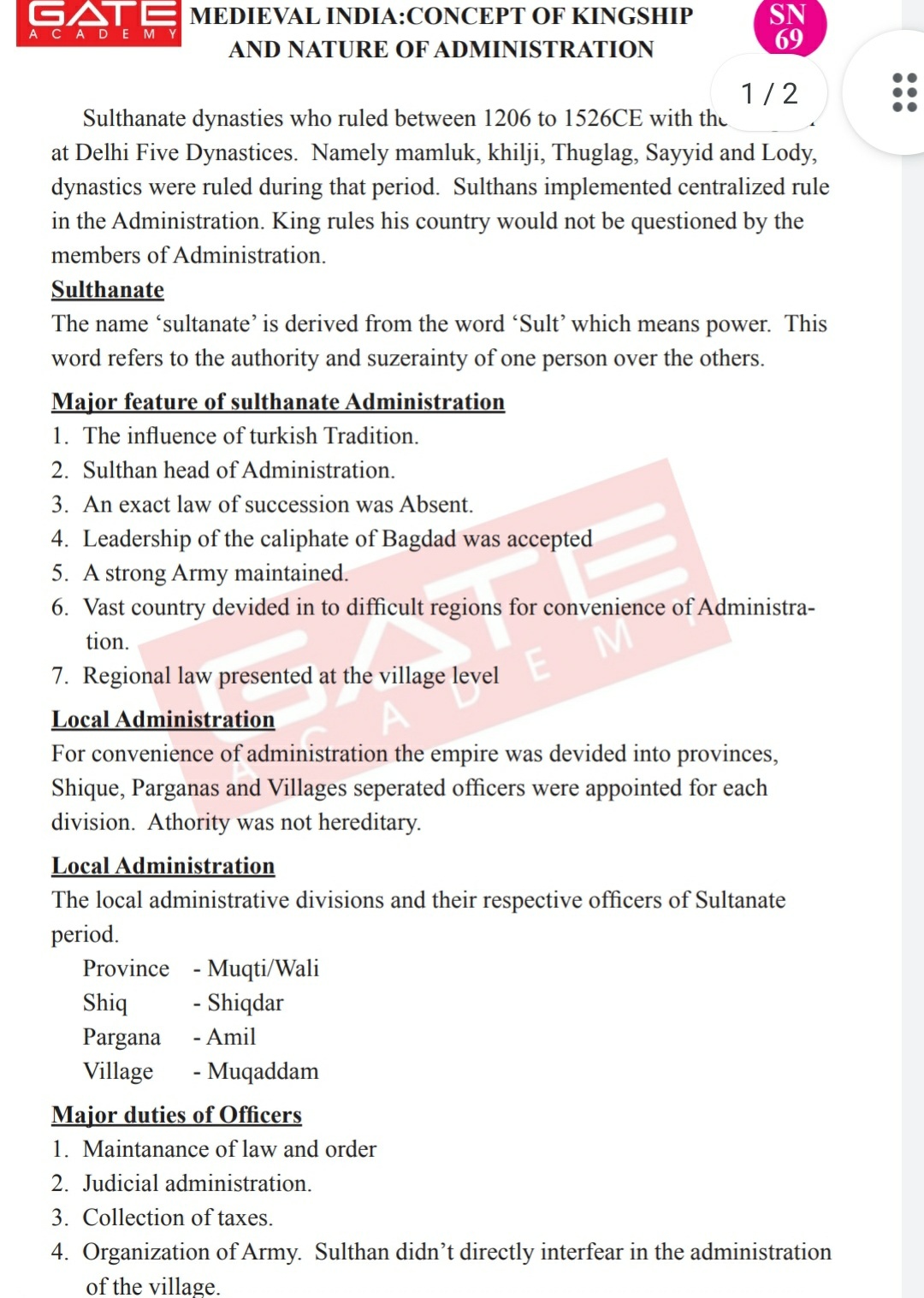
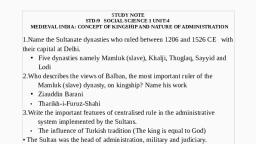
aN LE |=) MEDIEVAL INDIA:CONCEPT OF KINGSHIP ey, AND NATURE OF ADMINISTRATION, , , , ee, ee, Sulthanate dynasties who ruled between 1206 to 1526CE with the i a, , at Delhi Five Dynastices. Namely mamluk, khilji, Thuglag, Sayyid and Lody,, , dynastics were ruled during that period. Sulthans implemented centralized rule, , in the Administration. King rules his country would not be questioned by the, , members of Administration., , Sulthanate, , The name ‘sultanate’ is derived from the word “Sult’ which means power. This, , word refers to the authority and suzerainty of one person over the others., , Major feature of sulthanate Administration, . The influence of turkish Tradition., , . Sulthan head of Administration., , . An exact law of succession was Absent., , . Leadership of the caliphate of Bagdad was accepted, , . Astrong Army maintained., , . Vast country devided in to difficult regions for convenience of Administration., , 7. Regional law presented at the village level, , Local Administration, , For convenience of administration the empire was devided into provinces,, Shique, Parganas and Villages seperated officers were appointed for each, division. Athority was not hereditary., , DANntk WN, , Local Administration, The local administrative divisions and their respective officers of Sultanate, period., , Province - Muqti/Wali, , Shiq - Shiqdar, , Pargana - Amil, , Village = - Mugaddam, , Major duties of Officers, , 1. Maintanance of law and order, , 2. Judicial administration., , 3. Collection of taxes., , 4. Organization of Army. Sulthan didn’t directly interfear in the administration, of the village.