Notes of Bsc Nursing 3rd Year, Research Types - Study Material
Page 1 :
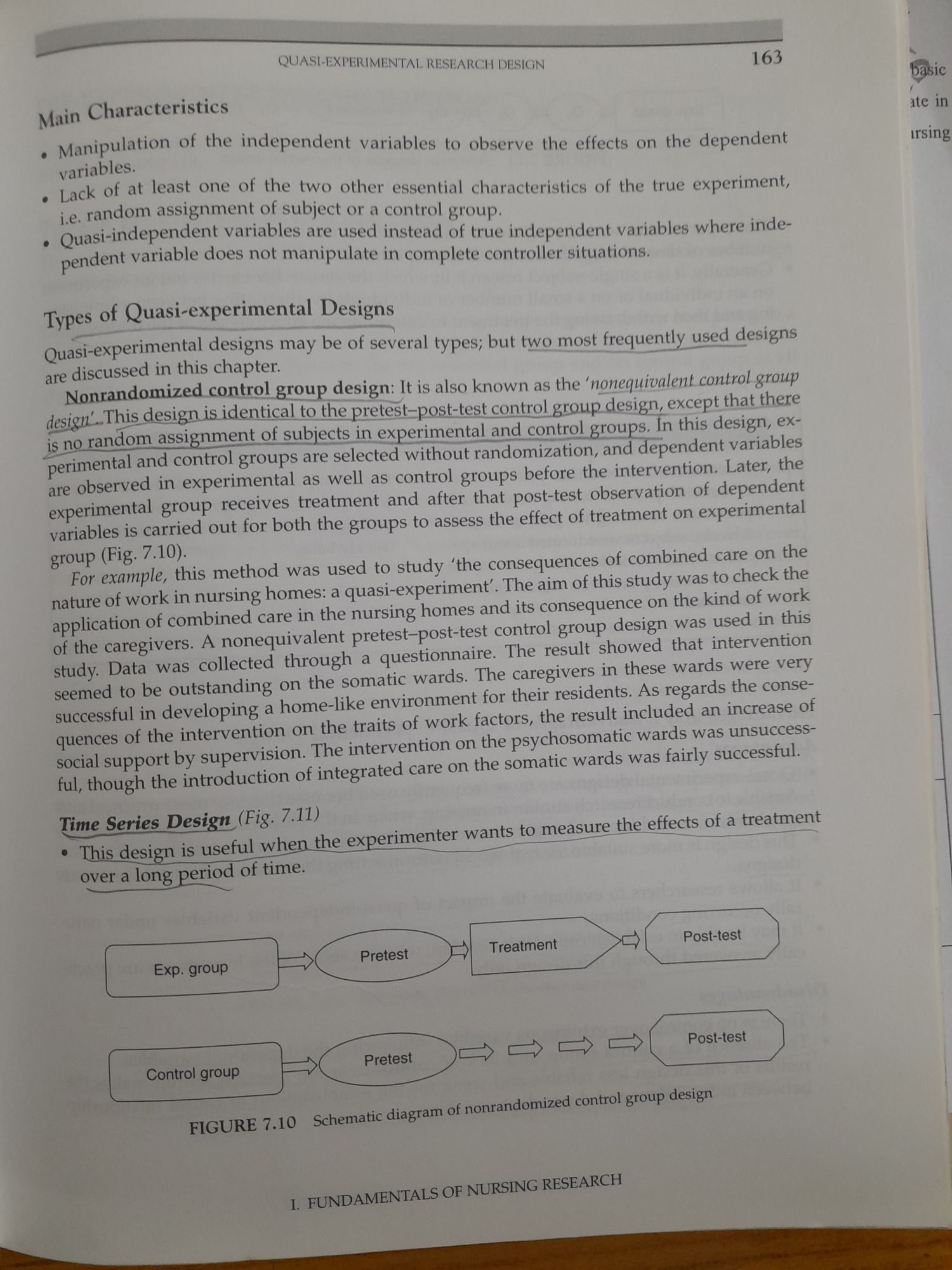
QU -EXPR 7, , QUASI-EXPERIMENTAL RESEARCH DESIGN 163 ‘, , Main Characteristics Bic, ate in, , + Manipulation of the independent variables to observe the effects on the dependent, , variables. irsing, , of at least one o ; ’, e Lack is as) of the two other essential characteristics of the true experiment, je. random assignment of subject or a control group P i, ° Quasi-independent variables are used insteé a, . s stead of true independent i i, Rar iho : variables where independent variable does not manipulate in complete controller situations, , Types of Quasi-experimental Designs, , Be ctatisciapie: be of several types; but two most frequently used designs, , Nonxandomized contro? group design: It is also known as the ‘nonequivalent control group, design’.-This « design is identical to the pretest-post-test control group design, except that there, is no random ass} nment of subjects in experimental and control groups. In this design, experimental and control groups are selected without randomization, and dependent variables, are observed in experimental as well as control groups before the intervention. Later, the, experimental group receives treatment and after that post-test observation of dependent, variables is carried out for both the groups to assess the effect of treatment on experimental, group (Fig. 7-10)., , For example, this method was used to study ‘the consequences of combined care on the, nature of work in nursing, homes: a quasi-experiment’. The aim of this study was to check the, application of combined care in the nursing homes and its consequence on the kind of work, of the caregivers. A nonequivalent pretest-post-test control group design was used in this, study. Data was collected through a questionnaire. The result showed that intervention, seemed to be outstanding on the somatic wards. The caregivers in these wards were very, successful in developing @ home-like environment for their residents. As regards the consequences of the intervention on the traits of work factors, the result included an increase of |, social support by supervision. The intervention on the psychosomatic wards was unsuccessful, though the introduction of integrated care on the somatic wards was fairly successful., , Time Series Design (Fig. 7.11) a, , e experimenter wants to measure the effects of a treatment, , ° This design is useful whe th ur s of é, over a long period of time., , Control group Prt — => (reset), , andomized control group design, , , , |, , FIGURE 7.10 Schematic diagram of nonr, , a FUNDAMENTALS OF NURSING RESEARCH, , ail