Page 1 :
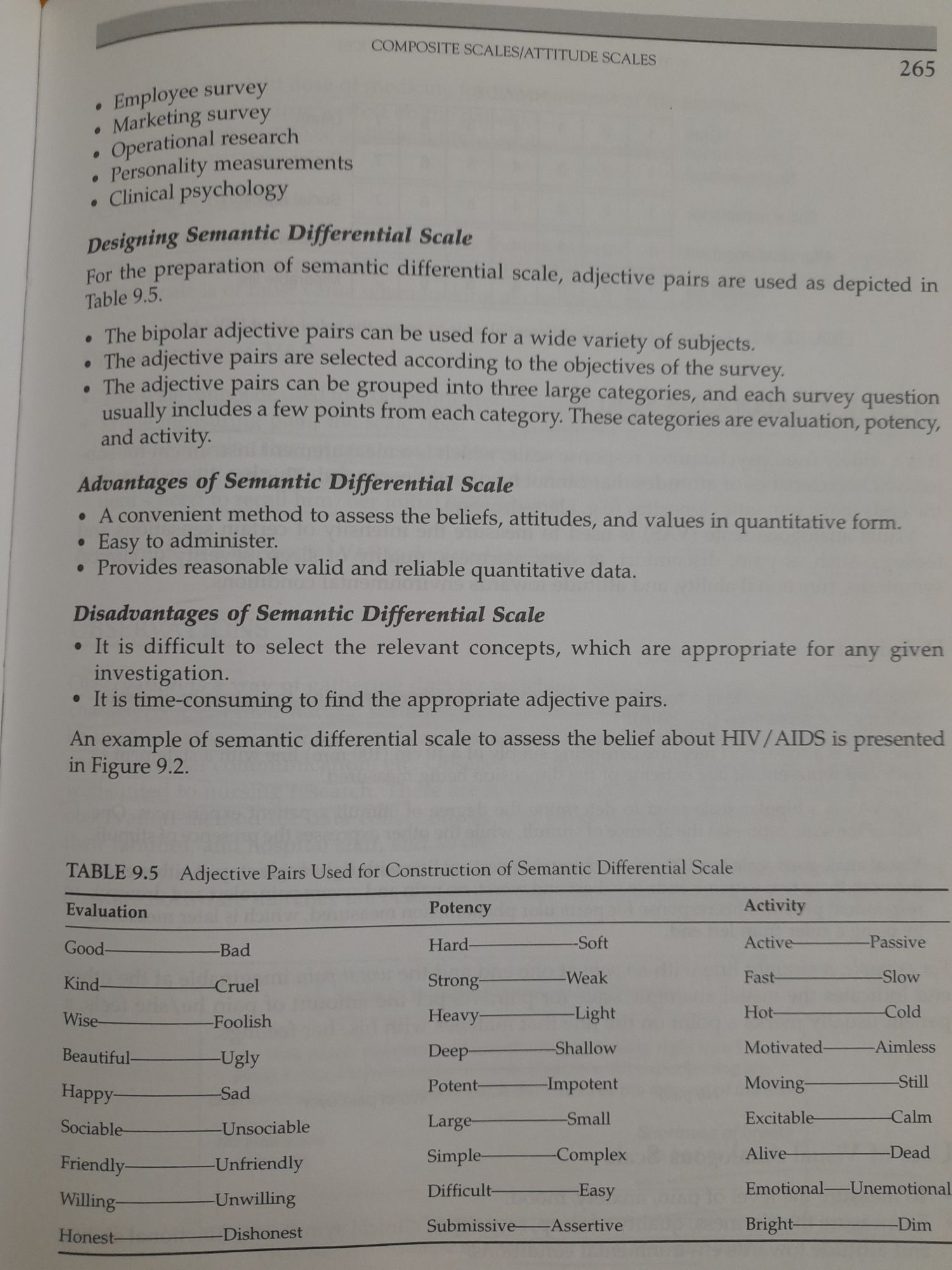
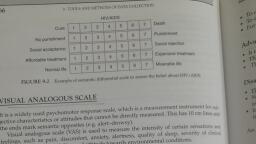
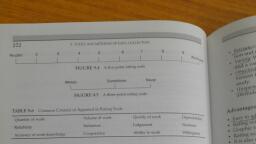
COMPO! CALES/ATTI \3!, MPOS St ES) DE SCALES, , gpmployee survey, , ® +, , » Marketing survey, Operational research, , ; personality measurements, , » Pers, , + Clinical psychology, , pesigning Semantic Differential Scale, , For the preparation of semantic differential scale, adjective pairs are used as depicted in, , Table 9.5., , e The bipolar adjective pairs can be used for a wide variety of subjects., , e The adjective pairs are selected according to the objectives of the survey., , e The adjective pairs can be grouped into three large categories, and each survey question, usually includes a few points from each ca tegory. These categories are evaluation, potency,, , and activity., Advantages of Semantic Differential Scale, e Aconvenient method to assess the beliefs, attitudes, and values in quantitative form., e Easy to administer., e Provides reasonable valid and reliable quantitative data., , Disadvantages of Semantic Differential Scale, * It is difficult to select the relevant concepts, which are appropriate for any given, , investigation., ¢ It is time-consuming to find the appropriate adjective pairs., , An example of semantic differential scale to assess the belief about HIV/AIDS is presented, , in Figure 9.2., , TABLE 9.5 Adjective Pairs Used for Construction of Semantic Differential Scale, , , , , , Evaluation Potency Activity, Good——______Bad Hard -Soft Active-————Passive, Rind 2 el Strong—————_Weak Fast——————Slow, Wise—____Foolish Heavy: Light Hot——_——_—_Cold, Beautiful—Ugly Deep————Shallow Motivated. Aimless, Happy——_—Sad Potent————Impotent Moving Still, Sociable Unsociable Large—————Smmall Excitable————_Calm, , _ Friendly: Unfriendly Simple————Complex Alive Dead, , Difficult—————Easy Emotional—Unemotional, , Unwilling, Dishonest, , Dim, , , , Bright:, , , , , , , Submissive——Assertive