Notes of Bsc Nursing 4TH YEAR, Obstetrics and gynaecology Visceral Injuries - Study Material
Page 1 :
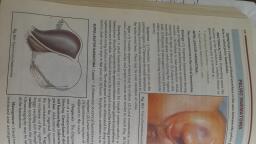
432 a TEXT BOOK of Onsp, aE, , © Repair : This is mostly applicable toascar rupture where the margins are clean. Repair ig done, ave to repair a spontaneous obstructive rupi by mK, , of the fibrous tissue at the margins. One may h, if possible. In such cases, however, there is chance of Periton:, s very much unfavourable because of ie i, , , , , , , , , , , , , , , , , , , , , , , , , , , , , , , , , , , , , , , , , , , , , , , , , circumstances (desirous of having child),, septicaemia. Remote prognosis during future pregnancy i, scar rupture., , © Repair and sterilisation : This is mostly done in, number of children., , To tackle a broad ligament haematoma — To open up the anterior leaf of the broad ligament, , out the blood clot — Secure the bleeding points > Replaced by ligature, taking care not to injure the,, Failing to secure the bleeding points — To tie the anterior division of the internal iliac artery,, , patients with a clean cut scar rupture havin,, , , , , Tae aeet sa, , to the bladder may be due to:, , BLADDER : Causes — Obstetrical injury, , (A) Traumatic — (1) Instrumental vaginal delivery such as destructive operations or forceps, specially with Kielland. (2) Abdominal operation such as hysterectomy for rupture uterus or Caesarean, specially a repeat one. (B) Sloughing fistula — This is rarely seen in these days. It results, from prolo, compression effect on the bladder between the head and symphysis pubis in obstructed labour (p,, , Diagnosis : (A) Traumatic — (1) Ur, , ine dribbles out soon following the operative delivery. Blood staiq, urine following Caesarean section or hysterectomy is suggestive of bladder injury. (2) Margins are dle, with oozing surfaces. (B) Sloughing fistula — (1) History of prolonged labour (2) Dribbling of urine, after varying interval following delivery (5-7 days). (3) Margins are devitalised and necrosed. (4), a chunk of tissue., , Management : Traumatic fi, healthy., , In unfavourable condition, a se, longer. Urinary antiseptics are prescribed. In favourable condition,, , fistula. If it fails, repair is to be done after 3 months., , Sloughing fistula : Repair should not be attempted as the conditions are not ideal (vide supra), instead, self retaining catheter is placed as outlined above. Repair is to be done after 3 months., , RECTUM: Rectal injury, other than that involved along with complete perineal tear is rare in obste, This is because, the middle-third of the rectum is protected by the curved sacral hollow and the upper, is protected by the peritoneal lining. Prolonged compression of the rectum by the head in mid pelvic contrac, witha flat sacrum predisposes to ischaemic necrosis of the anterior rectal wall and results in recto-vaginal fistt, The repair in such cases should be postponed for at least 3 months. ;, , URETHRA : Urethral injury may be traumatic resulting from instrume, may be ischaemic sloughing, the mechanism of which is similar to that of bladder necrosis., management are similar to those of bladder injury., , KEY POINTS, , “posterior vaginal wall, perineal body, anal, n be repaired immediately (p. 423,424)., , ge vulval haematoma, , ‘stula — Immediate local repair is preferable, if the local tissue cond, , 1f-retaining catheter is introduced and to be kept for 10-14 days oré, there may be spontaneous closure, , , , ntal delivery or during puro”, The principles