Notes of Bsc First Year 2022, Microbiology & Microbiology & Microbiology Sterilization - Study Material
Page 1 :
MODULE, , Sterilisation and Disinfection, , Microbiology, , 4, Notes, , STERILISATION AND, DISINFECTION, , 4.1 INTRODUCTION, Disinfection and sterilization are essential for ensuring that medical and surgical, instruments do not transmit infectious pathogens to patients. Because sterilization, of all patient-care items is not necessary, health-care policies must identify,, primarily on the basis of the items’ intended use, whether cleaning, disinfection,, or sterilization is indicated., , OBJECTIVES, After reading this lesson, you will be able to:, z, , define terms related to Sterilization and Disinfection, , z, , classify items to be sterilised or disinfected, , z, , discuss different Methods of sterilisation, , z, , describe Evaluation and in Process Monitoring of Sterilization Procedures, , z, , discuss Methods of disinfection, , z, , describe the Testing of disinfectants, , 4.2 DEFINITIONS OF TERMS, Sterilization: Sterilization describes a process that destroys or eliminates all, forms of microbial life and is carried out in health-care facilities by physical or, chemical methods., , 40, , MICROBIOLOGY
Page 2 :
MODULE, , Sterilisation and Disinfection, , Disinfection: Disinfection describes a process that eliminates many or all, pathogenic microorganisms, except bacterial spores, on inanimate objects., , Microbiology, , Cleaning: Cleaning is removal of visible soil (e.g., organic and inorganic, material) from objects and surfaces. It is normally accomplished manually or, mechanically using water with detergents or enzymatic products., Decontamination: Decontamination removes pathogenic microorganisms from, objects so they are safe to handle, use, or discard., , Notes, , Classification of Materials to be Sterilised / Disinfected, Earle H. Spaulding devised a rational approach to disinfection and sterilization, of patient-care items and equipment. This has three categories, Critical Items, Critical items confer a high risk for infection if they are contaminated with any, microorganism. Thus, objects that enter sterile tissue or the vascular system must, be sterile because any microbial contamination could transmit disease. This, category includes surgical instruments, cardiac and urinary catheters, implants,, and ultrasound probes used in sterile body cavities etc., Semi-critical Items, Semi-critical items contact mucous membranes or non-intact skin. This category, includes respiratory therapy and anaesthesia equipment, some endoscopes,, laryngoscope blades, esophageal manometry probes, cystoscopes, anorectal, manometry catheters, and diaphragm fitting rings etc., Noncritical Items, Noncritical items are those that come in contact with intact skin but not mucous, membranes. Intact skin acts as an effective barrier to most microorganisms;, therefore, the sterility of items coming in contact with intact skin is “not critical.”, They can be, Non-critical patient care items: bedpans, blood pressure cuffs, crutches and, computers, Non-critical environmental surfaces, , INTEXT QUESTIONS 4.1, 1., 2., 3., 4., , Sterilization, Disinfection, Cleaning, Decontamination, , MICROBIOLOGY, , (a), (b), (c), (d), , Removal of visible soil, Removal of Pathogenic Microorganisms, Destroys all forms of Microbes, Removal of Pathogenic Microorganism, except bacteria spores, 41
Page 3 :
MODULE, Microbiology, , Sterilisation and Disinfection, , 4.3 METHODS OF STERILIZATION, The various methods of sterilization are:, 1. Physical Method, (a) Thermal (Heat) methods, (b) Radiation method, , Notes, , (c) Filtration method, 2. Chemical Method, 3. Gaseous method, , Methods of sterilization/disinfection, Physical, Sunlight Heat Vibration Radiation, , Chemical, Filtration, , Non-ionizing, Dry heat Moist heat, Ionizing, Red heat, Below 100°C, Electomagnetic, Flaming, At 100°C, Incineration Above 100°C Particulate, Hot air oven, Infra red, , Earthenware, Asbestos, Sintered glass, Membrane, , Liquid, , Physiochemical, , Alcohols, Aldehydes, Phenolics, Halogens, Heavy metals, Surface active agents, Dyes, Gaseous, Formaldehyde, Ethylene oxide, Plasma, , 4.3.1 Heat Sterilization, Heat sterilization is the most widely used and reliable method of sterilization,, involving destruction of enzymes and other essential cell constituents. The, process is more effective in hydrated state where under conditions of high, humidity, hydrolysis and denaturation occur, thus lower heat input is required., Under dry state, oxidative changes take place, and higher heat input is required., This method of sterilization can be applied only to the thermostable products,, but it can be used for moisture-sensitive materials for which dry heat (160180°C) sterilization, and for moisture-resistant materials for which moist heat, (121-134°C) sterilization is used., The efficiency with which heat is able to inactivate microorganisms is dependent, upon the degree of heat, the exposure time and the presence of water. The action, of heat will be due to induction of lethal chemical events mediated through the, action of water and oxygen. In the presence of water much lower temperature, 42, , MICROBIOLOGY
Page 4 :
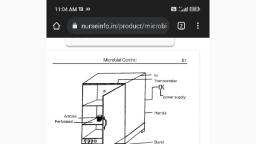
Sterilisation and Disinfection, , time exposures are required to kill microbe than in the absence of water. In this, processes both dry and moist heat are used for sterilization., , MODULE, Microbiology, , Dry Heat Sterilization: Examples of Dry heat sterilization are:, 1. Incineration, 2. Red heat, 3. Flaming, , Notes, , 4. Hot air oven, It employs higher temperatures in the range of 160-180°C and requires, exposures time up to 2 hours, depending upon the temperature employed. The, benefit of dry heat includes good penetrability and non-corrosive nature which, makes it applicable for sterilizing glass-wares and metal surgical instruments., It is also used for sterilizing non-aqueous thermo-stable liquids and thermostable powders. Dry heat destroys bacterial endotoxins (or pyrogens) which are, difficult to eliminate by other means and this property makes it applicable for, sterilizing glass bottles which are to be filled aseptically., Hot-air oven, Dry heat sterilization is usually carried out in a hot air oven, which consists of, the following:, (i) An insulated chamber surrounded by an outer case containing electric, heaters., (ii) A fan, (iii) Shelves, (iv) Thermocouples, (v) Temperature sensor, (vi) Door locking controls., Operation, (i) Articles to be sterilized are first wrapped or enclosed in containers of, cardboard, paper or aluminium., (ii) Then, the materials are arranged to ensure uninterrupted air flow., (iii) Oven may be pre-heated for materials with poor heat conductivity., (iv) The temperature is allowed to fall to 40°C, prior to removal of sterilized, material., Moist Heat Sterilization: Moist heat may be used in three forms to achieve, microbial inactivation, MICROBIOLOGY, , 43
Page 5 :
MODULE, Microbiology, , Sterilisation and Disinfection, , 1. Dry saturated steam – Autoclaving, 2. Boiling water/ steam at atmospheric pressure, 3. Hot water below boiling point, , Notes, , Moist heat sterilization involves the use of steam in the range of 121-134°C., Steam under pressure is used to generate high temperature needed for, sterilization. Saturated steam acts as an effective sterilizing agent. Steam for, sterilization can be either wet saturated steam (containing entrained water, droplets) or dry saturated steam (no entrained water droplets)., , Fig. 4.1: An Autoclave, , Autoclaves use pressurized steam to destroy microorganisms, and are the most, dependable systems available for the decontamination of laboratory waste and, the sterilization of laboratory glassware, media, and reagents. For efficient heat, transfer, steam must flush the air out of the autoclave chamber. Before using the, autoclave, check the drain screen at the bottom of the chamber and clean if, blocked. If the sieve is blocked with debris, a layer of air may form at the bottom, of the autoclave, preventing efficient operation. Autoclaves should be tested, periodically with biological indicators like spores of Bacillus stearothermophilus, to ensure proper function. This method of sterilization works well for many, metal and glass items but is not acceptable for rubber, plastics, and equipment, that would be damaged by high temperatures (Figure 4.1)., Autoclaves, or steam sterilizers essentially consist of following:, 1. A cylindrical or rectangular chamber, with capacities ranging from 400 to, 800 litres., 44, , MICROBIOLOGY
Page 6 :
Sterilisation and Disinfection, , 2. Water heating system or steam generating system, , MODULE, Microbiology, , 3. Steam outlet and inlet valves, 4. Single or double doors with locking mechanism., 5. Thermometer or temperature gauge, 6. Pressure gauges, Operation, , Notes, , For porous loads (dressings) sterilizers are generally operated at a minimum, temperature of 134°C for one hour, and for bottled fluid, sterilizers employing, a minimum temperature of 121°C are used. Ensure that there should be sufficient, water in the autoclave to produce the steam. The stages of operation of, autoclaves include air removal, steam admission and sterilization cycle (includes, heating up, holding/exposure, and cooling stages)., Gaseous Sterilization, The chemically reactive gases such as formaldehyde, (methanol, H.CHO) and, ethylene oxide (CH2)2O possess biocidal activity. Ethylene oxide is a colorless,, odorless, and flammable gas., The mechanism of antimicrobial action of the two gases is assumed to be through, alkylations of sulphydryl, amino, hydroxyl and carboxyl groups on proteins and, amino groups of nucleic acids. The concentration ranges (weight of gas per unit, chamber volume) are usually in range of 800-1200 mg/L for ethylene oxide and, 15-100 mg/L for formaldehyde with operating temperatures of 45-63°C and 7075°C respectively., Both of these gases being alkylating agents are potentially mutagenic and, carcinogenic. They also produce acute toxicity including irritation of the skin,, conjunctiva and nasal mucosa., (a) Ethylene oxide sterilizer: An ethylene oxide sterilizer consists of a, chamber of 100-300-Litre capacity and surrounded by a water jacket. Air, is removed from sterilizer by evacuation, humidification and conditioning, of the load is done by passing sub-atmospheric pressure steam, then, evacuation is done again and preheated vaporized ethylene oxide is passed., After treatment, the gases are evacuated either directly to the outside, atmosphere or through a special exhaust system., Ethylene oxide gas has been used widely to process heat-sensitive devices,, but the aeration times needed at the end of the cycle to eliminate the gas, made this method slow., MICROBIOLOGY, , 45
Page 7 :
MODULE, Microbiology, , Sterilisation and Disinfection, , (b) Low temperature steam formaldehyde (LTSF) sterilizer: An LTSF, sterilizer operates with sub atmospheric pressure steam. At first, air is, removed by evacuation and steam is admitted to the chamber., Liquid Sterilization, , Notes, , (a) Peracetic Acid liquid sterilization: Peracetic acid was found to be, sporicidal at low concentrations. It was also found to be water soluble, and, left no residue after rinsing. It was also shown to have no harmful health, or environmental effects. It disrupts bonds in proteins and enzymes and may, also interfere with cell membrane transportation through the rupture of cell, walls and may oxidize essential enzymes and impair vital biochemical, pathways., In a low-temperature liquid chemical sterile processing system, several, steps must be followed for effective sterilization:, 1. Pre-cleaning of the devices is necessary because many devices have, small connected lumens., 2. Leak testing is done to ensure there are no leaks that could allow fluid, to enter/leak the ampoules/vials and cause damage., 3. The appropriate tray/container must then be selected, and if the device, has lumens, the appropriate connector attached., 4. The sterilant concentrate is provided in a sealed single- use cup and, requires no pre-mixing or dilution., The disadvantages of this method of sterilization are that the devices must, be immersible, must fit in the appropriate tray, and must be able to withstand, the 55°C temperature the process uses., (b) Hydrogen Peroxide Sterilization: This method disperses a hydrogen, peroxide solution in a vacuum chamber, creating a plasma cloud. This agent, sterilizes by oxidizing key cellular components, which inactivates the, microorganisms. The plasma cloud exists only while the energy source is, turned on. When the energy source is turned off, water vapor and oxygen, are formed, resulting in no toxic residues and harmful emissions. The, temperature of this sterilization method is maintained in the 40-50°C range,, which makes it particularly well-suited for use with heat-sensitive and, moisture-sensitive medical devices. The instruments are wrapped prior to, sterilization, and can either be stored or used immediately., There are five phases of the hydrogen peroxide processing cycle:, 1. A vacuum phase creates a vacuum in the chamber and the pressure, drops to less than one pound per square inch. This phase lasts about, 20 minutes., , 46, , MICROBIOLOGY
Page 8 :
MODULE, , Sterilisation and Disinfection, , 2. In the injection phase, the aqueous hydrogen peroxide is introduced, into the vacuum chamber and is vaporized into a gas, which creates, a rise in pressure due to the increase of molecules., , Microbiology, , 3. During the diffusion phase the hydrogen peroxide vapor spreads, throughout the chamber and the increased pressure drives the sterilant, into the packs, exposing the instrument surfaces to the sterilant and, killing the microorganisms., 4. During the plasma phase the radio frequency energy is applied,, stripping the electrons from some of the molecules and producing a, low-temperature plasma cloud. Following this reaction, the activated, compounds lose their high energy and recombine to form oxygen and, water., , Notes, , 5. The purpose of the venting phase is to introduce filtered air into the, chamber and return the chamber to atmospheric pressure so that the, door can be opened. It lasts about one minute., , INTEXT QUESTIONS 4.2, Match the following, 1. Dry heat Sterilisation, , (a) Hydrogen peroxide Sterilizer, , 2. Moist heat, , (b) Formaldehyde Sterilizer, , 3. Gas Sterilization, , (c) Autoclave, , 4. Liquid Sterilisation, , (d) Hot air Oven, , 4.3 RADIATION STERILIZATION, Many types of radiation are used for sterilization like electromagnetic radiation, (e.g. gamma rays and UV light), particulate radiation (e.g. accelerated, electrons).The major target for these radiation is microbial DNA. Gamma rays, and electrons cause ionization and free radical production while UV light causes, excitation., Radiation sterilization with high energy gamma rays or accelerated electrons has, proven to be a useful method for the industrial sterilization of heat sensitive, products. But some undesirable changes occur in irradiated products, an, example is aqueous solution where radiolysis of water occurs., Radiation sterilization is generally applied to articles in the dry state; including, surgical instruments, sutures, prostheses, unit dose ointments, plastic syringes, MICROBIOLOGY, , 47
Page 9 :
MODULE, Microbiology, , Notes, , Sterilisation and Disinfection, , and dry pharmaceutical products. UV light, with its much lower energy, and poor, penetrability finds uses in the sterilization of air, for surface sterilization of, aseptic work areas, for treatment of manufacturing grade water, but is not, suitable for sterilization of pharmaceutical dosage forms., Gamma ray Sterilizer: Gamma rays for sterilization are usually derived from, cobalt-60 source, the isotope is held as pellets packed in metal rods, each rod, carefully arranged within the source and containing 20 KCi of activity. This, source is housed within a reinforced concrete building with 2 m thick walls., Articles being sterilized are passed through the irradiation chamber on a, conveyor belt and move around the raised source., Ultraviolet Irradiation: The optimum wavelength for UV sterilization is 260, nm. A mercury lamp giving peak emission at 254 nm is the suitable source of, UV light in this region., Electron Accelerator, There are two types of electron accelerator machines, the electrostatic accelerator, which produces electrons with maximum energies of 5 MeV, and the microwave, linear accelerator which produces electrons with maximum energies of 10 MeV., Higher energies cause better penetration into the product but there is a risk of, induced radiation., A high energy electron beam is generated by accelerating electrons from a hot, filament down an evacuated tube under high potential difference, and then, additional energy is imparted to this beam in a pulsed manner by a synchronized, traveling microwave. Articles to be sterilized are arranged on a horizontal, conveyor belt and are irradiated from one or both sides., Filtration Sterilization, Filtration process does not destroy but removes the microorganisms. It is used, for both the clarification and sterilization of liquids and gases as it is capable, of preventing the passage of both viable and non viable particles., The major mechanisms of filtration are sieving, adsorption and trapping within, the matrix of the filter material. Sterilizing grade filters are used in the treatment, of heat sensitive injections and ophthalmic solutions, biological products and air, and other gases for supply to aseptic areas. They are also used in industry as part, of the venting systems on fermentors, centrifuges, autoclaves and freeze driers., Membrane filters are used for sterility testing., , 48, , MICROBIOLOGY
Page 10 :
Sterilisation and Disinfection, , Application of filtration for sterilization of gases: HEPA (High efficiency, particulate air) filters can remove up to 99.97% of particles >0.3 micrometer in, diameter. Air is first passed through prefilters to remove larger particles and then, passed through HEPA filters. The performance of HEPA filter is monitored by, pressure differential and airflow rate measurements., , MODULE, Microbiology, , There are two types of filters used in filtration sterilization, (a) Depth filters: Consist of fibrous or granular materials so packed as to form, twisted channels of minute dimensions. They are made of diatomaceous, earth, unglazed porcelain filter, sintered glass or asbestos., , Notes, , (b) Membrane filters: These are porous membrane about 0.1 mm thick, made, of cellulose acetate, cellulose nitrate, polycarbonate, and polyvinylidene, fluoride, or some other synthetic material.The membranes are supported on, a frame and held in special holders. Fluids are made to transverse, membranes by positive or negative pressure or by centrifugation., Application of filtration for sterilization of liquids: Membrane filters of 0.22, micrometer nominal pore diameter are generally used, but sintered filters are, used for corrosive liquids, viscous fluids and organic solvents. The factors which, affects the performance of filter is the titre reduction value, which is the ratio, of the number of organism challenging the filter under defined conditions to the, number of organism penetrating it. The other factors are the depth of the, membrane, its charge and the tortuosity of the channels., Evaluation and In Process Monitoring of Sterilization Procedures, Dry Heat Sterilization, Physical indicator: In this process temperature record chart is made of each, sterilization cycle with dry heat sterilization. This chart forms the batch, documentation and is compared against a master temperature records. The, temperature should be taken as the coolest part of the loaded sterilizer, further, information on heat distribution and penetration within sterilizer can be gained, by the use of thermocouple place at selected site in the chamber or injected into, test packs or bottles., Chemical indicator: It is based on the ability of heat to alter the chemical or, physical characteristics of variety of chemical substances. This change should, take place only when satisfactory condition for sterilization prevails. Thus, conforming that sterilization cycle has been successfully completed. Chemical, indicators generally undergo melting or colour change., MICROBIOLOGY, , 49
Page 11 :
MODULE, Microbiology, , Notes, , Sterilisation and Disinfection, , Biological indicator: The biological indicators are the standardized bacterial, spore preparations which are usually in the form of suspension in water or culture, medium or of spore dried on paper or plastic carriers, they are placed in sterilizer., After the sterilization process the aqueous suspension /spores are on carriers are, aseptically transferred to an appropriate nutrient medium, which is then, incubated and occasionally seen for the growth. Clostridium species is generally, used for dry heat sterilization indicator., Indicators, , Sterilization, Methods, , Principle, , Physical, , Dry heat, , Temperature, recording charts, , Temperature, recording charts, , Temperature, , Chemical, , Dry heat, , Temperature, sensitive, coloured, solution, , Browne’s tube, , Temperature,, Time, , Temperature, sensitive, chemical, , A temperature, sensitive white, wax concealing, a black marked, , Temperature, , Temperature, sensitive, microbes, , Bacillus, subtilis, , D value, , Biological, , Dry heat, , Device, , Parameter, monitored, , Moist Heat Sterilization, Physical Indicator: In this process temperature record chart is made of each, sterilization cycle with dry heat sterilization. This chart of the batch documentation, is compared against a master temperature records. The temperature should be, taken as the coolest part of the loaded sterilizer, further information on heat, distribution and penetration within sterilizer can be gained by the use of, thermocouple place at selected site in the chamber or injected into test packs or, bottles., Chemical Indicator: It is based on the ability of heat to alter the chemical or, physical characteristics of variety of chemical substances. This change should, take place only when satisfactory condition for sterilization prevails. Thus, conforming that sterilization cycle has been successfully completed chemical, indicator generally undergoes melting or colour change., Biological Indicator: Spores of G. steareothermophylus in sealed ampoules of, culture medium are used for moist heat sterilization monitoring and these may, 50, , MICROBIOLOGY
Page 12 :
MODULE, , Sterilisation and Disinfection, , be incubated directly at 55°C, thus may eliminate the need of aseptic transfer, (Table 3)., , Microbiology, , Aseptic transfer is also avoided by use of self-contained units where the spores, strip and the nutrient medium are present in the same device ready for mixing, after use., The bacterial spores should have following qualities, Notes, , (i) It should be non-pathogenic, (ii) Should possess above average resistant to the particular sterilization, process., Indicator, , Sterilization, , Principle, , Device, , Parameter, monitored, , Physical, , Moist heat, , Temperature, recording, charts, , Temperature, recording, charts, , Temperature, , Chemical, , Moist heat, , Temperature, sensitive, coloured, solution, , Browne’s tube, , Temperature,, Time, , Steam, sensitive, chemical, , A device which, is impregnated, into a carrier, material., , Saturated steam, , Temperature, sensitive, microbes, , Geobacillus, stearothermophilus, , D value, , Biological, , Moist heat, , Gaseous Sterilization, Physical Indicator: Gas concentration is measured independently of pressure, rise, often by reference to weight of gas used., Chemical Indicator: The chemical indicator used here are Royach Sacket, the, indicator paper impregnated with reactive chemical which undergoes a distinct, colour change on reaction. Chemical indicators are valuable monitors of the, condition prevailing at the coolest of most in accessible part of a sterilizer., Biological Indicator: As with chemical indicator they are usually packed in, dummy packs located at strategic sites in the sterilizer. Alternatively for gaseous, sterilization, these may also be placed in tubular helix device. The species of, bacteria generally used for gaseous sterilization are B.subtilis var.niger and, B.subtilis var.golbigii, MICROBIOLOGY, , 51
Page 13 :
MODULE, Microbiology, , Sterilisation and Disinfection, , Radiation Sterilization, Physical Indicator: In radiation sterilization a plastic or perspex dosimeter, which gradually darkens in proportion to the radiation it absorbs give an accurate, measure of the radiation dose and is considered to be the best technique currently, available for the radiation sterilization process., , Notes, , Chemical Indicator: Chemical dosimeter acidified with cerric ammonium, sulphate or cerric sulphate solution .These responds to irradiation by dose, change in the applied density. Those are considered best and accurately measure, relation dose., Biological Indicator: These consist of standardized bacterial spore preparation, which are usually in the form of suspension in water or culture medium or of, spore dried on paper or plastic carriers, they are placed in sterilizer., After the sterilization process the aqueous suspension /spores are on carriers are, aseptically transferred to an appropriate nutrient medium, which is then, incubated and periodically observed for the growth. Clostridium species is, generally used for dry heat sterilization indicator, Filtration Sterilization, Physical Indicator: Sterilizing filters are subjected to a bubble point pressure, test. This is a technique for determining the pore size of a filter, and may also, be used to check the integrity of certain types of filters. The principle of the test, is that the wetted filter in its assembled unit is subjected to an increasing air or, nitrogen gas pressure difference. The pressure difference recorded when the first, bubble of gas breaks away from the filter is related to maximum pore size. When, the gas pressure is further increased slowly there is general eruption of bubble, over the entire surface. The pressure difference here is related to the mean pore, size. Pressure difference below the expected value would signify a damage or, faulty filter., Biological Indicator: Filtration sterilization requires a different approach from, biological monitoring, the test effectively measure in the ability of a filter to, produce a sterile filtrate from a culture of suitable organism S. marcesence, a, small gram negative rod shape bacterium. B. diminuta used as a biological, indicator having a dimension 0.5 micrometres and 0.3 micrometre respectively, has been used for filters of 0.45 micrometre and 0.22 micrometre. The extent, of the passage of this organism through membrane filter is enhanced by, increasing the filtration pressure. Thus successful sterile filtration depends, markedly on the challenge condition. Such tests are used as the part of filter, manufacture characterization and quality assurance process, and user’s initial, validation procedure., , 52, , MICROBIOLOGY
Page 14 :
Sterilisation and Disinfection, , MODULE, , 4.4 CHEMICAL METHODS OF DISINFECTION, , Microbiology, , Disinfectants are those chemicals that destroy pathogenic bacteria from inanimate, surfaces. Some chemicals when used at apropriate concentration for appropriate, duration can be used for sterilization and are called sterilant liquids. Those, chemicals that can be safely applied over skin and mucus membranes are called, antiseptics., An ideal antiseptic or disinfectant should have following properties:, 1. Should have wide spectrum of activity, 2. Should be able to destroy microbes within practical period of time, 3. Should be active in the presence of organic matter, 4. Should make effective contact and be wettable, 5. Should be active in any pH, 6. Should be stable, 7. Should have long shelf life, 8. Should be speedy, 9. Should have high penetrating power, 10. Should be non-toxic, non-allergenic, non-irritative or non-corrosive, 11. Should not have bad odour, 12. Should not leave non-volatile residue or stain, 13. Efficacy should not be lost on reasonable dilution, 14. Should not be expensive and must be available easily, , Notes, , Such an ideal disinfectant is not yet available. The level of disinfection achieved, depends on contact time, temperature, type and concentration of the active, ingredient, the presence of organic matter, the type and quantum of microbial, load. The chemical disinfectants at working concentrations rapidly lose their, strength on standing., Classification of disinfectants:, 1. Based on consistency, (a) Liquid (E.g., Alcohols, Phenols), (b) Gaseous (Formaldehyde vapour), 2. Based on spectrum of activity, (a) High level, (b) Intermediate level, (c) Low level, , MICROBIOLOGY, , 53
Page 15 :
MODULE, Microbiology, , Sterilisation and Disinfection, , 3. Based on mechanism of action, (a) Action on membrane (E.g., Alcohol, detergent), (b) Denaturation of cellular proteins (E.g., Alcohol, Phenol), (c) Oxidation of essential sulphydryl groups of enzymes (E.g., H2O2,, Halogens), , Notes, , (d) Alkylation of amino-, carboxyl- and hydroxyl group (E.g.,, Formaldehyde), (e) Damage to nucleic acids (Formaldehyde), Alcohols, Mode of action: Alcohols dehydrate cells, disrupt membranes and cause, coagulation of protein., Examples: Ethyl alcohol, isopropyl alcohol and methyl alcohol, Application: A 70% aqueous solution is more effective at killing microbes than, absolute alcohols. 70% ethyl alcohol (spirit) is used as antiseptic on skin., Isopropyl alcohol is preferred to ethanol. It can also be used to disinfect surfaces., It is used to disinfect clinical thermometers. Methyl alcohol kills fungal spores,, hence is useful in disinfecting inoculation hoods., Disadvantages: Skin irritant, volatile (evaporates rapidly), inflammable, Aldehydes, Mode of action: Acts through alkylation of amino-, carboxyl- or hydroxyl group,, and probably damages nucleicacids. It kills all microorganisms, including, spores., Examples: Formaldehyde, Gluteraldehyde, Application: 40% Formaldehyde (formalin) is used for surface disinfection and, fumigation of rooms, chambers, operation theatres, biological safety cabinets,, wards, sick rooms etc. Fumigation is achieved by boiling formalin, heating, paraformaldehyde or treating formalin with potassium permanganate. It also, sterilizes bedding, furniture and books. 10% formalin with 0.5% tetraborate, sterilizes clean metal instruments. 2% gluteraldehyde is used to sterilize, thermometers, cystoscopes, bronchoscopes, centrifuges, anasethetic equipments, etc. An exposure of at least 3 hours at alkaline pH is required for action by, gluteraldehyde. 2% formaldehyde at 40°C for 20 minutes is used to disinfect, wool and 0.25% at 60oC for six hours to disinfect animal hair and bristles., , 54, , MICROBIOLOGY
Page 16 :
Sterilisation and Disinfection, , Disadvantages: Vapors are irritating (must be neutralized by ammonia), has, poor penetration, leaves non-volatile residue, activity is reduced in the presence, of protein. Gluteraldehyde requires alkaline pH and only those articles that are, wettable can be sterilized., , MODULE, Microbiology, , Phenol, Mode of action: Act by disruption of membranes, precipitation of proteins and, inactivation of enzymes., , Notes, , Examples: 5% phenol, 1-5% Cresol, 5% Lysol (a saponified cresol),, hexachlorophene, chlorhexidine, chloroxylenol (Dettol), Applications: Joseph Lister used it to prevent infection of surgical wounds., Phenols are coal-tar derivatives. They act as disinfectants at high concentration, and as antiseptics at low concentrations. They are bactericidal, fungicidal,, mycobactericidal but are inactive against spores and most viruses. They are not, readily inactivated by organic matter. The corrosive phenolics are used for, disinfection of ward floors, in discarding jars in laboratories and disinfection of, bedpans. Chlorhexidine can be used in an isopropanol solution for skin, disinfection, or as an aqueous solution for wound irrigation. It is often used as, an antiseptic hand wash. 20% Chlorhexidine gluconate solution is used for preoperative hand and skin preparation and for general skin disinfection., Chlorhexidine gluconate is also mixed with quaternary ammonium compounds, such as cetrimide to get stronger and broader antimicrobial effects (eg. Savlon)., Chloroxylenols are less irritant and can be used for topical purposes and are more, effective against gram positive bacteria than gram negative bacteria., Hexachlorophene is chlorinated diphenyl and is much less irritant. It has marked, effect over gram positive bacteria but poor effect over gram negative bacteria,, mycobacteria, fungi and viruses. Triclosan is an organic phenyl ether with good, activity against gram positive bacteria and effective to some extent against many, gram negative bacteria including Pseudomonas. It also has fair activity on fungi, and viruses., Disadvantages: It is toxic, corrosive and skin irritant. Chlorhexidine is, inactivated by anionic soaps. Chloroxylenol is inactivated by hard water., Halogens, Mode of action: They are oxidizing agents and cause damage by oxidation of, essential sulfydryl groups of enzymes. Chlorine reacts with water to form, hypochlorous acid, which is microbicidal., Examples: Chlorine compounds (chlorine, bleach, hypochlorite) and iodine, compounds (tincture iodine, iodophores), MICROBIOLOGY, , 55
Page 17 :
MODULE, Microbiology, , Notes, , Sterilisation and Disinfection, , Applications: Tincture of iodine (2% iodine in 70% alcohol) is an antiseptic., Iodine can be combined with neutral carrier polymers such as polyvinylpyrrolidone, to prepare iodophores such as povidone-iodine. Iodophores permit slow release, and reduce the irritation of the antiseptic. For hand washing iodophores are, diluted in 50% alcohol. 10% Povidone Iodine is used undiluted in pre and, postoperative skin disinfection. Chlorine gas is used to bleach water. Household, bleach can be used to disinfect floors. Household bleach used in a stock dilution, of 1:10. In higher concentrations chlorine is used to disinfect swimming pools., 0.5% sodium hypochlorite is used in serology and virology. Used at a dilution, of 1:10 in decontamination of spillage of infectious material. Mercuric chloride, is used as a disinfectant., Disadvantages: They are rapidly inactivated in the presence of organic matter., Iodine is corrosive and staining. Bleach solution is corrosive and will corrode, stainless steel surfaces., Heavy Metals, Mode of action: Act by precipitation of proteins and oxidation of sulfydryl, groups. They are bacteriostatic., Examples: Mercuric chloride, silver nitrate, copper sulfate, organic mercury, salts (e.g., mercurochrome, merthiolate), Applications: 1% silver nitrate solution can be applied on eyes as treatment for, opthalmia neonatorum (Crede’s method). This procedure is no longer followed., Silver sulphadiazine is used topically to help to prevent colonization and, infection of burn tissues. Mercurials are active against viruses at dilution of, 1:500 to 1:1000. Merthiolate at a concentration of 1:10000 is used in, preservation of serum. Copper salts are used as a fungicide., Disadvantages: Mercuric chloride is highly toxic, are readily inactivated by, organic matter., Surface Active Agents, Mode of actions: They have the property of concentrating at interfaces between, lipid containing membrane of bacterial cell and surrounding aqueous medium., These compounds have long chain hydrocarbons that are fat soluble and charged, ions that are water-soluble. Since they contain both of these, they concentrate, on the surface of membranes. They disrupt membrane resulting in leakage of cell, constituents., Examples: These are soaps or detergents. Detergents can be anionic or cationic., Detergents containing negatively charged long chain hydrocarbon are called, anionic detergents. These include soaps and bile salts. If the fat-soluble part is, , 56, , MICROBIOLOGY
Page 18 :
Sterilisation and Disinfection, , made to have a positive charge by combining with a quaternary nitrogen atom,, it is called cationic detergents. Cationic detergents are known as quaternary, ammonium compounds (or quat). Cetrimide and benzalkonium chloride act as, cationic detergents., Application: They are active against vegetative cells, Mycobacteria and, enveloped viruses. They are widely used as disinfectants at dilution of 1-2% for, domestic use and in hospitals., , MODULE, Microbiology, , Notes, , Disadvantages: Their activity is reduced by hard water, anionic detergents and, organic matter. Pseudomonas can metabolise cetrimide, using them as a carbon,, nitrogen and energy source., Dyes, Mode of action: Acridine dyes are bactericidal because of their interaction with, bacterial nucleic acids., Examples: Aniline dyes such as crystal violet, malachite green and brilliant, green. Acridine dyes such as acriflavin and aminacrine. Acriflavine is a mixture, of proflavine and euflavine. Only euflavine has effective antimicrobial properties., They are more effective against gram positive bacteria than gram negative, bacteria and are more bacteriostatic in action., Applications: They may be used topically as antiseptics to treat mild burns., They are used as paint on the skin to treat bacterial skin infections. Melachite, green is used in LJ medium for growth of Mycobacterium tuberculosis., Hydrogen Peroxide, Mode of action: It acts on the microorganisms through its release of nascent, oxygen. Hydrogen peroxide produces hydroxyl-free radical that damages, proteins and DNA., Application: It is used at 6% concentration to decontaminate the instruments,, equipments such as ventilators. 3% Hydrogen Peroxide Solution is used for skin, disinfection and deodorising wounds and ulcers. Strong solutions are sporicidal., Disadvantages: Decomposes in light, broken down by catalase, proteinaceous, organic matter drastically reduces its activity., Beta-propiolactone (BPL), Mode of action: It is an alkylating agent and acts through alkylation of carboxyland hydroxyl-groups., Properties: It is a colorless liquid with pungent to slightly sweetish smell. It is, a condensation product of ketane with formaldehyde., MICROBIOLOGY, , 57
Page 19 :
MODULE, Microbiology, , Sterilisation and Disinfection, , Application: It is an effective sporicidal agent, and has broad-spectrum activity., 0.2% is used to sterilize biological products. It is more efficient in fumigation, that formaldehyde. It is used to sterilize vaccines, tissue grafts, surgical, instruments and enzymes, Disadvantages: It has poor penetrating power and is a carcinogen., , Notes, , Testing of Disinfectants, A disinfectant must be tested to know the required effective dilution, the time, taken to effect disinfection and to periodically monitor its activity. As disinfectants, are known to lose their activity on standing as well as in the presence of organic, matter, their activity must be periodically tested., Different methods are:, 1. Koch’s method, 2. Rideal Walker Method, 3. Chick Martin test, 4. Capacity use dilution test (Kelsey-Sykes test), 5. In-use test, Koch’s method: Spores of Bacillus anthracis were dried on silk thread and were, subjected to action of disinfectants. Later, it was washed and transferred to solid, medium., Rideal Walker method: This method relies on the estimation of phenol, coefficient. Phenol coefficient of a disinfectant is calculated by dividing the, dilution of test disinfectant by the dilution of phenol that disinfects under, predetermined conditions. Disadvantages of the Rideal-Walker test are: No, organic matter is included; the microorganism Salmonella typhi may not be, appropriate; the time allowed for disinfection is short; it should be used to, evaluate phenolic type disinfectants only., Chick Martin test: This test also determines the phenol coefficient of the test, disinfectant. Unlike in Rideal Walker method where the test is carried out in, water, the disinfectants are made to act in the presence of yeast suspension (or, 3% dried human feces). Time for subculture is fixed at 30 minutes and the, organism used to test efficacy is S.typhi as well as S.aureus. The phenol, coefficient is lower than that given by Rideal Walker method., Capacity use dilution test (Kelsey-Sykes test), The capacity test (Kelsey-Sykes) determine the appropriate use dilution of the, disinfectants. The stability test (Maurer) determines the stability and long term, , 58, , MICROBIOLOGY
Page 20 :
Sterilisation and Disinfection, , effectiveness of disinfectant dilution. The capacity and stability test help to, determine the choice of a disinfectant., , MODULE, Microbiology, , In-use test:, The routine monitoring of disinfectant in use can be done by the ‘in use’ test, (Kelsey & Maurer). This test is intended to estimate the number of living, organism in a vessel of disinfectant in actual use. The disinfectant that is already, in use is diluted 1 in 10 by mixing 1 ml of the disinfectant with 9 ml of sterile, nutrient broth. Ten drops of the diluted disinfectant (each 0.02 ml) is placed on, two nutrient agar plates. One plate is incubated at 37°C for 3 days while the other, is held at room temperature for 7 days. The number of drops that yielded growth, is counted after incubation. If there growth in more than five drops on either, plate, it represents failure of disinfectant., , Notes, , INTEXT QUESTIONS 4.3, 1. ................. species is used as indicator in dry heat sterilization, 2. Spores of ..................... is used in moist heat sterilisation, 3. Chemicals that can be safely applied over skin is ................., 4. Spores of ................. used for testing of disinfectants, , WHAT YOU HAVE LEARNT, The various methods of sterilization are:, z, , Physical Method, (a) Thermal (Heat) methods, (b) Radiation method, (c) Filtration method, , z, , Chemical Method, , z, , Gaseous method, , Classification of disinfectants:, z, , Based on consistency, (a) Liquid (E.g., Alcohols, Phenols), (b) Gaseous (Formaldehyde vapour), , MICROBIOLOGY, , 59
Page 21 :
MODULE, Microbiology, , Sterilisation and Disinfection, z, , z, , Notes, , Based on spectrum of activity, (a) High level, (b) Intermediate level, (c) Low level, Based on mechanism of action, (a) Action on membrane (E.g., Alcohol, detergent), (b) Denaturation of cellular proteins (E.g., Alcohol, Phenol), (c) Oxidation of essential sulphydryl groups of enzymes (E.g., H2O2,, Halogens), (d) Alkylation of amino-, carboxyl- and hydroxyl group (E.g.,, Formaldehyde), (e) Damage to nucleic acids (Formaldehyde), , TERMINAL QUESTIONS, 1. Define sterilisation and disinfection?, 2. Describe the working of an Autoclave in a flowchart?, 3. Classify disinfectant based on their mechanism of action., 4. What are various physical methods of sterilisation describe any one of them., 5. How to test for efficacy of disinfectents?, , ANSWERS TO INTEXT QUESTIONS, 4.1, 1. (c), , 2. (d), , 3. (a), , 4. (b), , 2. (c), , 3. (b), , 4. (a), , 4.2, 1. (d), 4.3, 1. Clostridium, 2. G. Steareothermophilus, 3. Antiseptics, 4. Bacillus Anthracisis, , 60, , MICROBIOLOGY



 Learn better on this topic