Notes of Bsc Nursing 4th Year, Management Use Of ABC & VED METHODS - Study Material
Page 1 :
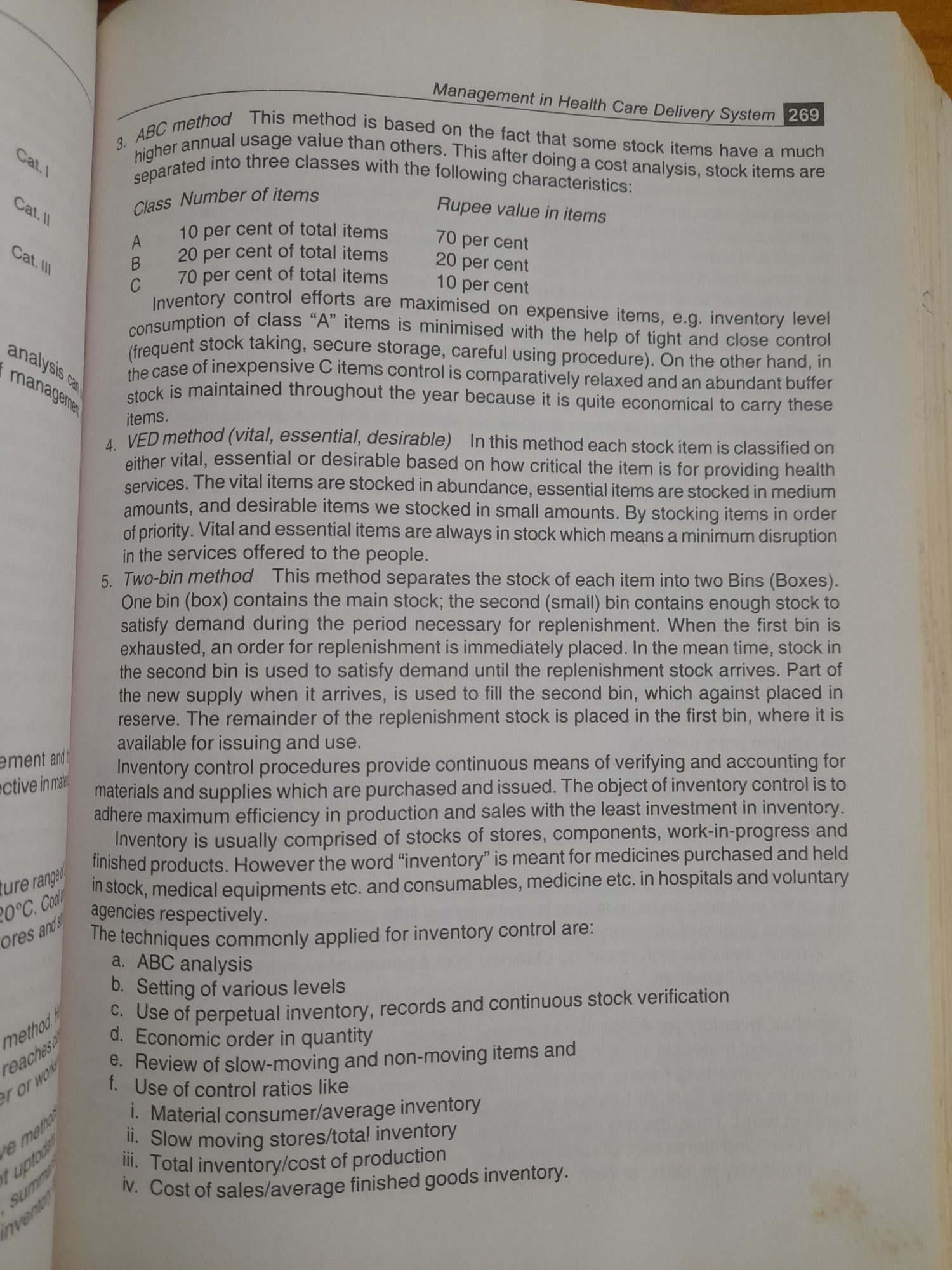
Management j, , i. in Health Care Deli, , ethod This method is elivery System Ex, , 3. orannual usage vaiue hinGas, on the fact that some stock j, nig d into three classes w; 8. This after doing a items have a much, separate’ S with the following charaser Cost analysis, stock items are, class Number of items istics:, , Rupee value in items, , 70 per cent, 20 per cent, , 10 per cent of total items, 20 per cent of total items, 70 per cent of total items, inventory control efforts are maximised i, F Me ! vm On expensive ite i, consumption of class A” items is minimised with the help ae H phiisks ws, (frequent stock taking, secure storag ot andicioserete, , je, Careful using procedure), O: i, : .Onth, the case of inexpensive C items control is comparatively nae an ai ee, , stock is maintained throughout the year because it is quite economical to carry these, , items., veD method (vital, essential, desirable) _|n this method each stock item is classified on, either vital, essential or desirable based on how critical the item is for providing health, services. The vital items are stocked in abundance, essential items are stocked in medium, amounts, and desirable items we stocked in small amounts. By stocking items in order, of priority. Vital and essential items are always in stock which means a minimum disruption, in the services offered to the people., , . Two-bin method This method separates the stock of each item into two Bins (Boxes)., One bin (box) contains the main stock; the second (small) bin contains enough stock to, satisfy demand during the period necessary for replenishment. When the first bin is, exhausted, an order for replenishment is immediately placed. In the mean time, stock in, the second bin is used to satisfy demand until the replenishment stock arrives. Part of, the new supply when it arrives, is used to fill the second bin, which against placed in, , : reserve. The remainder of the replenishment stock is placed in the first bin, where it is, , | available for issuing and use., , ment al Inventory control procedures provide continuous means of verifying and accounting for, , ctive inti ‘materials and supplies which are purchased and issued. The object of inventory control is to, , | adhere maximum efficiency in production and sales with the least investment in inventory., , Inventory is usually comprised of stocks of stores, components, work-in-progress and, finished products. However the word “inventory” is meant for medicines purchased and held, instock, medical equipments etc. and consumables, medicine etc. in hospitals and voluntary, agencies respectively., , The techniques commonly applied for inventory control are:, , a. ABC analysis, , . Setting of various levels, ¢. Use of perpetual inventory,, qd. Economic order in quantity ;, , & Review of slow-moving and non-mov!, , 1. Use of control ratios like, , i. Material consumer/average inventory, , i. Slow moving stores/total inventory, , i. Total inventory/cost of production, , iv. Cost of sales/average finished goods inventory. :, , A, B, , =, , ao, , records and continuous stock verification, , ng items and