Notes of Common Class, English Grammar Direct and Indirect Narration .pdf - Study Material
Page 1 :
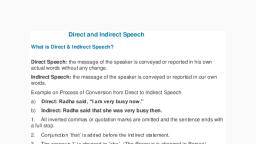
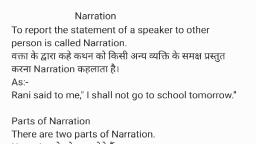
Narration, , To report the statement of a speaker to other, person is called Narration., , al ch ERI he He cl feat sry ath c GAA Veda, cheat Narration mee é!, , As:, Rani said to me," | shall not go to school tomorrow.", , Parts of Narration, , There are two parts of Narration., , Narration & at 4m eld @!, , 1. Reporting speech, , 2. Reported speech, , Reporting Speech—The part of the whole sentence, outside the Inverted Commas in Direct Narration is, called the Reporting Speech, and theVerb used in, this part is called the Reporting Verb., , Wear aut # AyUl aaa HI de AMT il Inverted, , Commas @ Sex eal & Sa Reporting Speech Hed &, az Reporting Speech at ferart at Reporting Verb, , Hed él, , Ram said, “I am going.”, , Mohan says, “He is my friend.”, , Rani said to me,’ | shall not go to school tomorrow.", Suet areal # Ram said, Mohan says, Rani said to, me, 4rT Reporting Speech |, , Reported Speech—The part of the
Page 2 :
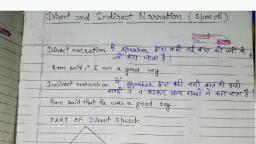
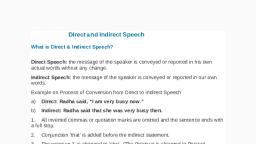
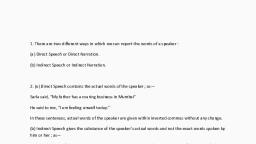
whole sentence in which the actual words of the, speaker are written within the Inverted Commas is, called, , the Reported Speech, and the Verb used in this part, is called the Reported Verb. Wea HAA HI Fs APT Gil, Inverted Commas & sak teal @ Reported Speech, Hecldl & Tal sa APT A Wych four ct Reported Verb, Hed Bl, , Ram said, “lam going.”, , Mohan says, “He is my friend.”, , Rani said to me, "| shall not go to school tomorrow.", Sax ae F “Iam going.” “He is my friend.” "|, shall not go to school tomorrow." 4m Reported, Speech é|, , Types of Narration, , There are two types of Narration., 1. Direct Narration (Wedel ha), , 2. Indirect Narration (Sedat He), , 1. Direct Narration:- It is the method in which the, actual words of the speaker are reported within, inverted commas., , Weast Het:- Hey cht ae fafa fas aap & area ateat, ant inverted commas ch sirax, , Wedel fear Ga 8, Weal HAA hectdl S|
Page 3 :
Note - In Indirect Narration the reporter uses the, actual words of the speaker., , Wears HAA A Ueaa, Fel ch AafacH areal HT WANT Ha, él, , As—, , 1. Ram said, “l am going.”, , 2. Mohan says, “He is my friend.”, , 3. Rani said to me,' | shall not go to school, tomorrow.", , 2. Indirect Narration—It is the method in which the, reporter reports the, , substance or idea of the speaker's words in his own, words without using his actual words., , SUA HUA:- HAA cl ae fate fSraa edte, Fepy ch areal, Al UR a fear sas areal A aept ch areal ar waht fav, feat St Wee Hear BI, , As:, 1. Ram said that he was going., , 2. Mohan says that he is his friend., , 3. Rani told me that she would not go to school the, next day., , The Rules for changing the Direct Narration into, Indirect Narration, Waa HUA hl AVA HAA A Jac ch aA
Page 5 :
saysto --------> tells, , saidto —-——--> told, , will say to -——— > will tell, , Raju said to me,'Father is going to school.", , Raju told me that father was going to school., Note:- If to is not used after say it is not changed, into tell but remains say., , afe say & Ugld to 7él ST St Safa object Hr Wart A, E31 St dl say Hl Ae! Tacid say Hl say St ted |, , say -——— > say, , 2) If the Reported speech is in the form of an, assertive sentence, the connective used to join it, with the Reporting speech is ‘that’ in place of, assertive sentence(,."_")—, , afe Reported speech 4H assertive sentence (fafe, Gah AR) ST VAT Sit St at comma a2 inverted, commas at écihe SAch VI UF conjunction (dats, Hay) ‘that’ Hr Wart aed €, , Direct : He said, “He is going home.”, , Indirect : He said that he was going home., , 3) Rules of changing Tense in reported speech, , A) If Reporting speech is in present or future Tense,, the Tense of reported speech is not changed., , afe Reporting speech 4 Present tense aT future, tense cI Want Sai @t at Reported speech #I ¢a =el



 Learn better on this topic