Page 1 :
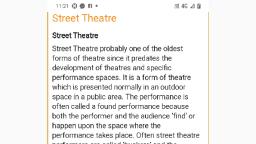
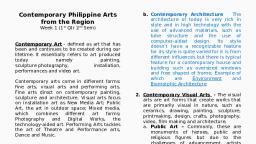
Street theatre is a form of theatrical, performance and presentation in outdoor public, spaces without a specific paying audience., These spaces can be anywhere, including, shopping centres, car parks, recreational, reserves, college or university campus and street, corners. They are especially seen in outdoor, spaces where there are large numbers of people., The actors who perform street theatre range, from buskers to organised theatre companies or, groups that want to experiment with, , performance spaces, or to promote their, mainstream work. It was a source of providing, information to people when there were no, sources of providing information like television,, radio etc. Nowadays, street play is used to, convey a message to the crowd watching it), Street play is considered to be the rawest form of, acting, because one does not have a microphone, or loud speakers, !@“ation needed), , , , Street theatre outside the Centre, Pompidou in Paris, , ee, A
Page 2 :
11:19 @@He M2 4G 4, , Sometimes performers are commissioned,, especially for street festivals, children's shows or, parades, but more often street theatre, performers are unpaid or gather some income, through the dropping of a coin in a hat by the, audience., , The logistics of doing street theatre necessitate, simple costumes and props, and often there is, little or no amplification of sound, with actors, depending on their natural vocal and physical, ability. This issue with sound has meant that, physical theatre, including dance, mime and, slapstick, is a very popular genre in an outdoor, setting. The performances need to be highly, visible, loud and simple to follow in order to, attract a crowd., , Street theatre should be distinguished from, other more formal outdoor theatrical, performances, such as performances in a park or, garden, where there is a discrete space set aside, (or roped off) and a ticketed audience., , In some cases, street theatre performers have to, get a licence or specific permission through local, or state governments in order to perform. Many, performers travel internationally!) to certain, locations of note., , Street theatre is arguably the oldest form of, , < @ a

Page 3 :
11:19 @@He M246 4 @, , Street theatre is arguably the oldest form of, theatre in existence: most mainstream, entertainment mediums can be traced back to, origins in street performing, including religious, passion plays and many other forms. More, recently performers who, a hundred years ago,, would have made their living working in variety, theatres, music halls and in vaudeville, now often, perform professionally in the many well-known, street performance areas throughout the world., Notable performers that began their careers as, street theatre performers include Robin, Williams,3! David Bowie, Jewel and Harry, Anderson., , Street theatre allows people who might not have, ever been to, or been able to afford to go to,, traditional theatre. The audience is made up of, anyone and everyone who wants to watch and, for most performances is free entertainment., , A Reasons for staging work, on the street, , Performance artists with an interest in social, activism may choose to stage their work on the, street as a means of directly confronting or, engaging the public. For example, multimedia, artist Caeser Pink and his group of performers, , < @ a
Page 4 :
11:20 8 @he i? 46 44 @, a Reasons for staging work, on the street, , io, , Performance artists with an interest in social, activism may choose to stage their work on the, street as a means of directly confronting or, engaging the public. For example, multimedia, artist Caeser Pink and his group of performers, known as The Imperial Orgy staged a piece titled, Our Daily Bread“! that brought performers onto, the streets of the New York's financial district to, ceremoniously lay loaves of Wonder Bread along, the sidewalks, each with an advertisement from, Satan offering to buy people's souls in exchange, for material possessions. The performance, caused an uproar when police were called out, and bomb-sniffing dogs were brought in to, inspect the loaves of bread for explosives., , Other artists consider a paying, theatre-going, public to be unrepresentative of the public to, whom they are trying to communicate, and, performing to ‘the man on the street’ may be, considered a more democratic form of, dissemination., , Some contemporary street theatre practitioners, have extensively studied pre-existing street and, popular theatre traditions, such as Carnival,, commedia dell'arte etc. and wish to present, , tham in a aitiunatian alacn ta thair arininal nantavt, , < @ a
Page 5 :
11:20 8 @ ie M2 4G 44, Some contemporary street theatre practitioners, have extensively studied pre-existing street and, popular theatre traditions, such as Carnival,, commedia dell'arte etc. and wish to present, them in a situation close to their original context., , Whatever the reason for choosing the street, the, street is a place with a different set of, possibilities than the conventional theatre space., Sue Gill of Welfare State International argues, that a street theatre performance is not a lesser, form than an indoor performance, nor is it simply, taking what you do on stage and placing it, outdoors, but a form with an energy and an, integrity of its own.!5), , , , q ae A. id, A street play (nukkad natak) in, Dharavi slums in Mumbai, Many companies are politically motivated and, use street theatre to combine performance with, protest. This has occurred through the guerrilla, theatre of San Francisco Mime Troupe, 6 The, Living Theatre, the carnivalesque parades of, Bread and Puppet Theatre, and the work of, , < @ a