Page 1 :
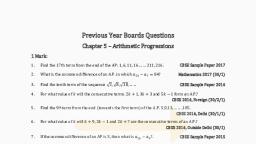
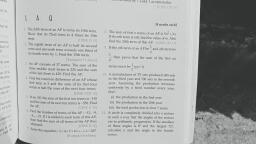
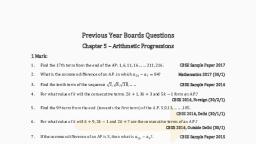
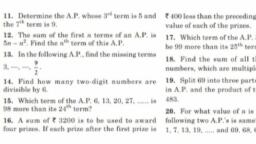
How many multiples of 9 lie between 10, and 300?, , 51. If the nth terms of the two AP's 9, 7, 5..., and 24, 21, 18,.., are the same, then find, the value of n. Also, find that term., , NCERT Exemplar, , , , $2. Split 207 into three parts such that these are, in AP and the product of the two smaller, parts is 4623. NCERT Exemplar, , 3. if four numbers are in AP such that their, sum is 50 and the greatest number is, 4 times the least, then find the numbers., , 54. The sum of first, third and seventeenth, terms of an AP is 216. Find the sum of the, first 13 terms of the AP, , 55. The sum of Sth and 9th terms of an AP is 72, and sum of 7th and 12th terms is 97. Find the, AP. NCERT Exemplar, , 56. If an AP has a=1,a, = 20 and S, = 399,, , then find the velue of n., f=) If 12th term of an AP is 213 and the sum of, , its four terms is 24, then what is the sum of, its first 10 terms?, , 58. Find the common difference of an AP whose, first term is 5 and the sum ofits first 4 terms, is half the sum of the next 4 terms., , 59. The sum of the first three terms of an AP is, 33. If the product of the first and the third, term exceeds the second term by 29, then, find the AP. NCERT Exemplar, , 60. The sum of the first term and the fifth term, of an ascending AP is 26 and the product of, the second term by the fourth term is 160,, = the sum of the first seven terms of this, , Long Answer (\A) lype Questions, , Ti. The sum of four consecuti, utive number in an, AP is 32 and the ratio of the product of the, first and the last term of the product of tw, middie terms is 7: 15, Pind the numbers ,, , CBSE 2018, , , , CBSE 2015,, , (Short Answer (5A) lype !! Questions, , 6)., , 62., , 63., , 64., , 65., , 66., , 67., , 68., , 69, , 70,, , 72., , , , , [3 Marks each], , , , + odd positive, , two-digi, ft all CBSE 2009, , Find the sum ©, numbers., ind the sum of, : ne which are mu., of 5., {Hint Take the LCM :, tnterms ofan APisSn’ -3n,, d also find its 16th term, CBSE 2010, first n terms of an AP whose, nd the common difference is, sum of first 2n terms of, first term is —30 and the, 8. Find the value of n., NCERT Exempiar, , IfS, denotes the sum of first n terms of, an AP then show that the common, , difference d of the AP is given by, d=S, — 25,-1 +5, 2, ose integers between 1, itiples of 2 as well as, NCERT Exemplar, , of 2 and 5.), , Sum of the firs’, Find the AP am, , The sum of the, first term is Ba, 20, is equal to the, another AP whose ©, common difference 1S, , InanAPifS, =m pandS, = mp, , m ¥ n, then prove that Se p ., , The sum of first n, 2n and 3n terms of, an AP are S,, S, and S;, respectively, , Prove that S, = 3(S, — S,)., , The sum of first n terms of three AP’s are, SS and S,. The first term of each AP SS, unity and their common differences are 1,2, and 3, respectively., Provethat S, + S, = 2S. CBSE 2016, Show that the sum of first n even |, , , , , , numbers is equal to (1 + = times the s, n, , first n odd natural numbers., , if, , there are (2n + 1) terms in an AP thet, , oo the ratio of the sum of odd tems, @ sum of even terms is(n + 1), , If the mth term of an AP is A and nth termi, , —, thi :, aia show that its mnth term is 1., , [4 Marks eactl