Notes of X1, Biology 3 - Study Material
Page 1 :
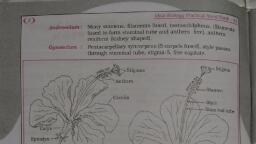
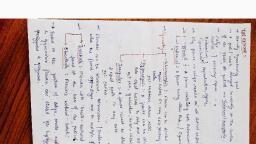
1.hypogynous 2. perigynous 3.epigynous, , 1.hypogynous:- here the ovary has a superior position than all other parts of flower., eg.china rose, brinjal, , 2. epigynous- here ovary has an inferior position than all other parts of flower., eg. guava, cucumber, ray florets in sunflower., , 3. perigynous:- here ovary is half inferior. Gynoecium seen at centre and all other parts seen at the rim of, thalamus., , eg.rose,plum, , parts of flower, , calyx-it is the outermost whorl. its units are sepals. Generally it is green in colour. In some flowers sepals, are fused. Such calyx are gamosepalous. In some flowers sepals are free they are polysepalous., , Corolla:- units of corolla are petals. They are brightly coloured. Sometimes they are fused[gamopetalous], sometimes they are free [polypetalous]., , Androecium: the units of androecium are stamens. They are the male reproductive structures. Each stamen, has two parts one stalk, called filament and a box like pait called anther at the tip of filament. This anther, show pollen sacs inside it. The pollen sacs produce poilen grains., , , , Staminode----- sterile stamen is called staminode, , ¢ epipetalous stamens----stamens attached to petals. eg.brinjal, , ¢@ epiphyllous stamens----stamens attached to perianth. eg. Lilly, , ¢@ polyandrous----- stamens in free condition, , ¢ monadelphous----many stanens fused to form a single bundle. eg. China rose, , @ didaelphous-----stamens fused and for two bundles. eg. Pea, , ¢ polyadelphous----stamens fused and form many bundles—citrus, gynoecium, , It is female reproductive part. Units are carpels. Each carpel has three parts. Stigma , style and, , ovary., , Ovary is the basal swollen portion . On which the style; a long tail like structure seen. At the tip of style, stigma seen., , Stigma is the receptive spot. Inside the ovary a tissue seen called placenta; from which the ovules are, formed. After fertilisation this ovule form seed. And the ovary from fruit., , Sometimes the ovules are free. Such condition is called apocarpous as in lotus., In some flowers the carpels are fused. It is called syncarpous. eg. Tomato., Placentation, , The arrangement of ovules in ovary is known as placentation. Various placentation types are there., , marginal At the margin of ovary |Here placenta form a ridge along the |pea, ventral suture of ovary, , axile Around the central axis | Here placenta is axial China rose,tomato, , , , , , , , , , parietal At the periphery Here ovules form at inner wall ovary {cucumber