






Thank you for booking the demo with us! Our team will connect with you shortly..





Aditya University, a 23,000+ student institution in Andhra Pradesh, adopted Teachmint X to make technical education more visual, interactive, and connected across faculty, students, and management.
Digitalized higher education workflows with Teachmint X
Surampalem, Andhra Pradesh | Higher Education | 23,000+ studentsAditya University was established in 2024, evolving from Aditya Engineering College, which was founded in 2001 by Aditya Academy. Today, the university operates from a 250-acre campus in Surampalem, Kakinada district, with students from across India and over 18 countries.
The institution has built its academic model around scale, research, industry readiness, and innovation. With schools across engineering, business, pharmacy, and sciences, Aditya University supports undergraduate, postgraduate, and doctoral programs across multiple disciplines. Its students participate in centres of excellence, earn global certifications, and receive placement training from the first year itself.
For Aditya University, technology was not an add-on to education. It was part of the institution's larger vision to be globally recognized for excellence in education, research, collaboration, and innovation.
That vision shaped how the university approached classroom infrastructure. If students were being trained for industry, research, entrepreneurship, and global opportunities, then the classroom experience also had to move beyond static teaching.
In technical education, explanation alone is rarely enough.
Subjects like artificial intelligence, machine learning, programming, cryptography, network security, and computer applications often require students to see how a concept works, not just hear about it. A neural network cannot be fully understood through a flat drawing. A piece of code becomes clearer when students can see it run, modify it, and connect the output to the logic. A complex technical process becomes easier to absorb when it is visual, live, and interactive.
Aditya University recognized this gap clearly. Conventional chalk-and-talk teaching, whiteboards, projectors, and pen drives could support instruction, but they could not create the kind of seamless, hands-on, visual learning environment the university wanted.
“Students, unless they see something and experience something, it is not registered in their mind. Hands-on training is more important, experiential learning is more important, visual learning is more important.”
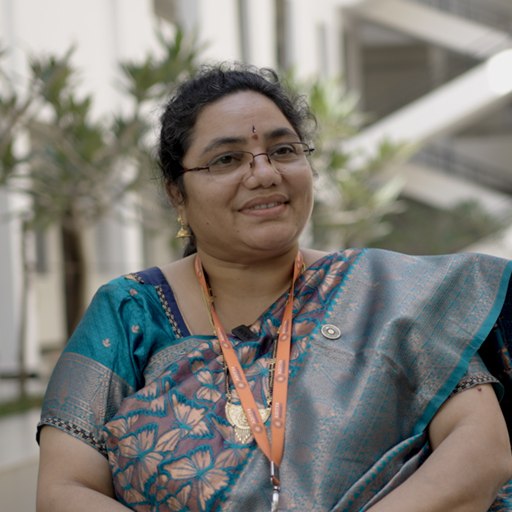
The university needed a classroom system that could support this shift. It needed faculty to move from explaining abstract ideas manually to demonstrating them visually. It needed students to stay active during class. And it needed management to have better visibility into how digital teaching was being used.
With Teachmint X interactive panels, Aditya University began moving toward a more visual and connected teaching experience.
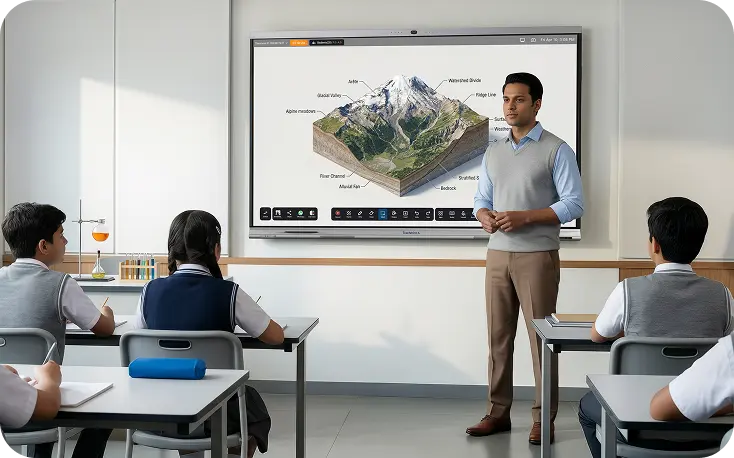
Faculty could display technical diagrams, videos, code, images, quizzes, and assignments directly within the flow of the lecture. Instead of carrying laptops, connecting projectors, using pen drives, or shifting between devices, faculty could upload content through the Teachmint app and display it directly to students on the panel.
For technical subjects, this made a meaningful difference. In artificial intelligence and machine learning classes, faculty could visually demonstrate concepts like neural networks and convolutional layers instead of spending long classes drawing them manually. In programming classes, code could be shown, modified, and explained live. In computer applications, faculty could combine explanation, demonstration, and presentation within the same teaching session.
Teachmint X helped make the classroom more dynamic. Instead of students only watching a faculty member write on a board, they could see the concept unfold through visuals, demonstrations, AI-supported content, and interactive tasks.
The impact was not just visual. It also changed how faculty used class time.
Earlier, faculty spent a significant portion of lectures writing diagrams, code, problems, or explanations on the board. In technical subjects, that time added up quickly. Several faculty members described how writing, erasing, redrawing, and re-explaining reduced the time available for interaction and doubt clarification.
With Teachmint X, faculty could save class content, continue from where they stopped, generate notes, create quizzes, assign homework, and revisit previous whiteboards. For students, this meant better continuity. For faculty, it meant less repetition.
In AI and machine learning classes, one faculty member explained how drawing a convolutional network manually could take nearly 15 minutes of a 50-minute class. With Teachmint X, the same concept could be shown visually, supported with images or videos, and explained more directly.
“In a 50-minute class, I used to spend 15 minutes drawing the convolutional network manually. Now, by displaying the picture or video, it saves me 15 minutes.”
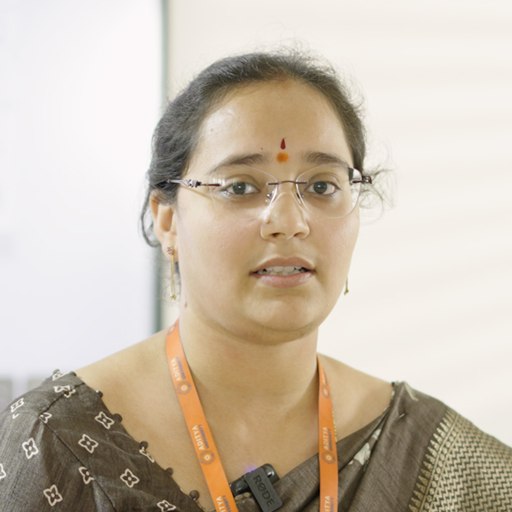
That time saved changed the role of the faculty member inside the classroom. Instead of spending most of the class writing on the board, faculty could spend more time explaining, interacting with students, and clarifying doubts.
Teachmint X also helped Aditya University address a common challenge in higher education: continuity.
In a conventional classroom, if a student missed a lecture, they had to borrow notes from a friend. If a faculty member wanted to continue a topic after a gap, they had to rely on memory or restart parts of the explanation. If a whiteboard was erased, the class context disappeared.
With Teachmint X, faculty could save whiteboards, record sessions, upload content, and share materials through the Teachmint app. Students who missed a class could revisit what was taught. Faculty could return to previous whiteboards and continue the concept instead of recreating it.
“With Teachmint X, I know where I stopped. I can open my earlier class whiteboard, recall very quickly, and the students can easily move on with me.”
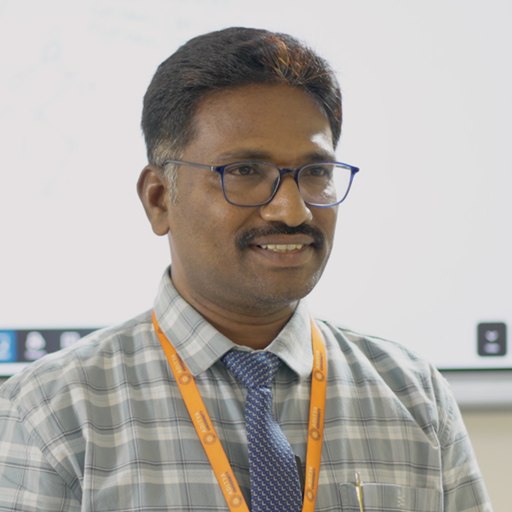
This was especially useful in technical courses, where missing one step in a concept or problem can affect understanding of the next. By making lessons easier to save, revisit, and share, Teachmint X helped reduce the gap between live classroom teaching and post-class learning.
For Aditya University, the value of Teachmint X was not limited to the panel inside the classroom.
The Teachmint app created a connected layer between faculty, students, and management. Faculty could upload teaching content, share materials, assign work, and use the same platform to support classroom delivery. Students could access shared notes and recorded lessons. Management could view what content was being displayed and how faculty were teaching.
This made the platform useful not only for teaching, but also for academic visibility.
“Teachmint X gives us a platform where we can upload materials, take attendance, share assignments, and record classes. It becomes a one-stop solution.”
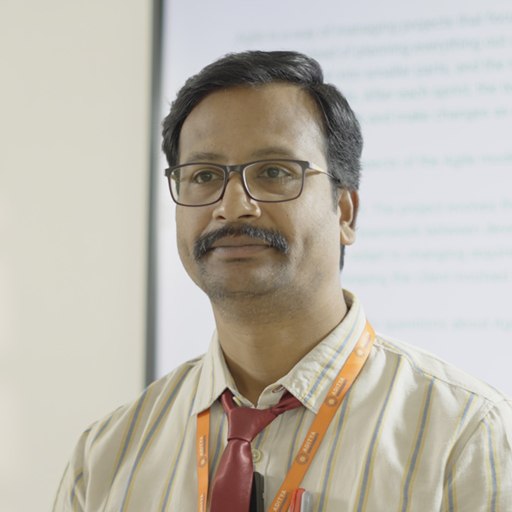
From the management perspective, this was one of the important differentiators. The university could see how faculty were using classroom technology, what content was being shown, and how students were being engaged. Instead of classroom technology being isolated inside individual rooms, it became part of a larger academic system.
Another important shift was student engagement.
Faculty observed that students responded better when the class included visual demonstrations, AI-supported quizzes, surveys, and interactive content. Instead of passively listening to lectures, students could respond to questions, participate in quick activities, and follow demonstrations in real time.
For technical education, this mattered because student attention often drops when concepts become abstract or heavily theoretical. Teachmint X helped faculty make those moments more active by using visuals, examples, quizzes, and live demonstrations.
Faculty also noted that students were more attentive when the panel was used for colour changes, video demonstrations, saved whiteboards, and AI-supported content. The classroom became less dependent on one-way explanation and more focused on interaction.
The transition did not happen by simply installing panels.
Aditya University's faculty received training from the Teachmint team, which helped them move beyond using the panel only for writing. Faculty learned how to use EduAI, generate quizzes, save content, use teaching tools, and apply the panel more fully during lectures.
This mattered because adoption in higher education depends on faculty confidence. Once faculty understood the features, usage increased. Teachers began using more tools, students became more active, and the panels became part of everyday teaching rather than a replacement for the whiteboard.
The support also mattered operationally. The university noted that smaller maintenance issues were resolved quickly by Teachmint personnel, helping the system remain dependable for daily academic use.
For Aditya University, Teachmint X supports a larger move toward digital transformation.
The institution is already investing in the latest technologies, including AI-focused centres of excellence and advanced infrastructure for research and student development. Bringing Teachmint X into classrooms extends that same future-facing mindset into daily teaching.
The result is a classroom experience better aligned with the university's academic direction. Students are not only learning technical subjects, they are learning through the kind of tools, visuals, and digital systems that reflect the world they are preparing to enter.
Aditya University's goal is not simply to modernize classrooms. It is to make learning more experiential, teaching more efficient, and academic delivery more connected.
With Teachmint X, faculty can explain better, students can visualize better, and management can gain better visibility into the teaching process. For a university built around innovation, research, and industry readiness, that shift brings classroom infrastructure closer to the future it is preparing students for.
See how Teachmint X can help your institution make technical learning more experiential and academic delivery more connected.




Demo booked successfully
Thank you for booking the demo with us! Our team will connect with you shortly..