


Product & Design · Engineering · AI Technology

Designing EduAI that actually works in Indian classrooms.

A teacher with 45 students, three learning levels, two languages, and one period to cover a dense syllabus isn't an anomaly, it's the system. Here's how we're building EduAI to meet it where it lives.

EduAI in motion, an intelligence layer that meets teachers and students where the lesson already lives.

India's classrooms have never been more complex, or more full of potential. Across metros, tier-2 cities, and rural districts, the average teacher isn't dealing with one learning problem. She's dealing with forty-five of them, simultaneously, in two languages, on a forty-minute clock.

That is not a teaching problem. That is a systems problem. And systems problems require systems solutions.

This is the promise, and increasingly, the reality, of EduAI: purpose-built artificial intelligence that doesn't replace teachers, but radically amplifies what they can already do.

01 / The Problem Where the Experience Breaks

There's a moment in every classroom that often goes unnoticed. A teacher explains a concept. A few students follow along. A few hesitate. A few quietly disengage. The lesson continues, but the learning experience has already fractured.

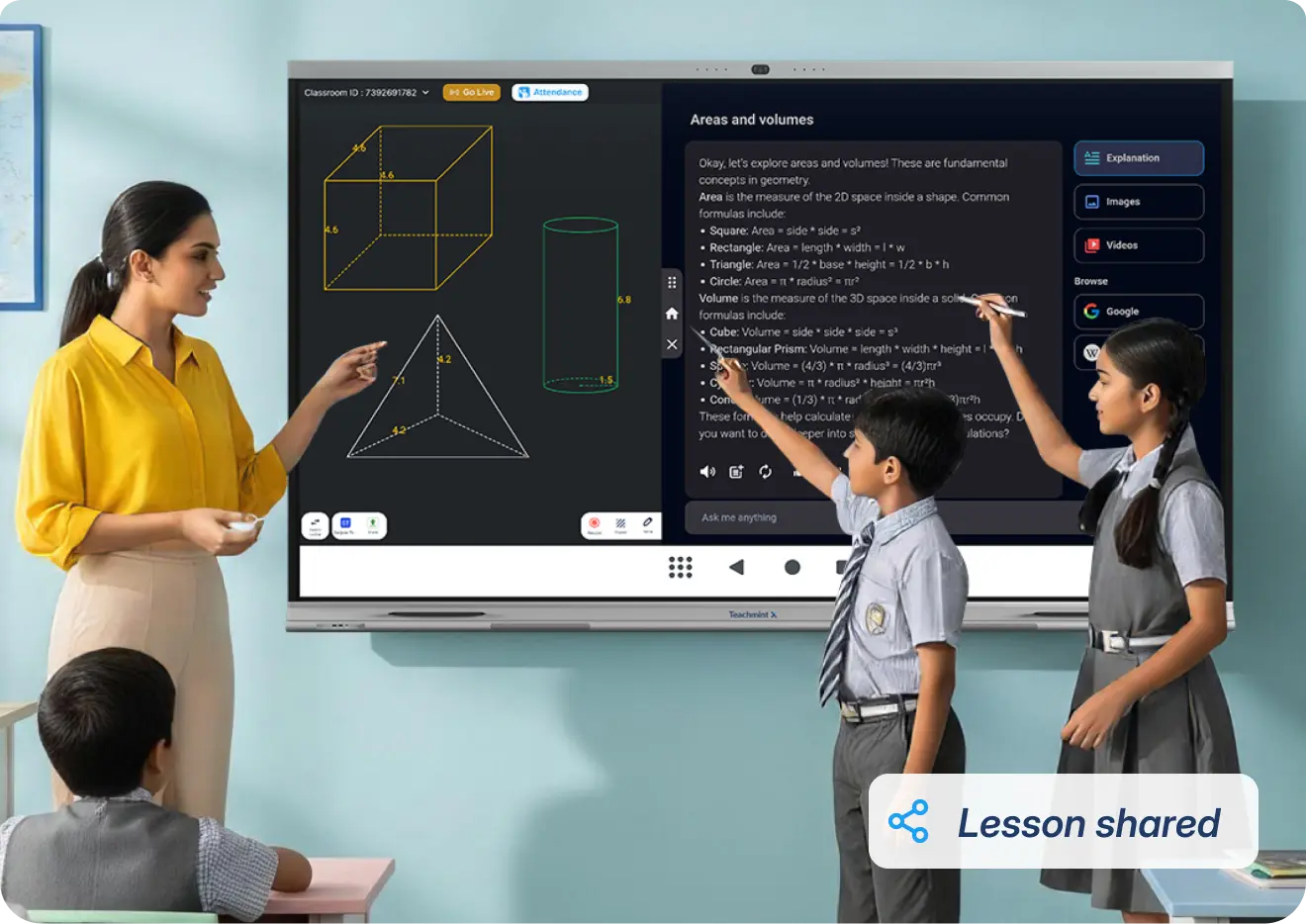
From a design perspective, this isn't a teaching problem. It's an experience problem. The classroom operates as a single interface trying to serve dozens of students with wildly different levels of prior understanding, all at the same moment.

The gap becomes more visible after class ends. Students move from a structured environment into fragmented tools, notes, question banks, search, or generic AI. None of these feel connected to what they just learned. The system disappears, and with it, the continuity of the experience.

The result is a system that works reasonably well for learners in the middle of the distribution and quietly underserves everyone else.

The future of education isn't about replacing the teacher, it's about giving every teacher the superpower of a thousand data points per student.

- Teachmint Product Principle No. 3

02 / The Architecture Designing EduAI as Part of the Experience

EduAI addresses these structural gaps through a layered set of capabilities, each designed to work within the real constraints of Indian classrooms, variable connectivity, multilingual environments, large class sizes, and tight administrative bandwidth.

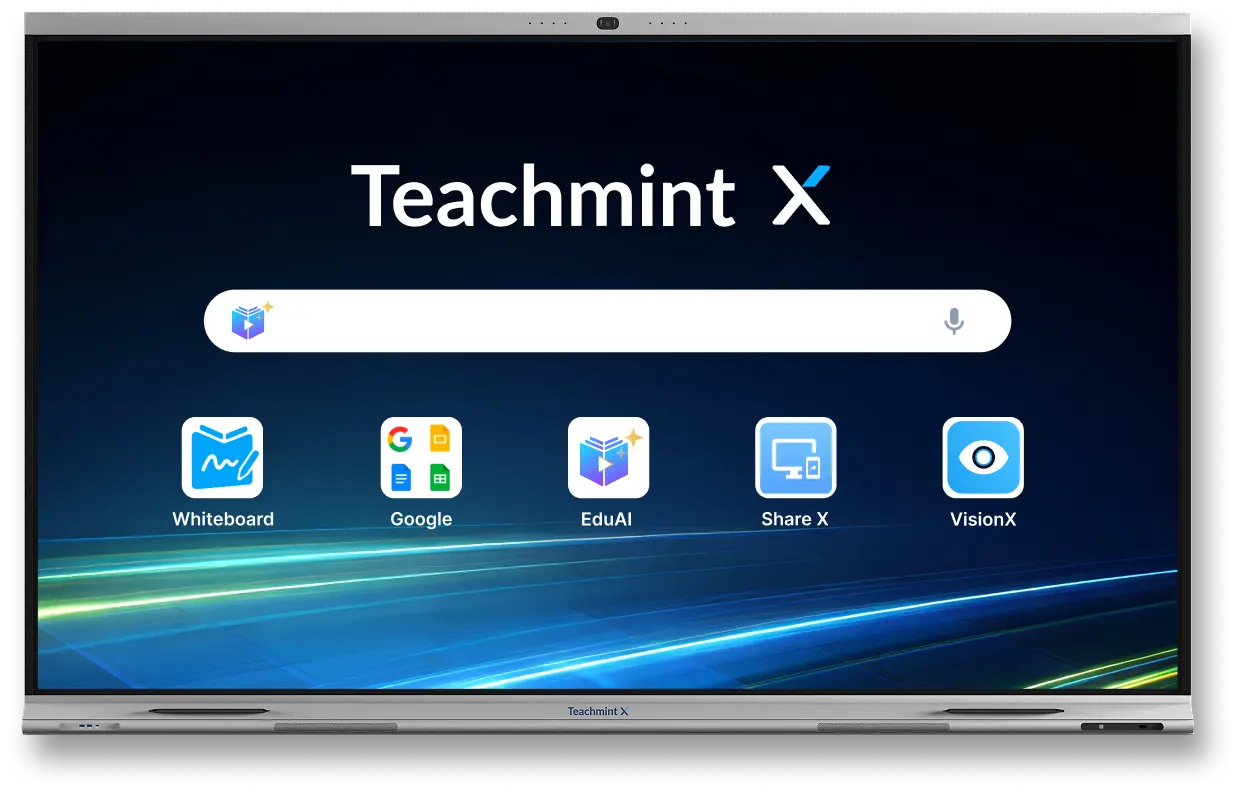
EduAI dashboard, the actual Teachmint product interface with Smart Tools, AI Suites, and Digital Library
The EduAI console in production, a single pane where teachers invoke AI suites, math tools, and reference libraries without ever leaving the lesson.

At its foundation, EduAI operates across four intersecting domains:

Each of these isn't a standalone feature. It's part of a connected intelligence layer that gets smarter the more it's used.

01/04
Module 01

Adaptive Learning Engine

Dynamically tailors content paths based on each student's performance, pace, and learning style in real time.

02/04
Module 02

Predictive Risk Alerts

Identifies students at risk of falling behind using early behavioural and assessment signals, days before a teacher might notice.

03/04
Module 03

Instant EduAI Feedback

Delivers detailed, personalised feedback on assignments and assessments without adding to educator workload.

04/04
Module 04

Multilingual EduAI Tutor

Engages students in their preferred language, breaking down comprehension barriers across India's linguistic diversity.

03 / The Interaction Designing the Core Interaction

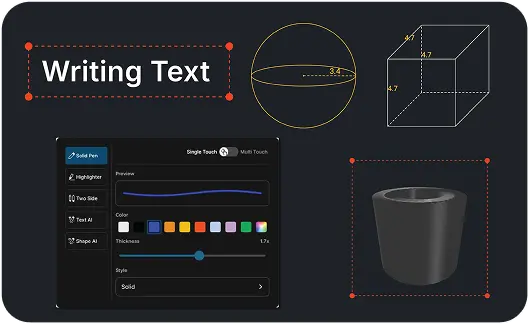
EduAI in action, student draws a triangle; AI Images panel instantly surfaces contextual visual references
One stroke in, the system already knows: the student drew a triangle, and EduAI responds with pyramids, mountains, cones, references without the context switch.

At the centre of the experience is a deliberately simple UI pattern: the card.

Each card represents a small, focused interaction, a question, a concept, or a quick revision point. Keeping these interactions small allows the system to maintain momentum. It also gives AI the flexibility to adjust the sequence without disrupting the interface.

What changes from card to card is not the layout, but the interaction. Sometimes the student selects an answer. Sometimes they recall. Sometimes they connect ideas. The structure remains familiar, while the experience stays varied.

This consistency in UI combined with variation in interaction is what maintains engagement without increasing cognitive load.

Student Engages
AI Captures Signals
System Analyses Gaps
Adaptive Path Served
Teacher Gets Insights

At the entry point, a student interacts with learning material, a video, a quiz, a practice problem. Every interaction, pause, retry, and skip generates a behavioural data signal. The AI engine processes these signals against a learning model, identifies where understanding is solid and where it's shaky, and serves the next piece of content accordingly, more challenging if the student is ready, more foundational if they need reinforcement.

This closed loop, student interaction → AI inference → adaptive response → teacher insight, is what separates EduAI from a simple content repository. It's a living system, not a digital textbook.

04 / The Educator Designing for Teachers

Teachmint Class Recap feature, AI-generated summary appearing beside the teacher's canvas
Class Recap, in the moment it arrives, the teacher finishes a stroke, and EduAI quietly surfaces a recap of the last class, right where the lesson lives.

Teachers interact with the system differently. They don't need more data; they need clarity.

The interface focuses on surfacing key signals rather than presenting full datasets. Visual hierarchy plays an important role here, important patterns are highlighted, while less critical information stays in the background.

The aim is to reduce the effort required to interpret information. Teachers should be able to understand what needs attention at a glance, and act immediately.

For teachers, the most significant reported shift isn't in outcomes, it's in confidence. Educators who previously operated on guesswork now have a factual basis for the decisions they already make: which student to pull aside, which concept to revisit before the next unit, which class needs a different pedagogical approach entirely.

When a teacher in Pune and a teacher in Patna can both access the same quality of real-time learning intelligence, equity stops being an aspiration and starts being an outcome.

- On equity as infrastructure

05 / The Safety Net Designing for Moments of Uncertainty

When a student gets stuck, the natural instinct is to look for help elsewhere. This breaks the learning flow.

To address this, the experience introduces an AI assistant, but not as a separate destination. It exists within the same interface, appearing as an extension of the current context rather than a new one.

The UI deliberately avoids full-screen takeovers. Instead, it uses contained interaction spaces that allow the student to explore explanations without losing their place. Responses are structured progressively, guiding the student rather than overwhelming them.

The goal is not to provide instant answers. It's to help the student move forward without leaving the experience.

06 / The Loop Feedback as a Design Priority

Feedback is the most critical moment in the learning flow. It's where confusion is either resolved or reinforced.

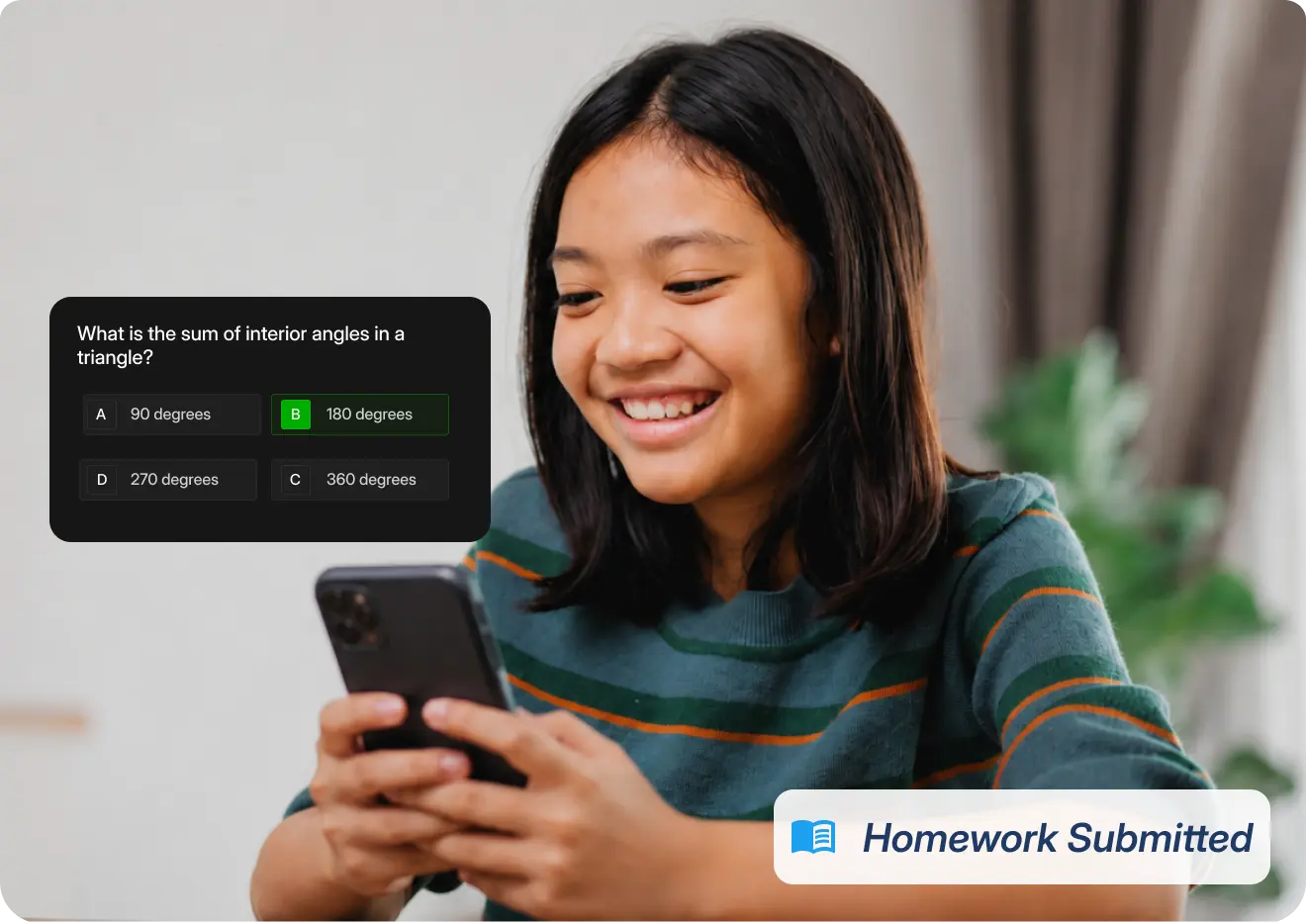
Instead of separating feedback into another screen, it's embedded directly into the interaction. The response appears immediately after the student acts. The interface highlights the result and presents a short explanation in place.

There are no transitions, no delays, and no need to navigate away. The student stays within the same visual context, which keeps attention focused and reduces effort.

This creates a tight loop between action and understanding, something traditional systems often fail to achieve.

07 / The Whole Bringing It All Together

When these design decisions come together, the experience changes in a fundamental way.

Students no longer navigate through menus or search for content. They move through a continuous flow where each interaction leads naturally to the next. Feedback is immediate. Help is contextual. The system adapts quietly in the background.

Teachers gain visibility without being overwhelmed. The interface supports action instead of analysis.

08 / Closing The Classroom Isn't Waiting for a Revolution

The conversation around AI in education has spent too long in the abstract, debating whether it will replace teachers, whether it can be trusted, whether it belongs in schools at all. Those debates, while not without merit, have distracted from a more urgent and more tractable question:

How do we design AI systems that make great teaching more possible, more consistent, and more equitable?

EduAI is Teachmint's answer to that question, built for the realities of Indian classrooms, not the ideals of a Silicon Valley whitepaper. The technology exists. The infrastructure is maturing. What's required now is the commitment to deploy it thoughtfully, at scale, in service of the educators and students who need it most.

The classroom of the future isn't waiting for a revolution. It's waiting for tools that actually work.

The best teachers have always personalised learning. EduAI just lets every teacher do it, for every student, every day.

Teachmint is building the intelligence layer that empowers educators across India to teach smarter, reach further, and leave no learner behind.

Learn More About Teachmint
©Copyright , Teachmint
Technologies Pvt. Ltd.